12 NATO nations pledge $50B for 2,000km-range strike weapons
European coalition commits to co-developed long-range missiles, signaling strategic autonomy in defense as NATO accelerates modernization spending.

Photo by Stenbocki maja, official NATO Summit photo, CC BY 4.0
By the numbers

Infographic: WeaponSpecs News Desk
Twelve NATO members have pledged a combined $50 billion over the next decade to modernize deep precision-strike weapons, a coalition led by the United Kingdom and announced on the sidelines of the NATO Ankara summit, according to Breaking Defense. The coalition, comprising the UK, Denmark, Estonia, Finland, France, Germany, the Netherlands, Norway, Romania, Spain, Sweden and Turkey, represents one of the largest coordinated European commitments yet to long-range missile capability, running from 2026 through 2036.
Of the $50 billion aggregate, only the UK’s contribution has been broken out publicly: £3 billion over four years, the largest named national figure and consistent with London’s position as the coalition’s lead nation. The remaining eleven members’ individual commitments have not been disclosed in the public announcement reviewed for this story, a real gap in the reporting rather than an oversight in this summary. A $50 billion headline total spread across twelve nations with only one member’s share specified is difficult to independently verify or stress-test, and this piece is not going to pretend otherwise by implying a level of granular confirmation the public record does not yet support.
The three-tier range ladder behind the pledge
The coalition’s investment target traces back to the European Long-Range Strike Approach, or ELSA, signed June 18 by a six-nation subset of Germany, France, Poland, Italy, Sweden and the UK. ELSA defines three distinct range tiers that now function as the organizing framework for how European strike-weapon money gets allocated: 300 to 500 kilometers for mid-range precision strike, 500 to 2,000 kilometers for intermediate deep strike, and 2,000-plus kilometers for strategic deep strike. Understanding which program sits in which tier is the clearest way to read what this $50 billion is actually buying.
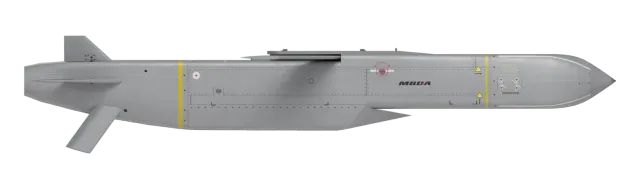
At the near-term end, PrSM, the US-built Precision Strike Missile already fielded by the US Army since 2023 and now also being procured by the UK in a separate £190 million deal confirmed the same week, delivers immediate 500-kilometer ground-launched reach without waiting for a new European system to mature. In the middle tier, the Stratus cruise missile, a joint UK-France-Italy development program still in progress, is intended as the eventual replacement for the Storm Shadow and Scalp cruise missiles currently in RAF and French Air Force service, targeting stealth and high-speed variants with a 2030s fielding horizon. At the top of the ladder, a separate UK-Germany Deep Precision Strike program is aiming for 2,000-plus kilometers using stealth and hypersonic variants, also targeting the 2030s. The $50 billion pledge functions as the funding umbrella meant to move all three tiers forward roughly in parallel, rather than sequencing one before starting the next.
The longest bar is also the least mature: only the bottom tier's weapon, PrSM, is fielded today, while the intermediate and strategic tiers remain in development targeting the 2030s.
The “strategic autonomy” framing deserves scrutiny
Coalition materials explicitly link this investment to “recent US force adjustments in European defense,” language that reads as a hedge against a reduced long-term American commitment to the continent and is being publicly framed by participating governments as a step toward European strategic autonomy. That framing is worth weighing rather than accepting at face value: every coalition member remains dependent on US-supplied intelligence, logistics and integrated air-defense architecture for the broader operational picture that any deep-strike weapon would need to be employed effectively. A European-built missile with 2,000-kilometer reach does not, by itself, replace US satellite targeting data, US airlift, or the US-anchored NATO air-defense network these nations still rely on. “Strategic autonomy” in the missile itself is a narrower claim than autonomy in the broader war-fighting system, and this coalition’s own announcement does not claim to have solved the latter.
The pledge also sits inside NATO’s wider 5%-of-GDP-by-2035 defense-spending target, against a current European baseline of roughly 4% of GDP. NATO’s own projected 2026 collective defense expenditure is expected to reach around $1.8 trillion, up roughly 11% from 2025, though that figure is a projection rather than a finalized, audited number and should be read as such. Manufacturing-capacity bottlenecks, not political will, are the factor Pentagon and congressional assessments have repeatedly identified as the limiting constraint on how fast any of this money turns into fielded weapons, which is the direct rationale coalition members have given for investing in sovereign European production capacity simultaneously across multiple nations rather than concentrating output in one or two nation’s factories.
Where the idea actually came from
A June 11-12 “GAP Dialogue” between German Chief of Defence Gen. Carsten Breuer and EUCOM/SACEUR Gen. Alexus Grynkewich at the George C. Marshall European Center reportedly laid the groundwork for this announcement, according to the sourcing behind Breaking Defense’s report. That places the coalition’s origin in direct US-European military coordination, not a purely European initiative developed in isolation from Washington, a detail that sits in some tension with the “strategic autonomy” framing the coalition’s own public messaging leans on, and is worth noting for readers weighing how independent this effort really is.
Sources
- European coalition pledges $50 billion to modernize deep precision strike capabilities (Breaking Defense, Jul 9, 2026)
Systems mentioned
Every system named in this story, with its photo and, where available, a video. Tap a card to open the full spec sheet.
Compare these side by side →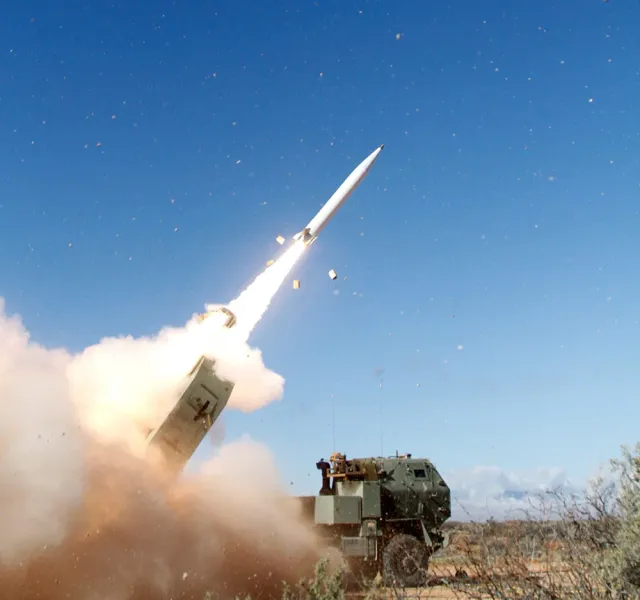
Missile
Storm ShadowFrequently asked questions
Why is this 12-nation coalition focused on long-range strike missiles? +
Long-range precision strike lets NATO members hold distant targets at risk without flying aircraft into contested airspace, and coordinated European development is meant to reduce reliance on US industrial capacity for these systems specifically.
What's the difference between Stratus, PrSM, and the Deep Precision Strike program? +
Stratus is a cruise missile in development to replace Storm Shadow/Scalp at roughly 300-500km with stealth variants. PrSM is a ballistic missile already fielded since 2023 offering immediate 500km reach. Deep Precision Strike is a separate UK-Germany program targeting 2,000-plus kilometers of strategic reach with stealth/hypersonic variants. All three sit at different rungs of the same range ladder.
How does this relate to NATO's broader defense-spending goals? +
NATO members have committed to a 5% of GDP defense-spending target by 2035. This coalition's $50 billion strike-weapons pledge is a specific capability investment inside that larger envelope, not a separate spending track.
Is this coalition aimed at Russia or China? +
Public coalition announcements frame it around Russia and Ukraine-driven European deterrence. China isn't named in the coalition's own materials, though Indo-Pacific strategic-autonomy language appears separately in UK and French national defense strategy.
More news


