Army awards AeroVironment $500M for layered counter-drone
The U.S. Army gives AeroVironment a $500 million three-year deal to rapidly field layered counter-drone defenses: RF jammers, radar, lasers and interceptors.

U.S. Department of Defense photo, DVIDS, public domain
By the numbers

Infographic: WeaponSpecs News Desk
The U.S. Army has awarded AeroVironment a $500 million, three-year IDIQ contract to rapidly field a layered counter-drone defense architecture across domestic installations, running from July 1, 2026 through June 29, 2029, according to Army Recognition and confirmed in earlier DefenseScoop reporting on the award. The deal, one of the largest single counter-drone contracts issued to date, sits under JIATF-401, the Joint Integrated Air and Missile Defense Task Force, Domestic, an Army-led body chartered in 2022 specifically to counter small-drone threats to U.S. bases, airports, ports and critical infrastructure.
Why a task force exists for this at all
JIATF-401’s creation four years ago was itself a response to a problem the Pentagon had been slow to acknowledge: a string of unexplained small-drone overflights near U.S. military installations exposed real gaps in domestic counter-UAS coverage, incidents that were often unauthorized, sometimes unattributed, and consistently difficult for existing air defense systems designed around larger, faster threats to detect and defeat. Small commercial and hobbyist-grade drones fly low, slow and quiet, making them a poor match for radar and interceptor systems built to track fighter jets and cruise missiles. The task force’s mandate has been to close that gap specifically for the homeland, distinct from the counter-drone systems the Army fields for deployed troops overseas.
This AeroVironment award is JIATF-401 moving from mandate to acquisition at real scale, and the structure of the deal, an IDIQ rather than a fixed-scope buy, matters as much as the dollar figure. Overt Defense’s coverage of the award frames it as a deliberate move to let the Army bypass slower traditional acquisition cycles and refresh counter-UAS suites on a short timeline, an approach shaped heavily by the war in Ukraine, where cheap, mass-produced drones have repeatedly proven capable of inflicting outsized damage against far more expensive conventional forces. The Pentagon’s counter-drone posture has shifted accordingly, treating rapid iteration and layered redundancy as more valuable than any single silver-bullet system.
What “layered” means in practice
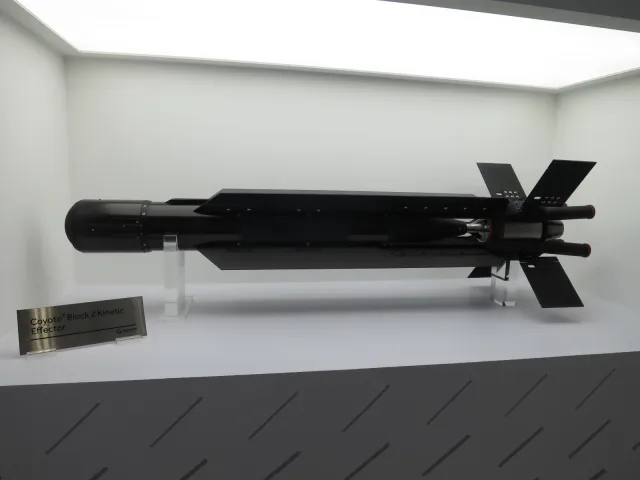
The award funds AeroVironment’s own family of counter-drone products stitched into a single defended architecture rather than one standalone weapon. On the detect-and-track side, the Titan MS sensor suite combines wideband radio-frequency sensing across 300 MHz to 6 GHz with X-band radar reaching roughly 60 kilometers and electro-optical/infrared cameras, giving operators multiple independent ways to spot an inbound drone before it reaches a defended perimeter. For soft-kill response, the Titan 4 is a mobile RF jammer rated above 550 watts with AI-assisted targeting, designed to sever a drone’s control link or GPS signal without a kinetic shot. Where jamming will not work, most notably against autonomous drones that do not depend on a live radio link, the architecture layers in hard-kill options: the LOCUST X3 laser, scalable from 20 to 35-plus kilowatts, a directed-energy approach conceptually similar to systems like Iron Beam, and the Freedom Eagle FE-1 kinetic interceptor, playing a role comparable to dedicated anti-drone interceptors such as Raytheon’s Coyote Block 2 or Roadrunner-M. Tying the whole stack together is AV_Halo, AeroVironment’s command-and-control software layer, functioning in the same connective role that platforms like Anduril’s Lattice occupy in other integrated defense architectures, fusing sensor data and coordinating which effector engages a given track.
The logic behind layering rather than betting on one system is straightforward once the failure modes of each individual layer are laid out. RF jamming is cheap and reusable but does nothing against a drone flying a pre-programmed autonomous route with no live radio link to jam. Lasers offer a near-unlimited magazine and low cost per engagement but are constrained by weather, atmospheric conditions and the need for a clear line of sight to the target. Kinetic interceptors work reliably against a wide range of threats but carry a real dollar cost per shot that does not scale well against a large swarm. No single layer is described by any source as sufficient on its own; the entire premise of the JIATF-401 architecture is that overlapping, redundant defeat mechanisms raise the cost and complexity for an attacker far more than any one system could alone.
What comes next
AeroVironment is headquartered in Roswell, Georgia, and the company’s existing counter-drone product lines give it a head start on rapid fielding under the IDIQ structure, but the full LOCUST laser system would still need State Department ITAR export approval before it could be offered to allied nations, a process that typically takes considerably longer than a domestic Army fielding timeline. For now the contract’s scope is explicitly domestic, aimed at U.S. installations rather than deployed units or partner militaries, which keeps this award distinct from the counter-drone equipment the Pentagon separately funds for Ukraine and other overseas partners.
Sources
- U.S. Army Awards AeroVironment $500M Contract for Layered Counter-Drone Defense Systems (Army Recognition, Jul 9, 2026)
- U.S. Army Awards AeroVironment a $500 Million Contract for Layered Counter-Drone Defense Systems (Overt Defense, Jul 9, 2026)
- Pentagon awards $500M contract to AeroVironment for counter-drone technology (DefenseScoop, Jul 2, 2026)
Systems mentioned
Every system named in this story, with its photo and, where available, a video. Tap a card to open the full spec sheet.
Compare these side by side →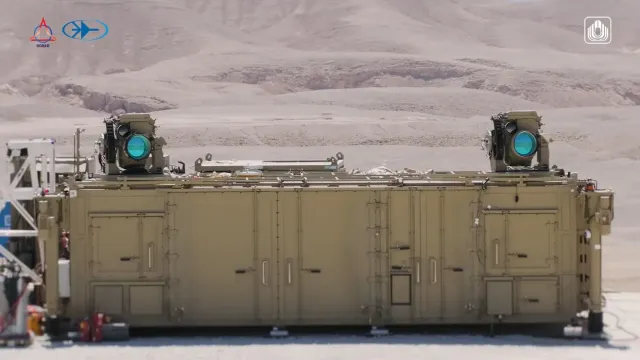
Air defense system
Coyote Block 2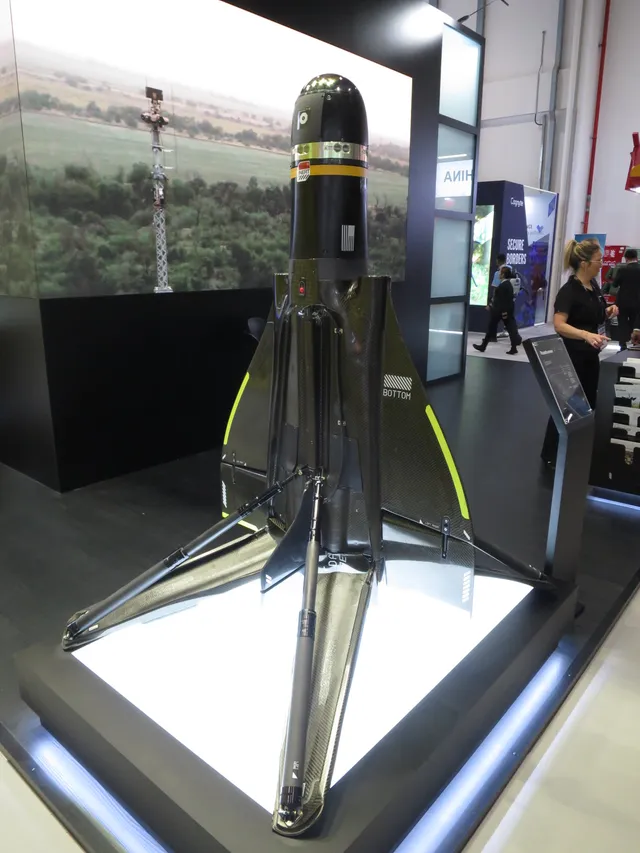
Air defense system
Roadrunner-M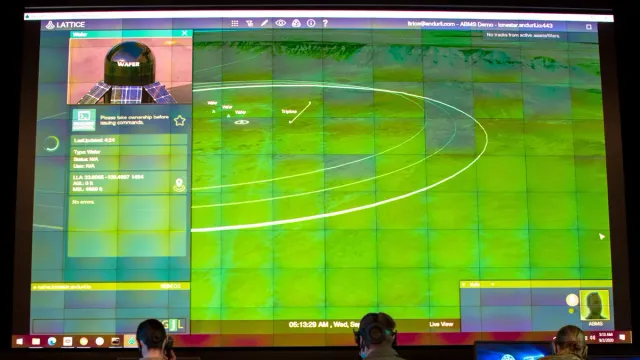
Frequently asked questions
What is JIATF-401? +
The Joint Integrated Air and Missile Defense Task Force, Domestic, is a U.S. Army-led body chartered in 2022 to counter drone threats to domestic installations, airports, ports and critical infrastructure after a string of small-drone incursions near military bases raised concern about gaps in homeland counter-UAS coverage.
Can these systems stop every drone? +
No single layer defeats every threat. RF jamming struggles against GPS-denied or fully autonomous drones that do not rely on a live radio link, laser weapons are limited by weather and require a clear line of sight, and kinetic interceptors carry a real cost per shot that limits how many can be fired against a swarm. Layering the defenses raises the cost and difficulty for an attacker rather than guaranteeing a 100 percent intercept rate.
What does 'layered' actually mean in this contract? +
It means combining a soft-kill RF jammer, a detection and tracking suite spanning radar, radio-frequency sensing and electro-optical/infrared cameras, hard-kill options in a laser and a kinetic interceptor, and a unifying command-and-control software layer, all covering the same defended area so that a drone defeating one layer still has to get past the next.
Will U.S. allies get access to these systems? +
The current $500 million IDIQ is a U.S. domestic contract under JIATF-401. Full export of the LOCUST laser component would require State Department ITAR approval, though partial capability could still be offered to allies through separate bilateral arrangements.
More news


