NATO's Ankara Summit: What Wasn't Signed
NATO's Ankara declaration pledged unity and 70 billion euros a year for Ukraine. Four other headline deals from the summit were never signed.

The White House, public domain, via Wikimedia Commons
NATO’s Ankara Summit Declaration is signed, public, and specific: €70 billion a year for Ukraine through 2027, a 5%-of-GDP defense-spending target by 2035. The summit’s other four biggest headlines are not written into anything. Turkey’s return to the F-35 program, Ukraine’s license to build Patriot interceptors domestically, a US trade threat against Spain, and a standoff over Greenland all happened in the same 48 hours, in the same city, on camera, and none of them is a signed agreement. That gap, between what the declaration formally commits to and what leaders actually said to each other in bilateral meetings and press conferences, is what this piece tracks: what was promised, what was threatened, and what remains just a claim until someone puts it in writing. This analysis reflects the state of play as of July 9, 2026, the summit’s close; for developments since, see WeaponSpecs’ news coverage of the summit’s Ukraine commitments.
What did NATO actually commit to on paper at Ankara?
The signed text is narrow and specific. The Ankara Summit Declaration commits members to roughly €70 billion a year in aid to Ukraine through 2026 and 2027, a two-year total near €140 billion, and a defense-spending target of 5% of GDP by 2035, split into 3.5% on core military spending and 1.5% on broader security-related investment. Europe and Canada together are tracking toward roughly 4% in 2026, according to NATO Secretary General Mark Rutte’s press conference following the summit. Those figures come directly from the Ankara Summit Declaration and Rutte’s own summit press conference, both published by NATO. WeaponSpecs has covered the spending pledges themselves at length; see the earlier coverage of the summit’s Ukraine-funding commitments and the site’s broader explainer on NATO’s founding and funding mechanics for how the 5% target compares to the alliance’s historical spending baseline. That’s the entire written record from Ankara. Everything below happened around it, not in it.

What did Trump and Erdogan agree to away from the podium?
In a July 7 bilateral meeting, Trump told Turkish President Recep Tayyip Erdogan, “We’re going to be taking the sanctions off,” referring to the CAATSA sanctions imposed on Turkey in 2020 after it bought Russia’s S-400 air-defense system in 2019 and was expelled from the F-35 partner program as a result. Sitting next to Erdogan, Trump also called the F-35 “a great plane, the best plane by far” and said a sale to Turkey is “certainly something we will consider,” adding that Turkey has been “much more loyal than other countries.” Erdogan said he believed the summit would produce a favorable F-35 decision and noted that Trump had “always kept his word.” Both quotes are reported by Al Jazeera and Al-Monitor.

None of that is a program readmission. US law requires a formal presidential determination that Turkey no longer possesses or operates the Russian S-400 before Turkey can return to F-35 sales, a determination that has not been made. Turkey’s S-400 batteries remain in its inventory today. “Consider” and “we’re going to be taking the sanctions off” are statements of intent from one meeting, not the legal instrument that actually reopens the program.
What did Trump actually promise Zelensky on Patriot missiles?
A day later, in a July 8 bilateral with Ukrainian President Volodymyr Zelensky, Trump made a different kind of pledge: “We’ll give them the right to make Patriots. We’ll show them how to do it,” offering Ukraine a license to manufacture Patriot interceptors domestically. Zelensky described the meeting as putting a “strong emphasis… on strengthening Ukraine’s air defense,” per NPR’s reporting.
The caveat here is the sharpest of the four tracks. This is a presidential statement, not a signed licensing, export-control, or production agreement, and Trump himself said that Lockheed Martin and RTX, the companies that actually build the Patriot system, had not yet been notified of the plan. WeaponSpecs’ dedicated coverage of the Patriot pledge reported that detail directly. Turning “we’ll give them the right” into an actual production line requires an ITAR-cleared licensing deal with Patriot’s manufacturers, a process that had not started as of the summit.
Which allies did Trump publicly single out, and why?
Two separate tracks ran through Ankara’s press conferences, and both were aimed at allies, not adversaries.
Spain. Standing beside Rutte, Trump said, “Spain is a terrible partner in NATO. They don’t participate. They don’t pay,” and added, “I don’t want anything to do with Spain. Cut off all trade with Spain.” Spain is the only NATO member that has not committed to the alliance’s 5%-of-GDP target; it spent about 2.1% of GDP on defense in 2025, up from 1.4% in 2021, per SIPRI figures cited by CNBC. Rutte pushed back gently in the same appearance: “You got Spain to pay 2%. They spent, they made a huge step in last year.”
Denmark and Greenland. Trump repeated that Greenland should be “controlled by the U.S.,” calling it “very important” for the United States “but it is not important for Denmark.” Danish Prime Minister Mette Frederiksen responded that Greenland is “of course, not for sale” and that Denmark is “ready to defend every inch of NATO including our own territory,” according to Fox News. Rutte partially validated Trump’s underlying concern without endorsing the ownership claim, saying Trump “absolutely has a point” on denying Russia and China access to the Arctic.
The summit’s bilateral tracks: said vs. signed
| Track | What was said in Ankara | Formalized in writing? | What actually has to happen next |
|---|---|---|---|
| Turkey / F-35 | Sanctions coming off; F-35 sale “something we will consider” | No | A formal US presidential determination that Turkey no longer operates the S-400 |
| Ukraine / Patriot | ”We’ll give them the right to make Patriots” | No | A licensing and ITAR-cleared production agreement with Lockheed Martin/RTX, who were not yet informed |
| Spain / trade | ”Cut off all trade with Spain” | No | Whether the threat becomes an actual executive trade action, or is pressure ahead of Spain’s own spending decision |
| Denmark / Greenland | Greenland “should be controlled by the U.S.” | No (Frederiksen refused) | Whether Washington pursues this outside NATO channels at all, given Denmark’s public refusal |
How did the Iran war change the room?
Hours before the leaders’ main session, Trump declared the Iran ceasefire “over,” called further negotiations “a waste of time,” and defended fresh US strikes on more than 80 Iranian targets. Rutte called the strikes “absolutely necessary,” describing what he characterized as an Iranian ceasefire violation, and said allies would discuss freedom of navigation in the Strait of Hormuz. That timeline is documented in Al Jazeera’s summit takeaways. A summit built around Ukraine funding and the 5% spending target spent a real share of its public airtime on the Middle East instead, before the leaders’ session had even started.
What did the stagecraft signal that the communique didn’t?
Turkey used the full weight of host-nation ceremony at Ankara. President Erdogan and First Lady Emine Erdogan personally greeted each visiting leader on the steps of the presidential complex ahead of a formal state dinner, and NATO’s traditional “family photo” included all 32 leaders plus Zelensky and South Korean President Lee Jae-myung as guests, per TRT World’s coverage of the reception. That ceremony played out at the exact moment Turkey’s own path back into the F-35 program, the direct result of its 2019 S-400 purchase, was the unresolved subject of a separate bilateral conversation happening in the same building. The declaration projected alliance unity. The four tracks documented above show how much of that unity was stagecraft layered over negotiations that stayed open.

Defense spending vs. NATO’s 5% target
Spain, the member Trump singled out by name at Ankara, is not an outlier by much: the entire European and Canadian average still sits roughly a full point below the 2035 target it just signed onto.
Spain’s 2.1% (2025) and the roughly 4% Europe/Canada average for 2026 are both well short of the signed 5%-by-2035 target, per NATO’s own declaration and Rutte’s press conference cited above. Spain is the outlier: the only member that hasn’t committed to the target at all.
The verdict
Four of Ankara’s biggest headlines are pledges, not paper. Watch for the actual mechanisms that would turn each one real: a formal US presidential determination on Turkey’s S-400 status, a real licensing agreement between Ukraine and Lockheed Martin or RTX rather than a presidential statement, whether the Spain trade threat becomes an executive action or fades as leverage, and whether Greenland talk moves past rhetoric given Denmark’s public refusal. Until then, the signed declaration is the only part of Ankara that’s actually binding. If Turkey’s F-35 status does move, compare the F-35A against the aircraft Turkey has publicly floated as its alternative to see what’s actually on the table, or browse the full compare tool for the rest of the field.
Sources
- The Ankara Summit Declaration
- Press conference by NATO Secretary General Mark Rutte following the 2026 NATO Summit in Ankara
- Five key takeaways from the NATO summit in Ankara
- Trump says will lift sanctions on Turkiye, 'consider' selling F-35s
- Trump says he doesn't want anything to do with Spain: 'Cut off all trade'
- Mette Frederiksen says Greenland not for sale as Trump pushes control
- Trump wraps NATO summit on a positive note, after meeting Zelenskyy
- Trump says US will lift CAATSA sanctions on Turkey, consider F-35 sale
- Erdogan hosts NATO leaders at Ankara summit reception, dinner
Systems in this comparison
Every system covered above, with its photo and, where available, a video. Tap a card to open the full spec sheet.
Compare these side by side →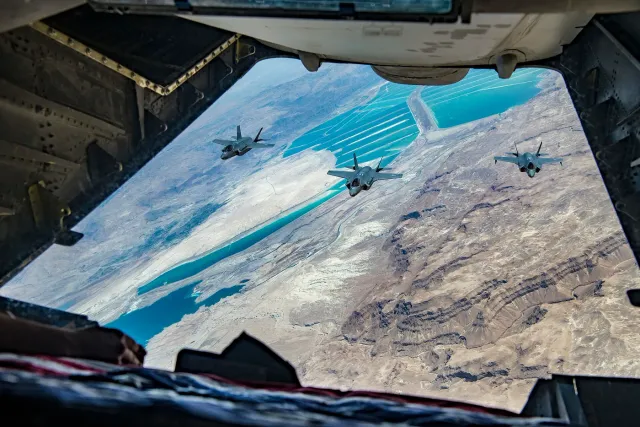
Fighter aircraft
F-35A Lightning II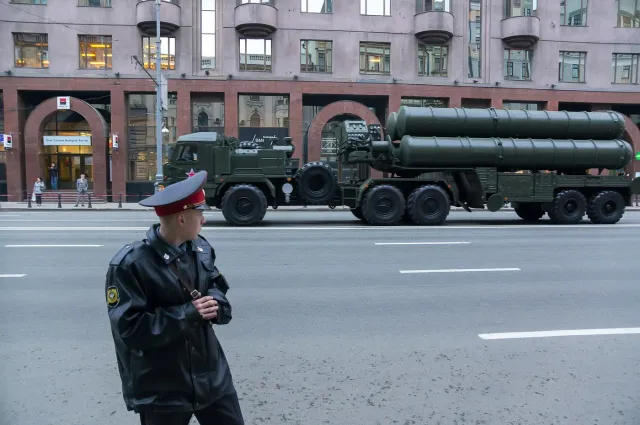
Air defense system
S-400 Triumf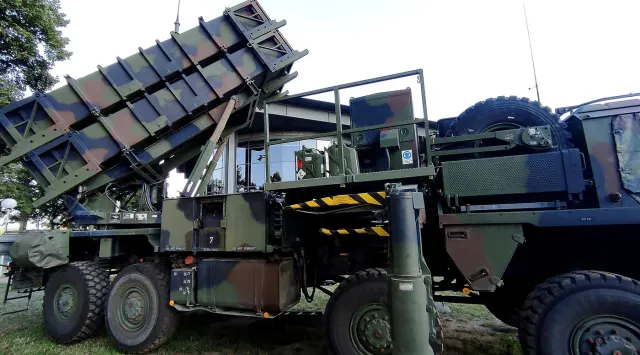
Air defense system
Patriot PAC-3Frequently asked questions
Did NATO agree to sell F-35s to Turkey at the Ankara summit? +
No signed agreement exists. Trump said the US would lift CAATSA sanctions and called an F-35 sale 'something we will consider,' but any return to the program legally requires a formal US presidential determination that Turkey no longer possesses or operates the Russian S-400, which had not happened as of the summit.
Did Ukraine get a formal license to build Patriot missiles? +
No. Trump told Zelensky the US would give Ukraine the right to manufacture Patriots, but by his own account Lockheed Martin and RTX, the system's actual manufacturers, had not yet been informed. It is a presidential pledge, not a signed licensing or export-control agreement.
Why did Trump threaten to cut off trade with Spain? +
Spain is the only NATO member not committed to the alliance's new 5%-of-GDP defense-spending target; it spent about 2.1% of GDP on defense in 2025. Trump called Spain a 'terrible partner' and said he wanted to 'cut off all trade' with the country at an Ankara press conference.
What did Trump say about Greenland, and how did Denmark respond? +
Trump repeated that the US should control Greenland, calling it important for the US 'but not important for Denmark.' Danish PM Mette Frederiksen said Greenland is 'of course, not for sale' and that Denmark would defend 'every inch' of its territory. NATO chief Mark Rutte said Trump 'has a point' about denying Russia and China Arctic access, without endorsing US ownership.
Did the Iran war overshadow the Ankara summit? +
Partly. Hours before the leaders' main session, Trump declared the Iran ceasefire 'over' and defended fresh US strikes on more than 80 Iranian targets. NATO Secretary General Rutte called the strikes 'absolutely necessary,' pulling public attention toward the Middle East alongside the summit's Ukraine and spending agenda.
Related reading


