Saudi Arabia, Jordan, Israel All Down Drones in One Morning
Saudi Arabia intercepted drones from Iraq, and Jordan and Israel separately downed UAVs near their border, in one morning of regional drone spillover.

U.S. Army photo by Pfc. Gabriella Bruce-Larkin, DVIDS, public domain
Saudi Arabia said its air defenses intercepted and destroyed drones launched from Iraqi territory on Monday, July 27, the same morning Jordan’s military shot down two drones targeting the kingdom and Israel’s air force intercepted two more UAVs near the Israel-Jordan border. None of the three incidents is confirmed to be part of a single coordinated attack, but together they mark the broadest single-morning spread of drone activity across the region since the wider Iran war resumed this month, arriving even as Red Sea shipping traffic sank to its lowest level in months.
What Saudi Arabia says happened
Saudi Arabia’s Ministry of Defense said air defenses intercepted and destroyed a number of drones during the past hours that had targeted petroleum facilities in the kingdom’s Eastern Region and in the capital, Riyadh. Spokesman Maj. Gen. Turki al-Maliki said the attempts were launched from Iraqi territory and carried out by Iranian-backed militias, and the ministry affirmed Saudi Arabia’s right to respond “at the appropriate time and place.”
“Terrorist attempts were launched from Iraqi territory and carried out by Iranian-backed terrorist militias,” Saudi Arabia’s Ministry of Defense said in a statement (France 24, July 27, 2026).
Riyadh also demanded that Iraq “take all necessary measures to ensure the prevention of the use of its territory as a launching point” for further attacks, a request delivered through an official Saudi broadcaster. Pro-Iran armed groups based in Iraq had not claimed any attacks in the country since the current round of US-Iran hostilities resumed earlier this month, after an April ceasefire broke down, though Gulf states accused Iraq-based militias of similar attacks during earlier phases of the fighting. The Iran-backed-militia attribution is a Saudi government characterization; it has not been independently verified.
Separately on the same day, Yemen’s Houthi movement, which is aligned with Iran but is not a state actor, said it had launched its own drone strikes on Saudi oil-transport infrastructure, describing the operation as retaliation for what it called Saudi drone incursions into Yemeni airspace. The group also announced a naval blockade on Saudi ports. Riyadh had not responded to those specific claims at the time of writing, so the Houthi-stated targets and any resulting damage remain unconfirmed. This is a distinct claim from, and should not be confused with, the Houthi strikes on Aramco’s Jizan and Yanbu sites two days earlier, on July 25, which WeaponSpecs covered separately, including a Greek-operated Patriot battery’s intercept of two ballistic missiles at Yanbu.
Riyadh’s air defenses lean heavily on US-supplied hardware, including Patriot PAC-3 and older PAC-2 GEM-T batteries, and the US Army has also stationed THAAD batteries in the kingdom since 2019 as part of the broader American force posture defending Gulf energy infrastructure. Exactly how many THAAD batteries remain in Saudi Arabia today is not independently confirmed in current reporting, so no specific count is repeated here.
Jordan and Israel intercept drones near their shared border
Jordan’s military said its air force shot down two drones targeting the kingdom on the same Monday morning, with no casualties or material damage, according to a military source who spoke through the state-run Petra news agency. No group claimed responsibility. Jordan has repeatedly intercepted projectiles crossing its airspace during the broader war, given its position between Iraq, Israel, and the wider conflict zone.
Israel’s military reported a parallel but separate incident: the Israel Defense Forces intercepted two unmanned aerial vehicles identified near the Jordan border the same morning. The IDF said the drones did not cross into Israeli territory and that no air-raid sirens were activated, in keeping with standard protocol for interceptions that occur outside Israeli airspace. The IDF said the origin of the launch was still under review as of its statement.
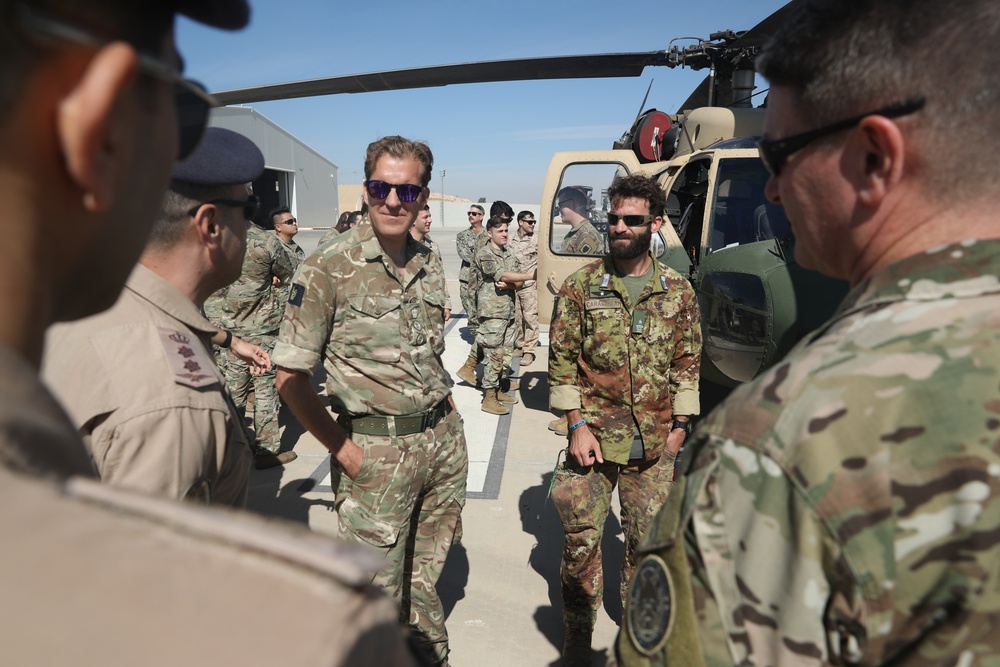
Neither Jordan nor Israel has attributed those drones to a specific origin, and no group has claimed the launches. That leaves the Jordan and Israel intercepts a real but separately unconfirmed thread from the Saudi attack, even though all three happened within hours of each other.
A fragile lull, and a Red Sea chokepoint under strain
All of this unfolds during a pause, not a ceasefire, in the direct US-Iran war: the two sides have not exchanged fire since Saturday, July 25, after 13 days of strikes and counterstrikes (WeaponSpecs covered that pause separately). Monday’s drone activity shows that pause has not stopped the conflict’s effects from reaching Saudi Arabia, Jordan, and Israel, even without new direct US-Iran fire. France 24 described the Saudi-Houthi flare-up specifically as the first time in years the two sides have traded blows, a development that threatens a 2022 truce in their earlier war that had otherwise held despite formally expiring.
The clearest economic signal of the strain is shipping data. Just 11 commodity vessels crossed the Bab el-Mandeb strait, the Red Sea’s southern chokepoint near Yemen, on Sunday, July 26, the lowest level in months, according to shipping-intelligence firm Kpler cited in Japan Times/Reuters reporting. Seven of those eleven vessels were oil tankers, including two very large crude carriers bound for the Saudi port of Yanbu. Transit through the Strait of Hormuz, the far larger oil artery between Iran and Oman, also stayed thin over the same weekend, with fewer than ten commodity vessels a day passing through even as the direct US-Iran fighting paused. Two chokepoints handling a large share of the world’s seaborne oil trade are both running well below normal traffic at the same time, a compounding effect that a pause in only one front of the conflict has not been enough to reverse.
Sources
- Saudi Arabia says it intercepted drones from Iraq as Houthis target oil sites — France 24, Jul 27, 2026
- Saudi Forces Intercept Drones Coming From Iraq: Defense Ministry — The Defense Post, Jul 27, 2026
- Saudi intercepts drones targeting oil facilities in Riyadh, Eastern Region — The Peninsula Qatar, Jul 27, 2026
- Jordan says it shot down 2 drones targeting its territory — Anadolu Agency, Jul 27, 2026
- IDF intercepts two drones near Israel-Jordan border — JNS, Jul 27, 2026
- Red Sea shipping slows after Houthi attack on Saudi Arabia, data shows — The Japan Times (Reuters), Jul 27, 2026
Systems mentioned
Every system named in this story, with its photo and, where available, a video. Tap a card to open the full spec sheet.
Compare these side by side →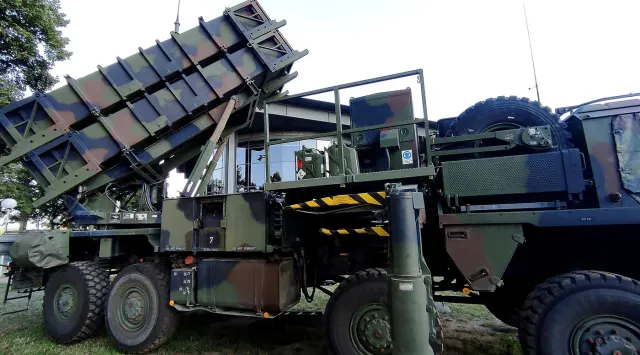
Air defense system
Patriot PAC-3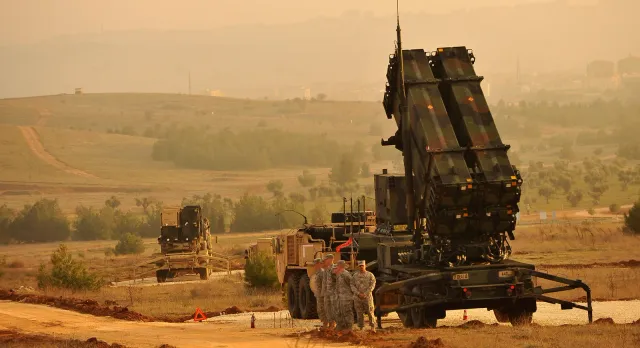
Air defense system
Patriot GEM-T Air defense system
Patriot PAC-2
Frequently asked questions
Who does Saudi Arabia blame for the July 27 drone attack? +
Saudi Arabia's Ministry of Defense, through spokesman Maj. Gen. Turki al-Maliki, says the drones targeting petroleum facilities in the Eastern Region and Riyadh were launched from Iraqi territory by Iranian-backed militias. That is a Saudi government characterization, not an independently confirmed finding, and Riyadh has demanded Baghdad prevent its territory being used as a launch point.
Are the Jordan and Israel drone intercepts connected to the Saudi attack? +
Not confirmed as the same campaign. Jordan's military shot down two drones targeting the kingdom the same Monday morning, and Israel's air force separately intercepted two UAVs near the Israel-Jordan border that did not cross into Israeli territory. Both militaries say the origin of those specific drones is still under review, and no group has claimed responsibility for them.
Did the Houthi drone strikes on Saudi Arabia actually hit anything? +
Yemen's Houthi movement, an Iran-aligned armed group, said it launched drone strikes on Saudi oil-transport infrastructure on July 27 in response to what it called Saudi drone incursions into Yemeni airspace, and separately announced a naval blockade on Saudi ports. Riyadh had not commented on those specific claims at the time of writing, so the claimed targets and damage are unconfirmed.
What is happening to Red Sea shipping as a result? +
Traffic through the Bab el-Mandeb strait fell to just 11 commodity vessels on July 26, the lowest level in months, according to shipping-data firm Kpler. Transit through the Strait of Hormuz also stayed thin over the same weekend, compounding an already-reduced flow of tanker traffic through both of the region's key oil chokepoints.
More news


