Iran Strikes Jordan Base, US Ends Pause With Heavy Strike Wave
IRGC ballistic missiles hit a US-linked Jordanian air base; Jordan says all five were intercepted. The US answered with a two-hour strike wave on Iran.

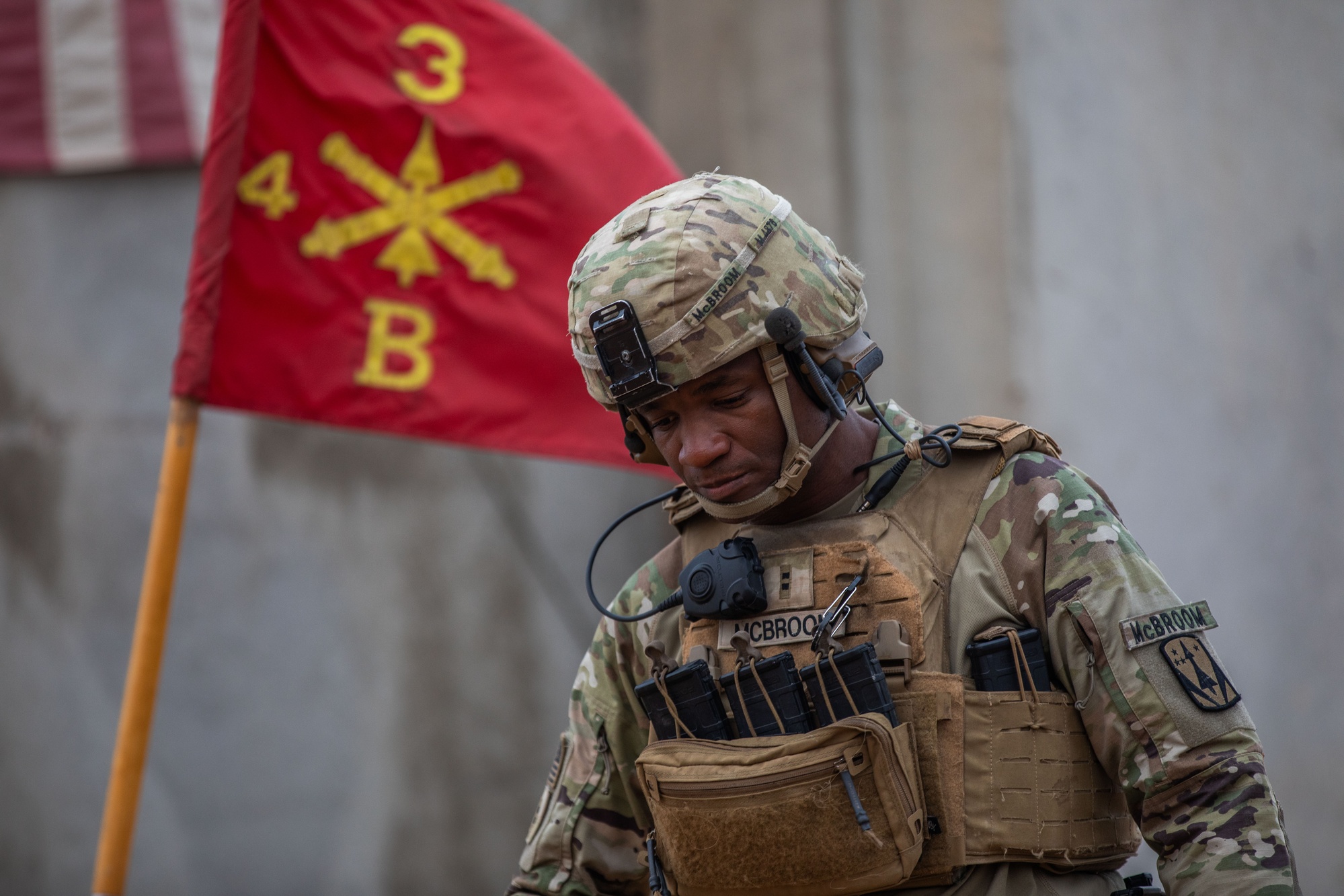
U.S. Army National Guard photo by Staff Sgt. Sebastian Rothwyn, 369th Sustainment Brigade, DVIDS, public domain
Iran’s Revolutionary Guard fired ballistic missiles at Muwaffaq Salti Air Base in Jordan on July 29, the second Iranian strike on that same facility in two weeks, and the United States answered hours later with a roughly two-hour “heavy wave” of strikes against dozens of targets inside Iran, ending a five-day pause both sides had used to pursue negotiations.
A second strike on the same base
Around 1:45 p.m. Gulf time on July 29, Iran’s Islamic Revolutionary Guard Corps launched ballistic missiles at Muwaffaq Salti Air Base near Azraq, Jordan, a facility that hosts US forces and aircraft. It is the same base where an Iranian strike killed two US service members and left one missing on July 17, an incident that marked the war’s first American combat deaths since its opening weeks in late February. This time, both Jordan’s military and US Central Command say the outcome was different: no missiles got through. Jordan’s army spokesperson said five missiles were “detected, intercepted, and shot down,” and CENTCOM said all ballistic missiles aimed at the US-linked base were “successfully intercepted and destroyed.”
Dueling claims about the intercept
Not every account agrees with that clean-intercept picture. IRGC Brig. Gen. Hossein Mohebbi asserted that Iran had destroyed six Patriot radar units between July 8 and July 22.
“Patriot systems have been weakened to such an extent that Iranian missiles and drones are reaching their targets without being intercepted,” said IRGC Brig. Gen. Hossein Mohebbi, a claim made via Iranian state media and directly contradicted by Jordan’s official statement that all five missiles fired at Muwaffaq Salti on July 29 were intercepted.
That claim, carried by Iran’s Tasnim News Agency, is an Iranian government assertion, not an independently verified fact, and it sits in direct tension with Jordan’s own account of a clean intercept just days after the claim was made. Lower-tier open-source claims of impact damage from the July 29 strike also circulated, but they were not used here because they conflict with the official CENTCOM and Jordanian statements and could not be independently confirmed.
The US answers: a two-hour wave
At around 8 p.m. ET the same day, CENTCOM ran a roughly two-hour campaign of strikes against dozens of IRGC-linked targets across Iran, including military command centers, missile and drone facilities, coastal surveillance and defense sites, and maritime capabilities. It was described in US and wire coverage as a “heavy wave,” language that reflects the scale of the response relative to the smaller, more targeted strikes that had characterized the war in recent weeks. Iranian state media reported hits in several Khuzestan Province cities, including Abadan, Shadegan, Arvandkenar and Ahvaz, and on Qeshm Island. Those specific locations come from Iranian government reporting and have not been corroborated by CENTCOM’s own target list, so they are noted here as Tehran’s account of where it was hit, not a confirmed US target list.
Why the intercept dispute matters beyond this one strike
The Patriot stockpile question has been a running theme of this war well before this week’s exchange. WeaponSpecs’ own July 30 coverage of a record $58.6 billion multiyear PAC-3 procurement plan noted that the Army converted an April 2026 stopgap into the largest Patriot deal in the program’s history explicitly against a backdrop of reported US Patriot stockpiles under 1,000 interceptors after the broader Iran war and continued support to Ukraine. An Iranian claim of degraded Patriot performance, even one this site cannot verify, lands directly on that storyline: whether US and allied missile-defense stocks can keep pace with a war that keeps producing fresh rounds of strikes and counterstrikes rather than settling into a lasting pause. This is also the second time in about two weeks that a Jordanian base tied to US forces has drawn direct Iranian fire, following the July 17 strike that killed two US service members, a pattern worth watching for whether Jordan becomes a more regular target of this conflict rather than an occasional one. This war, tracked on WeaponSpecs’ Iran-US conflict page, had briefly quieted during the five-day pause; this exchange ends that quiet.
Sources
- Iran attacks US bases in Middle East as Trump meets Netanyahu — Al Jazeera, Jul 29, 2026
- US Military Completes 'Heavy Wave' of Retaliatory Strikes on Iran — The Defense Post, Jul 30, 2026
- US launches 'heavy wave' of strikes on Iran after pause in attacks — The Irish Times, Jul 30, 2026
- U.S. pauses attacks on Iran for a second straight day and Tehran does too — NPR, Jul 26, 2026
- 2026 Iranian strikes on Jordan — Wikipedia
Systems mentioned
Every system named in this story, with its photo and, where available, a video. Tap a card to open the full spec sheet.
Compare these side by side →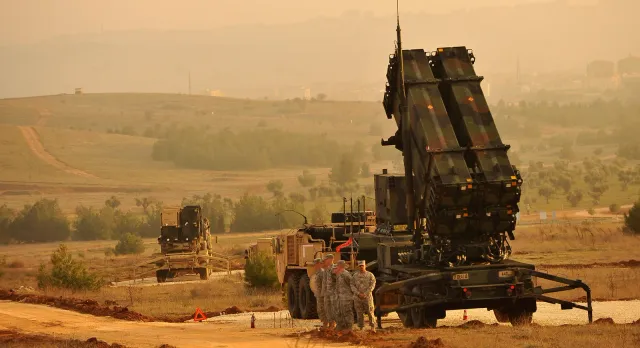
Air defense system
Patriot PAC-2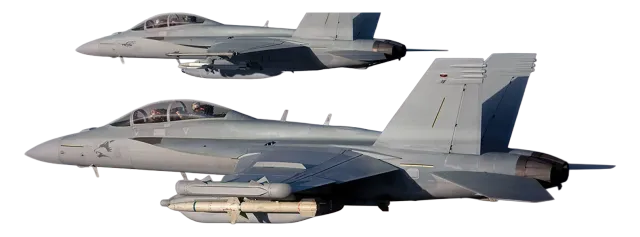
Fighter aircraft
F/A-18E/F Super HornetFrequently asked questions
What happened at Jordan's Muwaffaq Salti Air Base on July 29? +
Iran's IRGC fired ballistic missiles at the base; Jordan's military says all five were intercepted and destroyed, and US Central Command confirmed the same for missiles aimed at the US-linked facility.
Did the missiles actually hit anything? +
Official Jordanian and US accounts report no damage or casualties. Iranian officials have claimed otherwise, but that is an unverified state claim, and no independently confirmed evidence of impact was found for this story.
What did the US do in response? +
US Central Command ran a roughly two-hour 'heavy wave' of strikes against dozens of IRGC military, missile, drone and maritime-related targets across Iran late on July 29, ending a five-day pause in the conflict.
Is this a new war, or the same one from earlier this year? +
It is the same war, active since President Trump's order in late February 2026. This is the conflict's first strike-and-counterstrike cycle since a five-day pause both sides had used to pursue negotiations.
More news


