US, Iran Both Pause Attacks as Hormuz Transit Deal Is Weighed
Washington and Tehran held fire for a second straight day July 26 after a two-week escalation, as talks center on Iran managing Hormuz ship transit.

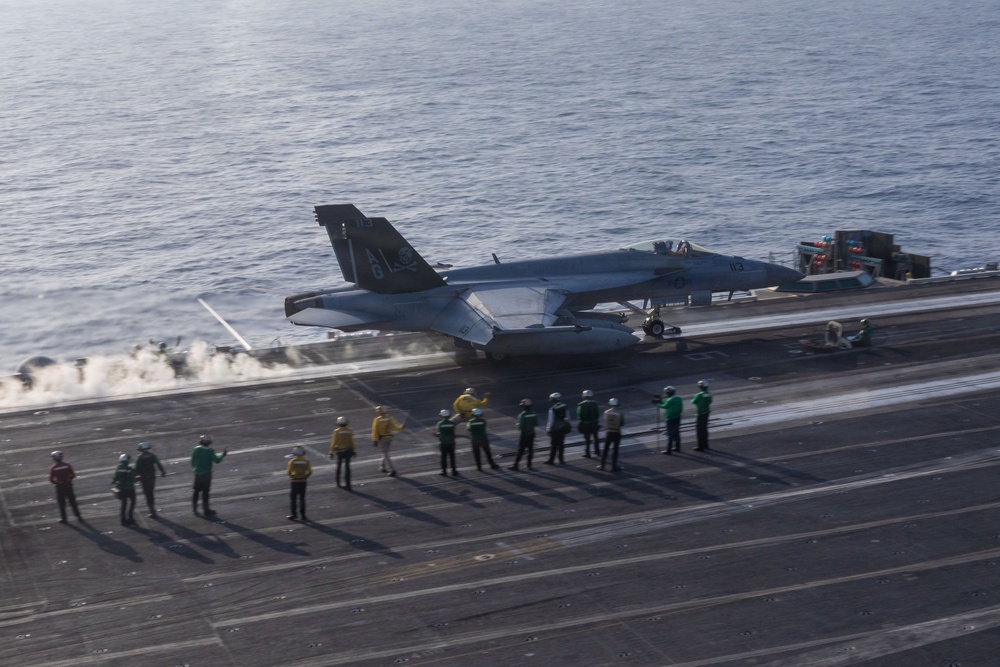
U.S. Navy photo by Mass Communication Specialist 1st Class Indra Beaufort, DVIDS, public domain
The United States and Iran each held fire for a second consecutive day on Sunday, July 26, after a roughly two-week exchange triggered by Iranian attacks on ships transiting the Strait of Hormuz. Neither side has declared a new ceasefire. Both are instead described by officials on both sides as pausing while Oman-mediated negotiators work toward a narrower fix: letting Iran itself manage commercial vessel transit through the strait with fewer restrictions, in place of the tighter controls Tehran had been enforcing when the escalation began.
What the two-week escalation actually looked like
The immediate cause of the flare-up was Iran firing at commercial vessels attempting to transit the Strait of Hormuz, the narrow waterway between Iran and Oman through which a large share of the world’s seaborne oil trade passes. The US Navy responded over the following two weeks by redirecting roughly a dozen commercial ships away from the strait, disabling two vessels, and boarding two others, according to reporting reviewed for this piece. That response, not a single dramatic strike, was what turned a maritime harassment campaign into a sustained standoff between two militaries that were already operating under the shadow of a fragile ceasefire.
The Pentagon has not explained why it chose to pause after that response, and Iran’s own explanation has been limited to saying, through its Foreign Ministry, that Oman-mediated talks are making progress, a state claim from Tehran that is not independently verified. What is verifiable is the pattern: no new attacks confirmed by either side in the 48 hours before this piece was reported, and commercial shipping traffic through Hormuz sitting at its lowest level in three weeks as owners and insurers wait to see whether the lull holds.
The Hormuz transit compromise on the table
The specific fix under negotiation is narrower than a full ceasefire renewal. Rather than reopening the broader question of whether Iran and the United States can avoid further military exchanges indefinitely, mediators are focused on a more mechanical arrangement: Iran managing and running the process by which commercial vessels transit the strait, with fewer restrictions imposed on individual ships than Tehran had been enforcing during the escalation. The logic is that if Iran controls the choke point’s traffic-management function directly, rather than contesting it through intermittent attacks, shipping can resume at something closer to normal volume while Tehran retains a degree of face-saving authority over its own coastal waters.
US Ambassador to the UN Mike Waltz described the diplomatic track as active at multiple levels, without characterizing it as close to resolution.
“We’ve had both Oman and Iran, and a number of our other negotiators, engaged at every level, from the most senior levels all the way down to the technical level over the past few weeks, and particularly in the past few days,” said Mike Waltz, US Ambassador to the United Nations (CP24, July 26, 2026).
Waltz also framed the pause itself as a deliberate choice by President Trump to create space for that diplomacy. “He’s giving talks some space. He’s giving it a little bit of room,” Waltz said, per the same report. Iran’s side of the negotiating message came through a paraphrased account of Foreign Ministry spokesperson Esmail Baghaei, who said talks with Oman had made progress and continued, and that the status of the strait “remained unchanged.” That characterization is a state claim from an Iranian government spokesperson and has not been independently verified.
The broader war this pause sits inside
This Hormuz episode is the most serious flare-up since a US-Iran ceasefire took effect in April 2026, but it did not start the underlying conflict. The current war traces to strikes in February 2026 that killed senior Iranian leadership, including Supreme Leader Ali Khamenei, an event that reordered Iran’s chain of command and set off months of intermittent exchanges before a two-week ceasefire was agreed on April 8, 2026, and then extended indefinitely by President Trump on April 21. That ceasefire has been violated repeatedly since, with the Hormuz shipping attacks marking its most serious test to date.
The casualty figures that appear in broader coverage of the war, at least three US service members killed at a base in Jordan and one at a base in Iraq, stem from Iranian counterattacks on regional bases hosting US forces earlier in this conflict, not from the July 25-26 pause period specifically. No new deaths tied to this particular Hormuz escalation have been independently confirmed as of this writing, and readers should not infer that the broader war’s casualty toll grew during the two days covered here.
Israeli Prime Minister Benjamin Netanyahu, who is scheduled to visit Washington July 28-29, 2026, publicly endorsed the pause-and-negotiate approach while warning against complacency.
“If he can do so without returning to intense military fighting, that’s fine. Why not?” said Israeli Prime Minister Benjamin Netanyahu, on backing President Trump’s approach, adding that a further Iranian attack “will make a terrible mistake” (CP24, July 26, 2026).
Sources
- U.S. pauses attacks on Iran for a second straight day and Tehran does too — NPR, Jul 26, 2026
- U.S. and Iran pause their attacks after days of escalation — CP24 (CTV News wire), Jul 26, 2026
- The U.S. and Iran pause attacks on each other for a second straight day while Tehran continues talks with Oman over Hormuz — Fortune, Jul 26, 2026
Systems mentioned
Every system named in this story, with its photo and, where available, a video. Tap a card to open the full spec sheet.
Compare these side by side →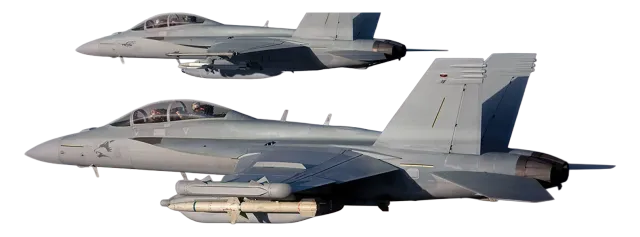
Fighter aircraft
F/A-18E/F Super Hornet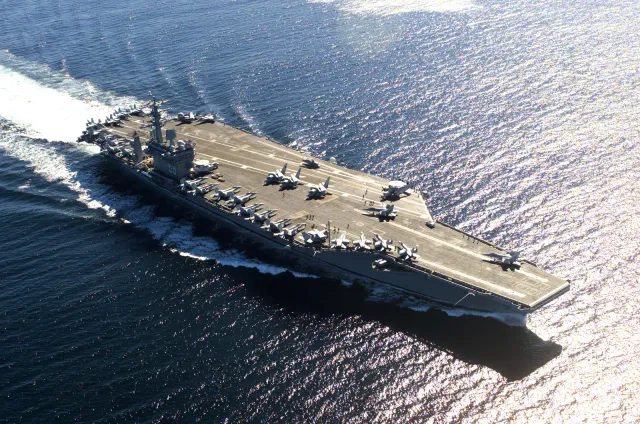
Warship
Nimitz-class Aircraft CarrierFrequently asked questions
What triggered this round of escalation? +
Iran firing at commercial ships transiting the Strait of Hormuz, which prompted a roughly two-week US naval response that redirected a dozen commercial vessels, disabled two, and boarded two.
Is this a ceasefire or just a pause? +
A pause, not a new formal ceasefire. Both sides say they held fire for two consecutive days, July 25 and 26, while Oman-mediated negotiators work to revive the broader interim ceasefire framework that has been in place since April 2026.
What is being negotiated to prevent this from happening again? +
A compromise under which Iran itself would manage commercial vessel transit through the Strait of Hormuz with fewer restrictions on ships, rather than the tighter controls Iran had been enforcing before the escalation.
How many people have been killed in this specific escalation? +
No deaths specific to the July 25-26 pause period have been independently confirmed. The service-member deaths cited in coverage of the broader war, at least three at a base in Jordan and one in Iraq, occurred earlier in the wider 2026 Iran war and are not new casualties from this particular Hormuz episode.
More news


