Fighter Jet Operator Counts: Newer Means Fewer
1970s-era weapons in the WeaponSpecs database average 14 operating countries; 2020s designs average 1.7. Age explains most of the gap, not capability.

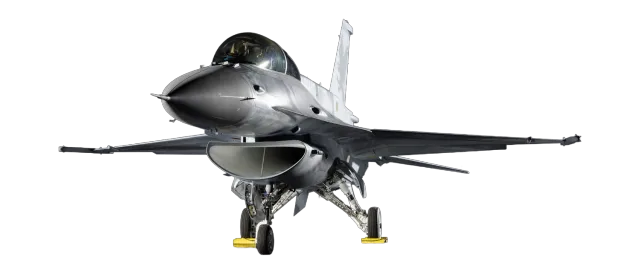
Lockheed Martin, official product image, background removed
The MiG-29 has 25 operating countries after 44 years in service. The J-20 has 1 after 9 years. That gap looks like a verdict on capability, but it mostly is not. Across 675 systems in the WeaponSpecs database that publish both a release year and an operator count, the average number of countries fielding a 1970s-era design is 14.0. For a 2020s-era design, it’s 1.7. The decline is monotonic across six decades, and it tracks age far more tightly than it tracks anything about how good a weapon is.
How Much Does Age Alone Explain Operator Count?
Bucket every system in the database by the decade of its releaseYear and average commercial.operators within each bucket, and the pattern is about as clean as procurement data gets:
| Decade | Systems (n) | Mean operators | Median operators |
|---|---|---|---|
| 1970s | 47 | 14.0 | 10 |
| 1980s | 70 | 11.9 | 5 |
| 1990s | 87 | 9.2 | 5 |
| 2000s | 135 | 6.5 | 4 |
| 2010s | 201 | 4.0 | 2 |
| 2020s | 110 | 1.7 | 1 |
Mean operator count falls by roughly a third each decade going forward, and the median falls in lockstep, so this isn't one outlier system dragging the average.
Two things make this more than a coincidence of sample selection. First, the sample sizes are solid across every bucket, from 47 systems in the 1970s to 201 in the 2010s, so this isn’t a handful of outliers driving the trend. Second, the mean and median move together at every step. If one freak platform (a Cold War rifle sold to half the planet, say) were inflating a bucket’s average, the median would lag behind it. It doesn’t. Across all 675 systems, the Pearson correlation between a system’s age in 2026 and its operator count is r = 0.506, a moderate positive relationship that confirms what the decade table already shows.
Note what’s deliberately left off that chart: systems from the 1930s through 1960s. Those decades have too few database entries (1 to 11 per bucket) to average meaningfully, and the 1940s bucket in particular is dominated by a single AK-47-type design credited with 106 operators on its own. Folding that era into a bar chart would let one Cold-War-and-earlier outlier swamp the real signal sitting in the 1970s-2020s range, so it stays in prose only: yes, operator counts run even higher the further back you go, but the mechanism is the same one driving the chart above, decades of accumulated adoption time.
Which Fighters Break the Pattern, and Why?
The age curve predicts most of the picture, but three fighters expose exactly where it stops applying.
The F-22A Raptor, released in 2,005 and 21 years in service, has 1 operator. On the age curve alone it should look more like a MiG-29 or F-16 by now, older platforms with decades to accumulate foreign buyers. It doesn’t, because it legally cannot. Congress has barred the F-22 from export since 1998 through what’s known as the Obey Amendment, a rider renewed in every Defense Department appropriations act since.
“Congress has prohibited the use of appropriated funds to approve or license the sale of the F-22 to any foreign government,” noted Christopher Bolkcom, then a Congressional Research Service specialist in national defense, in a 2007 CRS report on the aircraft’s export restrictions (EveryCRSReport.com).
That’s not a market outcome. It’s a standing legal wall that no amount of elapsed time will move. The F-22 is the clearest case in the database of a low operator count that age stops explaining, and it has stopped explaining it for close to two decades now.
The J-20, released in 2,017, 9 years in service, also sits at 1 operator, China alone. Unlike the F-22, there is no confirmed formal export ban on the record, Beijing has never announced one. But foreign-policy reporting treats a J-20 export version as unlikely for the foreseeable future, per Foreign Policy’s analysis of China’s fighter-export struggles, a claim worth reading as informed reporting on Chinese intent, not a confirmed Beijing policy statement. Nine years is still well inside the window where age alone plausibly explains a single-operator count, so the J-20 currently reads more like “too young to judge” than “permanently blocked,” with the caveat that the ambiguity itself is doing real work here.
The F-16C Block 52 and MiG-29 anchor the other end. The F-16 (released 1991, 35 years old) and MiG-29 (released 1982, 44 years old) each carry 25 operators, exactly the kind of double-digit-plus total the age curve predicts for a Cold War-era design that had decades to accumulate foreign sales, sanctions permitting, on both the Western and Soviet-aligned sides of the ledger.
The F-35A Lightning II is the counter-counter-example. Released in 2,016, just 10 years in service, it already has 20 operators, nearly matching the MiG-29 and F-16 totals in roughly a third of the time either needed. That’s not luck, it’s design. The F-35 was structured from the outset as a multinational partner program, with financing and industrial work-share for partner nations negotiated before first flight rather than sold country by country afterward. It front-loaded decades of organic sales-cycle time into the program’s founding structure, which is why it’s the one fighter in this dataset that clearly beats its own age curve.
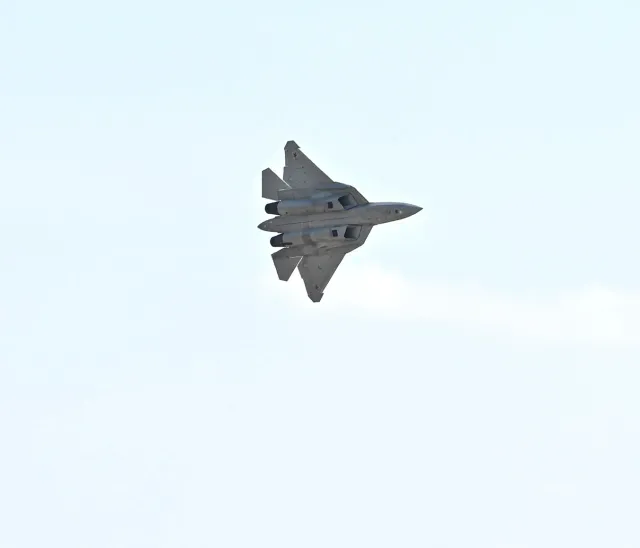
The Su-57 sits closer to the J-20’s story than the F-22’s. Released in 2,020, 6 years old, with 1 operator, it is reportedly struggling to close foreign sales, per Eurasian Times’ reporting on Russia’s stealth-fighter export difficulties. Any Russian state or manufacturer claim of pending export deals should be treated as an unverified claim, not a confirmed sale, until a buyer and contract are independently reported.
What a Low Operator Count Actually Tells a Buyer
The practical read for an analyst, journalist, or procurement-adjacent reader watching a brand-new platform, the KF-21 Boramae (2,026, 2 operators, still entering service), the J-20, the Su-57, or any future NGAD/F-47-class aircraft with a handful of operators or fewer: don’t read 0-2 operators as “nobody wants it.” The data shows that even wildly successful Cold War jets took decades to reach double-digit operator counts, and the median 2020s-era system in the whole WeaponSpecs database sits at exactly 1 operator. A young platform with a low count is on schedule, not failing.
The signal worth watching for is different: a low operator count that persists well past a platform’s first 15-20 years. At that point, age has run out as an excuse, and what’s left is either a genuine market or performance problem, or a policy choice, an export ban like the F-22’s, or the kind of sustained reluctance the J-20 and Su-57 are currently showing. Operator count is a maturity-and-policy signal for young systems, not a capability scorecard, but the moment a system crosses that 15-20 year threshold still sitting near 1, the question shifts from “is it still ramping up” to “what is actually stopping this.”
The Numbers, Side by Side
| System | Release year | Operators | Why |
|---|---|---|---|
| MiG-29 | 1,982 | 25 | Cold War-era design, decades of accumulated sales |
| F-16C Block 52 | 1,991 | 25 | Long-running Western export program |
| Eurofighter Typhoon | 2,003 | 9 | Mid-age multinational European program |
| F-22A Raptor | 2,005 | 1 | Legally barred from export since 1998 (Obey Amendment) |
| F-35A Lightning II | 2,016 | 20 | Built as a multinational partner program by design |
| J-20 | 2,017 | 1 | Still young; export version reported as unlikely |
| Su-57 | 2,020 | 1 | Young, plus reported struggles to close foreign sales |
| KF-21 Boramae | 2,026 | 2 | Too new for age or policy to have settled either way |
The Bottom Line
Age explains most of the gap between a MiG-29’s 25 operators and a J-20’s 1, and that’s a real, moderate statistical relationship (r = 0.506 across 675 systems), not a talking point. But it stops being a valid excuse once a platform clears the 15-20 year mark, which is exactly where the F-22 sits today: 21 years old, 1 operator, and still legally barred from export by a rider Congress keeps renewing. Read a new platform’s low operator count as immaturity. Read an old one’s the same way as a policy decision.
Browse the full fighter category for every system in this analysis, run a side-by-side in Compare, or build a mission-specific shortlist with the Advisor tool.
Sources
Systems in this comparison
Every system covered above, with its photo and, where available, a video. Tap a card to open the full spec sheet.
Compare these side by side →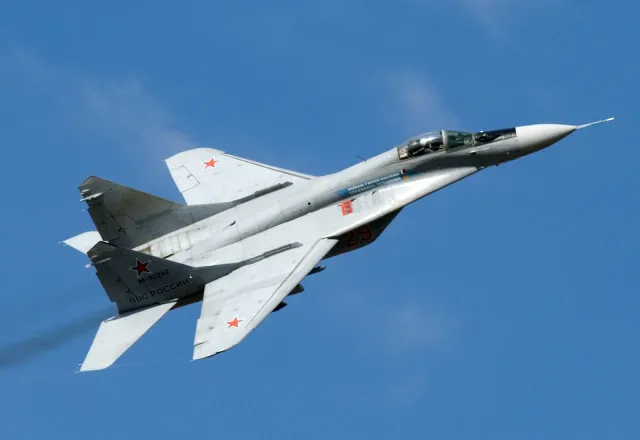
Fighter aircraft
F-16C Block 52 Fighting Falcon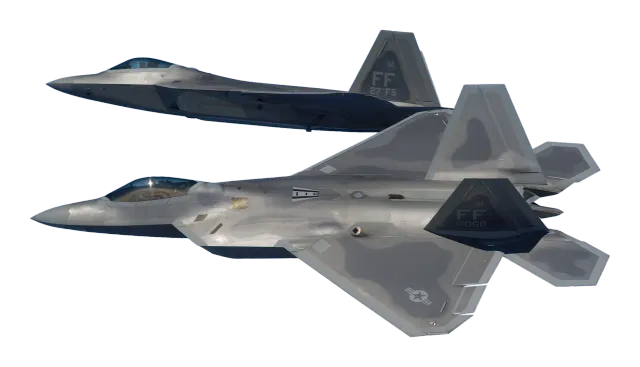
Fighter aircraft
F-22A Raptor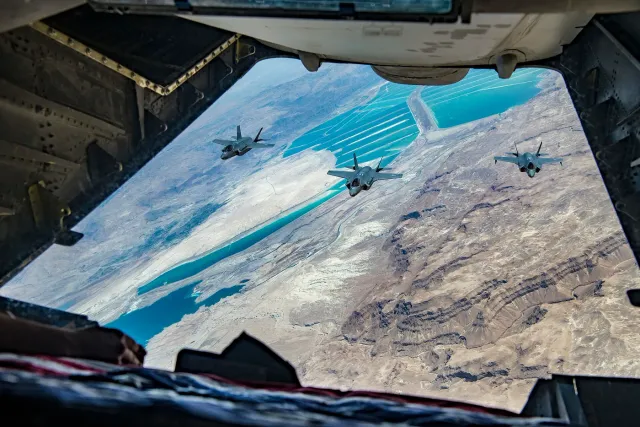
Fighter aircraft
F-35A Lightning II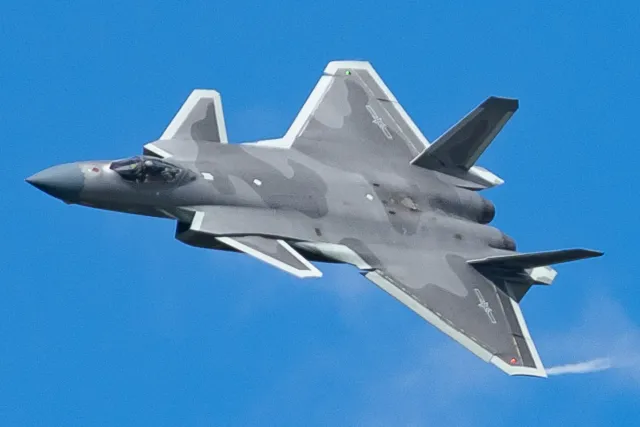
Frequently asked questions
Does a low operator count mean a weapon system is inferior? +
No, and the data says so directly. The median 2020s-era system in the WeaponSpecs database has exactly 1 operating country, not because these are bad weapons but because export sales, foreign financing, and integration into another country's air force all take years to close. A brand-new fighter with 1-2 operators is on the normal adoption curve, not failing in the market.
Why does the F-22 Raptor have only one operator despite being over 20 years old? +
It is illegal to sell. The 1998 Obey Amendment, a rider renewed in every Defense Department appropriations act since, bars the use of federal funds to license an F-22 export to any foreign government. Unlike most low-operator-count fighters, the F-22's single operator is a permanent legal fact, not a symptom of the aircraft still being new.
How is 'operators' different from 'units built' in the WeaponSpecs database? +
Operators counts the number of countries that field a system; unitsBuilt counts total production regardless of who bought it. A system can rack up high production numbers while selling to almost no one abroad (a large domestic air force buying for itself), or the reverse, modest production spread thin across many foreign militaries. The two figures answer different questions and should not be read as proxies for each other.
Will the J-20 or Su-57 eventually reach the same operator count as the F-16 or MiG-29? +
The age curve alone would predict slow, steady growth over the next two decades, the way MiG-29 and F-16 did. But both aircraft carry policy complications the age curve does not capture: reported analysis treats a J-20 export version as unlikely for the foreseeable future, and the Su-57 has reportedly struggled to close disclosed foreign sales. If either is still sitting at 1 operator by the mid-2030s, that will be a policy signal worth reading, not just a young program still ramping up.
Why did the F-35 reach 20 operators faster than most fighters in history? +
It was built as a multinational partner program from day one, not sold country by country after the fact. Financing and industrial work-share for partner nations were baked into the program before first flight, front-loading adoption that organically-sold platforms only accumulate over decades of individual sales campaigns.
Related reading


