Why Air-Defense Cost Figures Don't Compare
Only 12 of 70 air-defense systems in the database publish a cost, and those figures price different things: single rounds vs whole batteries.
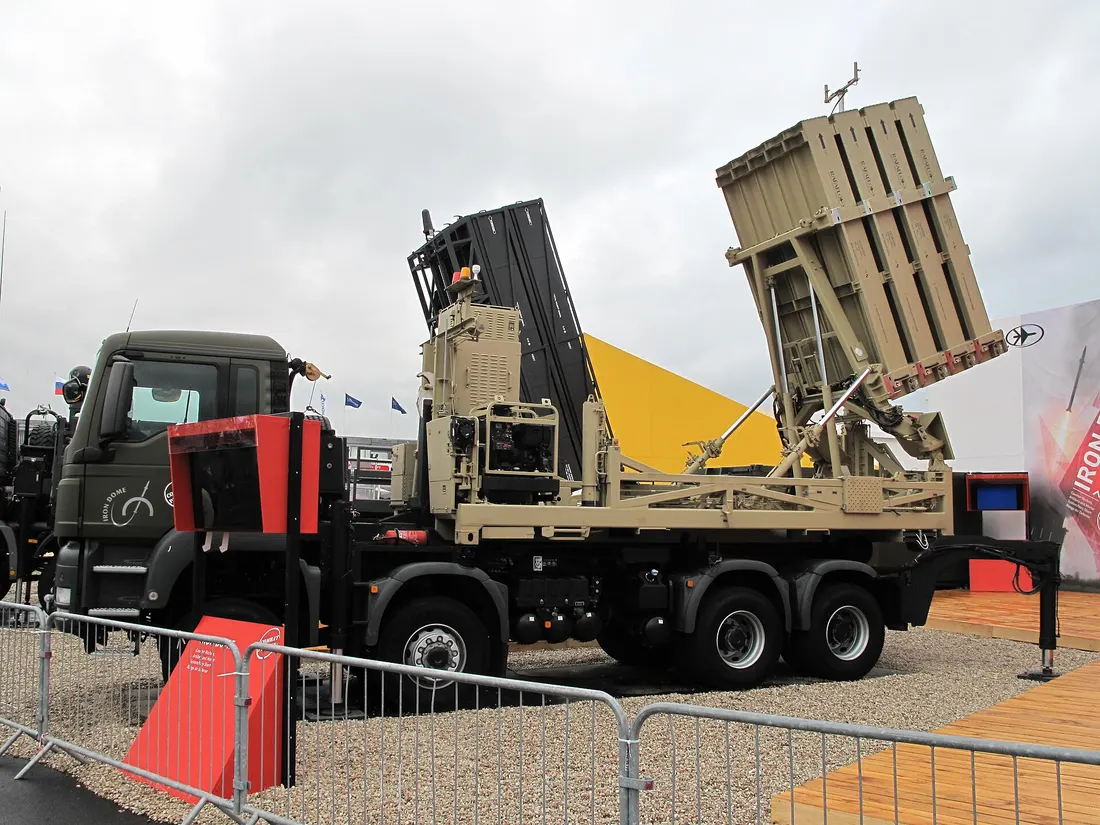
Tangopaso, CC BY-SA 3.0
On July 6, 2026, Ukraine’s air force intercepted zero of 23 ballistic missiles Russia launched at Kyiv, down from 4 of 24 (16.7 percent) just four days earlier. Ukrainian Air Force spokesman Yuriy Ihnat was blunt about why: “To shoot down ballistic missiles, you need something to shoot them down with… The missiles for them are running out,” he said. That is an interceptor-round shortage, not a battery shortage, and it points at exactly the confusion that runs through public air-defense cost data. In WeaponSpecs’ own database of 70 air-defense systems, only 12 (17 percent) publish any cost figure at all, and those 12 numbers split into three incompatible units of account: three price a single interceptor round, two price a single vehicle, and seven price an entire battery or battalion set. Line them up on one axis, as casual comparisons often do, and Iron Dome looks 22,000 times cheaper than Patriot. That is not a meaningful statement.
Which air-defense systems in the database publish a public cost?
Not many, and that scarcity is itself the finding. Of the 70 air-defense systems tracked in the WeaponSpecs database, only 12 carry a commercial.unitCostUSD figure sourced to something public: a government budget line, a reported export contract, or manufacturer commentary picked up by trade press. The other 58 systems, the large majority, have no reliable public cost on record at all. That fits the pattern documented in WeaponSpecs’ price-transparency analysis of the wider database: cost is one of the least-disclosed fields across defense hardware generally, and air defense is no exception.
What makes air defense a harder case than most categories is that the 12 systems that do publish a number aren’t measuring the same kind of thing. Three figures price a single interceptor round. Two price a single self-propelled vehicle. Seven price a full battery or battalion set, radar, launchers, command post, and a magazine of rounds combined. Treating all 12 as points on the same cost scale, which is exactly what a quick headline comparison tends to do, produces a ranking that looks dramatic and explains almost nothing.
What does a single interceptor round actually cost?
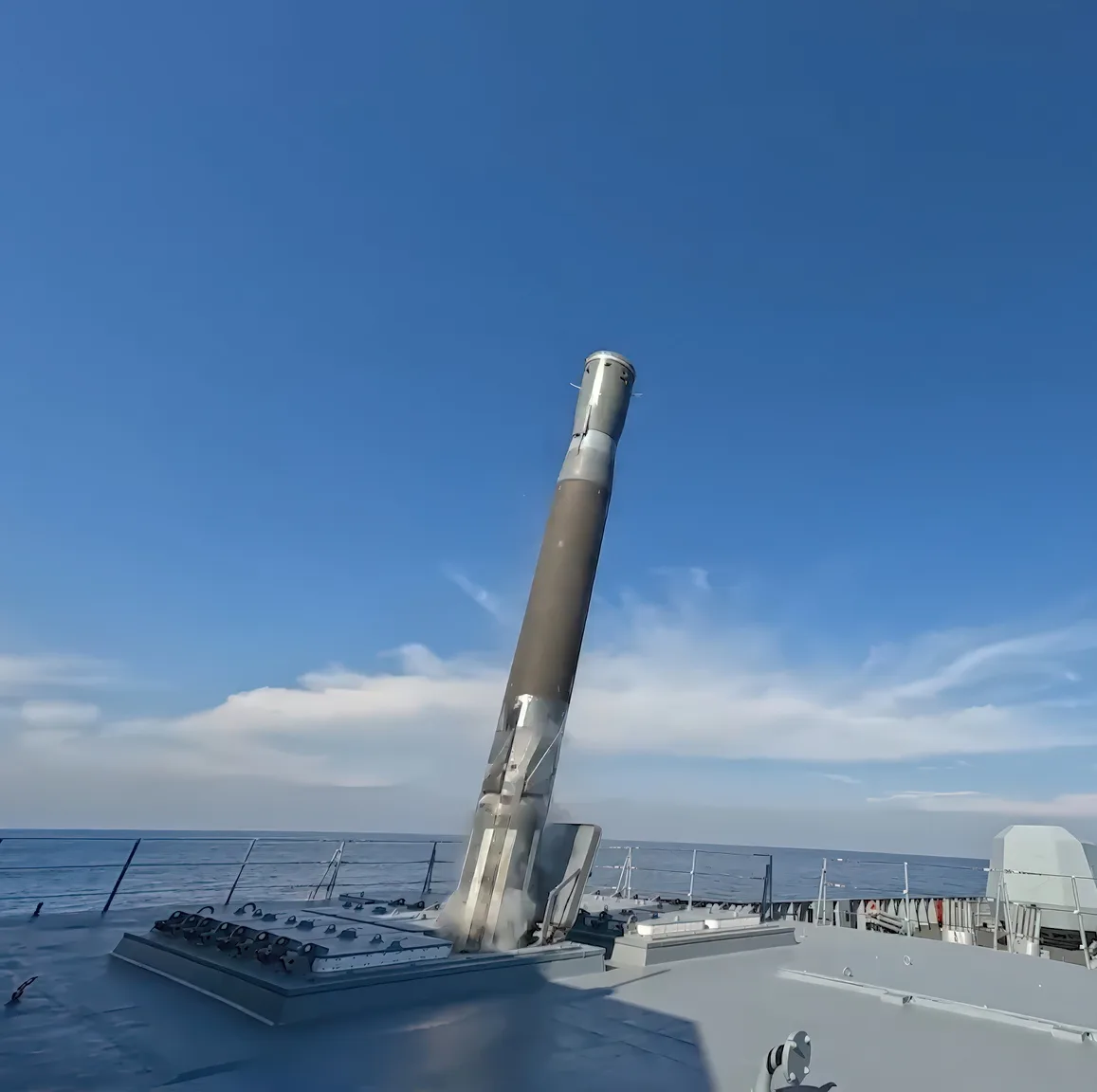
Three systems in the database publish a per-round figure: Iron Dome’s Tamir interceptor, David’s Sling’s Stunner, and Arrow-3.
A 44x spread inside a single unit of account, before any battery-level number even enters the comparison.
| System | Country | Cost/round | Note |
|---|---|---|---|
| Iron Dome (Tamir) | Israel | $50,000 | Widely cited $40,000-$50,000 for standard production; wartime surge production reportedly spiked to $60,000-$150,000 |
| David’s Sling (Stunner) | Israel | $1,000,000 | Roughly a quarter of a Patriot PAC-3 MSE interceptor’s per-unit cost |
| Arrow-3 | Israel | $2,200,000 | Reported $2M-$3M per interceptor in 2025-2026 Israeli MoD procurement reporting; export-context figures run as high as $4M |
The 44-fold spread inside this single tier already tells you something: cost tracks what the interceptor has to do, not how modern or well-funded the program is. Iron Dome’s Tamir intercepts short-range rockets and mortars at low altitude with an electro-optical assist, a comparatively forgiving intercept geometry. David’s Sling’s Stunner and Arrow-3 both fight exo- or high-endo-atmospheric threats, ballistic missiles closing at far higher speed, where the guidance package has to be precise enough for a hit-to-kill intercept with no room for a proximity-fuze miss. That sophistication, not inflation or brand, is what pushes Arrow-3 to roughly 44 times Iron Dome’s per-round price.
What does a full battery or battalion cost?
Seven systems in the database publish a battery- or battalion-level figure, an order of magnitude (or several) above any single-round price, because the number is paying for the radar, launchers, command post, and a magazine of rounds together, not a consumable.
| System | Country | Cost/battery | Note |
|---|---|---|---|
| S-300PMU2 Favorit | Russia/export | $130,000,000 | Per-battalion estimate from China’s 2008-2009 deal (~$890M for 8 battalions + 300 missiles) |
| IRIS-T SLM | Germany | $150,000,000 | Approximate cost per battery set |
| NASAMS | Norway | $200,000,000 | Approximate cost per fire-unit battery |
| SAMP/T (Aster 30) | France | $400,000,000 | Approximate cost per battery set |
| S-400 Triumf | Russia | $500,000,000 | Approximate cost per battalion set, export estimate |
| THAAD | United States | $1,000,000,000 | Includes radar and interceptors |
| Patriot PAC-3 | United States | $1,100,000,000 | Includes launchers and radar |
Two more systems occupy a third, in-between unit of account: the cost of a single vehicle, not a round and not a full battery. South Korea’s K30 Biho self-propelled gun-missile system runs about $12.1 million a unit, drawn from a 176-vehicle Republic of Korea Army production run. Russia’s Pantsir-S1 is reported at roughly $15 million a unit, a disputed figure traced to a single 2000 UAE contract for 50 systems worth about $734 million; upgraded S1M/SMD-E variants reportedly command $17-20 million today. Neither number belongs on the same chart as the seven battery-level figures above, or the three round-level figures before it.
The Russian entries in the battery-tier chart, S-400 Triumf, S-300PMU2, and Pantsir-S1 in the vehicle tier, carry the same caveat every time: these are disputed export estimates reverse-derived from specific foreign contracts (UAE, China), not official state prices. Russia has never published one. Treat every Russian figure in this piece as a manufacturer/export claim, not an audited cost.
Why does Ukraine’s “zero of 23” night matter here?
Because it is the real-world version of the tiering problem above, playing out with lives and infrastructure attached. Ukraine’s Patriot batteries defending Kyiv did not vanish on July 6, 2026, and the roughly $1.1 billion in radar, launchers, and command infrastructure that a battery represents was presumably still standing. What ran out, per Ihnat’s own account, was the interceptor rounds, the consumable tier, not the capital tier. A fully funded, fully deployed battery is strategically useless the moment its magazine is empty, and refilling that magazine is a completely separate procurement problem from buying the battery in the first place: different contract, different production line, different lead time, and in Patriot’s case a PAC-3 MSE interceptor that has consistently lagged demand across every theater it’s been fielded in. Four days earlier, on July 2, the same defenses intercepted 4 of 24 missiles (16.7 percent). The trend line between those two nights is a rounds problem, not a radar problem, exactly the distinction that gets erased when a single “air-defense cost” number gets quoted without saying which tier it belongs to. WeaponSpecs’ own reporting on the shortfall covers the interceptor depletion in more detail.
So how should a buyer actually compare air-defense economics?
Start by asking what the number is actually pricing before comparing it to anything else. A battery or battalion set is a capital asset with a service life measured in decades: you buy the radar, the launchers, and the command post once, and then you sustain them. An interceptor round is a consumable fired in seconds and then gone, bought over and over for as long as the system stays in service. Comparing Iron Dome’s $50,000 Tamir to Patriot’s $1.1 billion battery does not measure which system is more “efficient.” It measures a round against a decades-long capital program, two different budget lines that happen to share a dollar sign. The same logic applies inside a single country’s own procurement: a buyer who fully funds Patriot batteries but underfunds the PAC-3 MSE production line has bought half a capability, the exact trap Ukraine’s air defenses appear to be in as of July 2026.
The honest version of this comparison groups systems by what they’re pricing first, round against round, vehicle against vehicle, battery against battery, and only then asks about cost-efficiency within that group. Anything else ranks procurement categories, not economic performance. Build a cost-tier-aware comparison of your own shortlist in the Advisor, which lets you weigh interceptor economics against battery capital cost separately rather than folding them into one misleading number.
Systems in this comparison
Every system covered above, with its photo and, where available, a video. Tap a card to open the full spec sheet.
Compare these side by side →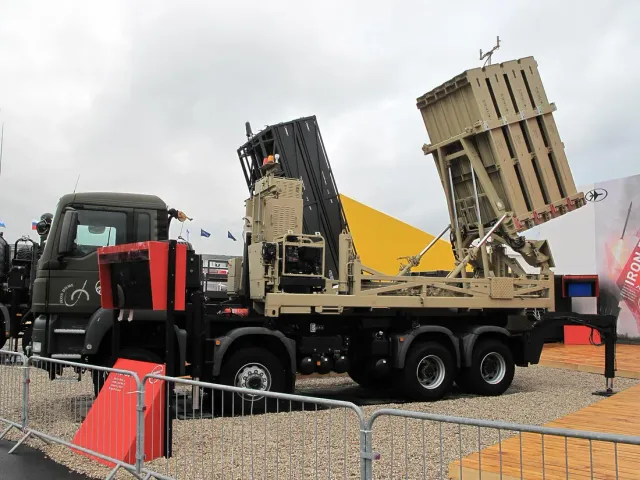
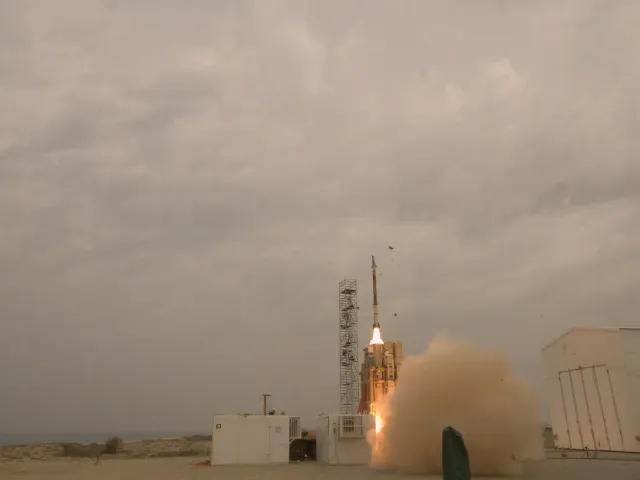
Air defense system
David's Sling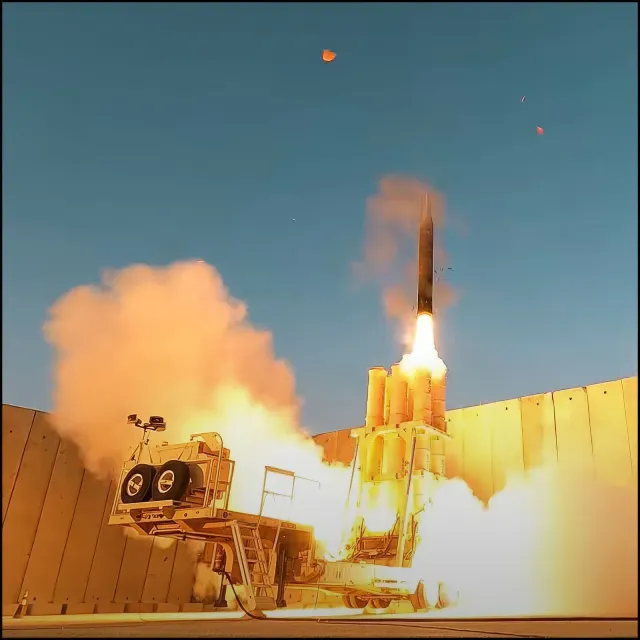
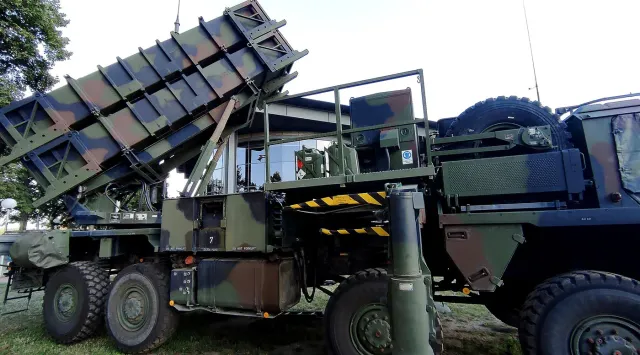
Air defense system
Patriot PAC-3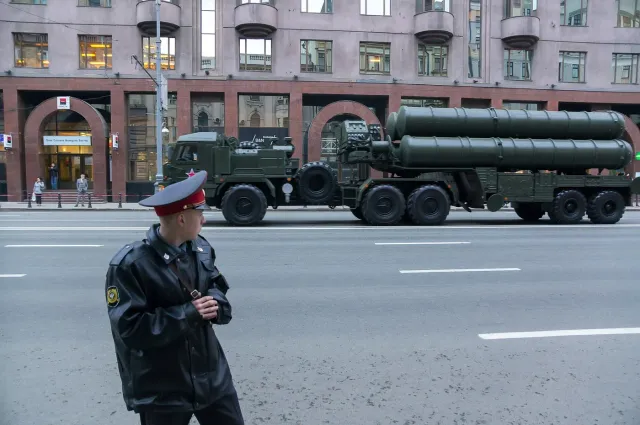
Air defense system
S-400 Triumf
Frequently asked questions
How many air-defense systems in the WeaponSpecs database publish a public cost? +
12 of 70, about 17%. The rest have no reliable public unit-cost figure on record.
Why can't Iron Dome's $50,000 be directly compared to Patriot's $1.1 billion? +
They price different things. Iron Dome's figure is the cost of a single Tamir interceptor round, a consumable fired in seconds. Patriot's figure is the cost of an entire battery: radar, launchers, command post, and a magazine of interceptors, a system with a service life measured in decades.
What did Ukraine's 'zero of 23' intercept night on July 6, 2026 reveal about air-defense cost? +
Ukraine's Patriot batteries were deployed and operational, but ran out of interceptor rounds. It illustrated that battery-level capital cost and round-level consumable cost are separate budget lines, and running out of one while having the other doesn't help.
Which countries' air-defense costs are least transparent? +
Russia's. Pantsir-S1, S-400 Triumf, and S-300PMU2 figures in the database are all disputed export estimates derived from specific foreign contracts (UAE, China), not official state prices, which Russia has never published.
What's the cheapest air-defense system in the database by published figure? +
Iron Dome's Tamir interceptor at roughly $50,000 per round, though that number isn't comparable to system-level figures since it prices only the consumable, not the launcher or radar that fires it.
Related reading