Congress Splits Over $1B Down Payment on $17B Nuclear Battleship
Three GOP-led defense committees are balking at funding the Trump-class battleship before its design is finalized, fearing it will crowd out carriers.

U.S. Navy photo by MC2 Ridge Leoni, via Wikimedia Commons, public domain. Shows the Ford-class carrier USS Gerald R. Ford, which shares the Trump-class battleship's planned reactor; no Trump-class hull has been laid down yet.
A White House request for $1 billion in advance-procurement funding for the lead ship of the Navy’s planned Trump-class nuclear-powered battleship has run into resistance from all three Republican-controlled defense committees handling it, a rare case of the party in charge of the purse hedging on the president’s own signature shipbuilding program before its design is even finished.
What the $1 billion actually buys, and why it’s stuck
The $1 billion in question is advance-procurement funding for the lead vessel of the Trump-class, hull designation BBGN, named USS Defiant. It was inserted as an exception, an “anomaly” in budget language, into the stopgap spending bill Congress needs to pass to keep the government funded past October 1, 2026. Advance procurement money is normally used to lock in long-lead-time components, such as reactor parts or specialized steel, ahead of a full construction contract, which is exactly why the specifics of how it can be spent have become the fight.
All three relevant committees have responded differently, and none has simply waved the money through. The Senate’s version of the National Defense Authorization Act does not authorize the $1 billion at all. A Senate aide characterized the funding as “early to need.” The House-passed NDAA does authorize the money, but explicitly forbids the Navy from signing a construction contract until the Secretary of the Navy certifies that the ship’s weapons systems have reached a sufficiently mature technology readiness level, a direct hedge against locking in a contract for hardware that doesn’t work yet. The House Appropriations Committee’s defense subcommittee approved the $1 billion as well, but its own report language warns against committing funding to construction before achieving design stability, stating plainly that the design is not yet finalized, that the analysis of alternatives is incomplete, and that requirements are not stable.
That caution has a recent history in the House. On June 4, an amendment from Rep. Joe Courtney to strip the advance-procurement funding entirely failed narrowly, by a vote of 26 to 30, in the House Armed Services Committee. Courtney did not walk away empty-handed: the tech-maturity certification requirement that ended up in the House NDAA’s final language traces back to his push that day. A separate amendment from Rep. Betty McCollum sought to zero out the funding altogether. At the House Appropriations Committee’s June 24 markup of the FY2027 defense bill, ranking member Rosa DeLauro publicly criticized the funding as premature, though a verbatim quote from that markup could not be independently confirmed for this story and is not reproduced here.
A $17 billion-plus hull, before the design is even final
Cost estimates for the lead ship vary depending on the source, and that spread is itself part of what’s driving the committees’ skepticism. The Congressional Budget Office puts the lead ship’s cost at more than $20 billion. Other reporting, and figures attributed to industry and Navy sources, put it at $17 billion. The Navy’s own FY2027 budget request asks for nearly $2 billion for the lead vessel alone, according to Shephard Media’s coverage of the June 24 markup. The full program, as currently envisioned, could run to as many as 25 battleships, per 19FortyFive’s reporting, which would put total program cost somewhere in the hundreds of billions of dollars depending on which per-hull figure ultimately holds.
The ship itself is planned as a genuinely capable platform, on paper. Specifications reported by 19FortyFive, generally corroborated by other public sourcing, describe a displacement of 35,000 to 40,000 tons, nuclear propulsion using the same A1B reactor design that powers the Navy’s Ford-class aircraft carriers, long-range strike weapons, vertical-launch cells sized to accommodate hypersonic missiles, and future capacity for directed-energy weapons and railguns. An expected delivery date of 2036 has been reported, though that figure comes from a single source and should be read as preliminary rather than a locked schedule.
The precedent Congress keeps citing
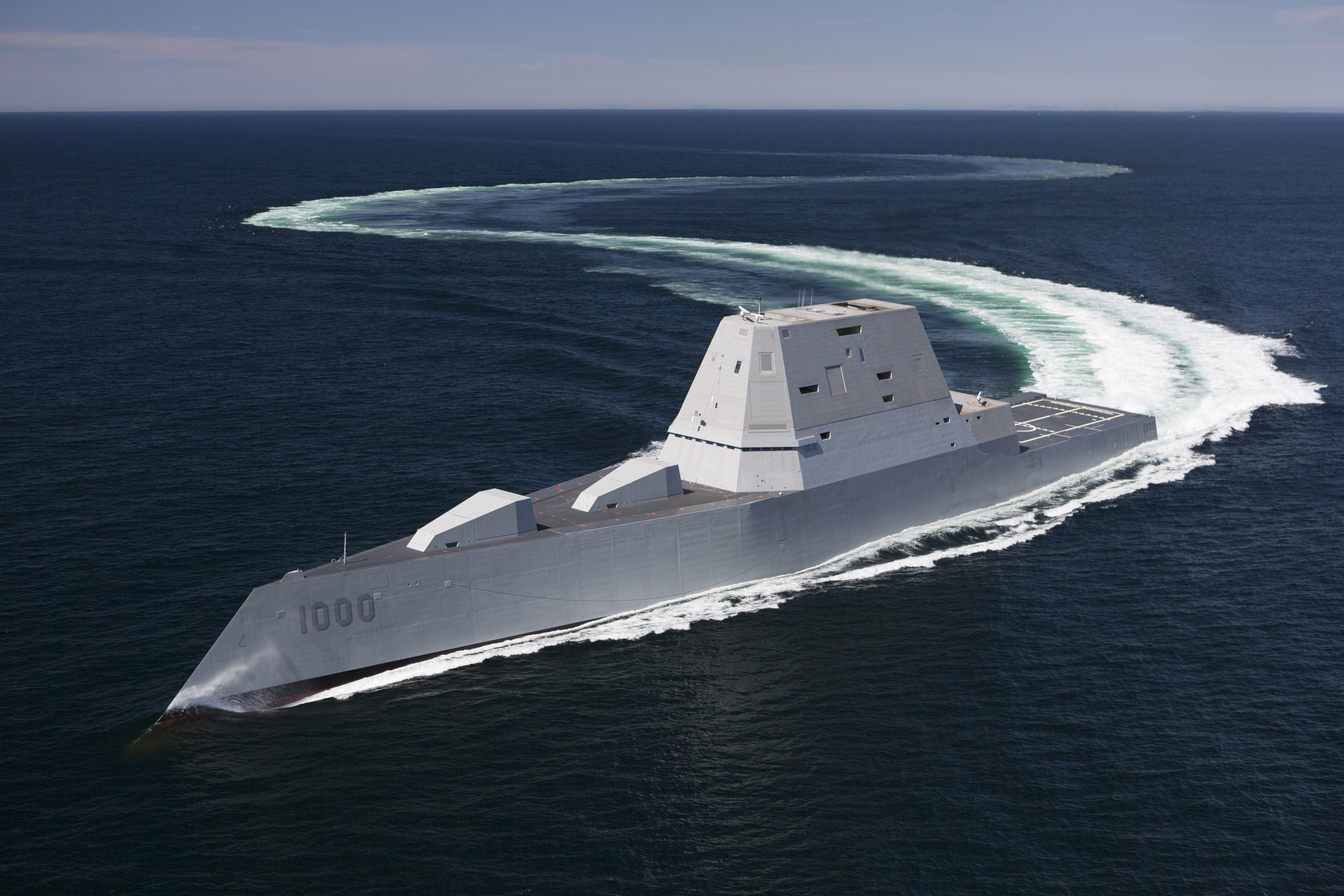
The comparison lawmakers keep reaching for is the Zumwalt-class destroyer, originally planned as a 32-ship class before the Navy built only three after costs soared, a program WeaponSpecs has covered directly, including a Government Accountability Office finding that the class’s hypersonic-missile refit is now 24 months late and its cost has risen from $31 billion to $41 billion. Critics also point to the Littoral Combat Ship, whose delivered combat capability never matched its original concept, and the canceled CG(X) cruiser program, as further evidence that ambitious Navy surface-combatant programs launched before their design and requirements are locked tend to blow through both budget and hull count.
There is also a hard physical constraint layered on top of the political one. Only two US shipyards are certified to build nuclear-powered surface ships, and one of them, Newport News Shipbuilding, is already behind schedule on Ford-class carrier construction. Battleship construction would compete directly with both carrier production and Virginia and Columbia-class submarine construction for the same limited pool of nuclear-shipbuilding labor and reactor components. Reactor component suppliers Rolls-Royce and BWXT have reportedly been described as already working at their limit, a strain tied in part to separate US commitments under the AUKUS submarine-technology partnership with Australia and the United Kingdom. That bottleneck is the concrete version of the abstract “starve the carriers” fear driving the committee language: there is a real, finite capacity for building nuclear warships in the United States right now, and every battleship built against it is a carrier or submarine slot not built.
Acting Secretary of the Navy Hung Cao announced the nuclear-powered battleship direction on May 11, 2026, and has separately told Congress the Navy needs roughly 540,000 shipbuilding-industry jobs to meet its current plans, while noting that any foreign shipbuilding partnerships to help meet that gap are, in his words, being studied rather than funded.
Sources
- Bipartisan headwinds buffet $1B 'anomaly' for Trump battleship — Roll Call, Jul 27, 2026
- America's New Trump-Class Battleship Already Costs $17 Billion, and Congress Fears It Will Starve the Aircraft Carriers to Get Built — 19FortyFive, Jul 28, 2026
- Funding for the future US Navy Trump-class battleship sparks controversy in Congress — Shephard Media, Jun 26, 2026
Frequently asked questions
What is Congress actually fighting about? +
A White House request for $1 billion in advance-procurement funds for the lead Trump-class battleship, inserted into the stopgap spending bill needed to fund the government past October 1, 2026. Even Republican-controlled committees are attaching conditions or declining to authorize it.
How much will the battleship actually cost? +
The Congressional Budget Office estimates the lead ship alone could exceed $20 billion. Other reporting puts the figure at $17 billion, with a program of up to 25 ships contemplated.
Why are lawmakers comparing this to the Zumwalt-class destroyer? +
Because the Navy originally planned 32 Zumwalt-class destroyers but built only 3 after costs spiraled. Critics argue the battleship program's unfinished design and incomplete analysis of alternatives risk repeating that pattern.
What would the battleship actually be able to do? +
It is planned as a nuclear-powered surface combatant of 35,000 to 40,000 tons, using the same reactor as the Ford-class carriers, with vertical-launch cells sized for hypersonic weapons and future capacity for directed-energy weapons and railguns.
More news


