US House Passes $1.15 Trillion Defense Bill for FY2027
The House passed the FY2027 defense bill 216-212, a near party-line vote authorizing the largest defense budget ever proposed, plus a Pentagon rename.

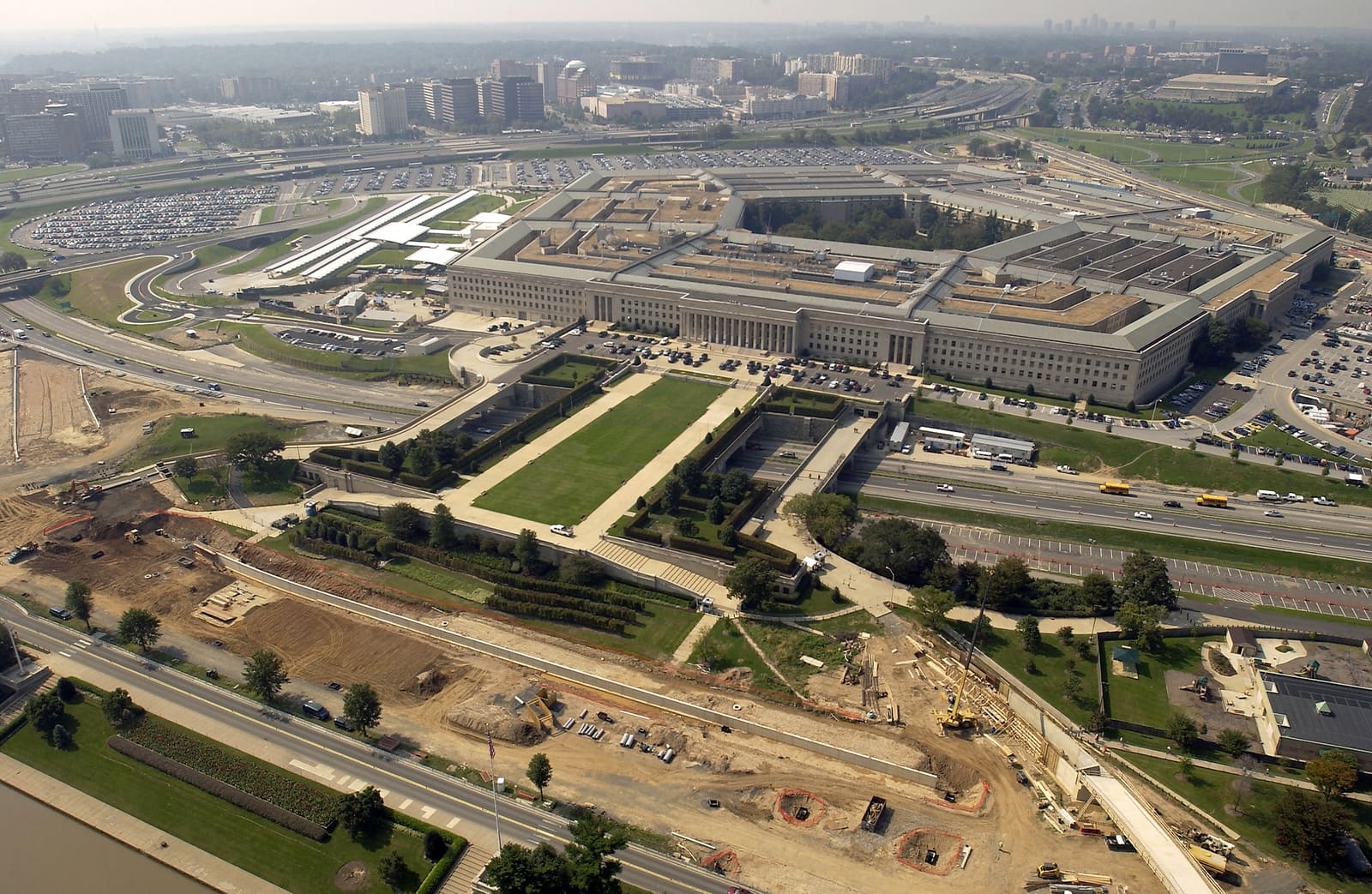
Public domain, Office of the Speaker of the House, via Wikimedia Commons
The House of Representatives passed the fiscal 2027 National Defense Authorization Act on July 22 by a vote of 216-212, authorizing $1.15 trillion in defense spending, the largest annual defense budget any administration has proposed, in a vote that broke almost entirely along party lines. Seven Republicans voted no and six Democrats voted yes, according to Al Jazeera, Breaking Defense, and Military Times, all of which independently reported the same 216-212 tally.
The $1.15 trillion figure is a jump of roughly $249 billion, about 28 percent, over the $900.6 billion authorized for fiscal 2026, a far steeper single-year increase than the low-single-digit percentage growth the NDAA has typically seen in recent years. The bill also carries three provisions that will outlast this year’s headlines regardless of what happens in the Senate: a mandate that the Pentagon adopt the name Department of War, an expansion of military technology and supply-chain cooperation with Israel, and a 5 to 7 percent pay raise for service members depending on rank.
Why the number is this big
Most of that $249 billion increase reflects the administration’s own request rather than a spontaneous congressional add: President Trump had asked Congress to raise the topline from roughly $900 billion to $1.5 trillion, and the House-passed figure lands well short of that ask but still far above any prior year’s authorization. Separately, and outside the NDAA itself, the administration has also asked Congress for a supplemental package of roughly $87.6 billion, including $67.1 billion earmarked specifically for the Pentagon, to cover this year’s costs from the ongoing conflict with Iran. Defense Secretary Pete Hegseth testified to the Senate on July 21 that the war’s cost had already reached $37.5 billion, up from $25 billion in April and $29 billion in May, a running total that itself shows how quickly the bill for an active conflict can escalate even before Congress votes on new money.
Hegseth explained the logic of the separate supplemental request directly in testimony:
“The supplemental request serves two purposes, sustain our military readiness to meet this year’s new demands and accelerate critical capabilities to replace and augment those we have used in contingencies,” said Pete Hegseth, Secretary of Defense, before the Senate (Stars and Stripes, July 21, 2026).
In plain terms: one pot of money keeps the day-to-day force running at the pace the Iran conflict now demands, and a second pot restocks munitions and other stores the Pentagon has already drawn down responding to it. That distinction matters for a reader trying to size up the bill, because it means the $1.15 trillion NDAA topline is not itself an “Iran war bill,” even though the same week’s testimony about war costs is very likely part of why lawmakers were willing to accept such a large jump.
A roughly 28 percent single-year jump, far steeper than the low-single-digit growth the NDAA has typically seen. Figures are the NDAA's own authorization ceilings, not the separate Iran war supplemental request.
What actually rides inside a bill this size
A National Defense Authorization Act is not a single-purpose funding measure; it is Congress’s annual, must-pass vehicle for setting Pentagon policy across hundreds of programs at once, which is why a bill nominally about the budget also carries the Department of War rename and expanded Israel cooperation. On the rename, the bill would revive the department’s original 1789 to 1947 name, before the National Security Act signed by President Truman folded the War and Navy departments into a unified Department of Defense; Hegseth has pushed the change publicly since 2025, framing it as an effort to “raise up warriors, not just defenders.” On Israel, the bill’s Section 219 expands cooperation on military technology and supply chains between the two countries, a provision specific enough that it drew direct criticism from within the Republican majority that passed it.
“Final vote total for the NDAA today which tragically merges our military technology and supply chains with Israel’s,” said Rep. Thomas Massie, R-Ky., in comments reported by Al Jazeera (July 23, 2026).
Massie’s objection is worth noting precisely because it did not come from the minority party; it signals that the Israel cooperation language is contested even among the Republicans who otherwise voted for the bill, not simply a partisan flashpoint along the usual lines.
What happens next
The bill’s passage in the House does not make it law. Senate Democrats have already blocked the measure from floor consideration, citing both the scale of the increase and the administration’s parallel Iran war spending, and House Armed Services Committee Chairman Mike Rogers, R-Ala., has acknowledged the bill contains “provisions in this bill that some folks disagree with” while committing to “work in a bipartisan manner” once formal negotiations begin. Because the Senate has not passed its own companion version, the next real procedural step is a House-Senate conference committee to reconcile the two chambers’ bills into one text, a process that in past years has changed final NDAA provisions substantially, including ones as prominent as a department rename. Nothing in the House-passed bill is final until that conference process runs its course and both chambers vote again on the reconciled text.
Sources
- US House passes $1.15 trillion military bill, expanding Israel cooperation — Al Jazeera, Jul 23, 2026
- House passes 2027 NDAA while measure remains stalled in the Senate — Breaking Defense, Jul 22, 2026
- House passes $1.15 trillion defense budget in near party-line vote — Military Times, Jul 22, 2026
- Hegseth offers $37.5B price tag for 'certain aspects' of Iran war — Breaking Defense, Jul 21, 2026
- Caine, Hegseth face Senate hearing on Iran war costs — Stars and Stripes, Jul 21, 2026
Frequently asked questions
How much defense spending does the FY2027 NDAA authorize? +
$1.15 trillion, up from $900.6 billion in fiscal 2026, a roughly 28 percent single-year increase. The National Defense Authorization Act sets policy and spending ceilings for the Pentagon; actual funding still requires separate appropriations bills.
Did the bill really rename the Department of Defense? +
Yes. The House-passed bill directs the department to adopt the name Department of War, reviving the designation the Pentagon carried before the 1947 National Security Act created the modern Department of Defense. Defense Secretary Pete Hegseth has pushed the change since 2025.
What happens to the bill now? +
It goes to the Senate, where Democrats have blocked floor debate over objections tied to the bill's scale and the administration's separate Iran war spending request. Because House and Senate versions differ, a conference committee would need to negotiate a single final bill before it can reach the president's desk.
Is this connected to the Iran war? +
Only indirectly. The $1.15 trillion is the base NDAA authorization for fiscal 2027. Separately, the administration has asked Congress for a roughly $87.6 billion supplemental package, including $67.1 billion for the Pentagon, to cover this year's Iran war costs, which Defense Secretary Pete Hegseth testified have already reached $37.5 billion.
More news


