Documents
 United States
 Huntington Ingalls Industries
Gerald R. Ford-class Aircraft Carrier
The U.S. Navy's newest class of nuclear-powered supercarriers, succeeding the Nimitz class with electromagnetic catapults (EMALS), advanced arresting gear and a smaller crew requirement. Ten hulls are planned.
In service since 2017 · 1 operator countries
Compiled from public sources ·primary reference ↗ ·last verified 2026-07-02
100,000
t
30
kn
4,539
crew
💲 ≈ $13,300,000,000, Matches the final procurement cost of the lead ship, USS Gerald R. Ford (CVN-78), about $13.32 billion, which includes cost growth from concurrent development of new systems like EMALS and the Advanced Arresting Gear. Follow-on ships run in a similar $13 to 15 billion band once learning-curve effects are applied.
Procurement snapshot
Availability & export
US ITAR-controlled
Export needs U.S. State Dept (DDTC) approval; end-use & re-transfer restrictions apply.
Channel: Foreign Military Sales (FMS) or Direct Commercial Sale
Fielded & proven
Limited · 1 operator
In service since 2017. Status: active · ~2 built.
Lifecycle cost (est.)
$33B – $47B
Acquisition is only ~30% of lifecycle cost, operating & support dominate over ~35 yrs. Rough 2.5–3.5× the unit price. How we estimate this →
Interoperability
No standardised NATO calibre / datalink detected in public specs.
Derived guidance from public data, export regime by country of origin, lifecycle from the GAO ~30% acquisition rule. Verify eligibility, pricing and offsets with the manufacturer and your acquisition authority.
Overview
The Gerald R. Ford class is the US Navy's newest generation of nuclear-powered supercarrier, designed to generate more sorties than the preceding Nimitz class while operating with a smaller crew. Its signature innovations are the Electromagnetic Aircraft Launch System (EMALS) replacing steam catapults, Advanced Arresting Gear, a repositioned island, and greater electrical capacity intended to support future systems such as directed-energy weapons.
The lead ship, USS Gerald R. Ford, is the most expensive warship ever built, and the programme has been dogged by cost overruns and long teething problems with EMALS, the arresting gear and weapons elevators. Follow-on ships are under construction, extending the class as the backbone of US carrier aviation for decades.
In 2023 the Ford made its operational mark when it was deployed to the Eastern Mediterranean as a deterrence signal following the outbreak of the Israel-Hamas war, underscoring the carrier's enduring role as a mobile instrument of American power projection. Its presence in a period of escalating Middle Eastern conflict illustrated why, despite its troubled development, the class remains central to US strategy.
Compatible munitions & weapons
Publicly reported weapons the Gerald R. Ford-class Aircraft Carrier can carry. Linked items have a full spec page.

Full specifications
Firepower
Armament, payload and guidance.
| Main armament Primary weapon: main gun, cannon or missile type. | RIM-162 ESSM, RIM-116 RAM point-defense missiles |
|---|
Physical
Dimensions, weight and crew.
| Length Overall length including gun/probe where applicable. | 337 m |
|---|
Sensors & avionics
Radar, sensor suite and datalinks.
| Radar Primary radar. AESA (active electronically scanned array) is the current state of the art. | AN/SPY-3 dual-band radar |
|---|---|
| Sensors IRST, EO/IR turrets, laser designators, sniper pods, thermal sights. | Dual Band Radar |
Program
Cost, production scale and operators.
| Unit cost Approximate flyaway/unit cost where public. Defense pricing varies hugely by contract, offsets and configuration. Lower is cheaper. | $13,300,000,000 |
|---|---|
| Units built Total production run. Higher means proven manufacturing, mature logistics and spares availability. | 2 |
| Operator countries Number of countries operating the system. More operators means broader support ecosystem. | 1 |
Specifications compiled from public Huntington Ingalls Industries and reference sources ↗. Published defense figures are approximations, treat comparisons as directional. Last verified 2026-07-02.
Compare with rivals
See how it stacks up
 Naval Group Amiral Ronarc'h-class Frigate (FDI)
  Navantia Alvaro de Bazan class (F100)
 Head-to-head comparisons
Gerald R. Ford-class Aircraft Carrier vs
 Queen Elizabeth-class
  Type 003 Fujian
  Sachsen-class
  Kirov-class
  Sejong the Great-class destroyer
 Frequently asked questions
What is the main armament of the Huntington Ingalls Industries Gerald R. Ford-class Aircraft Carrier? +
The Huntington Ingalls Industries Gerald R. Ford-class Aircraft Carrier's primary weapon is the RIM-162 ESSM, RIM-116 RAM point-defense missiles.
How many countries operate the Huntington Ingalls Industries Gerald R. Ford-class Aircraft Carrier? +
The Huntington Ingalls Industries Gerald R. Ford-class Aircraft Carrier is operated by 1 countries.
How much does the Huntington Ingalls Industries Gerald R. Ford-class Aircraft Carrier cost? +
The Huntington Ingalls Industries Gerald R. Ford-class Aircraft Carrier has an approximate unit cost of 13,300,000,000 USD. Defense pricing varies by contract, offsets and configuration, treat this as directional.
Similar systems
Related coverage
Gerald R. Ford-class Aircraft Carrier in the news
 News
News policy · Aug 15, 2026
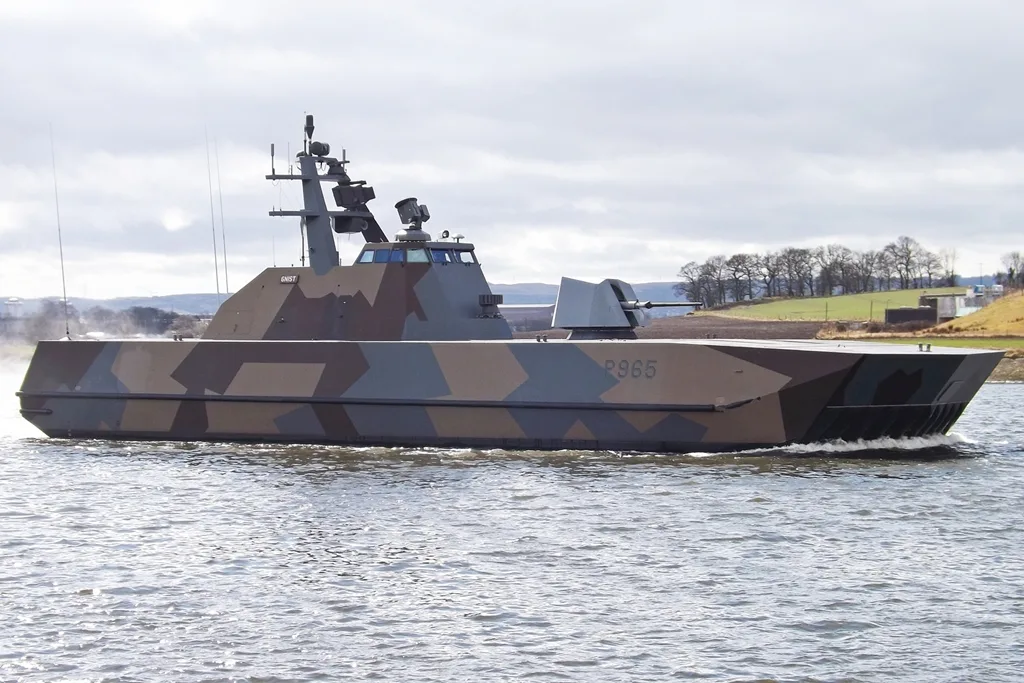
Trump Orders Navy Back to Steam Catapults, Opens Yards to Allies
A White House memo orders the Navy to strip EMALS from future carrier Doris Miller for steam catapults, and opens U.S. shipyards to allied builders.
 Article
 comparison · Jul 21, 2026
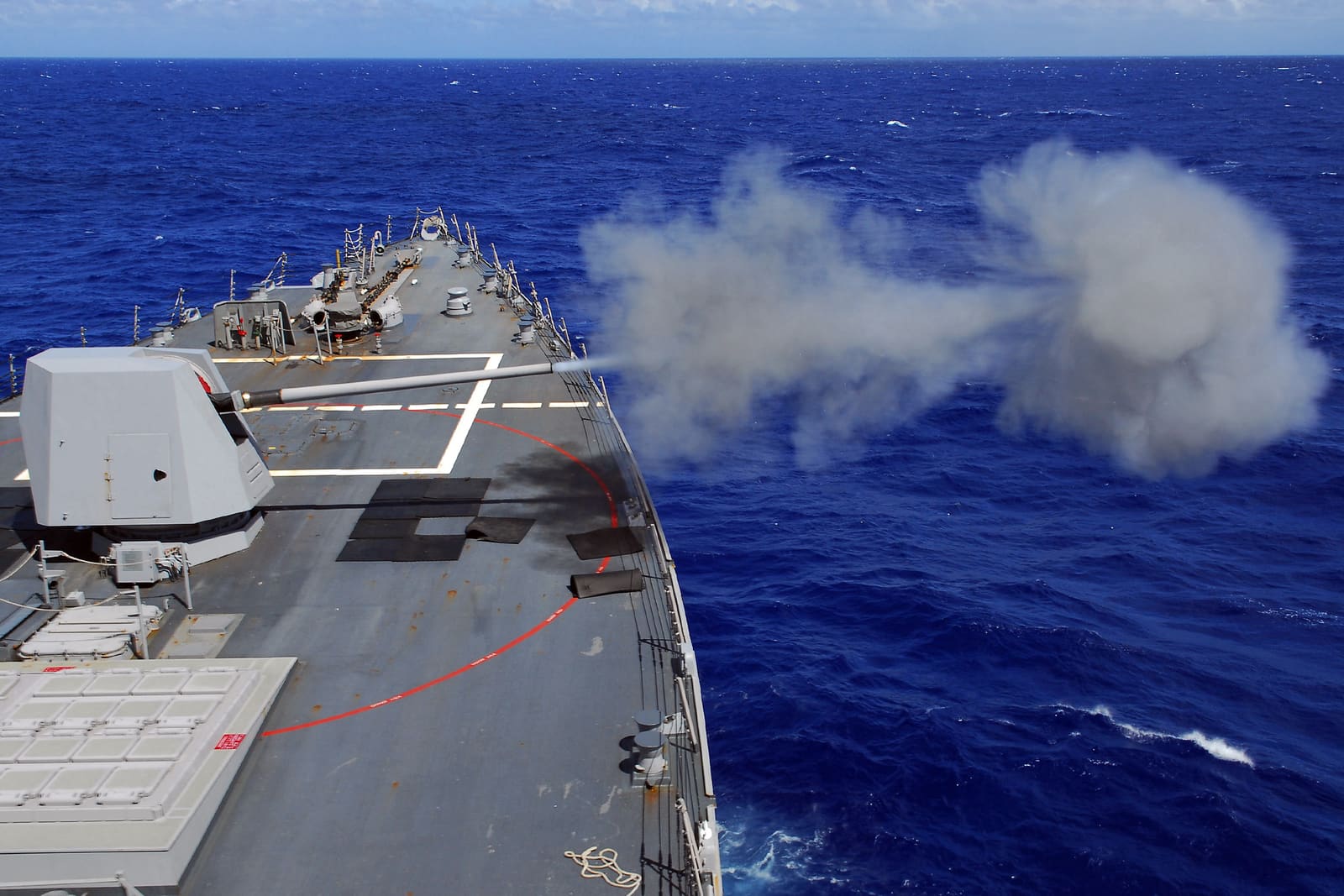
Warship Top Speed: Why Tonnage Barely Matters
Displacement barely predicts warship top speed: r = -0.089 across 72 WeaponSpecs database ships, and 20 of them, 250 t to 100,000 t, all publish 30 knots.
 Article
 industry · Jul 20, 2026
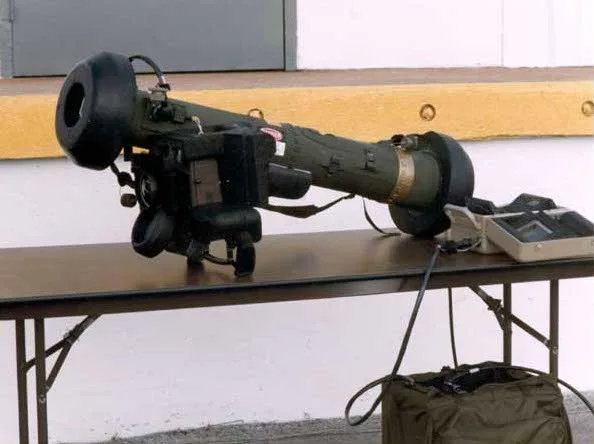
Two Naval Gun Calibers Arm 72% of the World's Warships
Of 53 gunned warships in the WeaponSpecs database, 76mm and 127mm guns each arm 19 ships, 38 of 53 combined, or 72 percent, of the entire fleet.
 Article
 industry · Jul 6, 2026
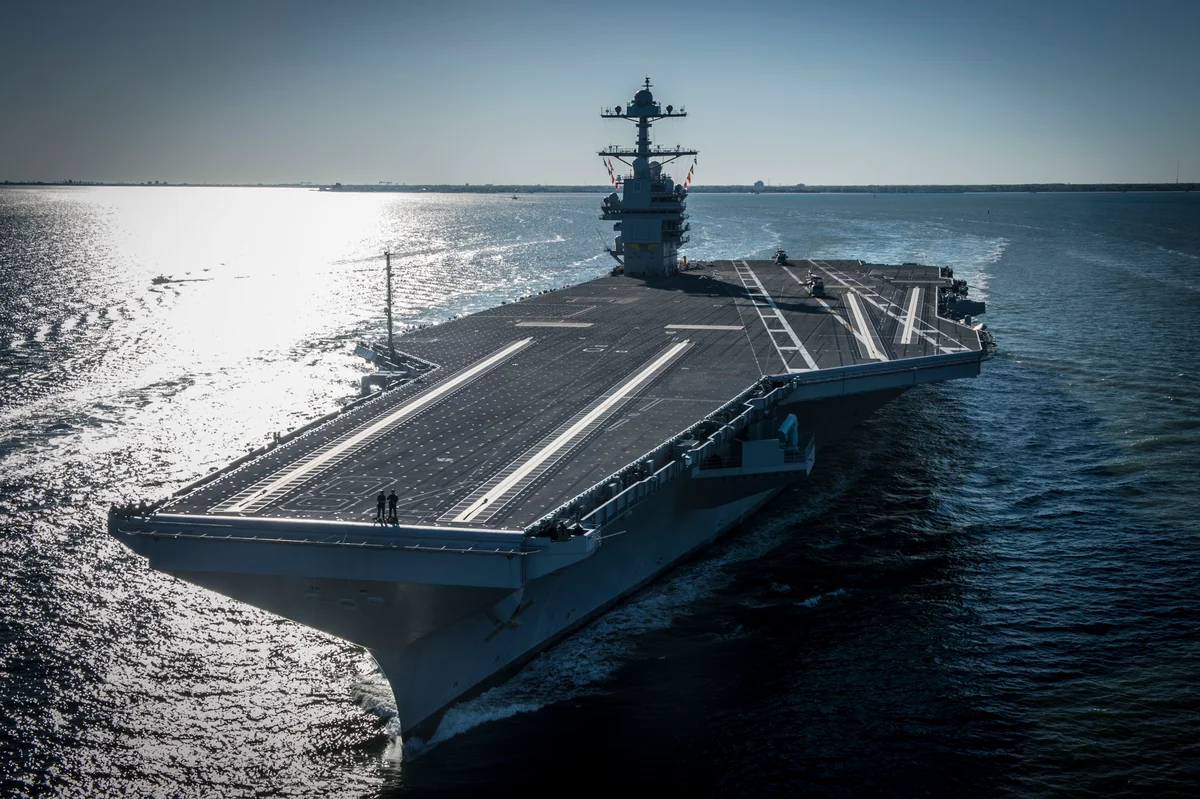
Why Only 22% of Weapons Publish a Price
Of 1,017 systems in the WeaponSpecs database, only 22% publish a unit cost. Pistols disclose 84% of the time; missiles 10%, munitions zero.
 Article
 comparison · Jul 3, 2026
Aircraft Carriers Compared: Ford vs Queen Elizabeth vs Fujian
Aircraft carriers compared: Gerald R. Ford's CATOBAR supercarrier, Queen Elizabeth's STOVL design, and China's new Fujian, side by side.