Russia's Starlink Rival Reaches Working Coverage Over Ukraine
Bureau 1440's Rassvet satellites now give Russian forces two-plus daily windows of live connectivity over Ukraine, enough to steer strike drones.

Russian Ministry of Defence, via Wikimedia Commons, CC BY 4.0
Russia’s answer to Starlink has crossed a threshold Ukrainian defense officials have been watching for: its Rassvet satellite network now delivers at least two reliable connectivity windows over Ukraine every day, each lasting more than an hour, according to satellite-tracking data reported by Militarnyi and relayed by Defence Blog. That is not round-the-clock coverage, and it has not been tied to a single confirmed strike, but it marks the erosion of an advantage Ukraine’s drone war has relied on since 2022: Russia’s lack of a reliable beyond-line-of-sight satellite link for its own deep-strike systems.
Two windows a day, from a constellation still climbing into place
Bureau 1440 is not a state space agency. It began in 2020 as an internal research office inside MegaFon, one of Russia’s largest telecom carriers, before spinning off into its own venture under IKS Holding. The company launched its first operational batch of 16 Rassvet-3 satellites on March 23, 2026, aboard a Soyuz-2.1b rocket from Plesetsk Cosmodrome, a military launch site roughly 200 kilometers south of Arkhangelsk that doubles as a test range for Russia’s land-based nuclear missile force. As of July 31, 12 of those 16 satellites had reached their intended 550-kilometer operational altitude, three were still climbing, and one had been lost, likely to a manufacturing defect.
A second batch of 16 more satellites followed on July 19, again from Plesetsk, bringing the constellation to 32 satellites total. Satellite-tracking data reviewed by Militarnyi shows the network now passes within visibility of Ukraine four times a day, though only two or three of those passes bring the satellites high enough above the horizon for a stable ground link. Volodymyr Stepanets, a satellite communications expert, described the pattern:
“We can see that a chain has effectively already formed with good coverage, which creates that kind of good coverage roughly twice a day, but in reality there are more of these passes… what’s important is that these satellites already provide fairly dense coverage,” said Volodymyr Stepanets, satellite communications expert (Defence Blog, citing Militarnyi, Aug. 3, 2026).
Two reliable passes a day is not saturation coverage, but it is enough windows, at roughly 60 to 90 minutes apiece, to matter operationally if paired with the right terminal.
A rocket launch Russia tried hard to hide
The July 19 batch did not arrive quietly. Starting July 10, roughly two weeks before liftoff, Russian authorities issued a series of vague, repeatedly revised aviation and maritime warning notices covering the zones where spent rocket stages would fall, a pattern designed to prevent outside observers from pinning down the exact launch date, vehicle, trajectory, or payload. Neither Russia’s defense ministry nor Roscosmos publicly confirmed the launch until after Bureau 1440 itself announced the satellites were deployed, even though American space-tracking systems had already spotted and classified them independently.
Dutch space analyst Bart Hendrickx, who tracks Russia’s military space program for The Space Review, linked that secrecy to a documented drone-strike attempt against Plesetsk during the first batch’s March launch: “Since another drone attack on Plesetsk took place on the day of the first Rassvet-3 launch in March, Russia appears to have done everything it could to sow confusion over the launch date of the second batch,” Hendrickx said, as reported by Defence Blog.
Roscosmos chief Dmitry Bakanov went further, telling Vladimir Putin that Ukrainian forces attempted a drone strike against Plesetsk during the March launch itself: “We had attempts of serious approaches toward the cosmodrome that day, but nevertheless the joint combat crews of Roscosmos and the Space Forces carried out the assigned task.” That account is a state claim, not independently verified, and no Ukrainian source has confirmed or denied it.

What the terminals could actually do
The military relevance of Rassvet comes from the ground terminals designed to work with it. Bureau 1440’s terminals measure up to 60 by 60 centimeters, weigh under 15 kilograms, support data rates up to 1 gigabit per second with latency under 70 milliseconds, and are rated from minus 40 to 104 degrees Fahrenheit. Like Starlink’s hardware, they use an active phased-array antenna that locates a satellite and holds the link automatically, no mechanical dish required. Open-source reporting indicates Bureau 1440 has finished the terminal’s baseline design and is moving toward serial production.
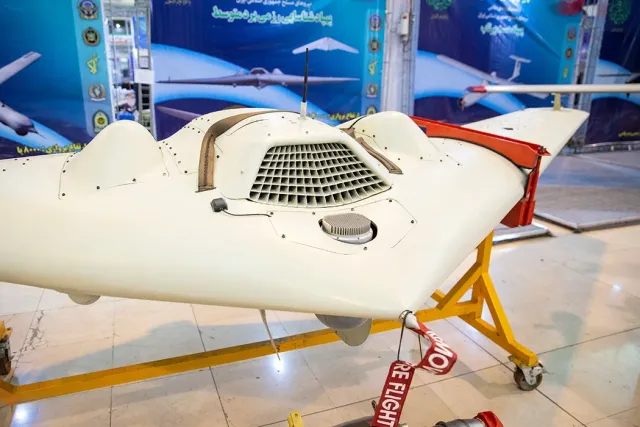
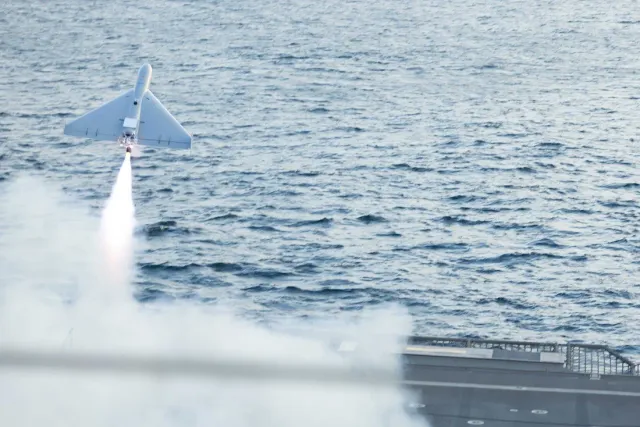
That combination, a small, rugged, self-aiming terminal with real bandwidth, is what makes the drone-control application plausible rather than speculative. Serhii “Flash” Beskrestnov, Ukraine’s presidential adviser on technology, put the risk plainly: “In theory, Russia could already install satellite internet terminals on Shahed drones and time attacks to coincide with satellite passes,” Beskrestnov told UNITED24 Media on Aug. 6, 2026. The platforms named across the sourcing are Russia’s Geran-2 and Geran-3, domestic derivatives of Iran’s Shahed-136 loitering munition. Geran-2, mass-produced at Alabuga since 2022, carries a 50-kilogram warhead out to a claimed 2,000-kilometer range at up to 185 km/h. Geran-3 is a turbojet variant claimed to reach roughly 600 km/h, though it remains in small-scale production and WeaponSpecs’ own database flags its figures as unverified. A satellite uplink would let operators retarget or receive live video from these drones well beyond their current line-of-sight radio range, and the same terminal class could eventually extend to naval drones and cruise-missile or glide-bomb guidance. That said, this is a documented technical possibility, not a confirmed operational capability: no publicly documented strike has yet been tied to a Rassvet-linked drone-control link.
The timeline Ukraine actually has to plan around
Bureau 1440 has disclosed a public buildout schedule: commercial service beginning in 2027, 250 satellites by 2027, 730 by 2030, and more than 900 by 2035. Reaching the 2027 target from today’s 32 satellites would require a pace far faster than anything demonstrated so far, since the gap between the first and second batches ran to nearly four months.
Only the 32-satellite figure reflects hardware currently in orbit. The 2027, 2030, and 2035 figures are Bureau 1440's own disclosed targets, not independent projections, and the company has not yet matched the launch cadence its 2027 goal would require.
Even at the slower four-month cadence the company has actually demonstrated, a fourth batch would arrive by roughly March 2027, and round-the-clock coverage over Ukraine would not be plausible before mid-summer of that year at the earliest, a projection built from current pace rather than Bureau 1440’s public promises. That gives Ukraine a real, if narrowing, window to develop jamming or other countermeasures before Rassvet’s coverage gaps close for good.
Sources
- Russia's Starlink rival gains steady coverage over Ukraine — Defence Blog, Aug 3, 2026
- Russia Is Building Its Own Starlink. How Big a Threat Is Rassvet? — UNITED24 Media, Aug 6, 2026
Systems mentioned
Every system named in this story, with its photo and, where available, a video. Tap a card to open the full spec sheet.
Compare these side by side →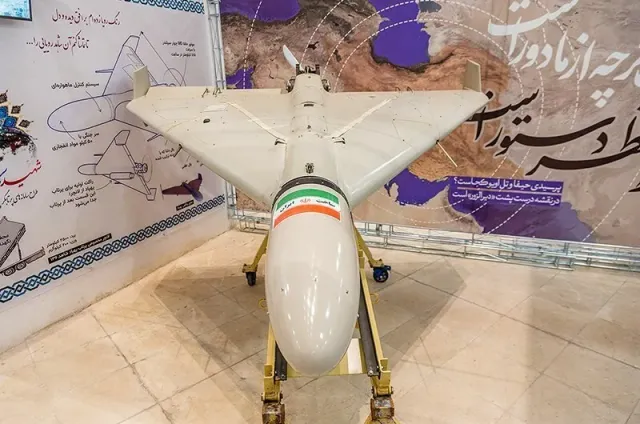
Frequently asked questions
What is Rassvet? +
Rassvet, Russian for 'dawn,' is a low-Earth-orbit broadband satellite constellation built by Bureau 1440, a Russian aerospace company, as a domestic answer to Starlink.
How many Rassvet satellites are in orbit now? +
Thirty-two, launched in two batches of 16. As of the most recent tracking data, at least 12 to 15 have reached full operational altitude and one has been lost, likely to a manufacturing defect.
Can Rassvet actually control strike drones? +
The terminal specifications make it technically plausible, and Ukrainian and Western analysts describe it as a real emerging application, but no confirmed instance of Rassvet-linked drone control in an actual strike has been publicly documented yet.
When would Russia get round-the-clock satellite coverage over Ukraine? +
Not before mid-2027 at the earliest, based on the roughly four-month interval between the first two launch batches, and only if Bureau 1440 sustains or improves on a launch pace it has not yet matched.
More news


