Ukraine's FP-7 Missile Nears Combat, Needs No US Sign-Off
Fire Point's FP-7 has completed roughly 15 test launches and is weeks from certification, the first domestically built ballistic missile Ukraine can fire without US targeting approval, unlike ATACMS.

Maj. Nicholas Chopp, 94th Army Air and Missile Defense Command, DVIDS, public domain
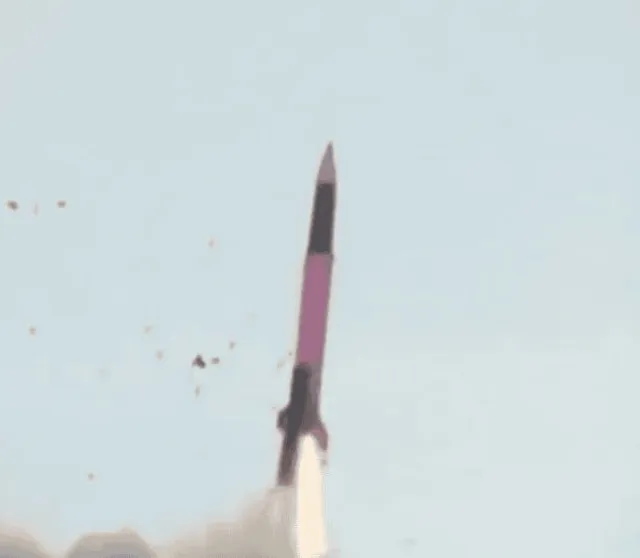
Ukraine’s FP-7 short-range ballistic missile has completed roughly 15 test launches and is in the final weeks of certification by Ukraine’s Defence Ministry, according to Fire Point chief executive Iryna Terekh, who told Reuters on August 4, 2026 that the missile is expected in combat use later this autumn. The FP-7 matters less for its specifications than for what its origin changes: it is a domestically built weapon, meaning Ukraine can fire it at targets on Russian soil without the case-by-case US authorization that has governed every ATACMS strike Ukraine has conducted.
A Soviet interceptor rebuilt into a Ukrainian strike missile
FP-7 is a solid-fuel, hot-launch ballistic missile built by Fire Point, a Ukrainian defense manufacturer founded in 2022 as an offshoot of Kvartal 95, the television production company President Volodymyr Zelenskyy co-founded before entering politics, now grown into one of Ukraine’s largest defense contractors with more than 500 employees. The missile is derived aerodynamically from the Soviet-era 48N6, the interceptor round used in Russia’s own S-400 system, but rebuilt around a new composite airframe and hot-launch system. Terekh has said the finished FP-7 now shares only about 20 percent similarity with its Soviet ancestor, effectively a new missile built on an inherited shape rather than a modified museum piece.
Fire Point’s own figures, best read as manufacturer claims rather than independently verified specifications, put FP-7’s range at up to 300 kilometers, though at least one source cites a lower 200 kilometers, a discrepancy worth noting rather than resolving toward the larger number. The missile carries a 150 to 250 kilogram warhead, a claimed circular error probable near 14 meters, and a terminal velocity near 1,500 meters per second, roughly Mach 4.4, placing it in the same performance class as the US-supplied ATACMS system Ukraine has used against Russian targets since 2024, at a range envelope Fire Point says costs roughly half as much to produce.
Why the certification, not the missile, is the real news
The specifications alone would make FP-7 notable but not unprecedented. What makes it more significant is a constraint that has shaped Ukrainian strike operations for years: every ATACMS launch against a target on Russian territory has required explicit authorization from Washington, a control layer that has visibly slowed and, at times, blocked strikes Ukrainian commanders wanted to conduct. FP-7 is entirely Ukrainian-built, funded and controlled, so no equivalent approval chain applies. That is the practical change certification unlocks: not a range bracket Ukraine lacked through ATACMS, but the ability to use it on Kyiv’s own timeline.
“We expect the first combat launches of the FP-7 in the beginning of fall,” said Iryna Terekh, chief executive of Fire Point (Reuters, Aug. 4, 2026).
The backdrop that makes the timing matter is Russia’s evolving ability to intercept the weapons Ukraine already has. An investigation by the Financial Times, cited by Tech Times rather than independently re-verified by this desk, reported that Russia adapted evasive maneuvering for its Iskander-M ballistic missiles starting in spring 2025, a change the investigation linked to a sharp drop in Ukrainian Patriot intercept rates, from roughly 37 percent in August 2025 to around 6 percent by September 2025. If accurate, that trend underscores why Ukraine is investing in offensive stand-off strike capability it fully controls rather than relying solely on defensive interceptors whose effectiveness has reportedly eroded.
FP-9 and the longer-range program running in parallel
Fire Point is developing a second, larger missile alongside FP-7. The FP-9 measures 9.5 meters long with a 1.1 meter diameter, larger than Russia’s own 9M723 Iskander at 7.2 meters, and carries an 800 kilogram warhead to a claimed 855 kilometer range at speeds above 1,200 meters per second, roughly Mach 3.5, comfortably covering Moscow from inside Ukraine. A test flight is expected this autumn, and Terekh has told Reuters that Fire Point plans FP-9 strikes on Russian targets by late autumn 2026. Its payload and range both exceed Missile Technology Control Regime thresholds, the framework restricting transfer of missiles carrying 500-plus kilograms over 300-plus kilometers, a detail the Arms Control Association, as cited by Tech Times, has flagged as relevant to any future third-party transfer, though none has been proposed.
Project Freyja: a separate, longer-horizon European effort
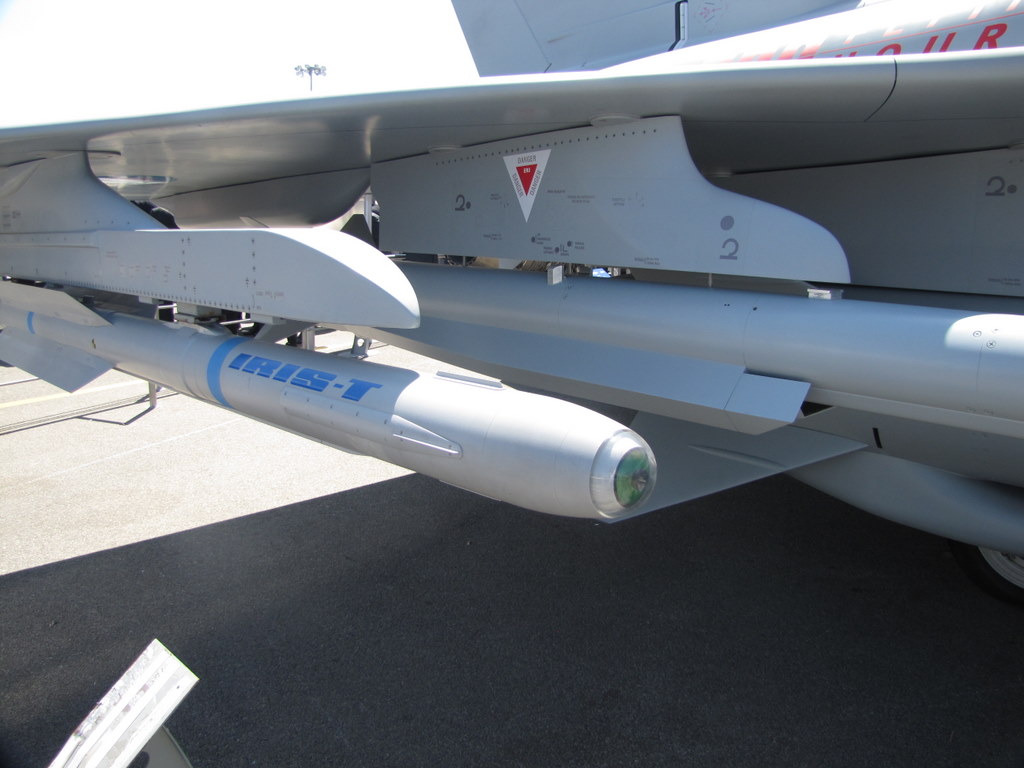
FP-7 and FP-9 should not be confused with Project Freyja, a separate and much longer-horizon program WeaponSpecs covered at its founding in prior coverage of the coalition’s July 13 Paris launch. Freyja is a nine-nation European missile-defense coalition, Denmark, France, Germany, Italy, the Netherlands, Norway, Spain, Sweden and the United Kingdom alongside Ukraine, plus 13 industrial partners, according to UNITED24 Media as cited by Tech Times. Its interceptor core is a faster-maneuvering variant called FP-7.X, which completed its first fully guided maneuvering flight on June 3, 2026. Norway’s Kongsberg is developing Freyja’s command center, while Germany’s Diehl Defence is in talks on seeker guidance drawing on its IRIS missile family. WeaponSpecs’ database entry for Freyja, spelled “Freyja” in current press but still “Freya” in the record itself, lists a top speed of Mach 5.9, a length of 7.25 meters and a target cost of $700,000 per intercept, flagged in the database as a program goal rather than a confirmed price, broadly consistent with Fire Point’s separately cited target of under 1 million euros, roughly $1.16 million.
Fire Point frames that $1.16 million target as one-quarter to one-sixth the cost of a Patriot PAC-3 MSE interceptor, which it cites as now costing the US Army more than $5 million per round, both figures unverified company claims best read as a development goal rather than a settled cost, since FP-7.X has not completed a live intercept test. Its stated production goal is 2,000 interceptors a year at scale, also a company target, with a first live intercept test planned for mid-2027. Fabian Hoffmann, a missile expert at the Norwegian Institute for Defence Studies, told Reuters that if Freyja’s interceptors can hit roughly a 40 percent per-shot intercept probability near that price point, the result would be “pretty impressive” and “very cheap” by Western missile-defense standards. Zelenskyy, in his August 6 evening address, said domestic ballistic-missile test results showed “strong potential,” though he did not name a specific missile or manufacturer, so that remark reads as general rather than a confirmation tied to FP-7.
Sources
- Ukraine's FP-7 Ballistic Missile Nears Combat, Freeing Kyiv From US Target Authorization — Tech Times, Aug 6, 2026
- Ukraine's FP-7 ballistic missile nears certification, first use expected in fall (Reuters) — RBC-Ukraine, Aug 6, 2026
- Ukraine Details FP-7X Interceptor and 2000-Missile Goal for Europe's Freyja Air Defense System — Army Recognition, Aug 6, 2026
- Ukraine's ballistic missile tests show 'strong potential,' Zelenskyy says — AeroTime, Aug 7, 2026
Systems mentioned
Every system named in this story, with its photo and, where available, a video. Tap a card to open the full spec sheet.
Frequently asked questions
Why does it matter that Ukraine built this missile itself? +
US-supplied weapons like ATACMS require explicit US authorization before every strike on Russian territory. A domestically built missile like FP-7 needs no such approval, changing what Ukraine can target and when without waiting on Washington.
How is Project Freyja different from the FP-7 itself? +
FP-7 is Ukraine's own short-range strike missile, already close to combat use. Freyja is a separate, longer-horizon nine-nation European missile-defense shield using a faster variant, FP-7.X, as its interceptor core, not expected to reach its first live intercept test before mid-2027.
How much cheaper is this supposed to be than existing Western systems? +
Fire Point's target is under roughly $1.16 million per FP-7.X interceptor versus more than $5 million cited for a Patriot PAC-3 MSE round, but this is a company development goal, not a confirmed production price, and the interceptor has not completed a live intercept test.
Is FP-7 combat-ready now? +
Not quite. As of early August it had completed roughly 15 test launches and was in the final weeks of certification, with first combat use expected this autumn.
More news


