France Submits $34B Formal Proposal for 114 Rafale Jets to India
Dassault filed its detailed technical and commercial offer around Aug. 6 for 114 Rafale fighters, most built in India, a deal that would nearly triple India's Rafale fleet and reshape its air posture against a Pakistan-China axis.

Dylan Agbagni, via Wikimedia Commons, CC0 1.0 Public Domain
France’s Dassault Aviation has formally submitted its detailed technical and commercial proposal for 114 Rafale fighter jets to India, a filing reported around August 6, 2026, that moves a program India cleared for negotiation back in February 2026 into its most concrete phase yet. The deal, valued at roughly 3.25 lakh crore rupees and converted by different outlets as somewhere between $34 billion and $39 billion, would build the large majority of the jets in India through an Indian industrial partner working alongside Dassault, engine and MRO firm Safran, avionics maker Thales, and weapons manufacturer MBDA.
What was actually submitted, and what’s still uncertain
Dassault’s submission is its response to a Letter of Request India issued in May 2026, part of the Multi-Role Fighter Aircraft program that has been under discussion since India’s Defence Acquisition Council first cleared the framework in February. Reporting on the exact submission date is not fully consistent: most outlets place the filing around August 6, while at least one account describes the proposal as submitted July 29 with the Indian government’s review beginning sometime in August. That gap matters less for what happened than for when, the substance is the same either way: France has now put a detailed, priced offer on the table rather than a preliminary framework.
The pricing and delivery-split figures carry similar spread. The deal’s total value is reported as 3.25 lakh crore rupees, but currency conversion varies by outlet between $34 billion and $39 billion, a range worth stating plainly rather than picking one number and presenting it as settled, since the final commercial terms are still under negotiation. The delivery split shows the same pattern: some reports describe 18 jets built and flown directly from France with the remaining 96 assembled in India, others put the flyaway number at 20 with 94 built domestically. Both versions agree on the underlying shape of the deal, a small initial batch delivered quickly from French production lines while the bulk is built at home, which is consistent with how India structured its 2016 order and its 2023 naval Rafale-M purchase.
Why the timing lines up with a capability gap
The context that makes this proposal newsworthy beyond its price tag is the state of the Indian Air Force’s own squadron strength. IAF fighter numbers have been declining as Soviet-era MiG-21s retire from service, while the indigenous Tejas Mk1A and the more capable Mk2 variant, meant to backfill that gap, have both faced delivery delays. A 114-jet Rafale order is explicitly framed in Indian defense planning as filling that shortfall rather than as pure fleet expansion. WeaponSpecs’ own database entry for the Rafale F4, the current production standard on offer, lists an export flyaway unit cost near $115 million, roughly 280 built worldwide across 8 operator nations, and compatibility with the MICA, Meteor, SCALP-EG and AASM Hammer weapons families plus the Exocet AM39 anti-ship missile, the kind of multirole weapons fit that suits both the air-defense and strike missions India needs covered simultaneously.
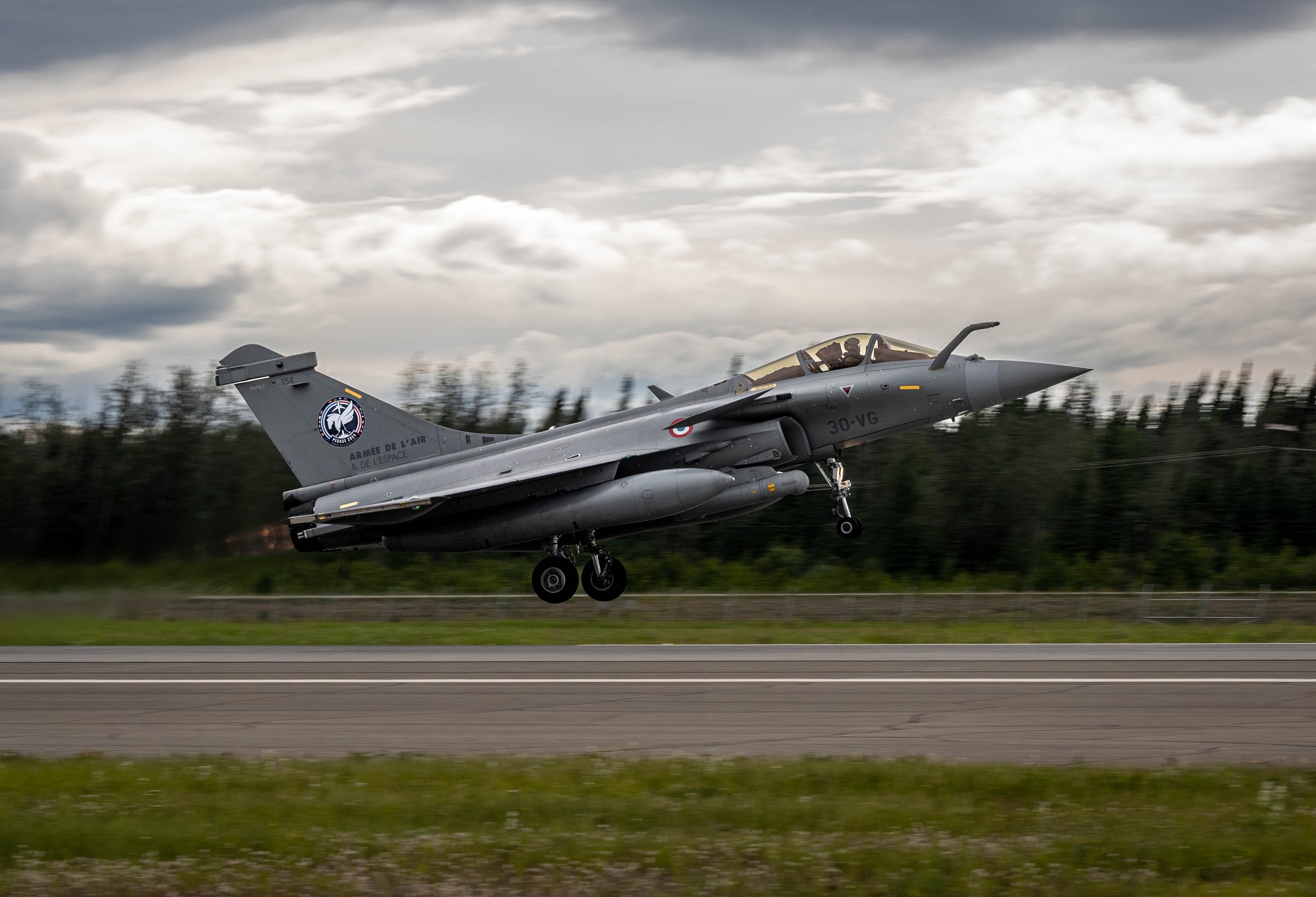
India’s existing Rafale commitment already stands at 62 aircraft: 36 IAF jets from the original 2016 deal, organized into two squadrons, plus 26 Navy Rafale-M carrier variants ordered in 2023. A completed 114-jet order would push the total fleet toward 176 aircraft, and Indian reporting has also floated a further 31 naval Rafale-M jets under separate discussion that could push the combined total past 200. At that scale, Rafale would move from being one component of a mixed Indian fighter fleet to its single largest type by a wide margin, which is a strategic decision as much as a procurement one: it commits India to French engines, French avionics architecture and French weapons integration as the core of its air power for the working life of these airframes, likely into the 2060s.
The Astra integration and the Pakistan-China backdrop
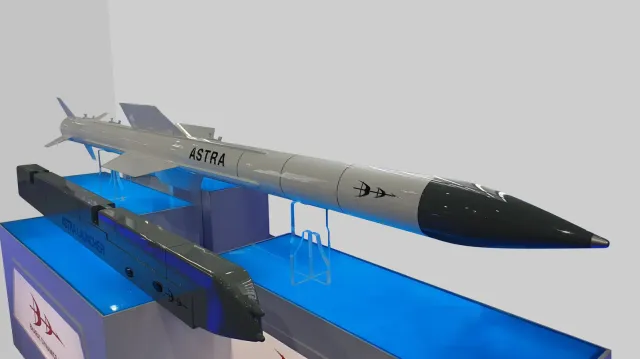
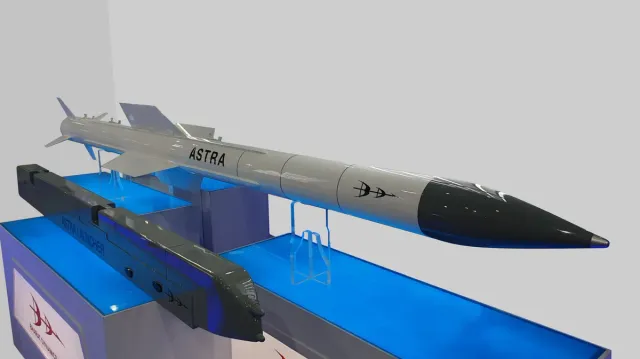
A specific Indian demand running through the negotiation is integration of India’s own DRDO-built Astra air-to-air missile family onto the Rafale. WeaponSpecs tracks two related entries in its database, the baseline Astra missile and the extended-range Astra BVRAAM variant, both part of India’s push to reduce dependence on France-sourced weapons like Meteor and MICA for its own air-to-air arsenal. India has also pushed for rising indigenous content on the deal, with figures cited moving from roughly 30 percent toward 60 percent or higher as the program matures, a pattern consistent with India’s broader defense-manufacturing policy of using large foreign platform buys to build domestic industrial capacity rather than simply importing finished aircraft.
The strategic backdrop for why this matters now is straightforward: India’s existing Rafales already flew Meteor beyond-visual-range and SCALP stand-off strike missions during Operation Sindoor in May 2025, the most recent instance of India using the type in an actual conflict scenario involving Pakistan. A near-tripling of the Rafale fleet, alongside a continuing Chinese fighter modernization program and deepening China-Pakistan defense ties, is being read in Indian strategic circles as a direct response to operating against what planners increasingly describe as a combined Pakistan-China threat axis rather than either country in isolation.
What still has to happen before this is real
None of this is signed. The submission moves the process into commercial negotiation, but the deal still requires approval from India’s Cabinet Committee on Security, the country’s top decision-making body for major defense purchases, before a contract can be finalized. Even on an optimistic negotiation timeline, deliveries under this new tranche are not expected to begin before 2029 or 2030, meaning the near-term effect on India’s actual squadron strength is limited regardless of how quickly the paperwork moves this year.
Sources
- France Submits Proposal For India's 114 Rafale Jet Deal With Large-Scale Local Manufacturing Plan — Free Press Journal, Aug 6, 2026
- 3.25 lakh crore defense deal: France proposes to build 94 Rafale jets in India — Business Today, Aug 6, 2026
- India's 114-Rafale fighter jet programme enters decisive phase as France submits formal proposal — Aerospace Global News, Aug 6, 2026
- India's defence ministry clears $39 billion Rafale fighter jet proposal — Gulf News, Feb 12, 2026
Systems mentioned
Every system named in this story, with its photo and, where available, a video. Tap a card to open the full spec sheet.
Compare these side by side →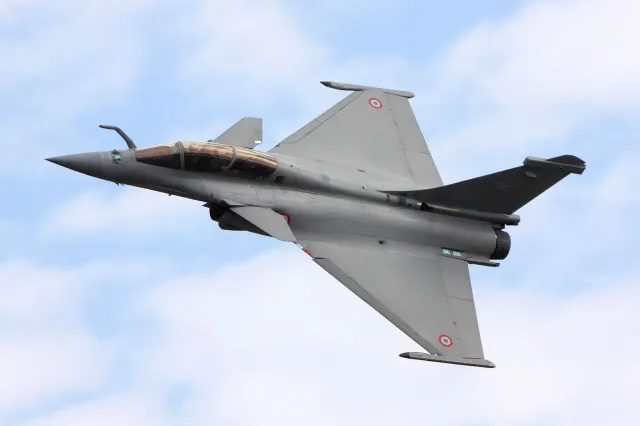
Frequently asked questions
How much is this deal actually worth? +
Roughly 3.25 lakh crore rupees, converted by different outlets as somewhere between $34 billion and $39 billion depending on the exchange rate used; the exact final price is still subject to commercial negotiation.
How many of the 114 jets would be built in France versus India? +
Reporting differs slightly, with some outlets citing 18 flyaway jets from France and 96 built in India, others citing 20 and 94, but the core structure is consistent: the large majority would be manufactured domestically by an Indian partner working with Dassault, Safran, Thales and MBDA.
Why does India want its own Astra missile integrated into a French jet? +
To reduce dependence on French-sourced weapons like Meteor and MICA, and to build export potential for the Astra family on other Rafale operators' aircraft.
Is this deal final? +
No. It still needs Cabinet Committee on Security approval and further commercial negotiation, and first deliveries under this new tranche are expected around 2029-30.
More news


