Navy Modular Missile: One Interceptor Body, Four Roles
NMM aims to replace SM-2, SM-6, and SM-3 Block IIA, whose ranges span 170-2,500 km, with one common 10-inch interceptor body and four swappable boosters.

Via Wikipedia, Virginia-class submarine (shown for identification)
The interceptor the U.S. Navy relies on to hit an incoming aircraft at 170 km is not the same interceptor it relies on to hit a ballistic target at 2,500 km, and that 14.7x gap between SM-2 and SM-3 Block IIA is exactly the seam the Navy now wants to weld shut. The Naval Modular Missile (NMM) program, formalized in a draft Request for Solutions released July 14, 2026, bets that a single 10-inch-diameter interceptor body, built from five common modules, can cover that entire range spread by swapping only the booster stack underneath it. Four variants are planned, one of them, ER-S, a genuinely new capability for submarines that has never existed in the fleet before.
What is the Naval Modular Missile, actually?
Every Standard Missile variant flying today, SM-2, SM-6, SM-3 Block IIA, was built as a largely separate missile with its own airframe, seeker, and guidance electronics. NMM inverts that: one shared Terminal Stage Interceptor (TSI), 10 inches in diameter, built from five modules, a Seeker Assembly Module, a Lethality Module, a Command Module, a Terminal-Stage Rocket Motor, and a Control Actuation Module. Only the booster and propulsion stack beneath that common stage changes between variants.
That single design is meant to produce four distinct missiles:
- LR (Long-Range): single-packed per Mk 41 VLS cell, hypersonic-capable, the longest-reaching variant.
- DP-ER (Dual-Packed Extended-Range): two interceptors per Mk 41 cell.
- QP-MR (Quad-Packed Medium-Range): four interceptors per Mk 41 cell. Navy officials told trade press the design goal here is covering “the engagement envelope from the highside of the ESSM (Evolved SeaSparrow Missile) to SM-6,” per reporting from Aviation Week and Army Recognition, not a named individual.
- ER-S (Extended-Range Submarine): fired from Virginia-class submarines’ Virginia Payload Module in 7-cell canisters, covered below.
To be precise about scope: NMM’s replacement target is the Standard Missile family only, SM-2, SM-6, and SM-3 Block IIA. It is not replacing ESSM or RIM-116 RAM; those remain separate missile families. QP-MR is only referenced against ESSM’s upper envelope as a design boundary, not as a program that absorbs it.
How different are the missiles NMM is trying to replace?
This is the number that makes the whole program legible. SM-2 publishes a 170 km range at Mach 3.5. SM-6 stretches that to 240 km, same Mach 3.5 class. SM-3 Block IIA, built for exo-atmospheric ballistic-missile defense rather than air targets, publishes 2,500 km and Mach 13.5. Divide the top by the bottom and you get 14.7x, a single missile family spanning point-defense-adjacent reach to hypersonic exo-atmospheric intercept.
For scale, RIM-116 RAM publishes just 9 km at Mach 2. RAM is not part of the Standard Missile family NMM targets, and it isn’t fired from a Mk 41 cell at all, it comes off a separate deck-mounted Mk 49/SeaRAM launcher entirely. It’s shown here purely for range-of-the-possible context: this is what a single-purpose, close-in point-defense interceptor looks like next to SM-3’s exo-atmospheric reach.
| System | Published range | Max speed | VLS packing | Launch platform |
|---|---|---|---|---|
| SM-2 | 170 km | Mach 3.5 | Single-cell Mk 41 | Surface ships |
| SM-6 | 240 km | Mach 3.5 | Single-cell Mk 41 | Surface ships |
| SM-3 Block IIA | 2,500 km | Mach 13.5 | Single-cell Mk 41 (larger-diameter canister) | Surface ships (Aegis) |
| RIM-116 RAM* | 9 km | Mach 2 | Not Mk 41, separate Mk 49/SeaRAM launcher | Surface ships (point defense) |
*RIM-116 is context only, shown for scale, not a system NMM is replacing.
Bars are drawn on a log scale, not linear, because a linear chart would render SM-2, SM-6, and RIM-116 as barely-visible slivers next to SM-3 Block IIA's 2,500 km. The log scale keeps every bar legible, but it also means the visual gap on the page understates just how much bigger SM-3's actual range is, read the numbers, not the bar lengths, for the real magnitude.
Why is packing density the real design problem, not range?
Range is the number everyone quotes, but it isn’t the constraint driving NMM’s design. VLS cell count is fixed the moment a ship is built, and a cruiser or destroyer only has so many Mk 41 cells. Quad-packing instead of single-packing lets the same physical magazine hold four times as many interceptors against short and medium-range threats, freeing single-cell slots for the longer-reach missiles that can’t be shrunk. That multiplier is why our own count of how many missile cells a warship actually carries matters more to real air-defense capacity than any one missile’s headline range.
This is also why simply buying more of an existing missile doesn’t solve the Navy’s problem. Lockheed Martin has floated its Army-origin PAC-3 as a possible interim or complementary interceptor, and is already ramping PAC-3 MSE production to 600 units a year (up from 250), largely to replace expenditure in Ukraine and the Middle East, at roughly $4.2 million per missile. But retrofitting PAC-3 for Navy packing density runs into a hard physical limit.
“The Navy was having a real challenge. They had very good long-range missiles, but they needed a complementary missile,” said Chris Mang, Vice President of Strategy & Business Development at Lockheed Martin Missiles and Fire Control (via The War Zone, 2026).
Mang was direct about the packing limit specifically: “In the MSE configuration, we cannot quad pack it.” The smaller PAC-3 CRI variant could theoretically allow denser packing, but that would mean restarting a rocket-motor production line the Navy has not authorized. PAC-3 wasn’t designed from day one to flex its packing density, so adapting it now is expensive and slow. NMM’s entire premise is the opposite: build the packing flexibility into the terminal stage from the start, so a single common design can be single-packed for hypersonic reach or quad-packed for volume, without a separate missile program for each configuration.
Why is the submarine-launched ER-S variant a new capability, not an upgrade?
Every other NMM variant replaces something the Navy already fields. ER-S does not. The Navy currently has no operational submarine-launched surface-to-air missile, “at least none we know about,” per The War Zone’s reporting. A submarine today can strike land targets and other ships, but it cannot shoot down an aircraft or incoming missile from underwater. ER-S would change that, fired from Virginia-class submarines through the Virginia Payload Module in 7-cell canisters, a launch tube arrangement built for land-attack missiles now being adapted to carry an air-defense interceptor instead.
The platform link matters as much as the missile itself. Only future Virginia-class Block V boats equipped with VPM would carry ER-S, so this isn’t a retrofit across the existing submarine fleet, it’s a capability tied to a specific hull configuration still being delivered. If it works, a submerged submarine gains a self-defense and area air-defense option it has never had, extending the Navy’s air-defense envelope to a platform that previously had none at all.
What will NMM cost, and when might it arrive?
The Navy requested $311 million in FY2027 for NMM as a budget “new start,” the formal designation for a program just beginning to receive dedicated funding rather than continuing an existing line. The draft Request for Solutions went out July 14, 2026, following a NAVSEA industry day earlier in the year, with the program’s conceptual roots tracing back to at least 2021. The stated target is 1,000 interceptors a year within five years of a contract award, a production rate that would need to cover all four variants across surface ships and, eventually, submarines. The Navy’s eventual goal is a fleet-wide replacement of the Standard Missile family, not a partial buy alongside SM-2, SM-6, and SM-3.
None of that is committed spending yet. A draft RFS is a solicitation for industry input, not a signed contract, and the FY2027 request still has to clear Congress. Worth separating from a different WeaponSpecs story: the Pentagon’s Family of Affordable Mass Missiles (FAMM) program, covering Anduril’s Barracuda, CoAspire’s RAACM, and Zone 5’s AGM-188 Rusty Dagger at roughly $462,700 average unit cost across $12.955 billion from 2027-2031, is an offensive cruise-missile mass-production push (see our own coverage of Anduril’s pricing opacity, one of the three FAMM vendors). NMM solves a different problem, packing density and variant proliferation in a defensive interceptor, and the two shouldn’t be conflated just because they surfaced in the same budget cycle.
What should a procurement-watcher track next?
The gap between a draft RFS and a fielded missile is where most “announced” defense programs actually live or die on schedule. Our own audit of the database’s 42 not-yet-fielded systems shows announced timelines slipping years past their original targets as a recurring pattern; NMM has no fielded or in-development record in the database yet, so it isn’t one of those 42, but the historical base rate is a reasonable caution against treating “1,000 interceptors a year within five years of contract award” as a fixed date rather than a program goal. Watch three things: whether the draft RFS converts to an actual contract award, whether QP-MR’s quad-pack claim survives real Mk 41 integration testing, and whether ER-S stays tied to Virginia-class Block V delivery schedules that have their own history of slipping. A missile meant to replace three missiles is a bigger bet than any one of them, and bigger bets take longer to prove out.
For a broader look at how packing density and cell count shape real fleet capacity, see Missiles on WeaponSpecs, or run your own comparison in the Advisor.
Sources
Systems in this comparison
Every system covered above, with its photo and, where available, a video. Tap a card to open the full spec sheet.
Compare these side by side →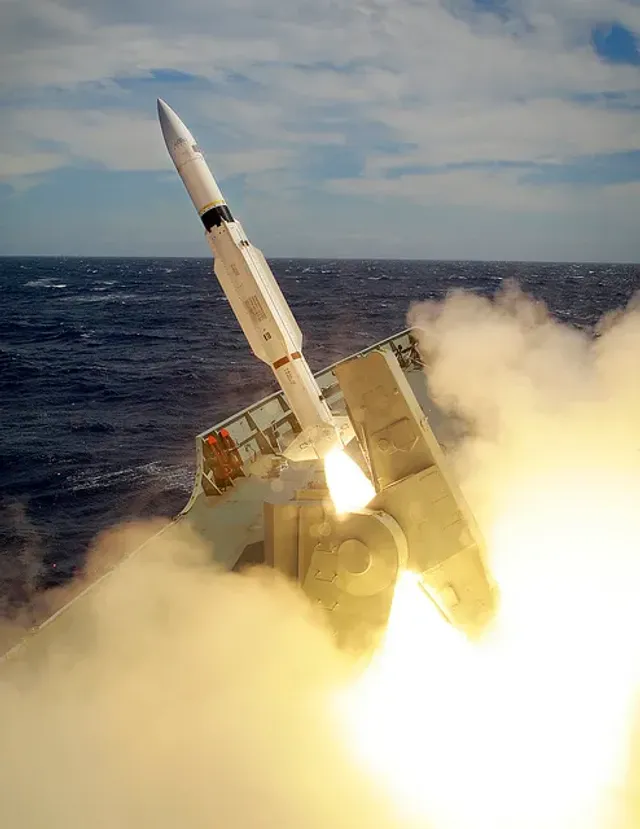
Missile
SM-2 (Standard Missile-2)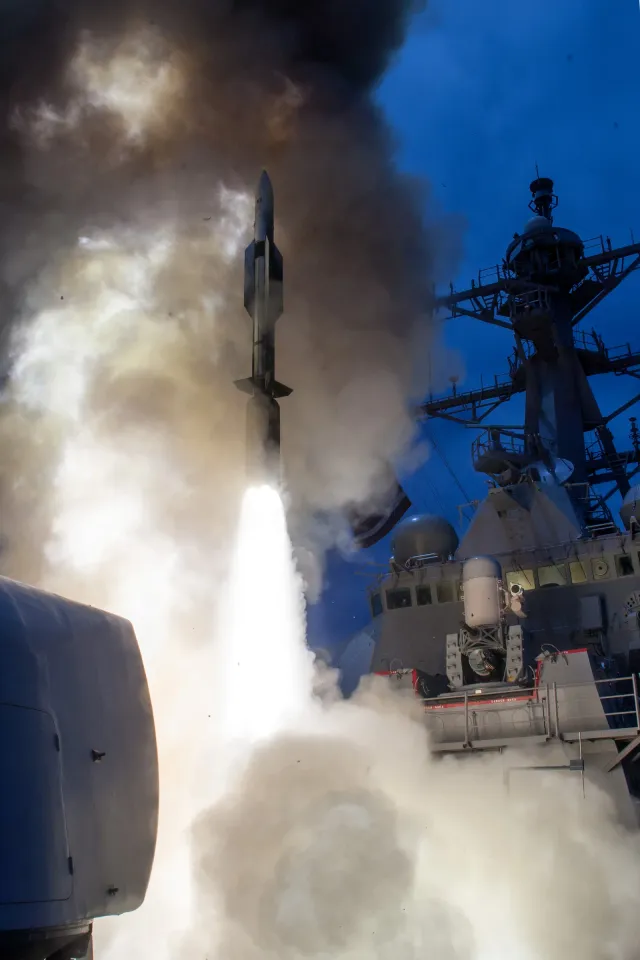
Missile
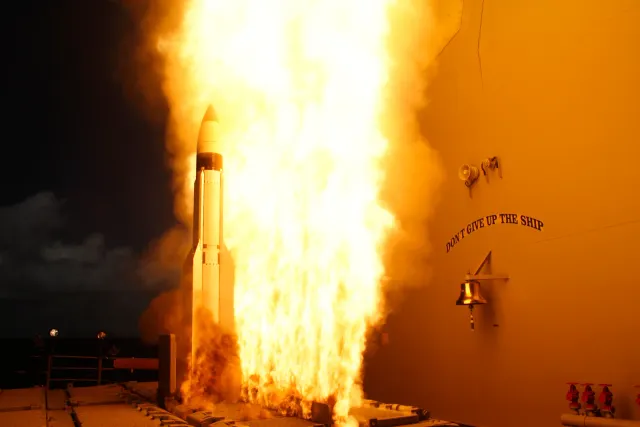
SM-3 Block IIA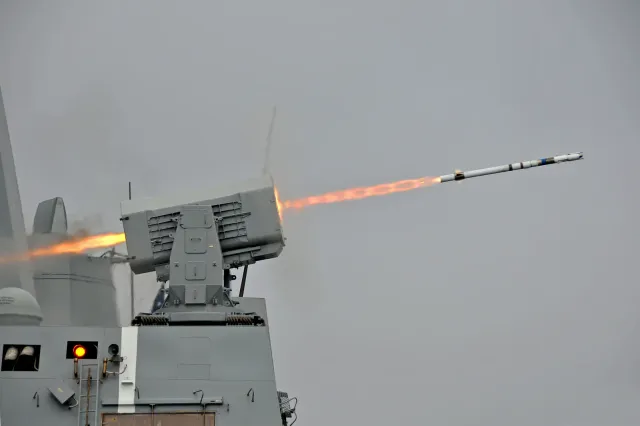
Missile
RIM-116 RAM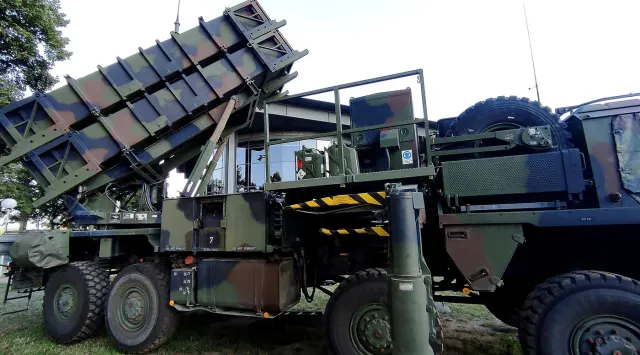
Air defense system
Patriot PAC-3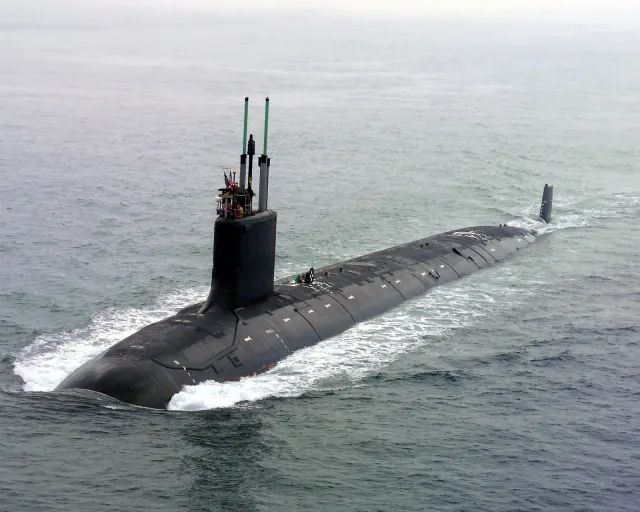
Submarine
Virginia-class SubmarineFrequently asked questions
What is the Naval Modular Missile (NMM)? +
NMM is a U.S. Navy program to replace the entire Standard Missile family (SM-2, SM-6, SM-3 Block IIA) with a single common interceptor body, a 10-inch-diameter Terminal Stage Interceptor built from five shared modules. Four variants change only the booster and packing configuration: LR, DP-ER, QP-MR, and a submarine-launched ER-S.
How is NMM different from the Family of Affordable Mass Missiles (FAMM)? +
They solve different problems. FAMM, covered in [our own coverage of Anduril's pricing opacity](/articles/anduril-zero-price-disclosure/), one of the three FAMM vendors, is an offensive cruise-missile mass-production push averaging about $462,700 per unit. NMM is a defensive interceptor architecture, aimed at consolidating variant proliferation and packing density, not driving down unit cost through mass production.
Why can't the Navy just buy more of an existing missile instead of building NMM? +
Packing density is the problem, not raw range. Lockheed Martin's PAC-3 MSE cannot be quad-packed in a Mk 41 cell as currently built; only the smaller PAC-3 CRI variant could theoretically allow it, and that would require restarting a rocket-motor production line the Navy hasn't authorized. NMM's premise is designing that packing flexibility in from the start via a common terminal stage with interchangeable boosters.
What is the ER-S variant and why does it matter? +
ER-S (Extended-Range Submarine) is a version fired from Virginia-class submarines' Virginia Payload Module via 7-cell canisters. The Navy currently has no operational submarine-launched surface-to-air missile, so ER-S would be an entirely new capability, not an upgrade to an existing one, carried by future Block V boats equipped with VPM.
When would NMM actually reach the fleet? +
The Navy's draft Request for Solutions came out July 14, 2026, and the FY2027 budget requests $311 million as a new start, targeting 1,000 interceptors a year within five years of contract award. Those are targets tied to a draft solicitation, not a signed contract, and our own audit of not-yet-fielded systems in the database shows announced programs have a documented history of slipping years past their original targets.
Related reading


