Army Wants a Sub-$150K Missile to Kill $35K Drones at Scale
The Army's new Next Generation Counter-sUAS Missile targets a $150,000 unit cost and a 5,000-round buy, aimed at closing the cost gap that lets cheap drones overwhelm million-dollar interceptors.

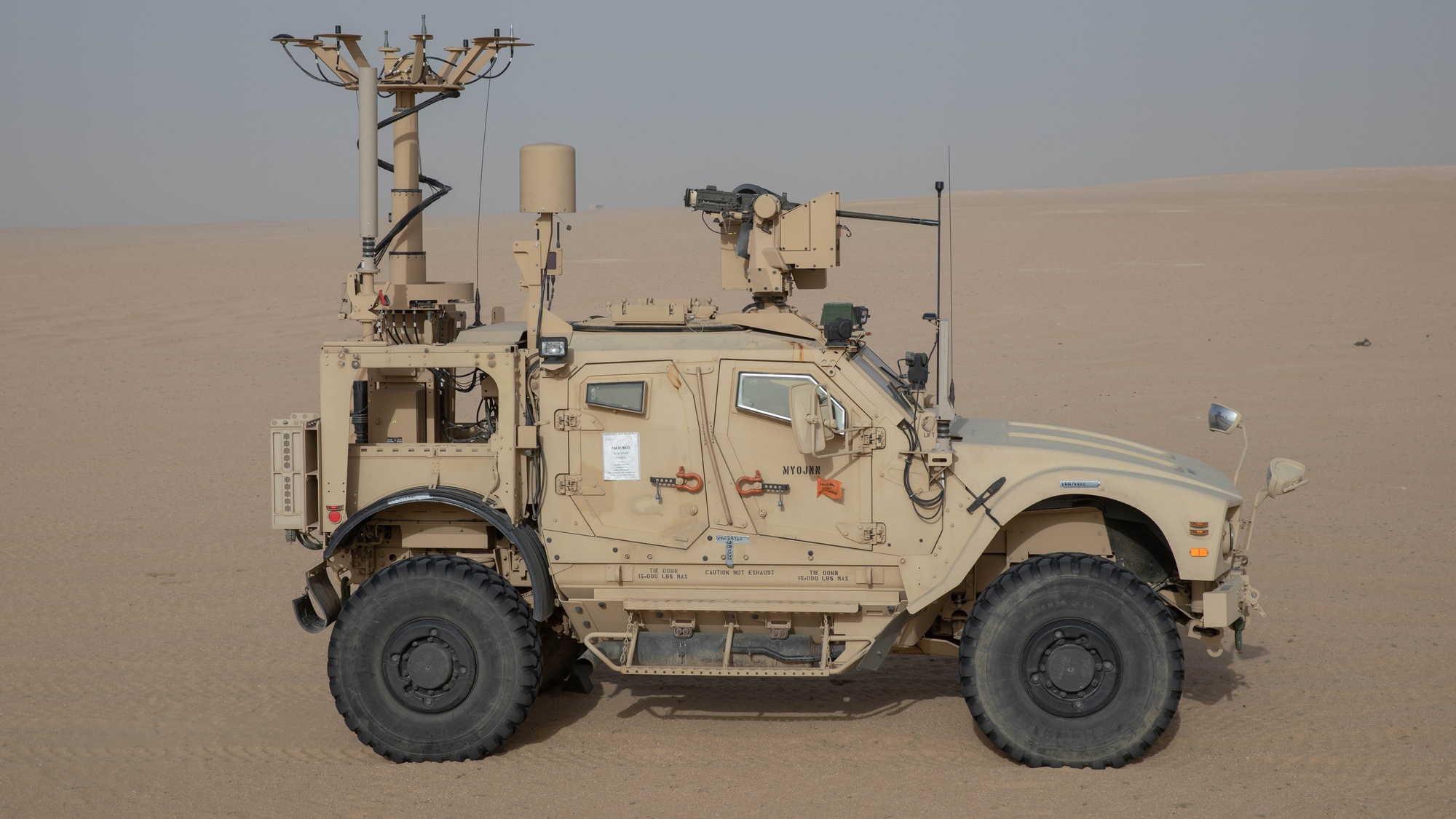
Airman 1st Class Keagan Lee, U.S. Air Forces Central, via Wikimedia Commons, public domain
The U.S. Army published a sources-sought notice on August 4, 2026 for a new interceptor called the Next Generation Counter-sUAS Missile, targeting a unit cost under $150,000 and a minimum buy of at least 5,000 rounds, an effort aimed squarely at a math problem that has been building for years: the missiles the Army already owns cost far more than the drones they are increasingly asked to shoot down. Industry responses to the notice are due August 20, 2026.
The problem this missile is meant to solve
The core justification for the program is simple arithmetic. A Patriot PAC-3 interceptor runs roughly $4 to $5 million per round in news reporting on the Army’s own cost figures, while cheap, mass-produced attack drones like Iran’s Shahed-136 have been estimated by Defense Daily at around $35,000 apiece. WeaponSpecs’ own database entry for the Shahed-136 lists a unit cost near $50,000, but flags that figure as heavily disputed: Iranian-to-Russian negotiated prices in leaked 2022 documents ranged from roughly $193,000 down to $375,000 including technology transfer, while Russia’s own domestic production target was closer to $48,800. Any Shahed-136 cost figure, whichever number is used, is best treated as a directional estimate tied to Iranian and Russian state-linked manufacturing claims, not an independently audited price.
Whatever the exact drone cost, the gap with a multimillion-dollar interceptor is the same shape, and it is not sustainable at scale. If an adversary can launch large numbers of cheap drones faster than defenders can afford to shoot them down with expensive missiles, the economics favor the attacker regardless of how effective any single intercept is. That dynamic, visible over more than three years of Russia’s Shahed-style drone campaigns against Ukraine and repeated Houthi drone and missile attacks in the Red Sea, is the backdrop the Army is citing for building something cheaper and more purpose-built than repurposing its existing high-end air-defense missiles for a threat class they were never designed to counter economically.
What the Army is actually asking industry to build
The performance bar the Army set in its notice is specific. At minimum, the missile needs a range beyond 16 kilometers and an intercept altitude up to 6 kilometers; the Army’s stretch goal is 25-plus kilometers of range and 8-plus kilometers of altitude. It should be able to respond within 5 seconds of an operator initiating an engagement, and it needs to handle Group 2 and Group 3 small unmanned aircraft, a Pentagon classification covering drones from 21 to 1,320 pounds, larger than a consumer quadcopter but smaller than a full-size jet-powered target drone.
Just as important as the missile itself is what it has to plug into. The Army wants the new interceptor to fit Raytheon’s existing Coyote launcher with little or no modification, tracked in WeaponSpecs’ database as the Coyote Block 2, which the Army already fields with a published engagement range near 15 kilometers, a top speed of 595 kilometers per hour and a combat weight of 5.9 kilograms. The new missile also has to work with the sensor and command infrastructure the Army already operates: the Patriot system, the AN/TPQ-53 counterfire radar, Sentinel A3 and A4 air-defense radars, and the IBCS-M battle command system that ties them together. Two physical configurations are planned, a fixed-site version built around the Army’s existing FS-LIDS setup with its own electronic-warfare sensors, and a mobile, vehicle-mounted version built around M-LIDS, the same family shown in the training photo above.
A distinct program from the Army’s other cheap-interceptor push
The new missile is not the Army’s only attempt at driving down counter-drone costs, and the two efforts are worth keeping separate. Army Secretary Dan Driscoll said in May 2026 that a related but different program, called the Low-Cost Interceptor, should hit a unit cost under $250,000. An Army spokesperson has since confirmed that the Next Generation Counter-sUAS Missile is separately defined from the Low-Cost Interceptor program, meaning the Army currently has two parallel efforts chasing a cheaper interceptor at two different price points and, likely, two different roles. Reporting reviewed for this story did not surface a named Army official speaking specifically about the new missile program by name, so no attributed quote about it is used here; Driscoll’s comment, while real and on the record, was about the separate Low-Cost Interceptor effort and should not be read as a statement about this one.
The Army has already been investing in the Coyote family this new missile is meant to complement: it awarded Raytheon a $5 billion contract for Coyote systems in 2025, a sign the service sees the underlying launcher and sensor architecture as sound even as it looks for a cheaper round to fire from it. On the current schedule, the Army wants the new missile mature to Technology Readiness Level 7, meaning it has been demonstrated in an operational environment, by the fourth quarter of fiscal year 2027, followed by an initial batch of 50 missiles for operational assessment by the first quarter of fiscal year 2028.
Reading the Patriot figure correctly
One number worth flagging precisely: WeaponSpecs’ own database lists the Patriot PAC-3 at a unit cost of $1.1 billion, but that figure is explicitly the cost of an entire battery, the launchers, radar and supporting equipment together, not a single interceptor round. It should not be read alongside the $150,000 target as if the two numbers describe the same kind of purchase. The relevant comparison for this story is the roughly $4 to $5 million per-round figure cited in news reporting on individual Patriot interceptors, which is the number the Army is actually trying to undercut with a purpose-built counter-drone missile.
Sources
- Army seeks next-gen missile that could shoot down small drones for less than $150K a pop — DefenseScoop, Aug 4, 2026
- Army launches search for counter-drone missile priced under $150K — Breaking Defense, Aug 4, 2026
- US Army wants a surface-to-air missile that can destroy small drones — Military Times, Aug 4, 2026
- Army details new Next-Gen C-sUAS missile effort, aims for unit cost below $150,000 — Defense Daily, Aug 4, 2026
- Army pursuing less-costly anti-drone missile — Stars and Stripes, Aug 5, 2026
Systems mentioned
Every system named in this story, with its photo and, where available, a video. Tap a card to open the full spec sheet.
Compare these side by side →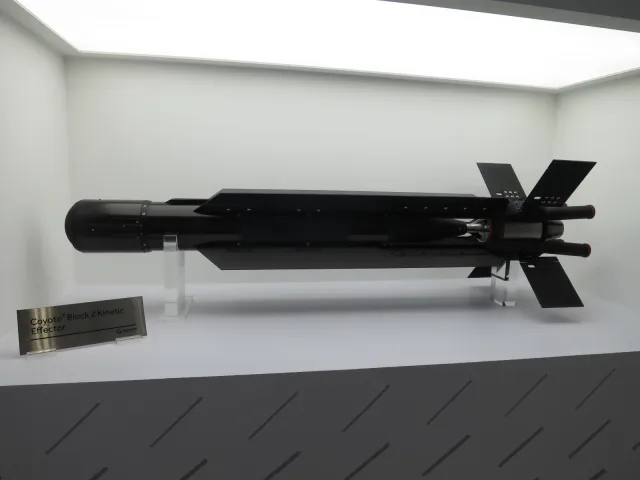
Air defense system
Coyote Block 2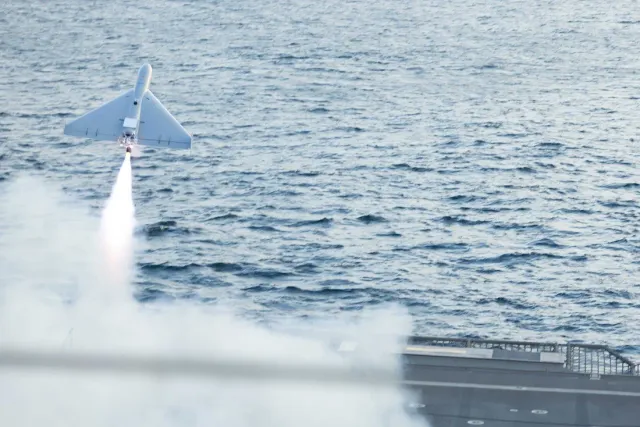
UAV / drone
Shahed-136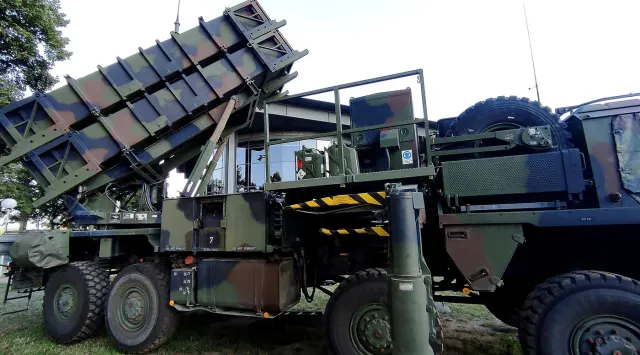
Air defense system
Patriot PAC-3Frequently asked questions
Why does the Army need a whole new missile instead of using what it has? +
Because interceptors like Patriot cost roughly $4 to $5 million per round, while the drones they are increasingly used against can cost tens of thousands of dollars, a ratio the Army judges unsustainable if it has to keep shooting down large numbers of cheap drones.
What exactly would this missile shoot down? +
Group 2 and 3 small unmanned aircraft systems, roughly 21 to 1,320 pounds, bigger than a hobbyist quadcopter but smaller than a jet-powered target drone.
How is this different from the Army's other cheap-interceptor effort? +
The Army is separately pursuing a Low-Cost Interceptor program targeting under $250,000 per unit; an Army spokesperson has said the new missile is distinct and separately defined from that effort.
When would this be fielded? +
The Army wants the design mature enough for fielding by the end of fiscal 2027, with an initial batch of 50 missiles ready for operational assessment by the first quarter of fiscal 2028; industry has until August 20, 2026 to respond to the Army's sources-sought notice.
More news


