Ukraine Claims It Hacked Russia's Air Defense Into Downing a Su-57
A Russian Su-57 stealth jet crashed near Moscow on July 23. A Ukrainian group claims it hacked the unit that shot it down; Moscow blames a malfunction.

Luis4516 via Wikimedia Commons, CC0 1.0 (public domain)
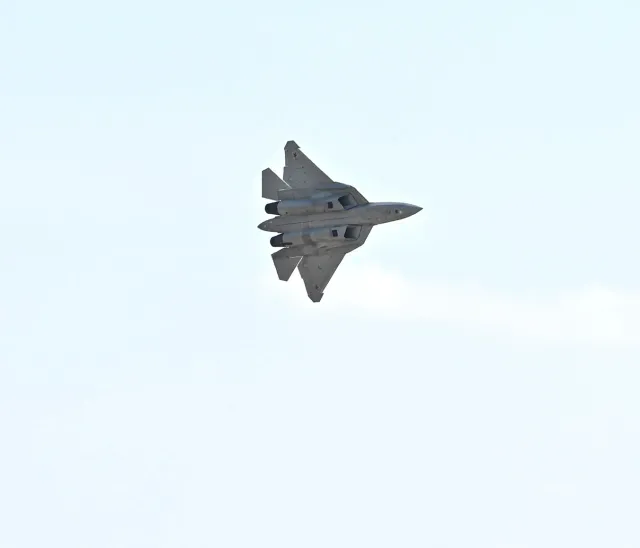
A Sukhoi Su-57 “Felon,” Russia’s flagship fifth-generation stealth fighter, crashed in the Odintsovo district near Zvenigorod, Moscow Oblast, shortly after taking off from Kubinka Air Base on July 23. The pilot ejected safely, no ground casualties or damage were reported, and the jet was not carrying weapons. Russia’s Ministry of Defense blamed a preliminary “technical malfunction.” A Ukrainian OSINT group, InformNapalm, offers a very different explanation: that it hacked the volunteer Russian air-defense unit assigned to protect Moscow’s skies and turned it against the Su-57 itself. Neither claim has been confirmed by an independent investigation.
What happened over Odintsovo
The Su-57 crashed in a wooded area of the Odintsovo district, a suburban zone southwest of Moscow, not long after departing Kubinka, a major Russian air base roughly 60 kilometers from the city center that regularly hosts Su-57 operations and airshows. The pilot ejected and survived; Russian and Ukrainian reporting agree on that much, along with the absence of any reported casualties or property damage on the ground. Aviation Safety Network, an independent incident-tracking database that logs the basic facts of military and civil aviation losses worldwide, lists the crash under its wikibase entry for July 23, 2026, without adjudicating a cause.
The Russian Ministry of Defense’s public explanation, a “technical malfunction,” is the kind of statement that closes the story for domestic audiences but tells an outside observer very little. It is a claim from a government with an obvious interest in a mundane, embarrassment-free explanation, and it has not been independently verified by any outside investigation, flight-data release, or third-party technical review. That does not make it false. It does mean it should be read as one government’s account, not as an established fact.
The hacking claim, and who’s making it
InformNapalm describes itself as a Ukrainian volunteer OSINT and information-operations group with a long track record of publishing analysis on Russian military hardware and personnel. Its account of the Su-57 loss is considerably more dramatic than Moscow’s: working, it says, alongside Ukrainian special services, the group penetrated the control systems of “BARS Moscow,” a volunteer-manned Russian unit trained to shoot down Ukrainian fixed-wing strike drones over the Moscow, Kaluga, Ryazan and Tula regions. BARS Moscow relies mainly on small Lys-2 interceptor drones, machine-vision guided, carrying roughly a 0.8-kilogram warhead and capable of about 206 kilometers per hour, a genuinely low-end tool set for defending the airspace around a national capital. InformNapalm claims it manipulated the unit’s targeting and engagement parameters so that its own systems fired on and downed the Su-57, and says it had shared an analytical report on the unit’s hardware and software vulnerabilities with Ukrainian defense forces beforehand.
That is a serious, specific claim, and it is also, as of this writing, an unverified one from a single partisan, non-governmental source with a direct interest in showcasing Ukrainian capability. No government, Ukrainian or Russian, has confirmed it. No independent technical evidence, logs, intercepted communications, or third-party forensic review has been published to substantiate the mechanism InformNapalm describes. Readers should weigh it accordingly: a plausible, alarming claim, not an established fact, sitting alongside an equally unconfirmed Russian explanation.
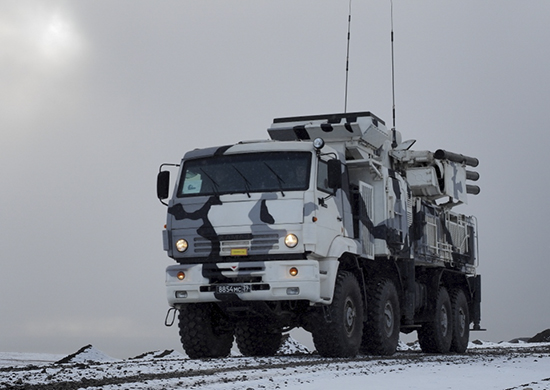
Why this matters regardless of which claim is true
The Su-57 is one of the Kremlin’s premier prestige weapons and export pitches, a jet built to demonstrate that Russia can field the same class of low-observable, supermaneuverable fighter as the United States’ F-22 and F-35. WeaponSpecs’ own database lists only around 30 Su-57s believed built against an in-service date of 2020, with a single confirmed export customer to date, figures that already made the program’s real operational maturity a subject of scrutiny well before this crash. Per Eurasian Times reporting referencing an earlier incident, this would be at least the second Su-57 loss of the war, a pattern that invites harder questions about the aircraft’s advertised fifth-generation billing versus its actual field record. WeaponSpecs’ own unit-cost estimate for the Su-57 sits around $50 million, flagged in the database as disputed and uncertain; some outside reporting on this incident has put the figure at “at least $100 million.” Neither number is confirmed against an audited program cost, and this piece does not pick a side between them.
Set the cause of the crash aside for a moment and the InformNapalm claim itself is still the more consequential story: a credible assertion, even an unproven one, that Ukraine can reach into and manipulate the software running part of Moscow’s own air-defense network is a meaningful escalation in the cyber and electronic-warfare dimension of the war. It also underscores something that is independently verifiable regardless of what caused this specific crash: Russia has had to lean on thin, improvised, volunteer-manned formations like BARS Moscow, armed with small machine-vision drones rather than dedicated military air-defense systems, to fill gaps in coverage against sustained Ukrainian long-range drone strikes on the capital region. That reliance on ad hoc capability, not the disputed cause of one crash, is the part of this story that does not depend on believing either government’s or either group’s account.
Sources
- Russian Air Defense Forced to Engage Its Own Su-57 — Militarnyi, Jul 26, 2026
- Military aircraft reportedly crashed in Russia's Moscow Oblast — The Kyiv Independent, Jul 23, 2026
- Russia's Crown-Jewel Su-57 May Have Crashed Outside Moscow — United24 Media, Jul 23, 2026
- Russian Su-57 Crashes Near Moscow, Local Media Reports; Could Be 2nd Crash of RuAF's Stealth Fighter Jet — The Eurasian Times, Jul 24, 2026
- Su-57 wikibase entry #574489 — Aviation Safety Network, Jul 23, 2026
Systems mentioned
Every system named in this story, with its photo and, where available, a video. Tap a card to open the full spec sheet.
Frequently asked questions
What exactly crashed, and where? +
A Russian Su-57 'Felon' stealth fighter went down in the Odintsovo district near Zvenigorod, Moscow Oblast, shortly after takeoff from Kubinka Air Base on July 23, 2026. The pilot ejected safely, and there was no reported ground damage.
What does Russia say happened? +
The Russian Ministry of Defense cited a preliminary 'technical malfunction.' That is a state claim, not independently verified by any outside investigation.
What does Ukraine claim? +
The Ukrainian OSINT group InformNapalm says it, working with Ukrainian special services, penetrated the control systems of the 'BARS Moscow' volunteer drone-interceptor air-defense unit and manipulated it into firing on the Su-57 itself. This is an unverified claim by a partisan, non-governmental group, not confirmed by the Ukrainian government or any independent party.
What is 'BARS Moscow'? +
A volunteer-manned Russian unit trained to intercept Ukrainian fixed-wing strike drones over the Moscow, Kaluga, Ryazan and Tula regions, primarily using small Lys-2 interceptor drones armed with roughly a 0.8-kilogram warhead.
More news


