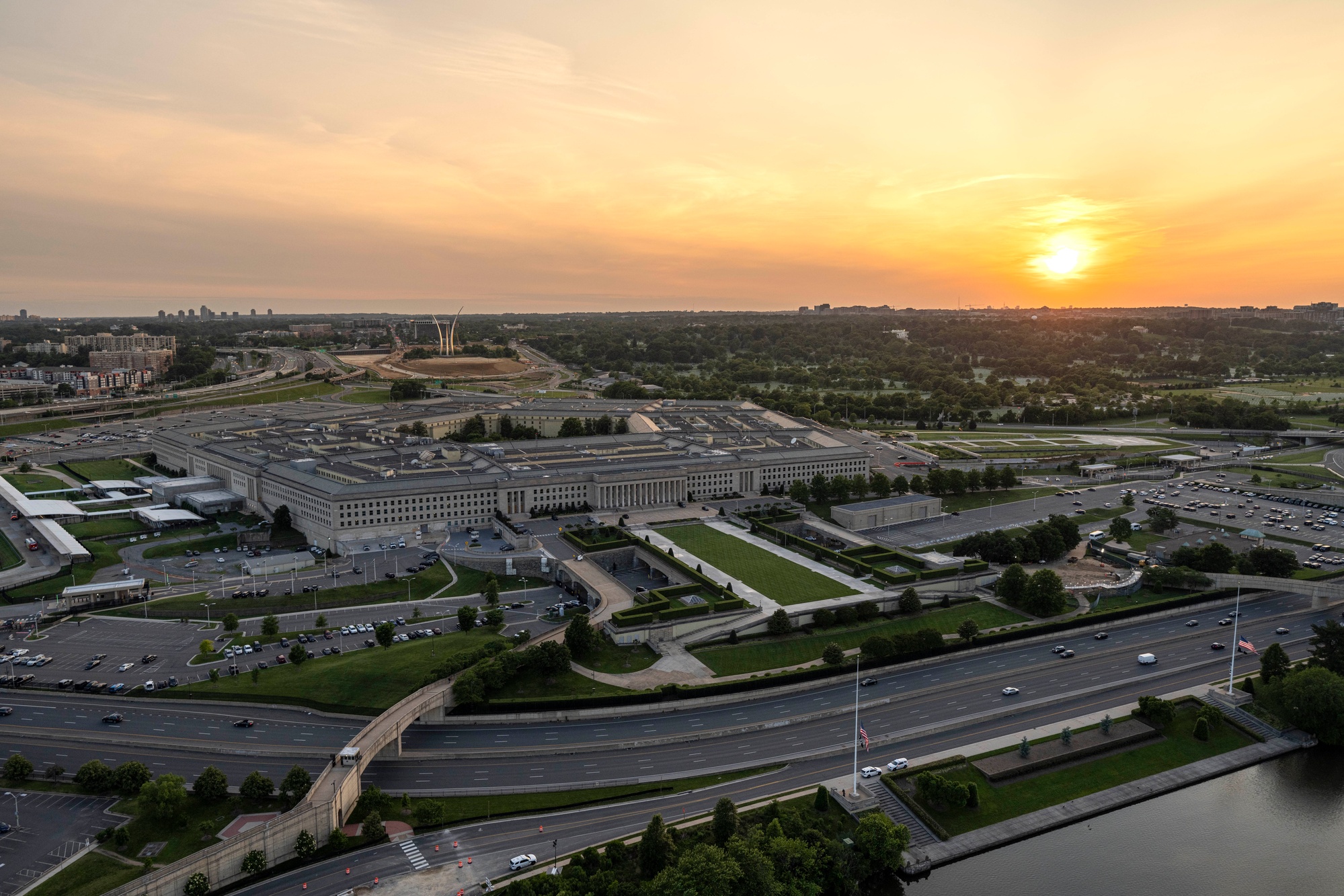
Pentagon Locks Away Decades of Weapons Test Reports
DOT&E moved 25 years of public findings behind a CAC-gated portal citing AI risk, and for the first time in over 20 years, the GAO's F-35 review is being withheld entirely.

Senior Airman Belinda Guachun-Chichay, 56th Fighter Wing, DVIDS, public domain
The Pentagon’s independent weapons-testing office pulled roughly 25 years of public unclassified reports off the open web on July 30, 2026, moving them behind a Common Access Card login, while separately, the Government Accountability Office’s latest F-35 review was withheld in full for the first time in more than two decades of annual reports.
An office built specifically to make failures public
The Director of Operational Test and Evaluation, known as DOT&E, exists because Congress decided in 1983 that the Pentagon could not be trusted to grade its own weapons before buying them in bulk. The office was created after a string of failures, including the Sergeant York DIVAD anti-aircraft gun and combat malfunctions in early M16 rifles, that made it into the field before independent testers caught the problems. Congress strengthened the office again in 1986, requiring live-fire survivability testing after the Bradley Fighting Vehicle was subjected to test conditions widely seen as unrealistic. The office’s entire institutional purpose, for more than 40 years, has been publishing realistic-combat test results that program offices and contractors cannot quietly bury.
That mandate had already been narrowed once this cycle. In May 2025, then-Defense Secretary Pete Hegseth directed DOT&E to “immediately eliminate any non-statutory” functions, a move that cut the office’s staff by 74 percent and its budget by roughly 80 percent, according to Federal News Network’s reporting. Dr. Amy Henninger was confirmed by the Senate Armed Services Committee and sworn in as DOT&E’s tenth appointed director on March 23, 2026, inheriting an office that had already been sharply reduced before this month’s access change.
What actually moved, and the AI justification
On July 30, 2026, DOT&E restricted public access to its unclassified annual weapons-testing reports, roughly 25 years of previously open assessments, relocating them to a CAC-gated secure network called the DOT&E Extranet. A Pentagon official framed the move as defensive rather than punitive: “The transition of DOT&E materials to a CAC-enabled environment is a proactive measure to strengthen our operational security posture,” according to the official justification reported by Federal News Network, which also carried Pentagon officials’ clarification that the reports were “not deleted,” only access-restricted to those with a valid military credential.
The specific concern cited is that adversaries could use AI tools to compile years of publicly posted testing data, much of which documents specific weaknesses and failure modes in individual weapons systems, into detailed vulnerability profiles of US equipment. That is a materially different threat model than the reports posed when they were first published two decades ago, before large-scale automated data aggregation existed as a practical capability, and it is the crux of the Pentagon’s argument for restricting access now rather than earlier.
The F-35 report is a separate, first-of-its-kind case
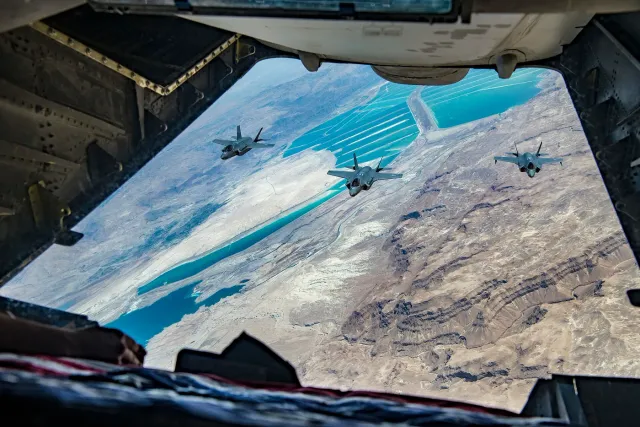
Distinct from the DOT&E access change, the GAO’s latest F-35 production-and-modernization report was stamped Controlled Unclassified Information in its entirety, meaning no version of it is publicly available. Federal News Network’s own reporting frames these as two related but separate actions inside the same broader trend, not one single decision, and this piece keeps that distinction intact. In more than 20 years of annual GAO reviews of the F-35 program, this is the first time the full report has been withheld from public release. The F-35A Lightning II, the Air Force’s primary fifth-generation fighter, carries a unit flyaway cost of roughly $82.5 million across Lots 15 through 17, with more than 1,100 built and 20 operator nations flying the type, a program scale that makes an unusually opaque annual oversight report notable on its own.
The pushback, in the testers’ own words
The strongest public criticism has come from a lawmaker and a watchdog group that have tracked DOT&E’s independence for years. Greg Williams, director of the Center for Defense Information at the Project On Government Oversight, called the timing suspect given how long the reports had been open.
“Removing access to these reports now, when no exemptions were claimed for 20 plus years, seems to flagrantly violate the law,” said Greg Williams, director, Center for Defense Information at the Project On Government Oversight (Federal News Network, Aug. 5, 2026).
Sen. Elizabeth Warren, a longtime critic of reduced weapons-testing transparency, framed the stakes in blunter terms tied directly to force protection and cost overruns: “Hiding reports that expose weapons malfunctions could cost service members their lives and waste billions in taxpayer funds,” she said, per Federal News Network’s August 5 reporting. A second version of a Warren quote has circulated elsewhere but was not independently confirmed for this story, so only the version above is used here.
The exchange that gives this moment its sharpest edge predates the access change itself. At her July 31, 2025 confirmation hearing, Henninger was asked directly by Warren about keeping DOT&E’s findings available to the public. “Yes, Senator, to the maximum extent possible,” Henninger answered, according to the Senate Armed Services Committee hearing record as reported by Federal News Network. That commitment, made under oath roughly a year before the DOT&E Extranet migration, is the tension at the center of this story: a director’s own stated promise against her office’s subsequent action.
Sources
- DoD pulls independent testing office's public reports from its website — Federal News Network, Aug 5, 2026
- The Pentagon closed access to weapons testing reports due to AI risks — UNN (Ukrainian News Network), Aug 5, 2026
- Cuts to DOT&E Weapons Testing Put Troops at Risk — Project On Government Oversight, Jan 1, 2025
Systems mentioned
Every system named in this story, with its photo and, where available, a video. Tap a card to open the full spec sheet.
Fighter aircraft
F-35A Lightning IIFrequently asked questions
What exactly did the Pentagon restrict? +
The Director of Operational Test and Evaluation's unclassified annual weapons-testing reports, roughly 25 years' worth, moved on July 30, 2026, from open public web access to a Common Access Card-gated internal network called the DOT&E Extranet.
Why did the Pentagon say it did this? +
Officials cited concern that adversaries could use AI tools to compile publicly posted testing data into detailed vulnerability profiles of US weapons systems, calling the move a proactive operational-security measure. The Pentagon says the reports were not deleted, only access-restricted.
Is this connected to the F-35 report being withheld? +
It is a separate but related action in the same trend. The GAO's latest F-35 production-and-modernization report was independently marked Controlled Unclassified Information, the first time in more than 20 years of annual F-35 GAO reviews that the full report has been withheld from public release.
Who is pushing back? +
Sen. Elizabeth Warren and the Project On Government Oversight's Greg Williams have both objected publicly, arguing the reports were public for two decades without any claimed legal exemption and that hiding failures risks both service members' lives and taxpayer money.
More news


