Army Opens Five Test Ranges to Speed Weapons Buys
Camp Grayling, Yuma, Dugway, Camp Shelby and a Morocco range now bookable online, with the Army pledging 30-day access, down from 12 to 18 months.

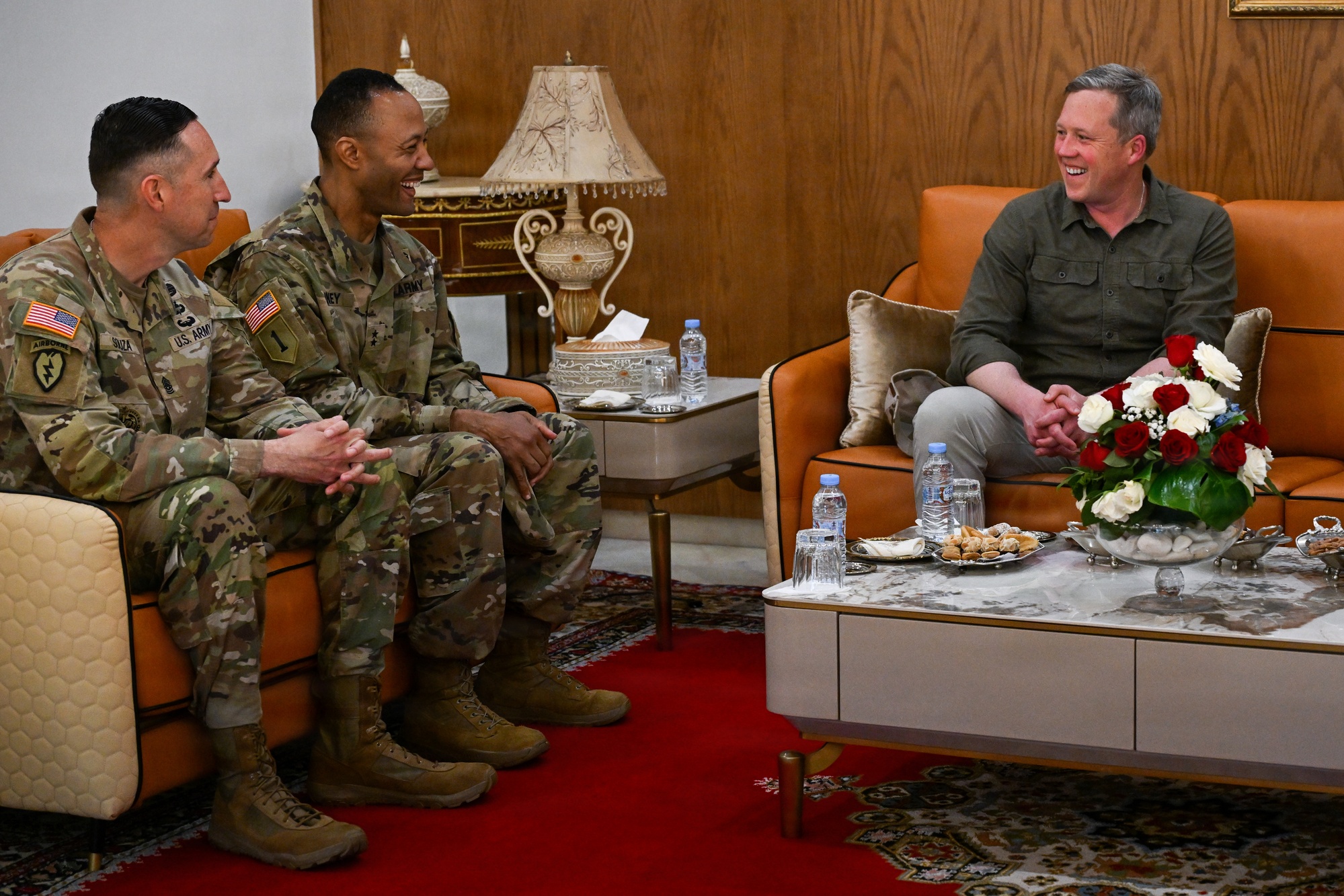
Sgt. 1st Class Daniel Garas, 837th Brigade Engineer Battalion, Michigan National Guard, DVIDS, public domain
The Army opened five test ranges to outside companies through a new online booking system on August 7, 2026, promising equipment access within 30 days of a request instead of the 12 to 18 months companies have typically waited to try their gear on Army land.
A website replacing a year of paperwork
Army Secretary Dan Driscoll announced the marketplace at Camp Grayling, Michigan, on Friday, framing it as a fix for a specific, well-documented bottleneck: a small company with a working prototype has historically needed a program of record, and often a team of lawyers, just to get a range slot to prove the equipment functions. “A company with a good idea shouldn’t need a team of lawyers and a program of record just to prove their equipment works,” Driscoll said at the announcement, according to the Associated Press wire carried by Stars and Stripes, ABC News, KSAT and the Washington Times.
The mechanism itself is simple: testrange.army.mil, live as of Friday, lets a company submit a request to book time at one of five sites rather than working through the traditional acquisition-office gatekeeping that has governed range access for decades. Driscoll called the tool a bet on itself as much as on the companies that will use it. “We have built it, and we hope that the program is wildly successful,” he said at the same event.
Five ranges, one deliberately global footprint
The five sites span both geography and mission profile. Dugway Proving Ground in Utah and the West Cibola Range at Yuma Proving Ground in Arizona are long-standing Army test facilities built for live-fire and chemical-biological testing. Camp Shelby Joint Forces Training Center in Mississippi adds maneuver and combined-arms space. Camp Grayling Joint Maneuver Training Center in Michigan, where Driscoll made the announcement, brings drone-specific infrastructure and Great Lakes open-water access. The fifth site is not domestic at all: the Multidomain Training Area range complex in Morocco, accessed through the Africa Multidomain Training and Experimentation Center partnership, giving companies a testing option outside the continental United States entirely.
Camp Grayling’s inclusion is not incidental. The Department of War designated its National All-Domain Warfighting Center a national UAS testing range on February 12, 2026, following a bipartisan push from Michigan’s congressional delegation. That designation gave the base a formal mandate for drone testing months before Friday’s marketplace launch, positioning it as the most natural venue for Driscoll to make the announcement in person.
The 30-day promise, and what it is meant to replace
The headline number is the gap between 30 days and 12 to 18 months. That old timeline was not a bureaucratic quirk so much as a structural filter: any company without deep pockets or an existing prime-contractor relationship effectively could not afford to wait more than a year just to get a live-fire or flight-test slot, long before ever reaching a production contract. A 30-day SLA does not guarantee a company’s equipment works or that the Army will buy it, but it does mean a founder with a working prototype and outside funding can now get a real-world test result in roughly the time it takes to plan the visit, not the time it takes to raise a second funding round while waiting for a range slot.
That distinction matters because testing access, not final procurement, has been the actual chokepoint in a lot of small-company defense pitches. A startup can build a working counter-drone interceptor or a cheap loitering munition prototype, but without a range to test it on, it has no data to show a program manager, and without data, it has no case for a program of record. The marketplace targets that specific gap rather than the downstream contracting process itself.
Part of a broader push to buy cheap weapons faster
The range marketplace sits inside a larger Driscoll agenda often described, including by Army officials themselves, as a “Silicon Valley model” for the service: treat small companies with working hardware the way a venture-backed startup ecosystem would, rather than the way a defense prime relationship traditionally works. That push has budget weight behind it. The Army’s June 2026 supplemental budget request totaled $87.6 billion, including $21 billion for munitions and $2.4 billion specifically for drones, spending that only pays off if the underlying acquisition pipeline can actually move small-company hardware from prototype to fielded equipment faster than the historical timeline allowed.
The marketplace also has a near-term test of its own. Quarterly electronic-warfare simulation events are scheduled to begin the week of September 13, 2026, giving the Army its first structured opportunity to show whether testrange.army.mil actually produces faster throughput or simply digitizes the same wait. The comparison to Ukraine’s drone war and to Replicator-style rapid-production initiatives is not incidental either: the Pentagon’s broader push toward cheap, mass-producible weapons depends on getting small manufacturers through testing and into production loops far faster than the legacy acquisition system was built to allow.
Sources
- Army opens test ranges to small companies to try to get weapons quicker to the battlefield — Stars and Stripes (AP), Aug 7, 2026
- Army opens test ranges to small companies to try to get weapons quicker to the battlefield — ABC News (AP), Aug 7, 2026
- Army opens test ranges to small companies to try to get weapons quicker to the battlefield — KSAT (Graham Media/AP), Aug 7, 2026
- Army opens test ranges to small companies to try to get weapons quicker to battlefield — Washington Times (AP), Aug 7, 2026
Frequently asked questions
What is the new Army marketplace called? +
Testrange.army.mil, which went live August 7, 2026, lets companies request Army test-range access online instead of navigating the traditional program-of-record process.
Which bases are involved? +
Dugway Proving Ground in Utah, the West Cibola Range at Yuma Proving Ground in Arizona, Camp Shelby in Mississippi, Camp Grayling in Michigan, and a Multidomain Training Area range in Morocco.
How much faster is this supposed to be? +
The Army is pledging access within 30 days of a request, compared to a typical current wait of 12 to 18 months for outside companies trying to test equipment on Army ranges.
Why start with Camp Grayling? +
The Department of War designated Camp Grayling's National All-Domain Warfighting Center a national drone-testing range on February 12, 2026, after a bipartisan push from Michigan's congressional delegation, and the base has Great Lakes open-water access useful for UAS testing.
More news


