Japan Fires First Live Tomahawk From Destroyer JS Chokai
Japan test-fired a Tomahawk from JS Chokai on July 28, becoming the third nation to launch one from a surface ship in a $1B, 400-missile buildup.

U.S. Navy photo by Petty Officer 2nd Class Timothy Weber, DVIDS, public domain
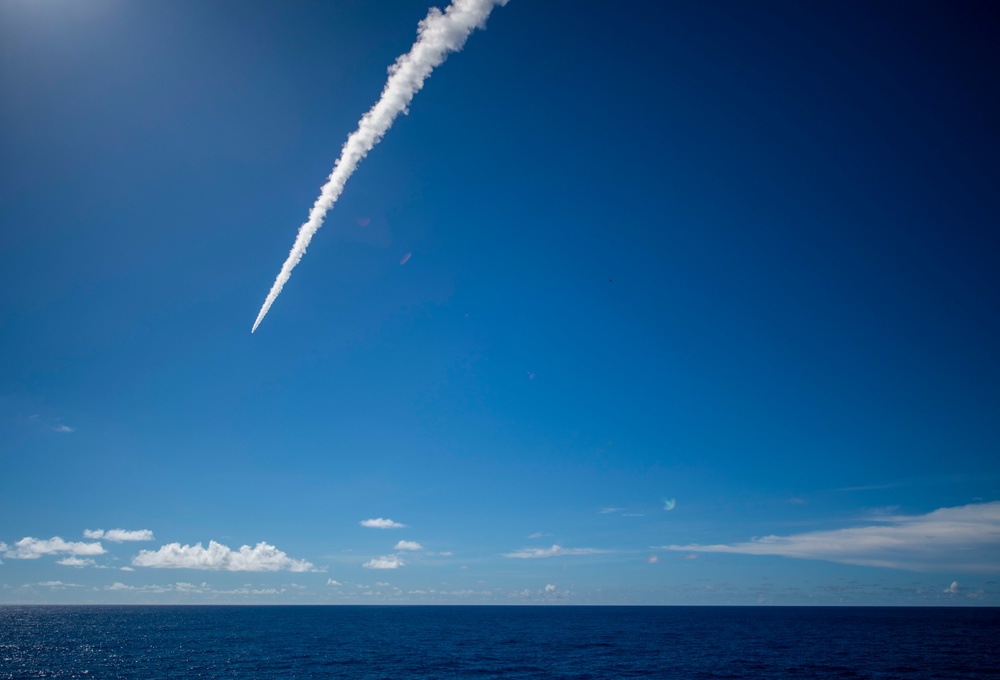
The Japan Maritime Self-Defense Force fired a live U.S.-made Tomahawk land-attack cruise missile from the Kongo-class Aegis destroyer JS Chokai (DDG-176) in the Pacific on July 28-29, 2026, with U.S. Navy support, the first time Japan has launched the weapon from one of its own ships. The test makes Japan the third country outside the United States to fire a Tomahawk from a surface combatant, after Australia and the Netherlands; the United Kingdom has only ever fired Tomahawks from submarines. Chokai had been in the United States since October 2025 for structural upgrades, software integration and crew training, and is expected back in Japan around September 2026.
What Chokai actually fired, and why it matters that it was this ship
Tomahawk is a Raytheon-built subsonic cruise missile designed to strike fixed targets from long range. WeaponSpecs’ database entry for the Tomahawk Block V lists a range of 1,600 kilometers at a cruise speed near Mach 0.74, with a unit cost near $2 million. Fired from a Japanese destroyer instead of a submarine or a land-based launcher, that range profile gives Tokyo a ship-based option to hold fixed targets at risk hundreds of miles inland, a capability Japan’s Aegis fleet was never designed to provide.
That design gap is the real story behind the ship itself. Japan’s Kongo-class destroyers, including Chokai, are derived from the U.S. Navy’s Arleigh Burke Flight I design, tracked in WeaponSpecs’ database as the Arleigh Burke-class destroyer, though it is important to be precise about what that lineage means: Kongo-class ships share the Arleigh Burke’s hull design and Aegis combat-system heritage, they are not the same class or the same hull as the U.S. Navy’s own ships. For decades, Japan’s Aegis destroyers were built and equipped purely for air and ballistic-missile defense, intercepting threats, not striking targets. Integrating Tomahawk required both a hardware modification to Chokai’s vertical launch cells and a software integration effort substantial enough to justify nearly a year of the ship sitting in the United States rather than in Japanese waters.
The buildup: 400 missiles, five ships, one strategic shift
Japan is acquiring up to 400 Tomahawks, roughly split between 200 Block IV and 200 Block V missiles, for approximately $1 billion (one source puts the figure at $1.03 billion), with deliveries running from fiscal year 2025 through 2027. Beyond Chokai, Japan has allocated roughly $700 million to modify four more Aegis destroyers for the same capability: Kirishima and Myoko, both Kongo-class sister ships to Chokai, plus Haguro, a Maya-class destroyer, and Atago, an Atago-class destroyer. Haguro’s classification is worth being precise about, since it has been mislabeled elsewhere: it is a Maya-class ship, not Kongo-class, matching WeaponSpecs’ own Maya-class destroyer database entry, whose aliases explicitly list “JS Maya” and “JS Haguro.”
Chokai is so far the only hull actually live-fire tested; the other four "capable" ships are funded for the same modification but not yet tested themselves. Two future Aegis System Equipped Vessels, entering service 2027-28, will add Tomahawk capability later still.
Put together, that means 5 of Japan’s 8 Aegis destroyers, Chokai, Kirishima, Myoko, Atago and Haguro, are now either tested or funded for Tomahawk capability, against 3 that are not: Kongo, Ashigara and Maya. Two future Aegis System Equipped Vessels, a new hull class entering service in fiscal years 2027 and 2028, will add Tomahawk capability to Japan’s fleet later still.
The 2022 policy behind the test
This buildup traces back to Japan’s 2022 National Security Strategy, which committed Tokyo to acquiring a “counterstrike capability,” a deliberate break from Japan’s decades-long posture of building its Aegis destroyers exclusively for air and ballistic-missile defense. Adding Tomahawk gives those ships the ability to strike fixed targets hundreds of miles inland, a capability Japan’s constitution and postwar defense doctrine had kept off the table for its naval forces until this shift. Chokai’s live-fire test is the first concrete proof that the policy commitment has become an operational capability rather than remaining a procurement line item.
Japan’s Ministry of Defense described the test in institutional terms rather than through a named individual: “This live-fire test demonstrates steady progress in the Tomahawk project, and the Ministry of Defense will continue to work towards the early establishment of stand-off defense capabilities,” the ministry said, according to reporting on the test.
North Korea’s reaction
North Korean state media reacted within days. KCNA commentary carried July 31, 2026, accused the United States of transforming U.S. Forces Japan into a “de facto war command,” a North Korean government characterization that is an unverified state claim, not an independently confirmed fact about the command’s actual role or structure. The same reporting, citing Japan’s Asahi Shimbun, quoted U.S. Forces Japan commander Lt. Gen. Stephen Jost as saying the command’s headquarters staffing had risen by 215 personnel over the past year, a figure attributed to Asahi Shimbun’s own reporting rather than independently verified by this desk.
Sources
- Japan Has Officially Joined The Tomahawk Cruise Missile Club — The War Zone, Jul 30, 2026
- Japan Fires First US-Made Tomahawk Cruise Missile from Aegis Destroyer Validating Strike Capability — Army Recognition, Jul 31, 2026
- North Korea Slams US Forces Japan Expansion As Tokyo Tests Tomahawk Missile — NK News, Jul 31, 2026
Systems mentioned
Every system named in this story, with its photo and, where available, a video. Tap a card to open the full spec sheet.
Compare these side by side →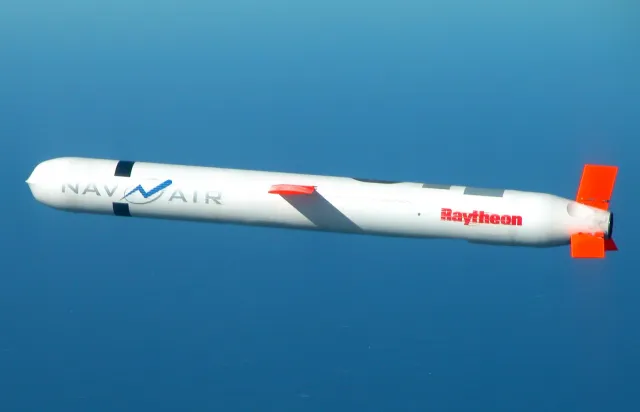
Missile
Tomahawk Block V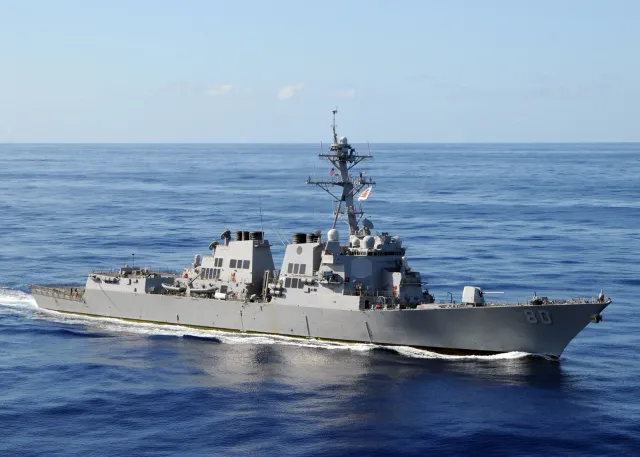
Warship
Arleigh Burke-class Destroyer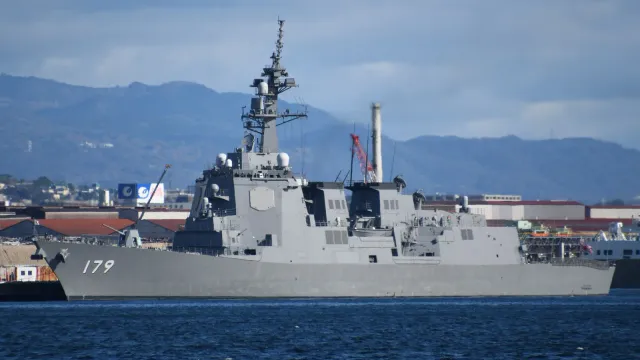
Warship
Maya-classFrequently asked questions
What did Japan test on July 28, 2026? +
The Japan Maritime Self-Defense Force fired a live U.S.-made Tomahawk cruise missile from the Kongo-class destroyer JS Chokai (DDG-176) in the Pacific, the first time Japan has launched the weapon from one of its own ships.
How many Tomahawks is Japan buying, and at what cost? +
Up to 400 missiles, roughly 200 Block IV and 200 Block V, for approximately $1 billion, with deliveries running through fiscal year 2027.
Which other Japanese ships will get this capability? +
Three more Aegis destroyers, Kirishima and Myoko (both Kongo-class) and Atago (Atago-class), plus Haguro (Maya-class), have roughly $700 million allocated for modification, putting 5 of Japan's 8 Aegis destroyers on track for Tomahawk, plus two future Aegis System Equipped Vessels entering service in 2027-28.
How did North Korea react? +
State media (KCNA) accused the United States of turning U.S. Forces Japan into a de facto war command, an unverified North Korean state claim, not an independently confirmed fact.
More news


