Turkey to Send Ukraine 70 ATACMS, 12 M270 Launchers in $256M Deal
State Dept notified Congress of Turkey's M270, ATACMS and cluster-munition transfer to Ukraine, extending deep-strike reach beyond direct US aid.

U.S. Army photo by Cpl. Siwon Koo, DVIDS, Public Domain
The US State Department has notified Congress of a proposed transfer of Turkish-owned, American-made weapons to Ukraine: 12 M270 Multiple Launch Rocket System launchers, 70 M39 ATACMS ballistic missiles, 2,524 M26 cluster rockets, and 47,000 rounds of 203mm cluster artillery ammunition, an original acquisition value the Congressional Record lists at roughly $255.9 million, a figure United24 Media’s own reporting instead puts at $280 million.
What was actually notified to Congress
The package, filed under Foreign Military Sales case RSAT 26-11496 and disclosed in the Congressional Record on August 6, 2026, covers 12 M270 tracked MLRS launchers, 70 M39 ATACMS tactical ballistic missiles, 2,524 M26 unguided 227mm DPICM cluster rockets, and 47,000 M509A1 203mm DPICM artillery rounds, according to Army Recognition’s reporting on the filing. The 203mm rounds are built for 203mm/M110-family howitzers, not the Soviet-era 2S7 Pion self-propelled gun that shares the same caliber, a distinction worth flagging since Ukraine operates neither type of American 203mm gun in large numbers and the ammunition’s ultimate destination platform is not detailed in public reporting.
Two different total values are circulating for the same package: the Congressional Record’s own RSAT case lists approximately $255.9 million, while United24 Media’s headline figure runs $280 million. Neither this desk nor the outlets involved have reconciled the gap; both numbers are stated here plainly rather than picked as the “real” one. The equipment is American-made, so even though it already belongs to Turkey, moving it to a third country requires US government sign-off under the Arms Export Control Act, the same law that governs direct US arms sales abroad. That is the entire reason this is running as a State Department notification to Congress instead of a routine bilateral transfer between Ankara and Kyiv. The department’s own language on the case, per Militarnyi’s reporting, describes the transfer as “consistent with U.S. security assistance objectives,” an institutional line attributed to the department itself rather than a named official. The notification lands roughly a week after Ukrainian President Volodymyr Zelensky met with Lockheed Martin executives in Washington on July 28, though no direct causal link between that meeting and this specific package has been confirmed by either side.
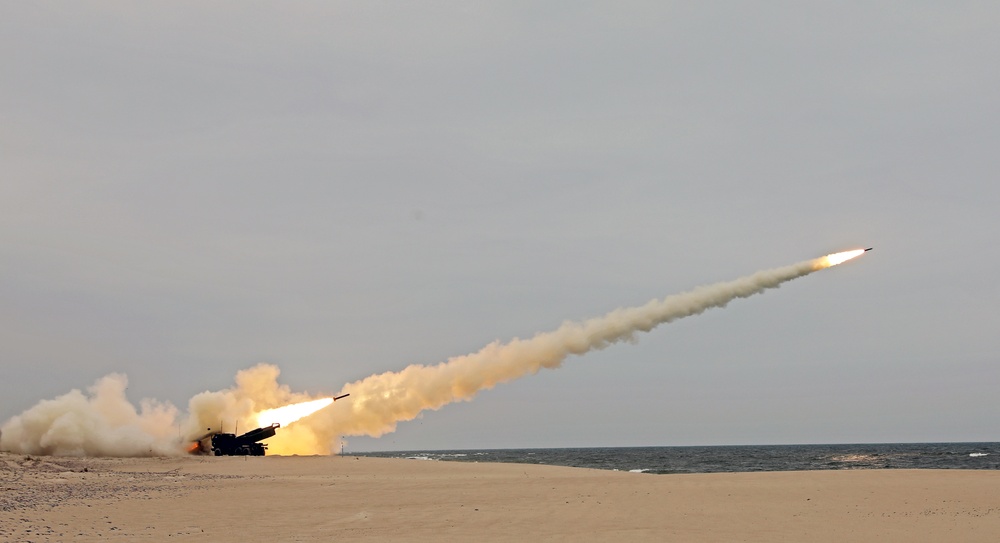
An older launcher, not the upgraded A2
WeaponSpecs’ own database lists the M270A2, a 2018-era upgrade with a new common fire-control system and improved engine. The launchers Turkey is transferring are almost certainly earlier-generation M270 or M270A1 hardware rather than the A2 standard, a distinction worth making explicit since the two share a name but not identical electronics or engines. What does carry over regardless of generation is the core design advantage over the wheeled HIMARS Ukraine already fields in numbers: the M270 rides on a tracked, armored chassis and carries two six-round rocket pods, or two ATACMS canisters, compared to HIMARS’ single pod, roughly doubling the ordnance a single launcher can carry into a firing position. That armor and cross-country mobility let a crew reposition faster over rough terrain after firing, a real advantage against Russian counter-battery radar, though it comes at the cost of the M270’s far heavier weight, which makes it harder to move long distances by road or air than the HIMARS Ukraine has relied on since 2022. According to Defense Express’s analysis, this transfer represents Turkey divesting its entire remaining M270 launcher fleet, not a partial drawdown.
What the ATACMS numbers do, and don’t, resolve
WeaponSpecs’ database lists a baseline ATACMS range of 300 kilometers, with a listed unit cost near $1.5 million that carries an internal “unverified estimate” flag rather than a confirmed figure. Most outlets covering this transfer, including Türkiye Today, instead cite roughly 165 kilometers for the specific M39 Block I variant being sent, an older and shorter-ranged ATACMS model than some later variants. Both figures are accurate for what they describe, a 300km baseline spec versus a specific 165km-range early-block missile, and this story states both rather than forcing one to stand in for the other. What is not in dispute is the strategic effect: ATACMS extend Ukraine’s ability to hit Russian rear-area targets, staging grounds, ammunition depots, airfields, well behind the front line, a capability it has used since 2023 but one that has consistently been rationed by how many launchers and missiles Kyiv actually has on hand from direct US aid. Seventy more missiles and 12 more launchers meaningfully add to that limited stock even if the number is modest set against Russia’s overall depth of rear-area infrastructure.
A new category of Turkish support
Turkey has built substantial defense ties with Ukraine since well before the 2022 invasion, starting with Bayraktar TB2 drone exports and expanding into a Baykar drone-production facility under construction in Ukraine since 2023, a roughly $100 million investment targeting 120 aircraft a year. Nearly all of that prior support has been Turkish-made hardware. This transfer is different in kind: heavy, American-origin ground systems that Turkey happens to hold in its own inventory, routed through a US legal process rather than built and sold outright by a Turkish firm. Turkish officials and regional analysts, per Kyiv Independent’s coverage, frame the move as Ankara clearing older equipment to make room and budget for its own modernization plans, while Ukraine gains firepower through a channel that runs parallel to, rather than competing directly against, its already-stretched direct US aid pipeline.
Sources
- Türkiye Moves to Send Ukraine 12 M270 MLRS Rocket Launchers and 2,524 Rockets as U.S. Reviews Transfer — Army Recognition
- Ukraine to Receive 70 M39 ATACMS Missiles and 12 M270 MLRS Launchers from Turkey — Militarnyi
- Ukraine Set to Receive 70 ATACMS and 12 M270 Launchers From Turkey in $280 Million Arms Deal — United24 Media
- Türkiye seeks US approval to transfer MLRS, ATACMS missiles to Ukraine — Türkiye Today
- Turkiye Sells Ukraine Its Entire Remaining M270 Launcher Stock Plus 70 ATACMS, 47,000 Cluster Shells, Deliveries Could Start This Year — Defense Express
- Ukraine buys 70 ATACMS missiles, other US weapons from Turkey in major defense package — Kyiv Independent, Aug 6, 2026
Systems mentioned
Every system named in this story, with its photo and, where available, a video. Tap a card to open the full spec sheet.
Compare these side by side →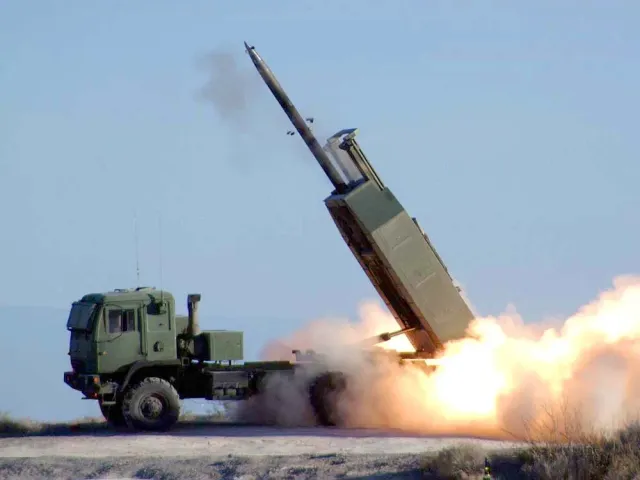
Artillery & MLRS
M270A2 MLRS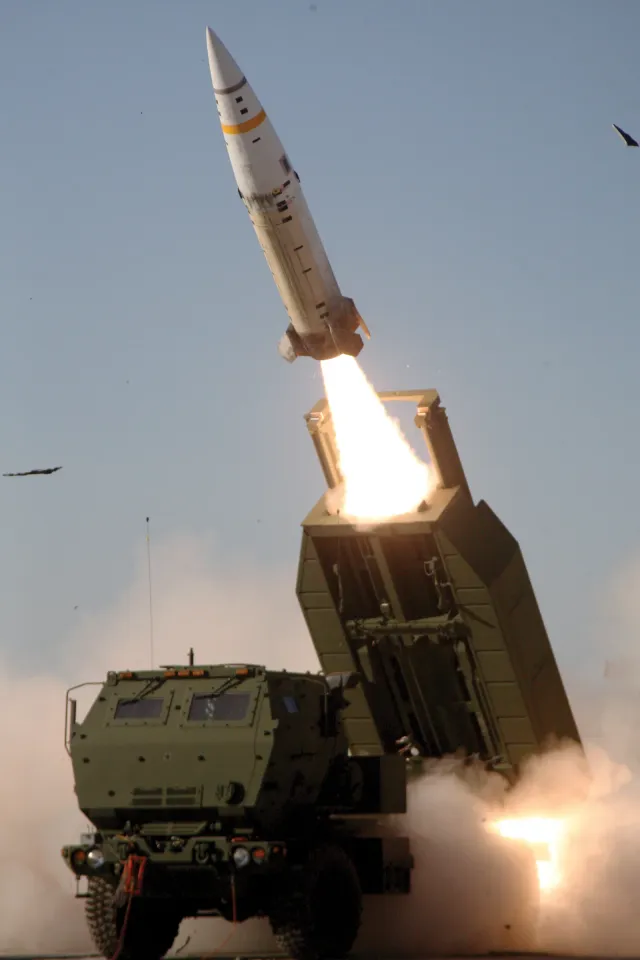
Missile
MGM-140 ATACMSFrequently asked questions
Why is Turkey, not the US directly, sending these weapons to Ukraine? +
The equipment is US-made and already sits in Turkey's own inventory. Because it is American-origin hardware, moving it to a third country requires US authorization under the Arms Export Control Act even though Turkey owns it outright, which is why the process runs through a State Department notification to Congress rather than a direct US-to-Ukraine aid package.
How does the M270 differ from the HIMARS Ukraine already operates? +
The M270 is tracked and armored and carries two six-round rocket pods (or two ATACMS canisters) versus one pod on the wheeled HIMARS, roughly doubling the firepower carried by a single launcher, at the cost of being harder to airlift and slower to redeploy long distances by road.
Does this let Ukraine strike further into Russia? +
The ATACMS missiles extend Ukraine's reach against Russian rear-area targets, a capability it has used since 2023 but one that has been limited mainly by how many launchers and missiles are available. Twelve more launchers and 70 more missiles add meaningfully to what has been a scarce stockpile, even though the package is small next to Russia's overall depth.
What does Turkey get out of divesting this equipment? +
Turkish officials and regional analysts frame it as clearing aging equipment from Turkey's own inventory to make room and budget for modernization, while Ukraine gains additional firepower through a channel that does not compete directly with already-stretched US direct-aid stocks.
More news


