The Interceptor Math Breaks: Inside a Week of Defense Shortfalls
Zelensky says Ukraine receives 1% of the Patriot interceptors it needs, and every fix on the table this week, from lasers to new motors, is years away.

1st Lt. Manuel Mata Hernandez, I Marine Expeditionary Force, U.S. Marine Corps, via DVIDS, public domain
Ukraine’s interceptor shortage went from a bad night to a confirmed trend last week; this week it went from a trend to a set of hard numbers. Zelensky told CNN Ukraine receives roughly 1% of the Patriot interceptors it needs, and a follow-up report Aug. 15 pegged July’s ballistic intercept rate at 29 of 195, about 14.9%. That thread ran through nearly everything the desk covered, from an idle Iron Beam laser to a 21-day Pentagon ultimatum to industry: demand has outrun the production base, and every response on the table is a multi-year bet.
The interceptor math has broken, and every fix is years away
Zelensky’s Aug. 12 CNN interview, covered here in our own story on Ukraine’s 1% figure, turned last week’s trend into arithmetic: Ukraine gets about 1% of what it needs, is asking for 5% to survive winter and 10% to stop all Russian ballistic missiles, and received 2.5 times fewer interceptors in 2026 than in 2025 while Russia’s monthly ballistic launch rate roughly doubled. A follow-up Aug. 15 report from Zona Militar sharpened that further: Ukraine intercepted only 29 of 195 Russian ballistic missiles in July, about 14.9%, and July was, per UN data cited in the report, Ukraine’s deadliest month for civilians since the 2022 invasion. US Ambassador to NATO Matthew Whitaker has said a joint Patriot-production arrangement inside Ukraine is unlikely to yield missiles before winter, and President Trump said Aug. 6 the US needs to retain missiles for its own defense.
“If they sell us 5% we will go through the winter and save people’s lives. If they can sell us 10%, we will destroy all the Russians’ ballistic missiles,” said Volodymyr Zelensky, President of Ukraine, in a CNN interview reported by Euronews, Aug. 13, 2026.
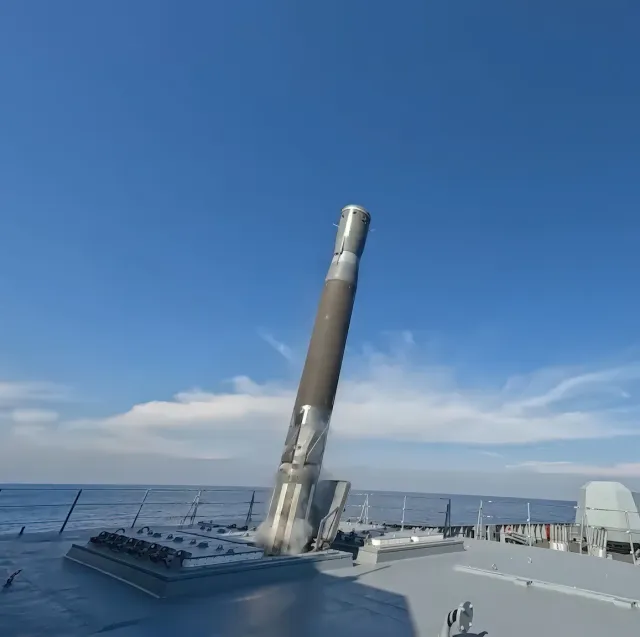
Every fix Washington and its contractors floated this week answers a later winter, not this one. WeaponSpecs’ reporting on the Pentagon’s Feinberg memo put numbers on the hole: Patriot stock has fallen from roughly 2,330 missiles before the Iran war to as few as 759, and THAAD’s stock fell from 452 to between 234 and 278. Acting Pentagon acquisition chief Michael Feinberg gave industry 21 days to commit capital toward faster delivery ahead of guaranteed funding, aimed at unlocking future capacity, not releasing missiles that already exist. Israel’s Iron Beam laser, delivered to the IDF in December 2025, still is not operational eight months later, despite a cost-per-shot near $2 against $100,000 to $2 million for the interceptors it is meant to spare. L3Harris’s Stage 2 motor hot-fire test for the $17.7 billion Next Generation Interceptor targets a 2030 deadline that already slipped once from 2028. The Army’s first large-scale LOCUST laser production order, reported at $400 million against a confirmed $500 million July award, remains an early-stage counter-drone system, not a ballistic-missile answer. Even Lockheed’s $211 million mod for new-build UAE THAAD launchers, pushing that FMS case past $1.05 billion, expands a foreign THAAD force rather than resupplying Ukraine’s.
With domestic production years out, this week’s practical stopgaps were allied drawdowns and financial pressure. Turkey transferred its entire M270 launcher stock, 12 launchers plus 70 ATACMS, to Ukraine in a $256 million deal requiring US reexport approval, a one-time divestment that cannot repeat once Turkey’s own inventory is gone. The Senate passed sanctions on Russia’s defense supply chains and shadow-fleet oil 86-11, a veto-proof margin, with tariffs up to 100%-200% on the top five buyers of Russian oil and gas, including China and India. It still needs House action after the Aug. 31 recess, then White House implementation: leverage on paper for now.
The bottleneck is the production line, not the design
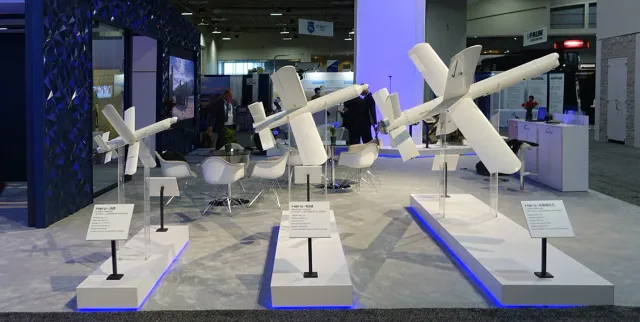
Set those interceptor stories next to three unrelated systems this week, drones, cruise missiles, submarines, and the same word keeps showing up: capacity, not technology. HERO-120’s Lot Acceptance Test unlocked recurring deliveries against a $982 million contract, and a fresh $50 million order followed within 24 hours: a loitering munition clearing a quality gate, not a design hurdle, on its way to volume production.
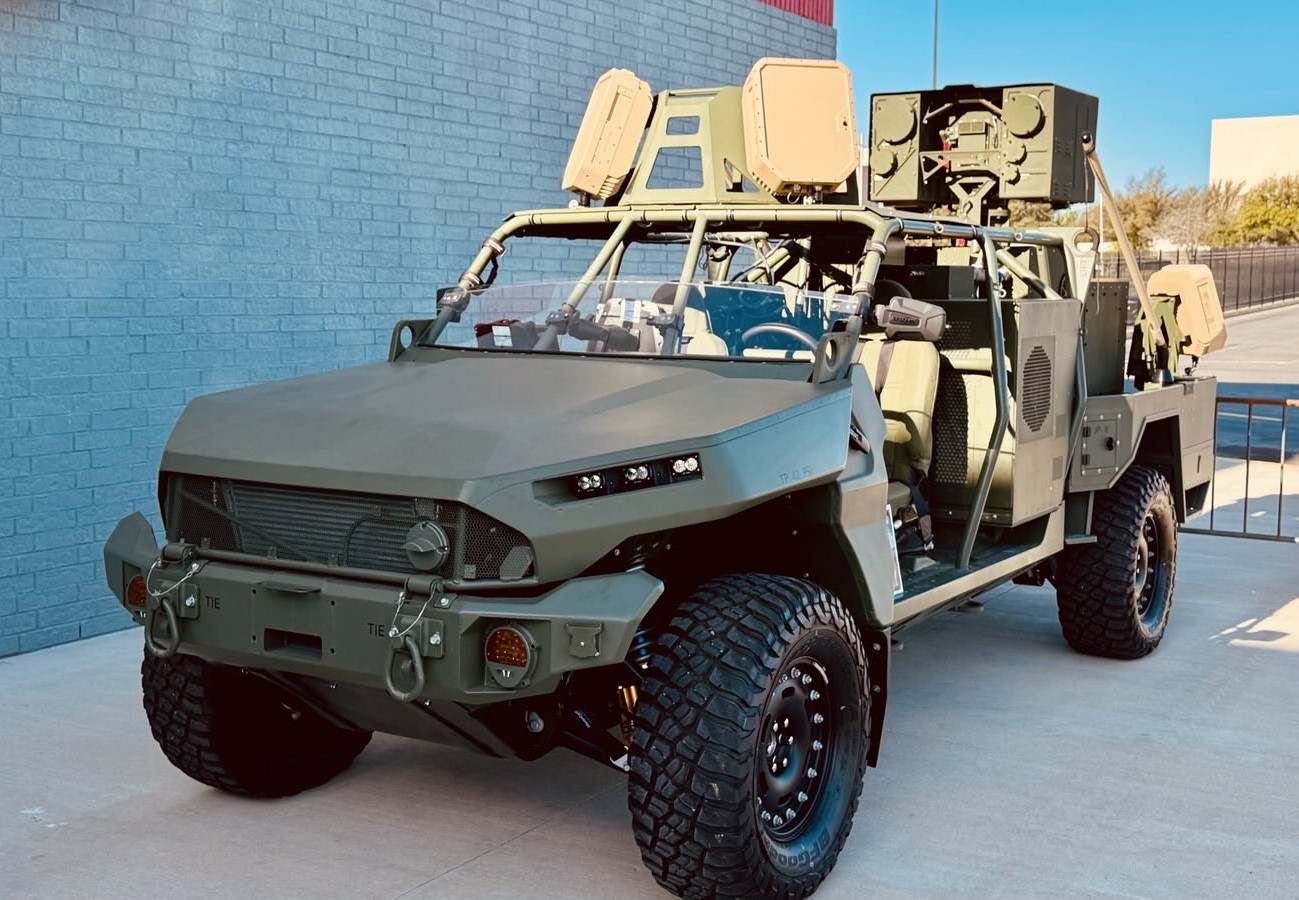
Shipbuilding told the same story at a larger scale. Hanwha’s non-binding $1.05 billion to $1.2 billion bid for Austal USA shipyard capacity landed the same week Austal posted a roughly $175 million loss: a bid for physical yard space and workforce, not new ship designs. Australia’s A$29.3 million deal with Lockheed builds that country’s first-ever sovereign capability to sustain Virginia-class submarine combat systems, a capacity investment rather than a hardware purchase.
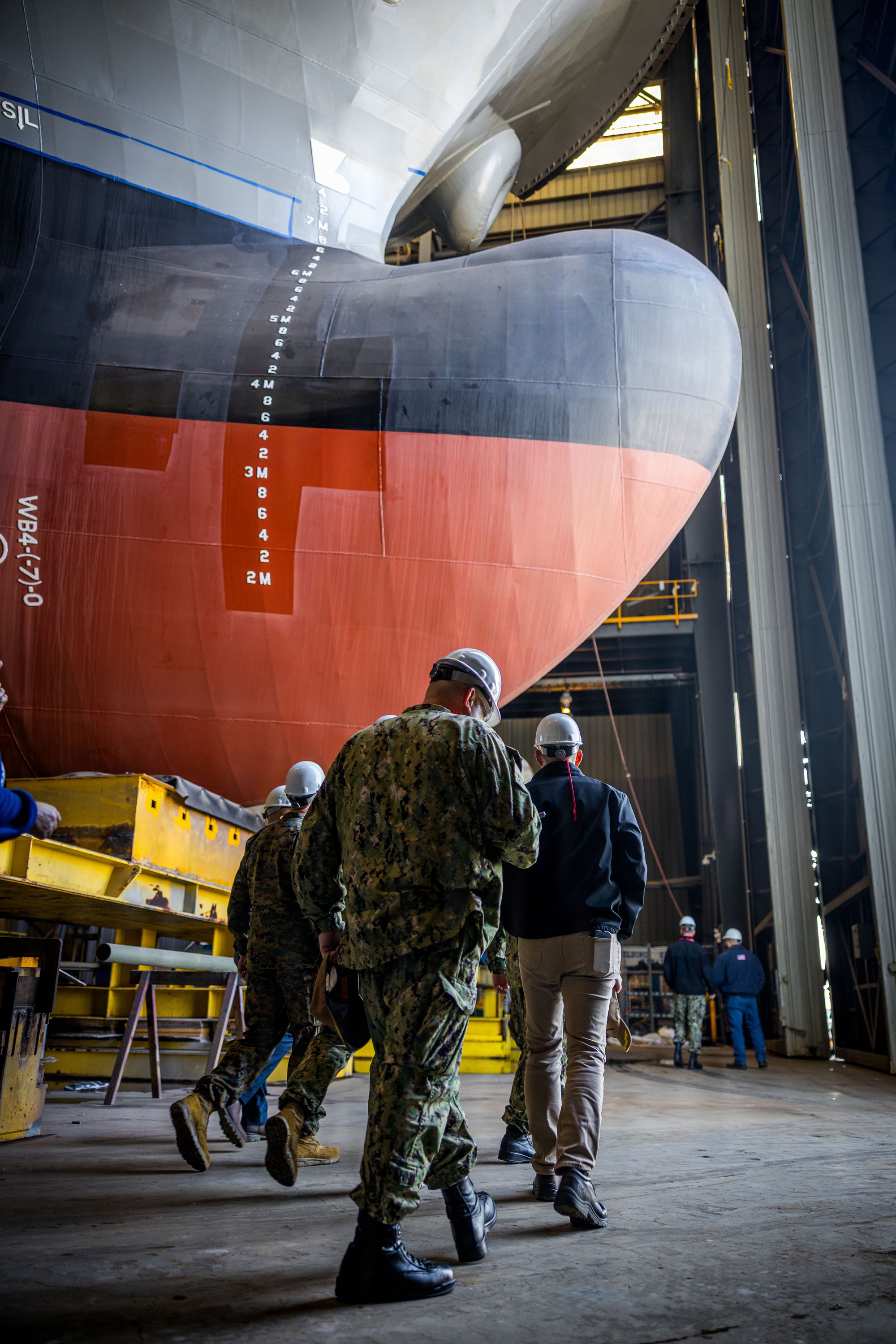
Ukraine’s own weapons production shows the same constraint from the other side. The Flamingo cruise missile’s output is capped at 30 a month by the shrinking parts supply for a single Soviet-era turbojet engine, not by the missile’s design. Manufacturer Fire Point is running two parallel fixes at once, a foreign substitute engine and an in-house replacement, targeting 2027, the same multi-year horizon as NGI and Iron Beam. Whether the constraint is a THAAD launcher, a shipyard berth, or one engine type, nobody this week was stuck on how to build the weapon. Everyone was stuck on how fast they could build enough of it.
Procurement and technology stories together outnumbered conflict coverage this week, a reflection of how much of this week's defense news was about production and contracting rather than combat.
Non-Western actors kept moving while attention stayed on interceptors
A wide set of state and private actors advanced their own capabilities this week outside the US-centric supply story, several with explicit “firsts.” North Korea conducted its 11th missile test of 2026, a roughly 700-kilometer flight from Wonsan, its second test in a week ahead of the Ulchi Freedom Shield exercise. Russia followed with an apparent first: a combined salvo striking Zaporizhzhia with a Russian hypersonic Zircon, a Russian ballistic Iskander-M, and a North Korean ballistic KN-23 in one night, no reported intercepts, an attribution treated here as a state claim, not independently verified.
China held its first foreign-navy drill in waters facing the open Pacific east of Taiwan, with Indonesia, a “first” claimed by state broadcaster CGTN and not independently confirmed. Under a new deal, Syria takes civilian control of the Tartus and Hmeimim bases from Russia within three months, recasting military sites as “joint training centres,” though terms remain unresolved. Russia’s Bureau 1440 says its Rassvet satellite constellation, a claim from the operator itself, now provides two to three stable daily coverage passes over Ukraine, though no confirmed combat use has surfaced.
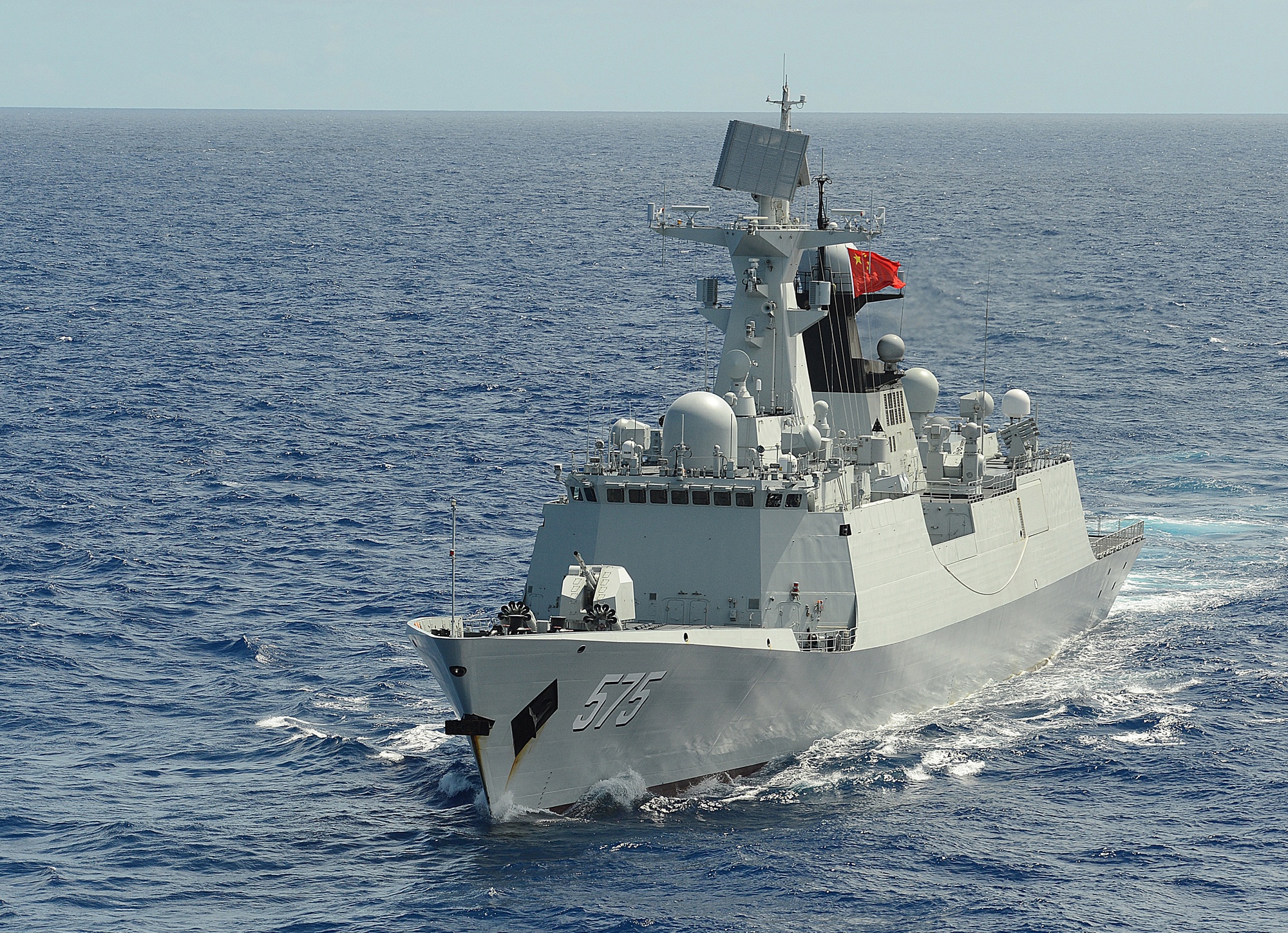
In the Yemen civil war, Houthi forces carried out a double-tap strike on the cargo ship Tihamah in Bab al-Mandeb, aimed at rescuers after the initial hit, the first fatal Houthi shipping attack since February’s Iran war. The Saudi-led coalition struck Houthi-controlled Hodeidah and Kamaran in response, per Al Jazeera and The National, and daily Bab al-Mandeb traffic has dropped from 50 ships to 32 since the blockade declaration. Elsewhere, Thiel-backed startup Covenant Industries live-fire tested its Anthem cruise missile, a low-cost Tomahawk alternative, at a new US-Morocco range, chasing the same cost-per-shot problem shadowing Patriot and Iron Beam.
Sources
- Ukraine urges U.S. to send more Patriot missiles as Zelensky claims Russia's ballistic threat could be defeated — Zona Militar, Aug 15, 2026
- Sell Ukraine 10% of US Patriots and 'we will destroy all the Russians' ballistic missiles,' Zelensky tells CNN — CNN, Aug 12, 2026
- Ukraine needs 5% of US Patriot stocks just to get through winter, Zelenskyy says — Euronews, Aug 13, 2026
- Six killed in Houthi attack on Bab al-Mandeb ship, Yemen's government says — Al Jazeera, Aug 12, 2026
- Houthi double-tap attack on Red Sea ship: How it unfolded — The National, Aug 12, 2026
- Syria and Russia Reach Deal on Future of Tartus and Khmeimim Bases After 18 Months of Talks — The Moscow Times, Aug 9, 2026
- Hanwha Makes $1B Bid to Acquire Austal USA, Shipbuilder Declares $79.73M Loss — USNI News, Aug 10, 2026
- Russia sanctions bill honoring Lindsey Graham breezes through Senate, heads to House — CNBC, Aug 7, 2026
- North Korea appears to conduct second missile test in a week — NK News, Aug 13, 2026
- Zelensky: Ukraine Has 1% of Patriot Stock It Needs — WeaponSpecs News Desk, Aug 14, 2026
- Pentagon Gives Industry 21 Days to Commit Capital in Feinberg Production Memo — WeaponSpecs News Desk, Aug 9, 2026
- Iron Beam Still Not Operational Eight Months After Delivery — WeaponSpecs News Desk, Aug 11, 2026
- L3Harris Completes NGI Stage 2 Motor Hot-Fire Test — WeaponSpecs News Desk, Aug 12, 2026
- Army Places First Large-Scale LOCUST Laser Production Order — WeaponSpecs News Desk, Aug 12, 2026
- Lockheed Wins $211M Mod for New-Build UAE THAAD Launchers — WeaponSpecs News Desk, Aug 14, 2026
- Turkey Transfers Its Entire M270 and ATACMS Stock to Ukraine — WeaponSpecs News Desk, Aug 10, 2026
- Senate Passes Graham Russia Sanctions Bill 86-11 — WeaponSpecs News Desk, Aug 9, 2026
- HERO-120 Clears Lot Acceptance Test, Unlocking Recurring Deliveries — WeaponSpecs News Desk, Aug 10, 2026
- Hanwha Bids Up to $1.2B for Austal USA Shipyard Capacity — WeaponSpecs News Desk, Aug 10, 2026
- Lockheed Deal Gives Australia Its First Sovereign Virginia-Class Combat Systems Capability — WeaponSpecs News Desk, Aug 9, 2026
- One Soviet-Era Engine Caps Ukraine's Flamingo Cruise Missile Output — WeaponSpecs News Desk, Aug 11, 2026
- North Korea Tests Second Missile in a Week Ahead of Ulchi Freedom Shield — WeaponSpecs News Desk, Aug 12, 2026
- Russia Fires Zircon, Iskander-M and North Korean KN-23 in First Combined Salvo — WeaponSpecs News Desk, Aug 13, 2026
- China Holds First Foreign-Navy Drill East of Taiwan With Indonesia — WeaponSpecs News Desk, Aug 14, 2026
- Syria Takes Civilian Control of Tartus and Hmeimim Under New Russia Deal — WeaponSpecs News Desk, Aug 9, 2026
- Bureau 1440's Rassvet Constellation Reaches Daily Coverage Over Ukraine — WeaponSpecs News Desk, Aug 11, 2026
- Houthi Double-Tap Strike on Tihamah Is First Fatal Shipping Attack Since February — WeaponSpecs News Desk, Aug 12, 2026
- Covenant Industries Tests Low-Cost Anthem Cruise Missile in Morocco — WeaponSpecs News Desk, Aug 14, 2026
Systems mentioned
Every system named in this story, with its photo and, where available, a video. Tap a card to open the full spec sheet.
Compare these side by side →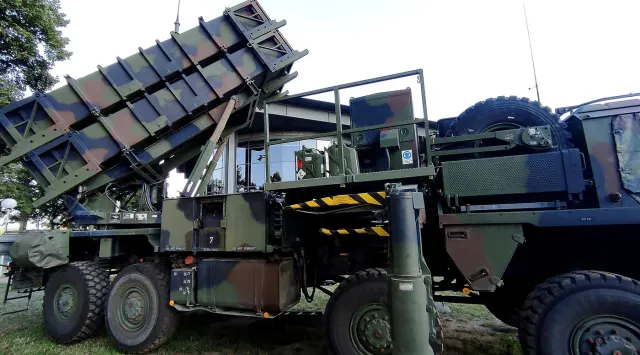
Air defense system
Patriot PAC-3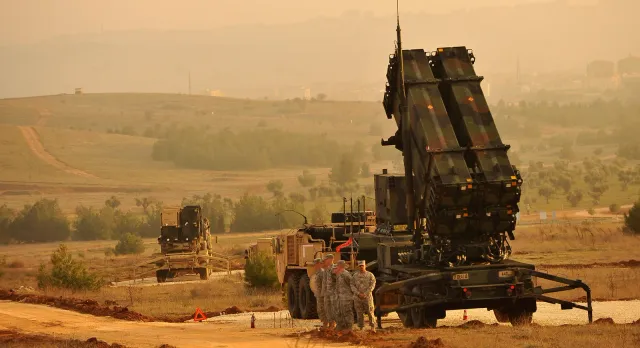
Air defense system
Patriot PAC-2 Air defense system
Patriot GEM-T
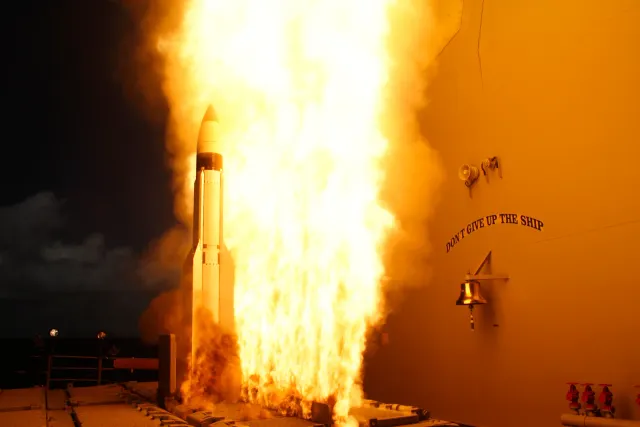
Missile
SM-3 Block IIA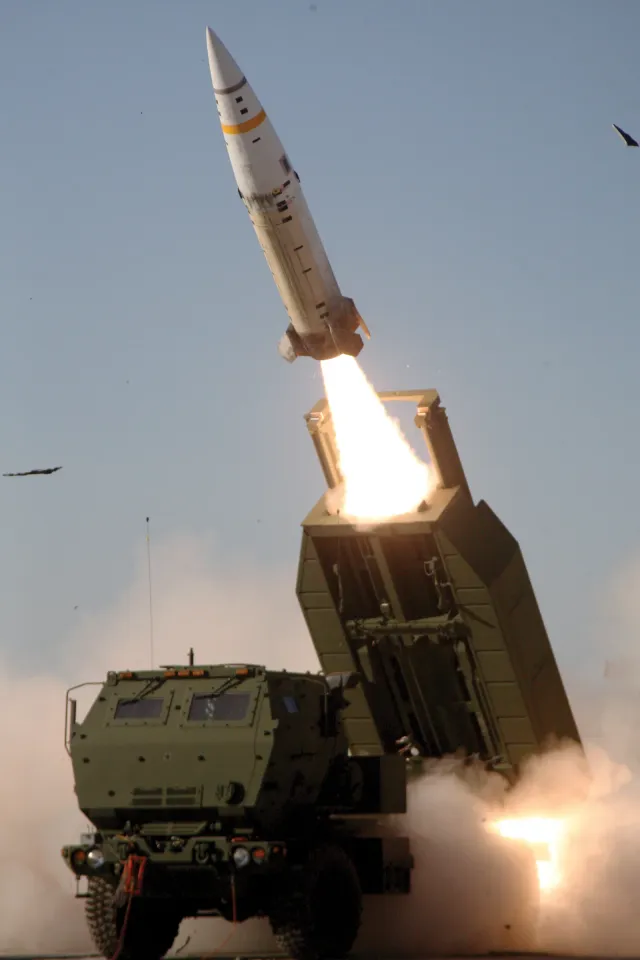
Missile
MGM-140 ATACMS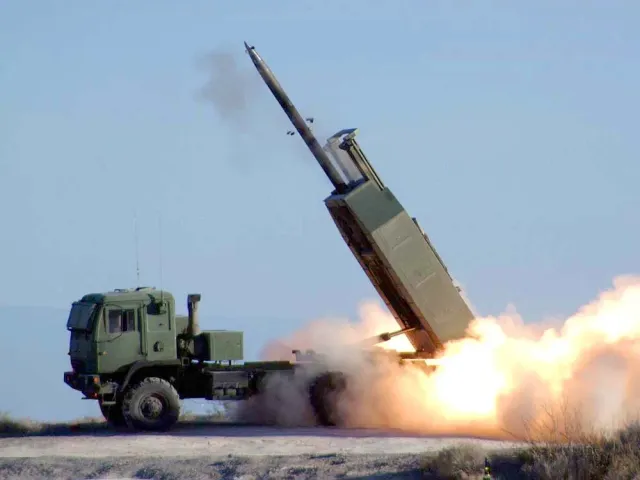
Artillery & MLRS
M270A2 MLRS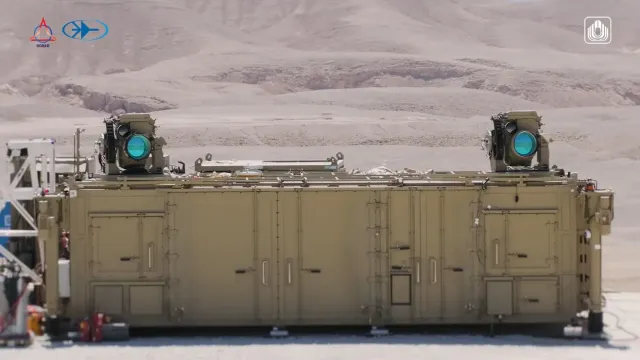
Missile
3M22 Zircon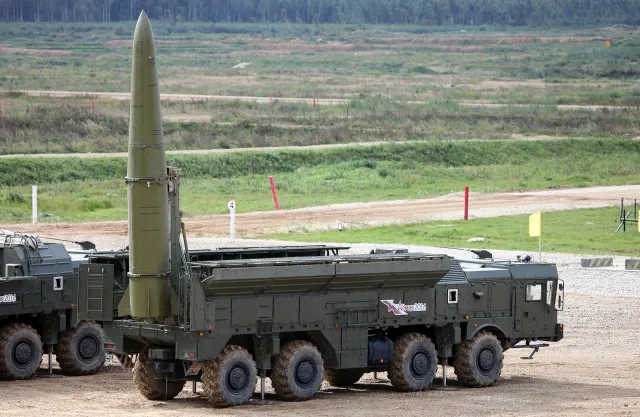
Missile
9K720 Iskander-M
Frequently asked questions
What was the single biggest development this week? +
Zelensky put hard numbers on Ukraine's Patriot shortage in an Aug. 12 CNN interview: Ukraine receives about 1% of the interceptors it needs, is asking for 5% to survive winter, and got 2.5 times fewer interceptors in 2026 than in 2025 while Russia's monthly ballistic launches roughly doubled. A follow-up report Aug. 15 added that Ukraine intercepted only 29 of 195 Russian ballistic missiles in July, about 14.9%.
Is any single fix going to close the gap soon? +
No. The Next Generation Interceptor's 2030 target, Iron Beam still not operational eight months after delivery, LOCUST's move to production, and new THAAD launchers for the UAE are all multi-year commitments. The Pentagon's 21-day industry memo targets future capacity, not this winter's stockpile.
Why did so many unrelated stories this week sound similar? +
Each named the same constraint: production and integration capacity, not weapon design. The HERO-120 loitering munition cleared a quality gate, not a design hurdle. Ukraine's Flamingo cruise missile is capped by one engine's parts supply. Hanwha is bidding for shipyard capacity outright rather than building a new yard.
What should readers watch next week? +
Whether Washington acts on Zelensky's 5% ask before winter; whether the House takes up the Senate's Russia sanctions bill after its Aug. 31 return from recess; and whether Hanwha's four-week Austal USA due-diligence window produces a binding offer headed to CFIUS review.
More news


