No Missiles for the Patriots: Inside Ukraine's Interceptor Math
A second barrage exposed how thin Ukraine's air defense has become, while contractors raced to fill gaps in orbit, supply chains, and cost.

U.S. Army, public domain (Wikimedia Commons)
Ukraine’s August 2 barrage was intercepted at just 3.7 percent against ballistic missiles, one of 27, and Zelensky said allied air-defense missile deliveries have fallen to a third of last year’s pace. Together those facts turn a bad night into a confirmed, worsening supply trend, one that shaped nearly everything else in defense this week: a Space Force hedge splitting risk on one tracking mission, three flashpoints testing limits while attention stayed on Kyiv, and Pentagon money chasing the actual bottleneck instead of prime contractors.
Ukraine’s interceptor math turns from a bad night into a trend
Last Saturday’s recap led with the August 1 barrage that first exposed how bare Ukraine’s Patriot stock had become. This week’s second barrage in 48 hours confirmed it was no fluke: 35 missiles, 27 ballistic, only one intercepted, plus 185 drones, of which 154 were downed. That 83 percent drone-intercept rate against a 3.7 percent ballistic rate is the story: Ukraine can still handle cheap, slow threats in volume, but the interceptors built for the expensive ones have run out. At least nine died in Kyiv’s Darnytskyi district, and Ukraine asked roughly 40 partner nations for both PAC-3 and older PAC-2/GEM-T interceptors afterward.
The shortfall has numbers attached. The U.S. Patriot PAC-3 stockpile has fallen from roughly 2,300 missiles before the war to under 827, and Lockheed’s ramp, targeting 600 to 2,000 units a year, implies roughly 42 months to rebuild what is already gone, before any reaches Kyiv. Zelensky confirmed the trend: allies have supplied only a third of the air-defense missiles in 2026 that they delivered in 2025, and he is now seeking a U.S. license to build Patriots domestically rather than wait on that pipeline.
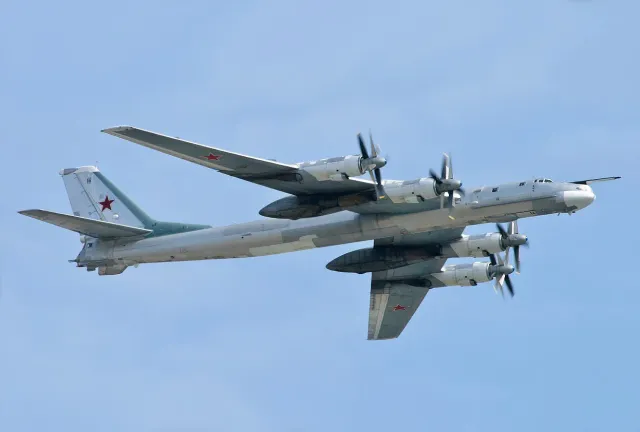
Ukraine answers on two tracks. One reaches for the source: strikes on Engels-2 and the Saratov refinery hit the staging ground for the Tu-95 and Tu-160 bombers that launch Russia’s cruise missiles, thinning the barrage at its origin. The other bypasses Washington: the FP-7 ballistic missile needs no U.S. sign-off the way ATACMS does, giving Ukraine independent strike timing. On interceptors, SkyFall and JetKiller trade precision for volume and cost: SkyFall targets 1,000 drones a month near $25,000 each, and JetKiller’s maker claims 50,000 a month under $5,000 a unit, against a Patriot running well over $1 million. That figure and JetKiller’s claimed 5,500-plus intercepts come from a spokesperson using the pseudonym “Ares,” unverified and untested against ballistic missiles: a real parallel track, not yet a substitute.
The Space Force bets both ways on the same mission
If Ukraine’s week was about running out of interceptors, the space budget’s week was about hedging the systems that track the missiles needing intercepting. The Space Force put $981 million into NITE-STAR, an aggressor-satellite contract across 15 firms, and SpaceX won $1.6 billion for 18 launches carrying the SB-AMTI tracking constellation feeding Golden Dome.
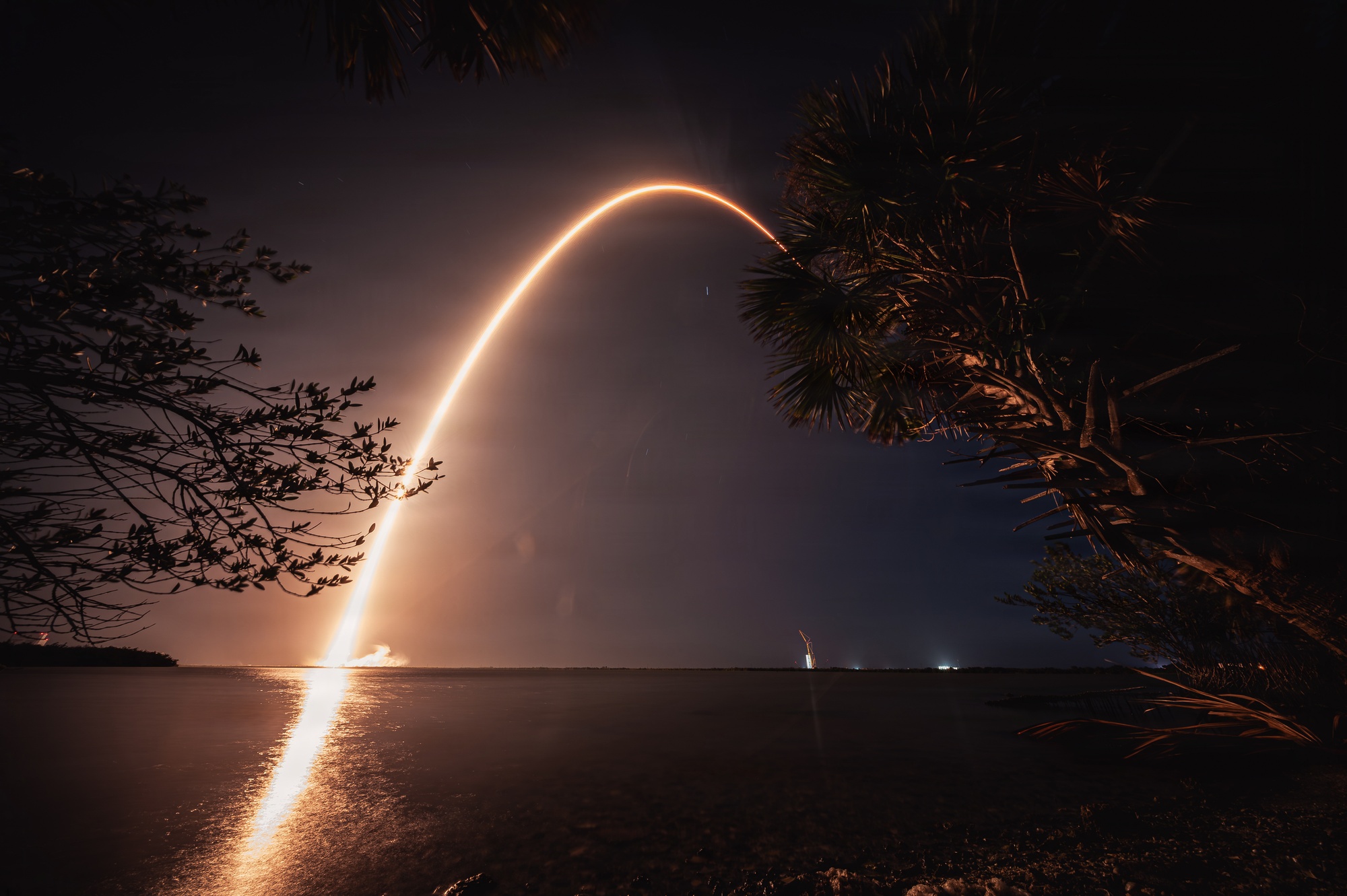
The sharpest contrast came August 6, when two awards for the same mission took opposite risk postures the same day. Rocket Lab won a second SB-AMTI task order worth $397 million of $615 million total, and its satellites will launch on Neutron, a rocket that has never flown to orbit and has no maiden-launch date.
“Rocket Lab is honored to play a key role in the SB-AMTI program, which is critical to expanding the Space Force’s layered, resilient tracking architecture,” said Peter Beck, chief executive of Rocket Lab (via WeaponSpecs News Desk’s coverage of the award, August 6, 2026).
The same day, Leidos, Sierra Space, and L3Harris split a combined $1.75 billion Golden Dome award for 36 satellites built on infrared sensors already flight-proven across four Tranche 0 satellites since 2023, plus 30 more delivered since. The Space Force is running Ukraine’s dilemma in reverse, at a larger scale: fund a high-risk vendor and a proven one in parallel, so a Neutron delay does not leave the architecture empty-handed. The same hedged posture echoed in a maritime sea trial of the Hammer of the Gods counter-GPS emitter and Canada’s Arctic satcom deal with Telesat and MDA.
Three chokepoints test limits at once
While attention stayed on Kyiv, three flashpoints escalated at once, each serious enough to lead an ordinary week alone. China answered the Philippines’ UN maritime-baseline filing with a layered response at Scarborough Shoal: a naval-air drill, coast guard boarding drills, and a new “nature reserve” regime, military, legal, and enforcement tracks moving together. China’s Foreign Ministry called the filing “a grave infringement on Chinese sovereignty,” a state claim worth weighing against the 2016 Permanent Court of Arbitration ruling that rejected China’s claim, a ruling Beijing does not recognize. Four Chinese warships then confronted a Philippine frigate.
In the Red Sea, Houthi forces claimed an eighth Saudi-tanker strike since their July 22 blockade declaration, unconfirmed by Saudi Arabia, though one sinking, the MSV Faize Noore Oliya, was independently confirmed with all 14 crew rescued. Yanbu now handles roughly 4 million barrels a day, a 400 percent jump, as shippers reroute around a corridor carrying 15 percent of global maritime trade. In Yemen’s interior, 13 ballistic missiles and drones hit Marib and Hadramout, killing more than 30 by the government’s count, a figure Houthis dispute upward without confirmation. UN envoy Hans Grundberg said the combination has left Yemen at its “greatest risk of renewed large-scale conflict” since 2022, a backdrop the earlier Strait of Hormuz tanker strike had set.
Money moves to where the shortage actually lives
The Pentagon’s procurement this week answers Thread One directly: the bottleneck is component capacity. Roughly $3 billion went straight to Northrop Grumman and L3Harris for solid rocket motors and THAAD propulsion, bypassing the normal Lockheed-Raytheon prime hierarchy because the constraint sits in the parts that go inside the missile, not the missile itself.
“These are not contracts; they are agreements to agree,” said Tom Karako, senior fellow and director of the Missile Defense Project at the Center for Strategic and International Studies, on the framework nature of the new awards (via WeaponSpecs News Desk’s reporting on the Pentagon’s supplier deals, August 4, 2026).
Karako’s caveat matters: these are framework terms, not appropriated money, so $3 billion overstates what is locked in. Norway’s $270 million add-on for M795 shells, atop an earlier $99.99 million, draws on the same Camden, Arkansas line the Army expanded for NATO’s 155mm shortage, allies absorbing capacity that already exists. The Army’s sub-$150,000 counter-drone missile under NGCM states the asymmetry outright: a Patriot costs roughly 100 to 140 times the drone it kills, using a Shahed-136 figure that ranges $35,000 to over $100,000, a range, not a fixed number.
Sources
- Ukraine's Patriot Shortage Deepens as Allies Cut Deliveries — Foreign Policy, Aug 5, 2026
- Houthi Attacks on Govt Forces Hint That a Major Battle in Yemen Is Brewing — Al Jazeera, Aug 7, 2026
- Kyiv's Second Barrage in 48 Hours Exposes the Patriot Shortfall — WeaponSpecs News Desk, Aug 2, 2026
- Ukraine Strikes Engels-2 and Saratov Refinery — WeaponSpecs News Desk, Aug 2, 2026
- Ukraine's FP-7 Missile Needs No U.S. Targeting Authorization — WeaponSpecs News Desk, Aug 7, 2026
- Ukraine Moves SkyFall and JetKiller Toward Mass Production — WeaponSpecs News Desk, Aug 7, 2026
- Kyiv's Patriot Interceptor Shortage — WeaponSpecs News Desk, Aug 1, 2026
- Space Force Awards $981M NITE-STAR Orbital Aggressor Contract — WeaponSpecs News Desk, Aug 2, 2026
- SpaceX Wins $1.6B for SB-AMTI Missile-Tracking Launches — WeaponSpecs News Desk, Aug 3, 2026
- Space Force Bets on Rocket Lab's Neutron for SB-AMTI — WeaponSpecs News Desk, Aug 6, 2026
- Leidos, Sierra Space and L3Harris Win Golden Dome Infrared Sensor Awards — WeaponSpecs News Desk, Aug 6, 2026
- Army and Navy Complete Hammer of the Gods Maritime Sea Test — WeaponSpecs News Desk, Aug 4, 2026
- Canada Signs $2.3B CAD Arctic Satcom Deal With Telesat and MDA — WeaponSpecs News Desk, Aug 4, 2026
- China Runs Layered Military and Legal Drills at Scarborough Shoal — WeaponSpecs News Desk, Aug 2, 2026
- Houthis Claim Eighth Saudi Tanker Strike in the Red Sea — WeaponSpecs News Desk, Aug 6, 2026
- Houthi Attack on Marib and Hadramout Reopens Yemen's Interior Front — WeaponSpecs News Desk, Aug 7, 2026
- LNG Carrier GasLog Shanghai Struck in the Strait of Hormuz — WeaponSpecs News Desk, Aug 2, 2026
- Pentagon Sends $3B Directly to THAAD and Patriot Component Suppliers — WeaponSpecs News Desk, Aug 4, 2026
- Norway Adds $270M in M795 Artillery Shells to Its FMS Order — WeaponSpecs News Desk, Aug 7, 2026
- Army Seeks a Sub-$150K Counter-Drone Missile Under NGCM — WeaponSpecs News Desk, Aug 7, 2026
Systems mentioned
Every system named in this story, with its photo and, where available, a video. Tap a card to open the full spec sheet.
Compare these side by side →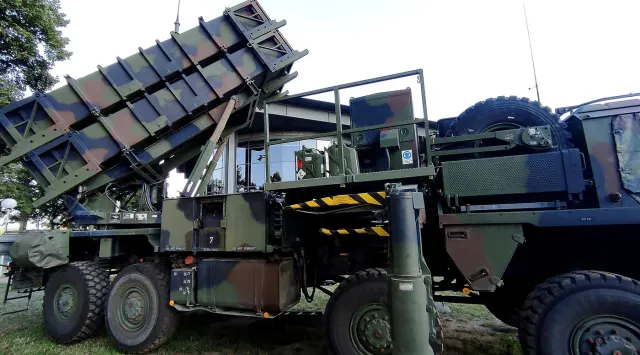
Air defense system
Patriot PAC-3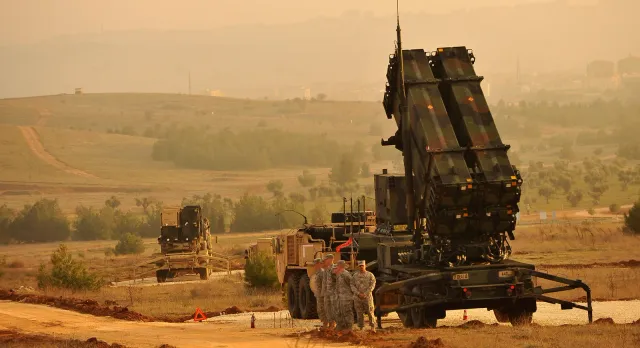
Air defense system
Patriot PAC-2 Air defense system
Patriot GEM-T

Frequently asked questions
What was the single biggest development this week? +
Ukraine's Patriot interceptor shortage went from a bad night on August 1 to a confirmed trend. President Volodymyr Zelensky said on August 5 that allied deliveries of air-defense missiles in 2026 have fallen to a third of 2025 levels, and the August 2 barrage saw just one of 27 ballistic missiles intercepted.
Is Ukraine's own SkyFall and JetKiller production a real substitute for Western interceptors, or just a headline? +
It is a genuine parallel track, not yet a substitute. SkyFall targets 1,000 strike drones a month and JetKiller claims a 50,000-a-month production target at a fraction of Patriot's per-unit cost, but neither has the intercept reliability of a fielded PAC-3 system against ballistic threats specifically. JetKiller's own claimed track record is against Shahed-type drones, not ballistic missiles, and that claim has not been independently verified.
Why did two nearly identical Space Force satellite contracts take opposite risk approaches in the same week? +
Rocket Lab's $397 million SB-AMTI award bets on Neutron, a rocket that has never flown to orbit. Leidos's parallel $1.75 billion Golden Dome award uses sensors already flight-proven across three prior tranches. The Space Force appears to be deliberately hedging the same tracking mission across one high-risk, high-reward vendor and one low-risk, proven vendor at the same time.
What should readers watch next week? +
Whether Ukraine secures a U.S. license to build Patriot missiles domestically, a step Zelensky raised on August 5; whether the Yemen truce formally collapses given UN envoy Hans Grundberg's warning of the country's greatest conflict risk since 2022; and whether Rocket Lab announces a Neutron maiden-launch date, which would de-risk its SB-AMTI commitment.
More news


