April 2026 in review: Iran ceasefire, Ukraine's deadliest month
A two-week Iran ceasefire halted the Middle East air war while Ukraine logged its worst civilian toll since July 2025 and NATO, Space Force, and the Navy all advanced major procurement moves.

Via Wikipedia, M142 HIMARS (shown for identification)
By the numbers

Infographic: WeaponSpecs News Desk
April 2026 was the month an active state-on-state air war paused without resolving, and Ukraine’s civilian toll from the separate Russia war hit its worst point in nine months. Around those two stories, NATO’s eastern flank grew a deep-strike arm, the Pentagon committed billions to space-based missile defense and a Bradley replacement, and the Navy set a real date for its next carrier fighter. This digest ranks the eight developments that mattered most, weighing scale of impact over recency.
The ceasefire that stopped, but didn’t end, the Iran war
The month’s dominant story is a pause, not a peace. A two-week ceasefire in the Iran war took effect April 8, 2026, halting the active combat phase of a conflict that opened with strikes in late February.12 In the war’s first four days alone, Iran fired more than 500 ballistic missiles and over 2,000 drones, a tempo it could not sustain: by early April, launch rates had fallen 83 to 90 percent from that opening pace, reflecting both the ceasefire and degraded Iranian launch capacity after weeks of strikes on its missile infrastructure.
The dominant Iranian system through the conflict was the Khorramshahr-4, a liquid-fueled ballistic missile Tehran states carries a roughly 2,000-kilometer range, a 1,800-kilogram warhead, and a claimed circular error probable near 30 meters. Every one of those figures is an Iranian state claim, not independently verified, and WeaponSpecs’ own Khorramshahr system entry carries that caveat. Israeli air defenses intercepted the majority of incoming fire across the conflict, though open-source damage assessments indicate a meaningful share still penetrated, consistent with a saturation campaign mixing ballistic missiles and large drone waves to strain interception capacity.
The ceasefire’s diplomatic follow-through did not hold. Pakistan, whose foreign minister brokered the truce, hosted follow-on Islamabad Talks on April 12 and 13 aimed at converting the pause into a durable settlement. Those talks collapsed, and Washington moved to a naval blockade posture in the region afterward, a sign the underlying dispute, not just the shooting, remains unresolved heading into May.
Ukraine’s deadliest month since July 2025
While the Iran war paused, the separate Russia-Ukraine war produced the worst civilian toll in nine months. The UN Human Rights Monitoring Mission Ukraine’s April 2026 report3 recorded 238 civilians killed and 1,404 injured during the month, the highest monthly figure since July 2025. Long-range missile and drone strikes caused the largest single share of the toll, 84 killed and 628 injured, 43 percent of April’s total casualties. Short-range attack drones caused a further 80 deaths and 481 injuries, the highest monthly drone-attributed casualty count recorded since Russia’s full-scale invasion began in 2022.
The strikes were not evenly spread. The UN mission’s geographic breakdown shows concentrated damage in Kherson (26 killed, 201 injured), Dnipro (23 killed, 115 injured), Nikopol (16 killed, 93 injured), and Odesa (15 killed, 80 injured), cities well behind the front line rather than in active combat zones, a pattern consistent with a continued air-interdiction strategy aimed at infrastructure and morale rather than battlefield attrition. Year-to-date through April, the mission’s cumulative figures stand at 815 killed and 4,174 injured, 21 percent above the same stretch in 2025, so April’s spike sits inside a broader upward trend rather than as an isolated outlier.
The highest monthly toll since July 2025. Cheap short-range drones killed nearly as many civilians as long-range missile and drone strikes combined, 80 killed and 481 injured versus 84 killed and 628 injured, the deadliest month for that low-cost weapon type since the invasion began.
Estonia deepens NATO’s eastern-flank strike arm
Against that backdrop, NATO’s Baltic members kept building out deep-strike capability. Estonia’s Centre for Defence Investments signed a contract with Lockheed Martin for three additional M142 HIMARS launchers, adding to six already delivered in spring 2025, according to Army Recognition5 and Estonian World4. The deal, valued above €60 million, pairs the new launchers with a roughly $11 million investment in a regional HIMARS sustainment center inside Estonia, with maintenance support extending to Latvia, Lithuania, Poland, and Finland. Estonian defense minister Hanno Pevkur framed the acquisition around holding Russian command posts and logistics nodes at risk, language that matches WeaponSpecs’ M142 HIMARS entry describing the system’s core role as a mobile, long-range precision-strike platform. The new launchers are due in 2027, and the sustainment hub is the more structurally significant piece: it converts Estonia from a HIMARS operator into a regional maintenance node for four allied air forces, reducing dependence on shipping launchers back to the US for major service.

Golden Dome commits $3.2 billion to a space-based interceptor layer
The Pentagon’s Golden Dome missile-defense initiative took its most concrete shape yet in April. Space Force awarded roughly $3.2 billion across 20 contracts to 12 companies, ranging from established primes (Lockheed Martin, Northrop Grumman, RTX, General Dynamics) to newer space-systems entrants (Anduril, SpaceX, True Anomaly, Turion Space, GITAI USA), to build a proliferated low-earth-orbit constellation of boost-, midcourse-, and glide-phase interceptors, according to Breaking Defense6 and DefenseScoop7. April’s award is one slice of a program with a total projected cost of $185 billion, an initial capability target of 2028, and prototype work planned for that same year. Spreading 20 contracts across 12 companies rather than consolidating around one or two primes signals the Pentagon is deliberately hedging technical risk, a pattern more common in early-stage space acquisition than mature weapons programs.
RTX’s StormBreaker order shows allies are footing more of the bill
RTX secured a sole-source contract worth up to $709 million for Lot 12 production of the GBU-53/B StormBreaker precision-guided glide bomb, with an initial obligation of $338 million, per public contract-award reporting. The notable detail is the funding split: foreign military sales partners including Belgium, Canada, Finland, Germany, Italy, Norway, South Korea, and Switzerland are co-funding $171.5 million of that initial obligation, 48 percent, a reminder that StormBreaker has become as much an allied-interoperability program as a US Air Force one. Production runs through February 2030 at RTX’s Tucson, Arizona facility and covers all-up rounds, containers, spares, and diagnostic test equipment, the full logistics tail rather than just warheads.

The Army commits real procurement dollars to XM30
The Army’s XM30 Mechanized Infantry Combat Vehicle, intended as the eventual replacement for the M2A4 Bradley, moved from research funding into production procurement in April’s FY2027 budget request: $547 million for 19 vehicles, roughly $28.8 million per unit at this early production-startup phase, a figure that should fall once the line is running at volume, according to Army Recognition8. The Army’s stated plan totals 108 vehicles by FY2031. XM30 is built around a 50mm XM913 Bushmaster cannon and a modular open-systems architecture, a deliberate break from the Bradley’s fixed 25mm turret, and this is the clearest signal yet that the decades-old Bradley replacement effort, which has cycled through prior cancellations, is now actually funded rather than merely planned.
The Navy sets a real date for its next carrier fighter
The Navy’s F/A-XX sixth-generation fighter program, intended to eventually replace the F/A-18E/F Super Hornet and EA-18G Growler fleets, finally got a concrete near-term milestone. Chief of Naval Operations Adm. Daryl Caudle confirmed at the Sea-Air-Space conference on April 20 that the Navy will downselect between the two remaining competitors, Boeing and Northrop Grumman, in August 2026, according to Breaking Defense10. Lockheed Martin was eliminated from the competition in early 2025. The program’s stated goals, extended range, enhanced stealth, AI-enabled mission systems, track the operational logic driving carrier-aviation planning fleet-wide: longer standoff range to operate farther from contested airspace. An August downselect moves F/A-XX into engineering and manufacturing development on a schedule that originally targeted a mid-2025 decision, so the program is running roughly a year behind its earliest public timeline.
SOUTHCOM stands up the first regional Autonomous Warfare Command
In a smaller but structurally notable move, Gen. Francis L. Donovan, commander of US Southern Command, directed the creation of a SOUTHCOM Autonomous Warfare Command on April 21, per DefenseScoop9. It is the first US regional command with a dedicated organization for autonomous, semi-autonomous, and unmanned platforms, tasked with countering narcotrafficking networks and supporting disaster response across Latin America and the Caribbean, using US facilities in Honduras, El Salvador, and Panama to test across varied terrain. The move coordinates with a proposed Defense Autonomous Warfare Group carrying a $54.6 billion FY2027 budget request, and it signals the Pentagon is now restructuring regional command organization itself, not just equipment, around autonomous systems.
For the day-by-day record behind these numbers, browse WeaponSpecs’ news desk, or run a side-by-side of the systems named here in the compare tool.
Sources
- 2026 Iran war — Wikipedia, Apr 30, 2026
- 2026 Iran war ceasefire — Wikipedia, Apr 30, 2026
- Protection of Civilians in Armed Conflict, April 2026 — UN Human Rights Monitoring Mission Ukraine, Apr 30, 2026
- Lockheed Martin to establish HIMARS sustainment centre in Estonia — Estonian World, Apr 13, 2026
- Estonia expands HIMARS fleet to advance deep-strike capabilities on NATO's eastern flank — Army Recognition, Apr 13, 2026
- Space Force tasks a dozen companies for Golden Dome space-based interceptors — Breaking Defense, Apr 24, 2026
- Golden Dome space-based interceptor missile defense contractors — DefenseScoop, Apr 24, 2026
- U.S. Army launches XM30 IFV procurement with $547 million to replace Bradley with 19 vehicles in 2027 — Army Recognition, Apr 1, 2026
- SOUTHCOM establishes new Autonomous Warfare Command — DefenseScoop, Apr 22, 2026
- F/A-XX fighter downselect coming in August, CNO says — Breaking Defense, Apr 20, 2026
Systems mentioned
Every system named in this story, with its photo and, where available, a video. Tap a card to open the full spec sheet.
Compare these side by side →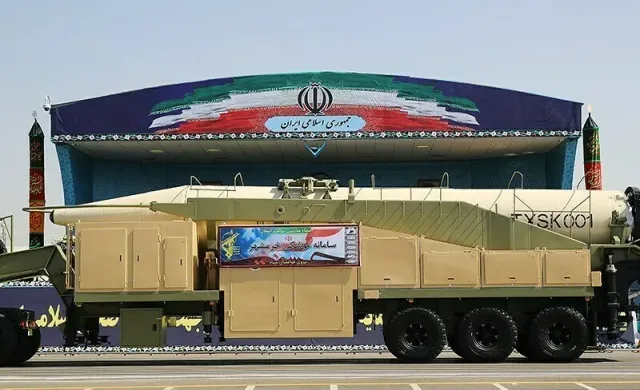
Missile
Khorramshahr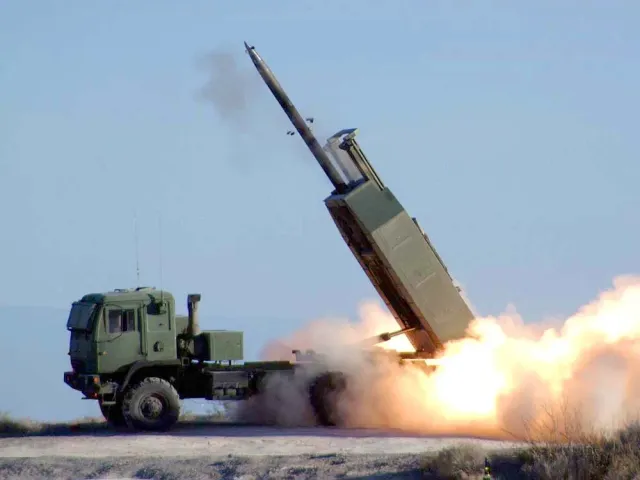
Artillery & MLRS
M142 HIMARS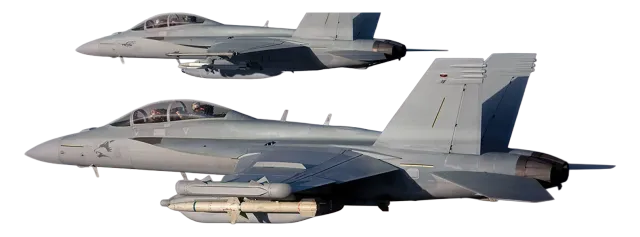
Fighter aircraft
F/A-18E/F Super Hornet Fighter aircraft
EA-18G Growler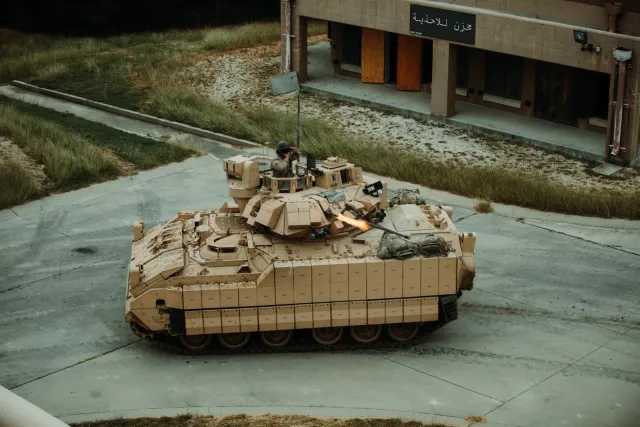
IFV / APC
M2A4 BradleyFrequently asked questions
What was the single biggest story of April 2026? +
The two-week ceasefire that took effect April 8 in the Iran war, which halted the active combat phase after Iran had fired more than 500 ballistic missiles and 2,000-plus drones since late February. It is the biggest story by scale: it reshaped the trajectory of an active state-on-state air war, even though talks that followed later broke down.
Why did Ukrainian civilian casualties peak in April? +
The UN Human Rights Monitoring Mission Ukraine recorded 238 civilians killed and 1,404 injured in April, the highest monthly toll since July 2025. Long-range missile and drone strikes accounted for 84 of the deaths, and short-range attack drones caused 80 more, the highest monthly drone-attributed toll since the 2022 invasion began.
Is the Iran ceasefire still holding? +
The ceasefire itself, which took effect April 8, held through the month, with Iranian missile and drone fire down 83 to 90 percent from the war's opening days. But follow-on talks in Islamabad on April 12 and 13 collapsed, and Washington moved to a naval blockade posture afterward, so the underlying dispute remains unresolved even as the shooting stopped.
What should I watch next? +
The Navy's F/A-XX downselect between Boeing and Northrop Grumman, due in August 2026, and whether the Iran ceasefire survives past its two-week window given the collapsed Islamabad talks, are the two clearest threads carrying directly out of April.
More news


