Space Force Picks 15 Firms for $981M Orbital-Combat Training Range
NITE-STAR will fund live aggressor satellites and jamming ranges so Guardians can rehearse against China and Russia before a real fight.

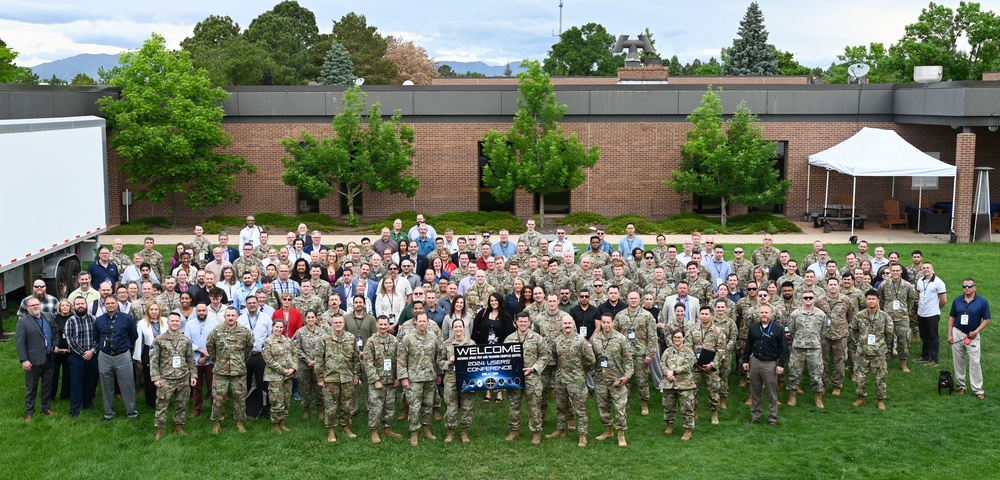
US Space Force photo by David Grim, via DVIDS, public domain
The Space Force announced July 31 that it has awarded spots on a $981 million contract vehicle to 15 companies to build the aggressor satellites, jamming ranges and simulated cyberattack infrastructure Guardians need to rehearse orbital combat before facing it for real. The program, called NITE-STAR, is the service’s clearest step yet toward a live-adversary training range for space, comparable to what Red Flag has long done for fighter pilots.
What Guardians have been missing
NITE-STAR stands for National Space Test and Training Complex Innovative Technology and Engineering, Space Test and Range, a name that describes its purpose more than it clarifies it: fund the physical and simulated infrastructure Guardians need to train the way pilots and sailors already do, against a live, adversarial opponent rather than a slide deck. Space Force training today leans heavily on classroom instruction and legacy systems that cannot replicate what a real orbital fight looks like, jamming a satellite’s communications link, dazzling its sensors with a laser, or maneuvering to threaten it directly. NITE-STAR is meant to close that gap by procuring satellites that mimic adversary behavior in orbit, ground systems that reproduce cyberattacks and electronic jamming, and a blended live, virtual and constructive training environment, the same conceptual approach the Air Force and Navy use in the Joint Simulation Environment for pilot training.
“This effort sets the foundation for rapidly advancing and integrating the test and training tools needed to effectively train Space Force Guardians,” said Col. Craig Hackbarth, head of the Operational Test and Tracking Infrastructure program (DefenseScoop, Space Force establishes $981M contract vehicle to develop testing, training infrastructure, July 31, 2026).
Fifteen companies, one contract ceiling
The award is structured as an indefinite-delivery, indefinite-quantity vehicle with a $981 million ceiling shared across all 15 winners, running on a roughly six-year structure that SpaceNews anchors to July 2032. The 15 companies span the full range of the space-industrial base: established primes Boeing, Lockheed Martin Space, Northrop Grumman, L3Harris Technologies and BAE Systems sit alongside newer entrants Rocket Lab, Firefly Aerospace, Sierra Space, Redwire and York Space Systems, plus Amentum, CACI, Pacific Crest Alliance, Parsons Government Services and Viasat. That mix matters beyond headcount: it signals the Space Force wants both the manufacturing scale of legacy contractors and the faster iteration cycles smaller commercial space firms have demonstrated, applied to a mission, realistic adversary simulation, where neither group has an existing product to simply hand over. Individual task orders under the IDIQ ceiling will determine how the $981 million actually gets divided among the 15 firms over the life of the contract.
The buy builds on infrastructure that already exists rather than starting from nothing. The Space Test and Training Range at Schriever Space Force Base in Colorado, run by Space Delta 11’s aggressor squadrons under Space Training and Readiness Command, already fields dedicated units for different threat types: the 527th Space Aggressor Squadron for electromagnetic warfare, the 57th Space Aggressor Squadron for orbital warfare, and the 33rd Range and Aggressor Squadron for cyber warfare. NITE-STAR is designed to expand what those units can throw at trainees, funding more realistic, more varied threat replication than the current range supports.
A Red Flag model, applied to orbit
Gen. Chance Saltzman, the Chief of Space Operations, has previously described this live-aggressor-satellite training approach as the Space Force’s equivalent of the Air Force’s Red Flag exercises, in which pilots fly against dedicated adversary squadrons flying US aircraft configured to mimic enemy tactics rather than training only in simulators. The comparison is a useful anchor for what NITE-STAR is actually buying: not new weapons, but the rehearsal space to use existing ones competently against an opponent that behaves unpredictably, the same logic that has driven decades of Air Force and Navy investment in realistic adversary training. For a service as young as the Space Force, which stood up in 2019 and has comparatively little institutional experience running live-force-on-force exercises, building that rehearsal infrastructure now, rather than after a crisis exposes the gap, is the explicit point.
Sources
- Space Force establishes $981M contract vehicle to develop testing, training infrastructure — DefenseScoop, Jul 31, 2026
- Space Force picks 15 companies for $981 million training range contract — SpaceNews, Jul 31, 2026
- Facing a lack of kit, Space Force creates $981M pool to buy training capabilities — Breaking Defense, Jul 31, 2026
Frequently asked questions
What is NITE-STAR? +
NITE-STAR is a $981 million, multi-award IDIQ contract vehicle through which the Space Force will buy aggressor satellites, jamming and cyberattack simulation ground systems, and a blended live and virtual training environment so Guardians can rehearse against realistic orbital threats.
Which companies won spots on the contract? +
Fifteen firms, including major primes such as Boeing, Lockheed Martin Space, Northrop Grumman, L3Harris and BAE Systems, alongside newer space companies including Rocket Lab, Firefly Aerospace, Sierra Space, Redwire and York Space Systems.
Why does the Space Force need this now? +
Current training relies mainly on classroom instruction and older systems that cannot replicate real contested-orbit conditions such as jamming, laser attacks or anti-satellite engagement, leaving operators with limited ability to rehearse against a peer threat like China or Russia before a real crisis.
Is this actually a Red Flag-style exercise for space? +
It institutionalizes the live-aggressor-satellite training model that Space Force leadership has compared to the Air Force's Red Flag exercises, giving Guardians real adversarial spacecraft and simulated electronic-warfare and cyber threats to train against rather than only classroom scenarios.
More news


