Ukraine Hits Russia's Engels Bomber Base, Saratov Refinery
Long-range drones struck the Tu-95MS/Tu-160 staging base at Engels-2 and Rosneft's Saratov refinery overnight, Kyiv's General Staff confirmed Aug. 2.

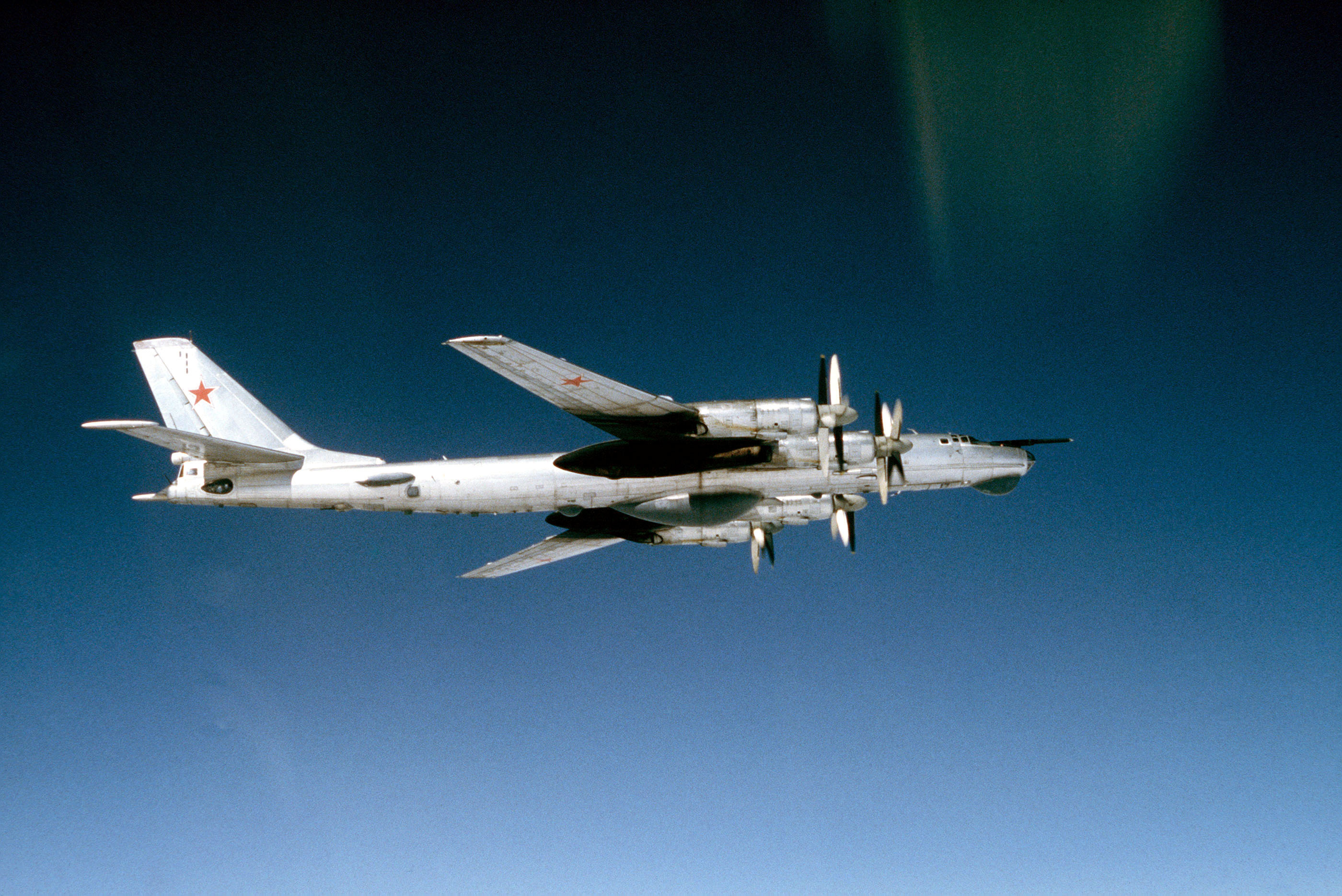
Photographer Kobel, MAKS 1997 airshow, public domain (released by copyright holder), via Wikimedia Commons
Ukraine’s Defense Forces struck the Engels-2 strategic bomber base and Rosneft’s Saratov oil refinery overnight into August 2, hitting a target roughly 600 km from the front line that hosts the Tu-95MS and Tu-160 bombers Russia uses to launch its mass missile barrages on Ukrainian cities. Kyiv’s General Staff confirmed both strikes directly, along with a separate hit on a fuel depot near Lyudinovo and a drone storage site near Navlya.
What happened overnight
Ukraine’s General Staff said Defense Forces struck Engels-2 airbase and the Saratov oil refinery in Saratov Oblast overnight between August 1 and 2, roughly 600 km (370 miles) from the front line. Fires were reported at both sites. At the refinery, the General Staff said the ELOU-AVT-6 primary crude distillation unit, the section of the plant that performs the first processing stage on incoming crude oil, was precisely struck. A regional Russian governor said there were preliminary reports of casualties, without providing figures. In the same overnight window, Ukrainian forces also hit a fuel depot near Lyudinovo in Kaluga Oblast and a drone storage and launch site near Navlya in Bryansk Oblast, both well inside Russian territory and unconnected to the Saratov strikes beyond timing.
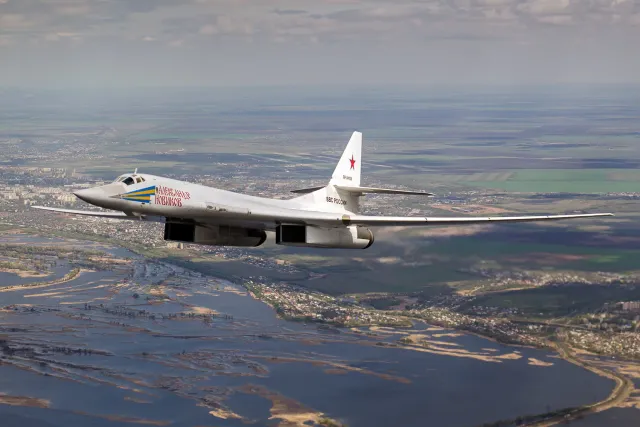
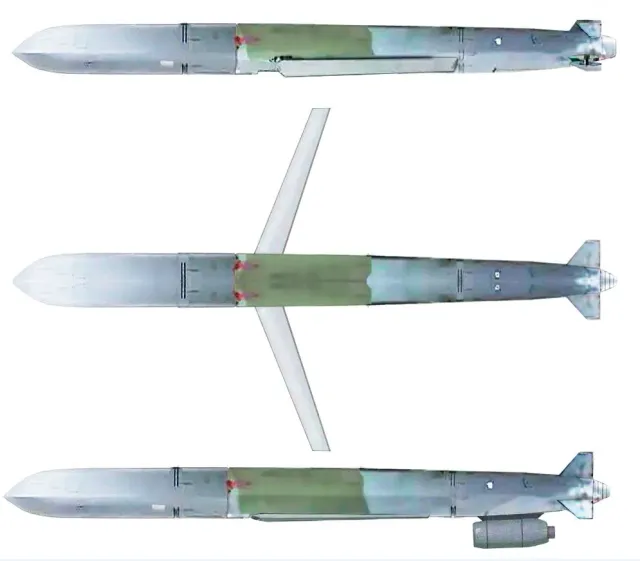
Engels-2 is not a minor target. It is home to the 184th Heavy Bomber Aviation Regiment and the 121st Guards Heavy Bomber Aviation Regiment, which fly the Tu-95MS “Bear” and Tu-160 “Blackjack” strategic bombers. Both aircraft carry the Kh-101 air-launched cruise missile, a roughly 4,500-km-range weapon with a 400 kg warhead that has been a mainstay of Russia’s mass strikes on Ukrainian cities, including the August 1 barrage on Kyiv this desk covered separately. Hitting Engels is, in effect, Ukraine reaching for the source end of that same supply chain rather than only responding after the missiles are already airborne.
Why Engels keeps coming back as a target
Engels has been struck repeatedly since 2022, including a widely reported attack in mid-July 2026, so this is best understood as one strike in a sustained campaign rather than an isolated event. What has changed since Operation Spiderweb in June 2025, the operation that dispersed a large share of Russia’s strategic bomber fleet to more distant airfields to reduce exposure, is that Engels now functions less as permanent, full-time basing and more as a forward staging and arming point where bombers load Kh-101 and Kh-102 missiles before a mission. That shift matters for how to read this strike: it is not necessarily a hit against parked aircraft, but against the logistics and munitions-handling infrastructure that lets Russia turn Engels into a launch point on short notice.
The refinery half of the strike sits inside a much larger pattern. Ukraine’s long-range drone campaign has already hit refineries at Ryazan, Perm, Volgograd and Ufa in the past week alone, all covered separately by this desk. Saratov is a distinct addition to that list, both because it is a different, larger facility and because it was struck in the same operation as a bomber base rather than as a standalone refinery raid. The General Staff cites the plant’s processing capacity at roughly 7 million tonnes a year, though other public estimates place it lower, in the 4.8 to 6 million tonne range, a spread worth noting rather than collapsing into one number no source actually agrees on. Either figure describes a large facility: even the lower estimate is enough fuel-refining capacity to matter for military logistics well beyond the immediate region.
Zoomed out, the campaign’s cumulative effect is larger than any single strike. A Financial Times assessment cited in coverage of the broader campaign estimated that, as of late July 2026, Ukrainian strikes had disrupted more than 30% of Russia’s operational oil refining capacity and 45% of its nominal capacity, a scale that starts to explain why Russia has periodically had to restrict domestic fuel exports even as it continues fighting a two-front air war. That figure describes the campaign as a whole, not this single night, but it is the context that makes an individual refinery strike more than a one-off headline: each additional hit compounds a shortfall Russia has not yet found a way to fully repair between attacks.
What’s confirmed and what isn’t
Ukraine’s General Staff issued an institutional confirmation of the Engels and Saratov strikes rather than a statement attributed to a single named official, and no outlet in this desk’s sourcing carried an individually attributed quote meeting the bar for a named person, title and affiliation. The regional Russian governor’s mention of “preliminary reports of casualties” was paraphrased without figures in the available reporting and should be read as a Russian government claim, not an independently verified casualty count. An earlier search turned up a Kyiv Independent article describing a Tu-95/Engels strike, but that piece covers a separate, previously reported July 16, 2026 incident and was not used as a source for this story.
Sources
- Ukrainian Defense Forces strike Saratov oil refinery and Engels-2 airbase — Militarnyi, Aug 2, 2026
- Ukraine hits Russia's strategic bomber base and major oil refinery in overnight strike — United24 Media, Aug 2, 2026
- Russia's full-scale war against Ukraine: Day 1,121 — UACrisis.org, Aug 2, 2026
- Ukraine strikes Saratov oil refinery and Engels-2 airbase — Mezha.net, Aug 2, 2026
- Ukraine strikes Saratov oil refinery, Engels airfield and Russian fuel depot — News.az, Aug 2, 2026
Systems mentioned
Every system named in this story, with its photo and, where available, a video. Tap a card to open the full spec sheet.
Compare these side by side →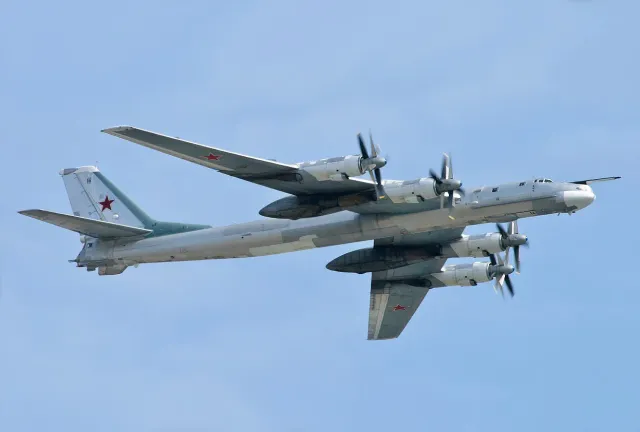
Frequently asked questions
What is Engels-2 airbase and why does it matter? +
Engels-2 is Russia's primary strategic bomber base in Saratov Oblast, about 600 km from the Ukrainian front. It hosts Tu-95MS and Tu-160 regiments that load Kh-101 and Kh-102 cruise missiles before flying mass strikes on Ukrainian cities.
Has Engels been hit before? +
Yes, repeatedly since 2022, including a widely reported strike in mid-July 2026. This is part of an ongoing Ukrainian deep-strike campaign against the base, not a one-off attack.
What was hit at the Saratov refinery specifically? +
Ukraine's General Staff and local reporting point to the ELOU-AVT-6 primary crude distillation unit, the part of the plant that performs the first stage of turning crude oil into refined fuel. The refinery is operated by Rosneft.
How much of Russia's refining capacity has Ukraine knocked out overall? +
A Financial Times assessment cited in coverage put cumulative disruption at more than 30% of Russia's operational refining capacity and 45% of nominal capacity as of late July 2026, a campaign-wide figure covering many strikes, not this one alone.
More news


