Ukraine's drones reach Russia's largest refinery for first time
FP-1 drones flew roughly 2,500km to hit Omsk's ELOU-AVT-11 unit July 6, the last of Russia's 11 largest refineries to be struck; a suspension followed within a day.
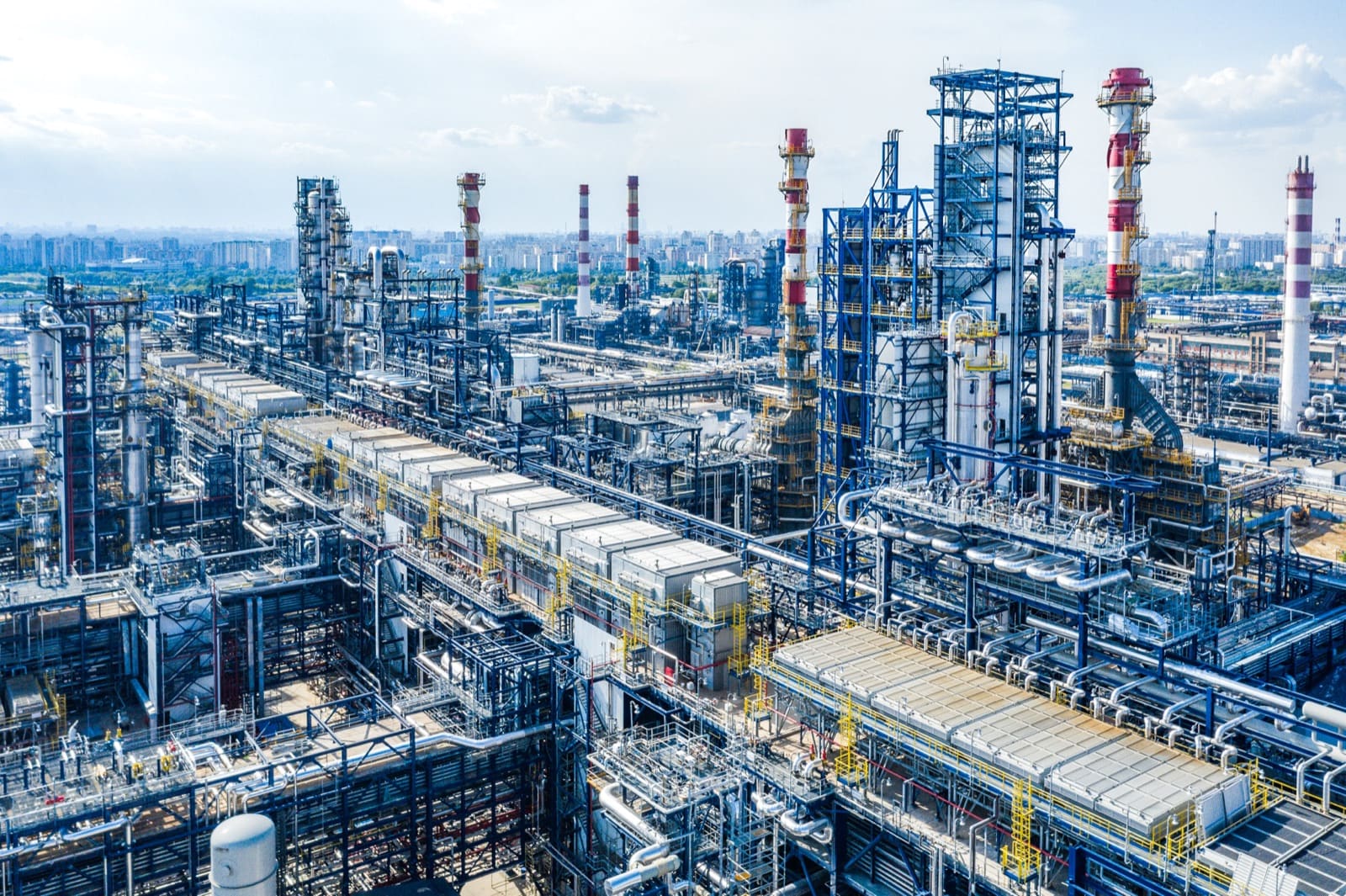
Photo by Gennady Golubev, CC BY-SA 4.0, via Wikimedia Commons
By the numbers
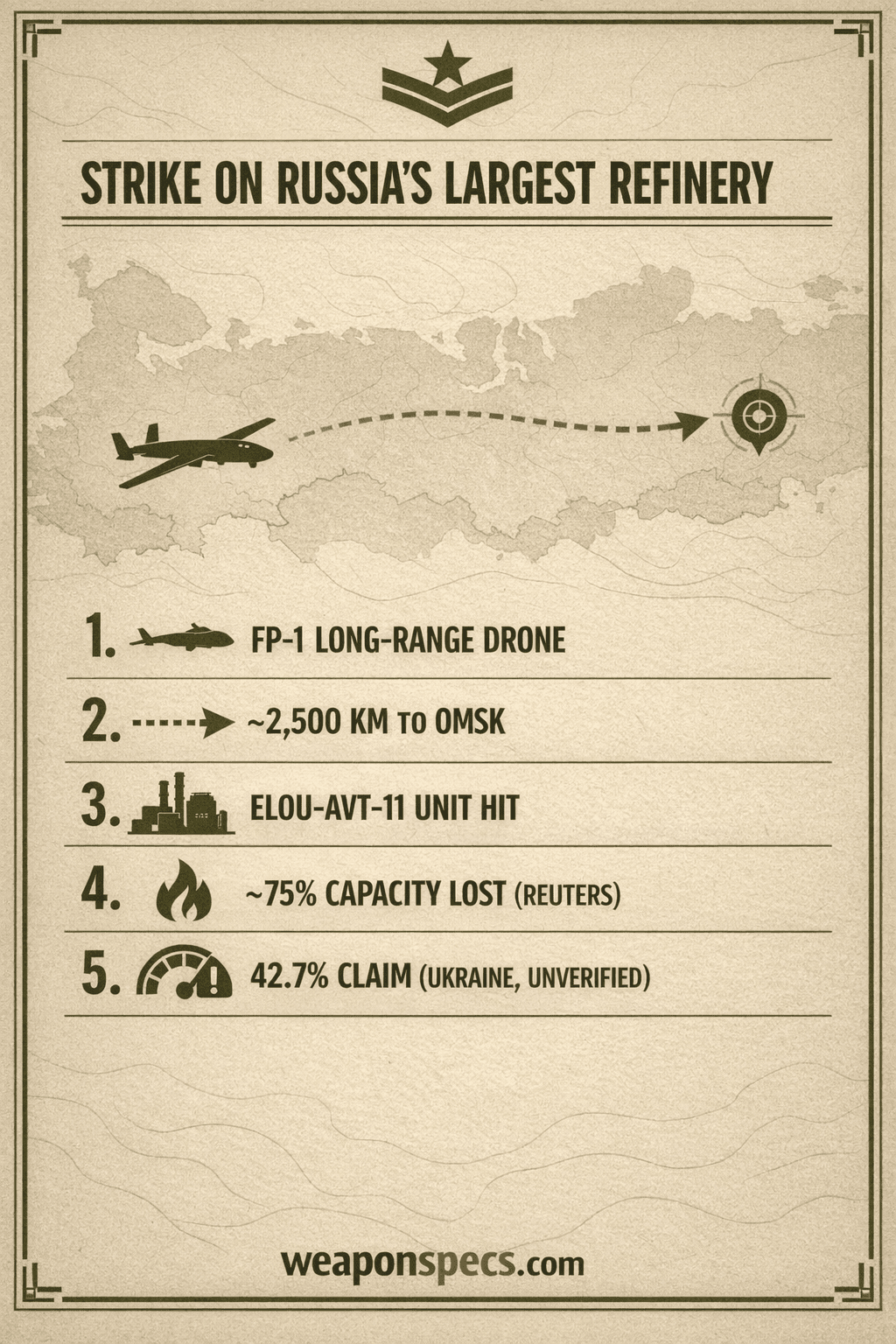
Infographic: WeaponSpecs News Desk
Ukrainian long-range drones struck Gazprom Neft’s Omsk refinery, Russia’s largest, for the first time on July 6, hitting the facility’s primary crude-processing unit roughly 2,500 kilometers from the Ukrainian border, according to United24 Media, the Kyiv Independent and The Moscow Times. Ukraine’s General Staff and Special Operations Forces (SSO) said upgraded FP-1 drones flew a roughly 3,000-kilometer route to reach the ELOU-AVT-11 unit, the plant’s largest single processing line, and the refinery suspended fuel sales within a day.
The deepest strike on Russia’s fuel supply yet
Omsk had been the conspicuous holdout among Russia’s largest refineries. Ukraine’s General Staff described this strike as the last of the country’s 11 largest gasoline-producing refineries to be successfully hit in a drone campaign against Russian energy infrastructure that has run since the invasion began, a characterization from Kyiv that this story treats as Ukraine’s own framing rather than an independently confirmed tally. Regional governor Vitaly Khotsenko confirmed that “several drones” penetrated the area’s air defenses and struck the facility, according to Moscow Times reporting, while Ukraine’s General Staff stated only that “an impact with subsequent fire was recorded on the territory” and that “the extent of the damage is being verified,” a notably cautious formulation for a strike Kyiv otherwise publicized heavily.
Independent confirmation came quickly and from multiple angles. NASA satellite sensors documented multiple fire hotspots at the refinery site the evening of the strike, and Militarnyi’s review of Maxar commercial satellite imagery, corroborated by open-source analysts at the Exilenova+ project, confirmed at least four drone impacts specifically on the ELOU-AVT-11 unit, which has a design capacity of roughly 8.4 to 8.6 million tonnes of crude per year, close to 40% of the refinery’s total throughput on its own. Social media imagery circulating the same evening showed black smoke rising from the complex, consistent with both the satellite and governmental accounts.
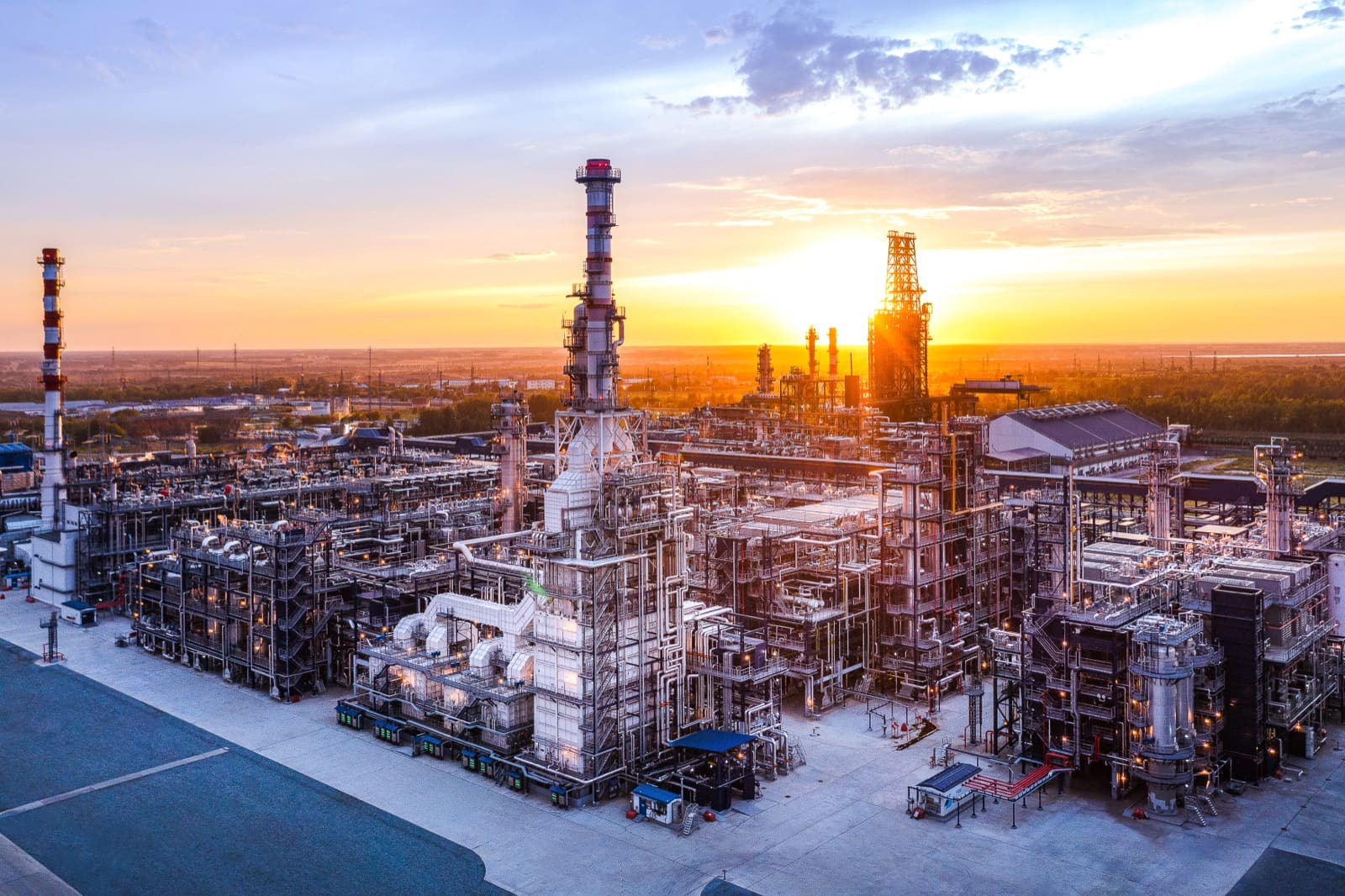
Why Omsk specifically matters
Omsk is not just Russia’s largest refinery by volume, it occupies a structurally unique position in the country’s fuel supply. The facility processes on the order of 21 to 23 million tonnes of crude annually (figures vary slightly by source and year), accounting for roughly 10% of Russia’s total refining capacity, and it supplies more than half of motor-fuel demand across the entire Siberian Federal District, a region with no comparably sized alternative refinery nearby. Less widely known outside the industry, Omsk is also Russia’s only domestic producer of catalytic cracking catalysts, the specialized chemical compounds every refinery needs to break heavy crude into usable fuels, meaning sustained damage there could complicate refining operations well beyond Omsk’s own output. A Militarnyi report citing Reuters sourcing put the immediate production-capacity loss at roughly 75%, with the St. Petersburg International Commodity Exchange documenting a suspension of the refinery’s gasoline and diesel sales as of July 7, the day after the strike, an independently observable market signal that corroborates a genuine operational disruption even without a full damage assessment from either side.
Kyiv has separately claimed a much larger cumulative effect: on July 4, two days before the Omsk strike, Ukraine’s General Staff stated that strikes over roughly the prior year had taken 42.74% of Russia’s total design oil-refining capacity out of service, alongside an estimated $13.5 billion in losses. That figure comes exclusively from the Ukrainian General Staff’s own reporting, has no independent corroboration from international energy analysts, satellite-imagery reviewers or Russian sources in any of the reporting reviewed for this story, and should be read as an unverified Ukrainian government claim rather than a confirmed industry figure, distinct from the Omsk-specific satellite and market evidence described above.
What is still unconfirmed
Neither Russian officials nor Gazprom Neft has published a detailed damage assessment or a timeline for restoring ELOU-AVT-11 to service. The 75% capacity-loss figure traces to Reuters’ unnamed sourcing rather than an on-the-record Russian statement, and Ukraine’s own General Staff has notably avoided quantifying the damage itself beyond confirming “an impact with subsequent fire.” How long Omsk’s suspension lasts, and how much of the Siberian Federal District’s fuel supply actually tightens as a result, remain open questions this story cannot yet answer.
Sources
- Ukraine Strikes Russia's Largest Omsk Oil Refinery for the First Time, 2,500 km From Ukraine — United24 Media, Jul 6, 2026
- Russia's largest oil refinery in flames as Ukraine strikes Omsk, 2,500 km away from border — Kyiv Independent, Jul 6, 2026
- Ukraine Strikes Russia's Largest Oil Refinery in Western Siberia — The Moscow Times, Jul 6, 2026
- Satellite Imagery Confirms Four Strikes on the Russian Oil Refinery in Omsk — Militarnyi, Jul 7, 2026
- Omsk Oil Refinery Lost 75% of Its Production Capacity and Suspended Operations — Militarnyi, Jul 7, 2026
- Ukrainian attacks have disabled 42.74% of russian oil refining capacity — UNN, Jul 4, 2026
Frequently asked questions
What exactly did Ukraine hit at Omsk, and when? +
Ukrainian forces struck the ELOU-AVT-11 primary crude-processing unit at Gazprom Neft's Omsk refinery on July 6, 2026, using long-range FP-1 drones. Ukraine's General Staff and Special Operations Forces described the strike; Maxar satellite imagery reviewed by open-source analysts confirmed at least four drone impacts on the unit.
How significant is the Omsk refinery to Russia? +
Omsk is Russia's largest oil refinery, processing roughly 21 to 23 million tonnes of crude annually, about 10% of national refining capacity, and supplying more than half of motor-fuel demand across the Siberian Federal District. It is also Russia's only domestic producer of catalytic cracking catalysts, giving it an outsized role beyond its own fuel output.
Was this the first time Omsk has been hit? +
Yes. Ukraine's General Staff described this as the last of Russia's 11 largest gasoline-producing refineries to be successfully struck since Ukraine's long-range drone campaign against Russian energy infrastructure intensified, and the first drone attack on the Omsk region since the 2022 invasion began. That framing of a completed list is Ukraine's own characterization and was not independently verified for this story.
How much of Russia's refining capacity has Ukraine actually disabled? +
Ukraine's General Staff claimed on July 4, 2026, two days before the Omsk strike, that cumulative strikes had taken 42.74% of Russia's total design oil-refining capacity out of service over roughly the prior year. This is a Ukrainian government claim, not independently verified by any third party reviewed for this story, and should be read as such rather than as a confirmed figure.
More news
 conflict
 Russia fields a dedicated jammer to blind Starlink-guided Ukrainian drones
Read → conflict
 Ukraine's deep-strike campaign hits a Bashkortostan refinery and 20 Black Sea shadow-fleet vessels in one 48-hour window
Read → conflict