 Russia
 Tactical Missiles Corporation (KTRV)
Kh-101
A Russian air-launched, low-observable cruise missile carried by Tu-95MS and Tu-160 bombers for long-range conventional strikes against land targets. It has been the primary standoff weapon in Russia's mass missile strikes against Ukrainian infrastructure since 2022.
In service since 2012
Compiled from public sources ·primary reference ↗ ·last verified 2026-07-02
4,500
km range
0.77
Mach
400
kg warhead
Pricing: Unit cost not publicly disclosed
Procurement snapshot
Availability & export
Russian state channel
Rosoboronexport monopoly; Western sanctions exposure and payment/logistics risk for many buyers.
Channel: Rosoboronexport (state)
Fielded & proven
Operator data not public
In service since 2012. Status: active.
Lifecycle cost (est.)
No public unit price to model from. Why so few systems publish one →
Interoperability
No standardised NATO calibre / datalink detected in public specs.
Derived guidance from public data, export regime by country of origin, lifecycle from the GAO ~30% acquisition rule. Verify eligibility, pricing and offsets with the manufacturer and your acquisition authority.
Full specifications
Performance
Speed, range, altitude and engagement capability.
| Max speed (Mach) Maximum speed as a multiple of the speed of sound. Mach 2+ is typical for air-superiority fighters. | 0.77 Mach |
|---|---|
| Range Maximum distance: ferry range for aircraft, operational range for vehicles, maximum engagement distance for missiles. Higher means more standoff or persistence. | 4,500 km |
Firepower
Armament, payload and guidance.
| Warhead Warhead mass. Heavier generally means larger effect radius, at the cost of range. | 400 kg |
|---|---|
| Warhead type Blast-fragmentation, shaped charge (HEAT), penetrator, thermobaric or nuclear-capable. | High-explosive fragmentation or penetrator |
| Guidance How the weapon finds its target: inertial, GPS/GLONASS, active/semi-active radar, infrared, laser, TV, wire. | Inertial navigation, GLONASS, Terrain contour matching, Electro-optical terminal correlation |
Physical
Dimensions, weight and crew.
| Length Overall length including gun/probe where applicable. | 7.45 m |
|---|---|
| Combat weight Fully loaded weight. Lighter eases transport and bridging limits; heavier often means more armor. | 2,400 kg |
Propulsion
Engine, power and fuel.
| Propulsion type Turbofan, turboshaft, diesel, gas turbine, solid-fuel rocket, ramjet… | Turbofan |
|---|
Specifications compiled from public Tactical Missiles Corporation (KTRV) and reference sources ↗. Published defense figures are approximations, treat comparisons as directional. Last verified 2026-07-02.
Compare with rivals
See how it stacks up
 Boeing AGM-86 ALCM
 Frequently asked questions
What is the range of the Tactical Missiles Corporation (KTRV) Kh-101? +
The Tactical Missiles Corporation (KTRV) Kh-101 has a maximum range of 4,500 km.
How much does the Tactical Missiles Corporation (KTRV) Kh-101 weigh? +
The Tactical Missiles Corporation (KTRV) Kh-101 has a combat weight of 2,400 kg.
What is the Tactical Missiles Corporation (KTRV) Kh-101 used for? +
The Tactical Missiles Corporation (KTRV) Kh-101 is a missile typically used for deep strike.
How much does the Tactical Missiles Corporation (KTRV) Kh-101 cost? +
Tactical Missiles Corporation (KTRV) Kh-101: Unit cost not publicly disclosed. Defense program costs are rarely fully public and vary by contract and configuration.
Similar systems
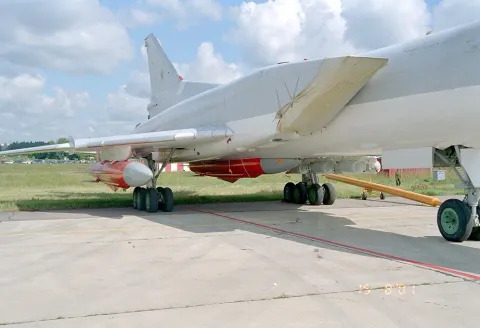
Tactical Missiles Corporation (KTRV)
Kh-32
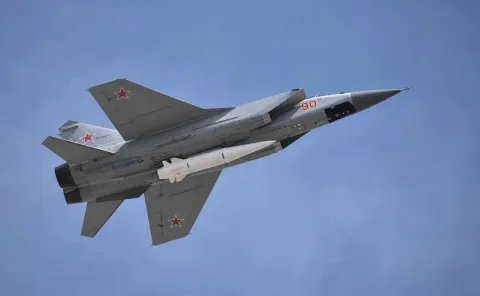
Tactical Missiles Corporation (KTRV)
Kh-47M2 Kinzhal
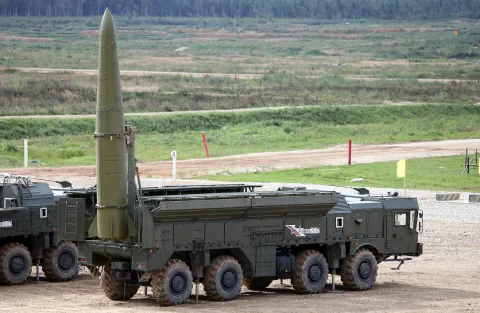
KBM (Kolomna Machine-Building Design Bureau)
9K720 Iskander-M
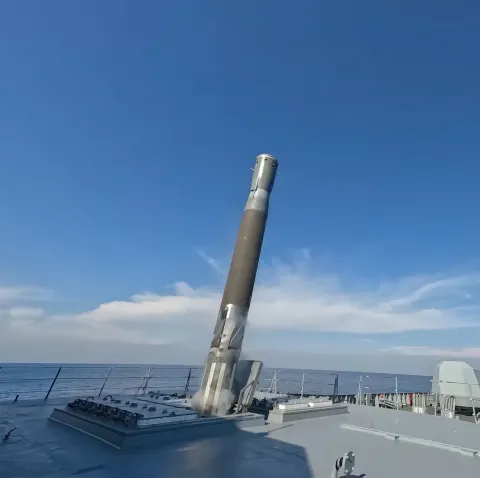
Almaz-Antey
3M22 Zircon
Related coverage
Kh-101 in the news
 Article
 industry · Aug 15, 2026
Baltic GPS Jamming Can't Blind Most Missiles
Baltic GPS jamming hit a 2026 record, but WeaponSpecs' database shows only 30% of missiles reference GPS, and none of those rely on it alone.
 News
News conflict · Aug 2, 2026
Ukraine Hits Russia's Engels Bomber Base, Saratov Refinery
Long-range drones struck the Tu-95MS/Tu-160 staging base at Engels-2 and Rosneft's Saratov refinery overnight, Kyiv's General Staff confirmed Aug. 2.
 News
News digest · Aug 1, 2026
Iran's War Resets Again, Russia Probes NATO's Seams
A Jordan strike, a two-hour US response, a Kh-101 that landed in Poland, and three new counter-drone systems defined this week in defense.
 News
News conflict · Jul 31, 2026
Russian Kh-101 Crashes Into Poland as NK Missile Kills Family
A Russian cruise missile flew 100km into NATO territory overnight as Moscow used a North Korean missile against Ukraine for the first time in a year.
 News
News conflict · Jul 24, 2026
Ukraine's Flamingo missile hits Russia's only ejection-seat plant
A Ukrainian FP-5 Flamingo cruise missile struck the Avitek plant in Kirov, Russia's sole ejection-seat maker, 1,200 km from the border, Russian officials report casualties.
 News
News conflict · Jul 6, 2026
Russia strikes Kyiv with 570 missiles and drones, 30 killed
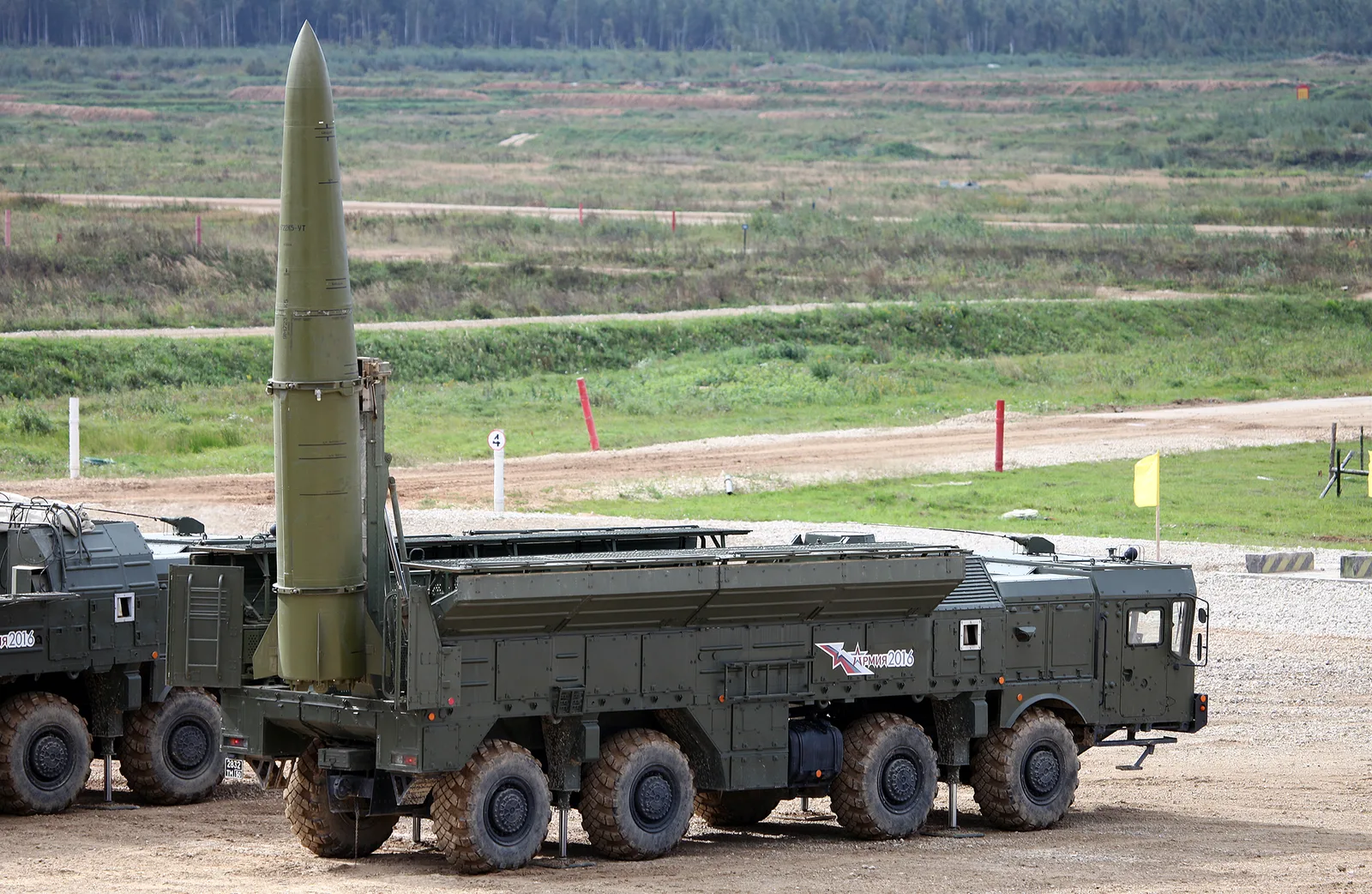
Russia launched a coordinated overnight assault; 30 confirmed dead, 92+ injured. Iskander ballistic missiles and Kinzhal hypersonics hit civilian targets across the city.
 News
News digest · Jul 6, 2026
War's New Math: Russia Bleeds Interceptors, Ukraine Exports Drones
Two strikes in one week exposed Ukraine's air-defense crisis while the Drone Deal opens combat-proven exports to NATO allies, reshaping the war's industrial logic.