Iran's War Resets Again, Russia Probes NATO's Seams
A Jordan strike, a two-hour US response, a Kh-101 that landed in Poland, and three new counter-drone systems defined this week in defense.

U.S. Army photo via DVIDS, public domain
The week’s dominant fact is a five-day pause in the US-Iran war that ended exactly the way the previous ones did: an Iranian strike on a Jordanian air base, a full Patriot intercept, and a heavier American response within hours. Around that cycle, Russia tested three edges of NATO’s perimeter in seven days, three counter-drone systems debuted as cheaper alternatives to missile interceptors, and the Gulf’s arms-buying spree collided visibly with the production limits of the factories meant to supply it.
Iran’s war resets again
The week opened on a rare quiet note. By July 27, the US and Iran had gone two full days without an attack, the longest lull since Iran began firing on Hormuz-transiting ships roughly two weeks earlier, with Oman mediating and commercial traffic through the strait at a three-week low. The pause still produced friction: Saudi Arabia intercepted drones targeting oil sites near Riyadh, while Jordan and Israel each downed two more drones near their borders, none crossing into Israeli territory. Red Sea traffic through Bab el-Mandeb fell to just 11 vessels, the lowest in months, a reminder that a pause between two states still leaves regional shipping absorbing the risk.
“Terrorist attempts were launched from Iraqi territory and carried out by Iranian-backed terrorist militias,” Saudi Arabia’s Ministry of Defense said in a statement (France 24, July 27, 2026).
That attribution to Iran-backed militias in Iraq is a Saudi government claim, not independently confirmed, and it shows the war’s front lines were never confined to Iran and the Gulf’s shipping lanes. The pause held five days before Iran’s IRGC struck Jordan’s Muwaffaq Salti Air Base again on July 29, the second hit on that base in two weeks after an earlier strike killed three US service members. Jordanian and CENTCOM officials say all five missiles fired at the base were intercepted, an outcome an Iranian general publicly disputed.
“Patriot systems have been weakened to such an extent that Iranian missiles and drones are reaching their targets without being intercepted,” said IRGC Brig. Gen. Hossein Mohebbi, a claim made via Iranian state media and directly contradicted by Jordan’s official statement that all five missiles were intercepted.
That degraded-Patriot claim is worth flagging plainly as unverified, because the actual outcome that week, five for five, says the opposite. The US answered with a roughly two-hour wave of strikes on dozens of IRGC targets across Iran, ending the pause. Two days earlier, a drone had hit the US-owned LNG vessel Energos Winter and a second tanker at Egypt’s Damietta port, the first attack on Egyptian soil since the war began in February. No party has claimed responsibility, and Iran has floated an unverified “false-flag” framing while denying involvement. The pattern here is the cycle itself: no ceasefire since April 2026 has held more than about two weeks, and this week’s version fits that mold rather than breaking it.
Russia probes NATO’s seams three different ways
Russia spent the week testing NATO’s edges without crossing a line clean enough to trigger Article 5. Over three consecutive days, Romanian air defenses shot down Shahed-type drones over the Black Sea, the third incident prompting Romania to scramble F-16s and actually engage rather than just track, a shift after 33 recorded airspace violations since 2022. Russia issued no public comment on any of the three, a silence that is itself notable.
The sharper incident came July 30, when a Kh-101 cruise missile, part of a roughly 61-missile barrage on Ukraine, overshot its target and crashed about 100 kilometers inside Poland near Tarnawa-Kolonia in Lublin Voivodeship. There were no casualties, but Poland scrambled F-16s, an AEW aircraft and a NATO tanker in response.
“Everything indicates that it was a Russian Kh-101 missile,” said Polish Prime Minister Donald Tusk, who added Poland’s forces could have shot it down had it not changed course (Notes from Poland, July 30, 2026).
Poland is now weighing NATO Article 4 consultations, a step short of Article 5 and still unresolved. The same barrage carried a second thread: a strike Ukrainian officials preliminarily attribute to a North Korean KN-23 or KN-24 ballistic missile killed several members of one family near Kryvyi Rih, casualty figures still being finalized locally. A second crater near the site corroborated the identification with physical fragment evidence rather than radar tracking alone, though it remains preliminary pending forensic confirmation, the first such North Korean-missile use in roughly a year. Ukraine answered in kind: FP-1-family strike drones hit the Lukoil-Volgogradneftepererabotka refinery, about 5.6% of Russia’s refining capacity, plus a port, an aircraft facility and three logistics hubs, striking as far as 1,300 kilometers from the front. None of this alone forces a NATO decision, but a drone shootdown Romania chose to engage, a missile crossing into Polish airspace, and an unresolved Article 4 question together tested the alliance’s threshold for response without quite reaching it.
The counter-drone answer to an interceptor shortage
Three separate reveals this week point at the same underlying problem: interceptor missiles cost far more per engagement than the drones and cruise missiles they shoot down. The Marine Corps disclosed a $6.2 million prototype contract for Bullfrog, an AI-aimed robotic turret built around the standard M240 machine gun, mounted on L-MADIS counter-drone trucks. Its maker puts the cost per engagement at roughly $10 in ammunition, against tens of thousands of dollars for a missile interceptor, and a human operator still authorizes every shot.
“We are honored to support Marines with fast, scalable, and cost-effective counter-drone solutions that integrate seamlessly into existing platforms,” said Mike Wior, co-founder and CEO of Allen Control Systems (Breaking Defense, July 20, 2026).
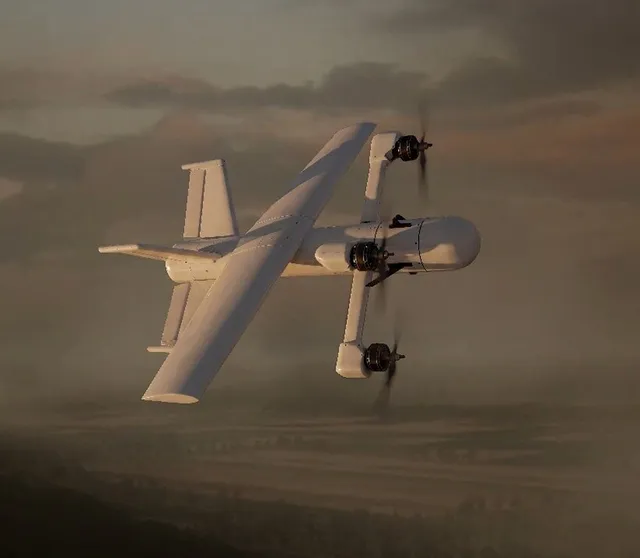
Lockheed Martin separately unveiled MORFIUS X-Rotor, a ground-launched, reusable high-power-microwave interceptor at Farnborough, claiming it can defeat more than 50 hostile drones “in a single flight,” an ambiguous figure the manufacturer has not clarified as simultaneous or cumulative. And off Naval Base San Diego, Hammer of the Gods completed its first-ever sea trial of a counter-GPS jamming emitter during Project Convergence Capstone 6, previously demonstrated only on land, built to answer the 2024-2026 rise in GPS spoofing across the Baltic, Black Sea and Middle East.
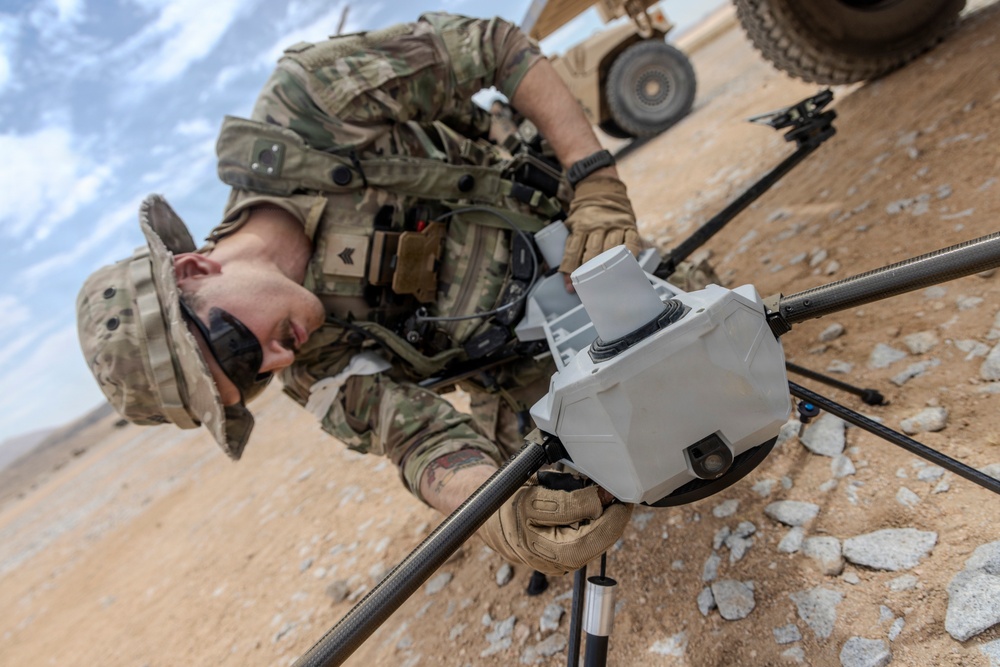
None of these three is a missile. A gun turret, a microwave aircraft and a jamming emitter all attack the same cost curve from a different angle, reusable or near-free per engagement, instead of adding to a stockpile this week’s Iran and Poland incidents show is already under strain.
Record Gulf sales meet a production ceiling
The clearest link between this week’s intercepts and the defense industry’s own math is money. US-approved Gulf Cooperation Council arms sales hit $41 billion in the first half of 2026, more than four times the $9 billion total for all of 2025. Saudi Arabia alone signed a $9 billion order for 730 Patriot PAC-3 MSE missiles, Qatar committed $4.01 billion to PAC-2 GEM-T and PAC-3 MSE replenishment under an emergency determination, and Kuwait added a $2.5 billion IBCS and LTAMDS package. Lockheed’s 2025 Patriot-interceptor production target was only 650 units, a hard ceiling against demand from three Gulf states plus Ukraine and NATO’s own restocking needs.
“You can sign those deals even if you don’t have the production capacity or the availability right now. That’s what many producers do,” said Albert Vidal, research associate at the International Institute for Strategic Studies (AGBI, July 24, 2026).
That gap between signed contracts and production capacity is what made this week’s five-for-five Jordan intercept notable rather than routine: every interceptor fired there came from the same finite Patriot stock Gulf buyers are now racing to expand. The Pentagon addressed the institutional side of the same problem too, signing a 10-year, $3.31 billion enterprise software deal with Oracle with an option to $6.99 billion, aimed at the roughly 12-year average timeline the GAO has found for delivering new weapons systems. Buying faster and building faster are different problems, and this week showed both still unsolved.
Sources
- US-Iran Hormuz Pause Enters Second Day — WeaponSpecs News Desk, Jul 27, 2026
- Saudi Arabia, Jordan, Israel Intercept Drones During Iran War Pause — WeaponSpecs News Desk, Jul 27, 2026
- Egypt's Damietta Port Hit by Drone Strike on LNG Vessel — WeaponSpecs News Desk, Jul 31, 2026
- Iran, Jordan and the US Trade Heavy Strikes — WeaponSpecs News Desk, Jul 31, 2026
- Romania Shoots Down a Drone Over the Black Sea — WeaponSpecs News Desk, Jul 27, 2026
- Russian Kh-101 Crashes Into Poland as NK Missile Kills Family — WeaponSpecs News Desk, Jul 31, 2026
- Ukraine Strikes Volgograd Refinery With FP-1 Drones — WeaponSpecs News Desk, Jul 31, 2026
- Marines Field AI-Aimed Bullfrog Machine Gun on L-MADIS — WeaponSpecs News Desk, Jul 28, 2026
- Lockheed Martin Unveils MORFIUS X-Rotor Counter-Drone Interceptor — WeaponSpecs News Desk, Jul 27, 2026
- Hammer of the Gods Completes First Maritime Counter-GPS Trial — WeaponSpecs News Desk, Jul 31, 2026
- US Approves $41 Billion in Gulf Arms Sales in H1 2026 — WeaponSpecs News Desk, Jul 26, 2026
- Oracle Signs 10-Year Enterprise Software Deal With the Pentagon — WeaponSpecs News Desk, Jul 28, 2026
Systems mentioned
Every system named in this story, with its photo and, where available, a video. Tap a card to open the full spec sheet.
Compare these side by side →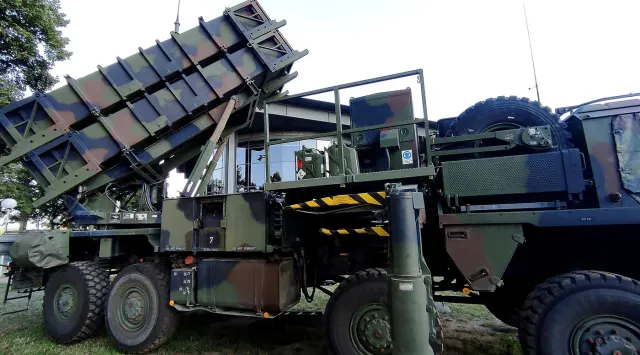
Air defense system
Patriot PAC-3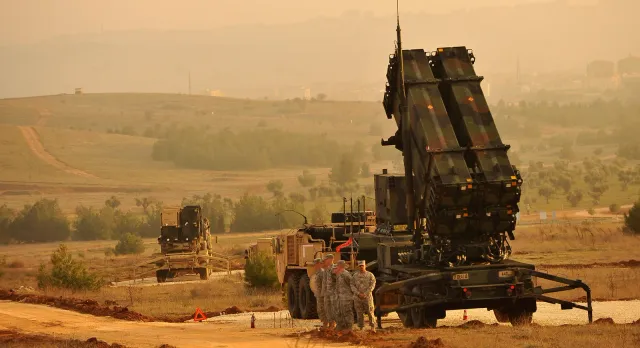
Air defense system
Patriot PAC-2 Air defense system
Patriot GEM-T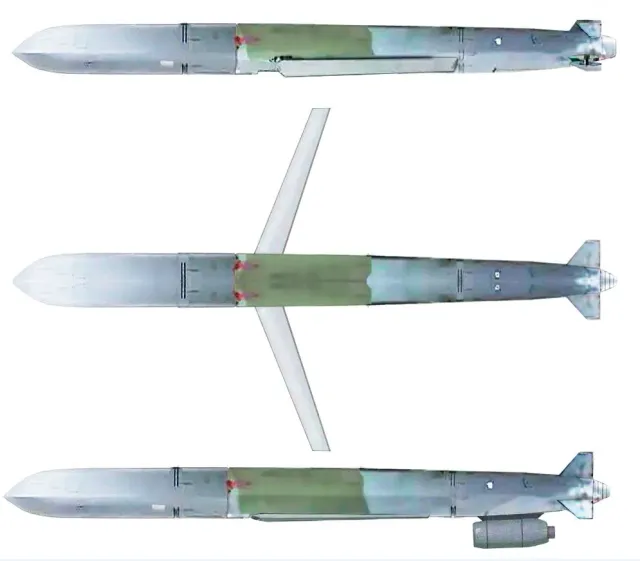

Air defense system
MORFIUS X-Rotor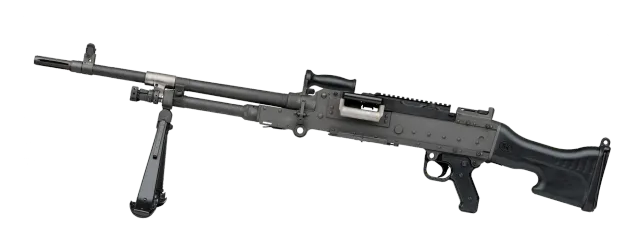
Frequently asked questions
What was the biggest development this week? +
Iran struck Jordan's Muwaffaq Salti air base again on July 29, the second hit on that base in two weeks, with all five missiles intercepted by Patriot batteries. The United States answered within hours with a roughly two-hour strike wave across Iran, ending a five-day pause in the broader war.
Is the US-Iran ceasefire holding? +
Not durably. The original April 2026 truce has broken repeatedly, and this week's pattern, a short pause, then a five-day pause, then renewed strikes from July 29 to 31, is consistent with the cycle that has defined the war since April, not a resolution.
What happened with the Russian missile that hit Poland? +
A Kh-101 cruise missile, part of a roughly 61-missile barrage on Ukraine, overshot and crashed about 100 kilometers inside Poland on July 30. There were no casualties, NATO scrambled jets, and Poland is weighing NATO Article 4 consultations, still unresolved as of August 1.
What should readers watch next week? +
Whether Poland formally raises Article 4, whether the Iran-Jordan pause holds longer this time, final forensic confirmation of the Kryvyi Rih North Korean-missile attribution, and whether MORFIUS X-Rotor, Bullfrog, or Hammer of the Gods land a named program of record.
More news


