Interceptor Economics Went From Theory to Policy This Week
From Iron Beam's few-dollar laser shots to Tomahawk-starved B-1B strikes on Iran, this week's defense news turned interceptor math into policy.

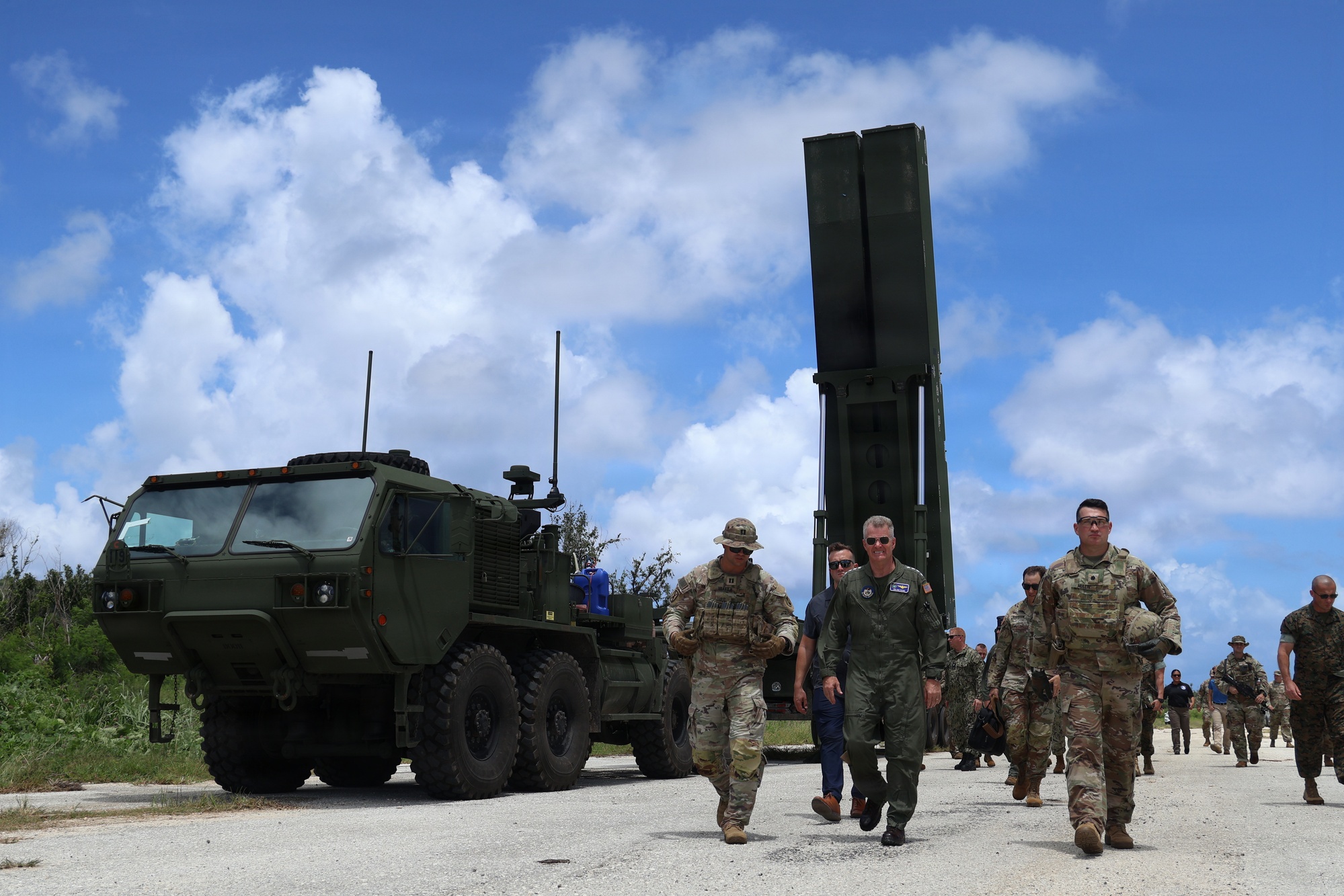
Photo by Tech. Sgt. Robert M. Trujillo, 28th Bomb Wing, U.S. Air Force, via DVIDS, public domain
The cost-per-shot problem that has hung over air defense for years stopped being a talking point this week and started producing real procurement moves, three of them, in the same seven days, while the war they answer for kept widening.
Interceptor economics, from diagnosis to procurement
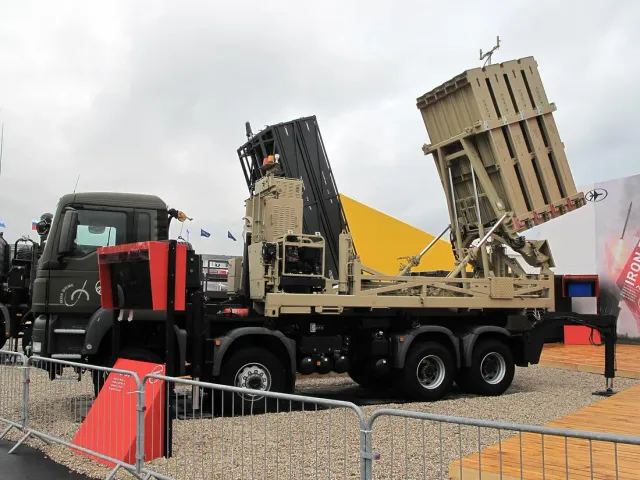
Iron Beam, the first high-energy laser air-defense system ever fielded operationally, moved from a quiet December 28, 2025 IDF handover to a public showcase at Farnborough this week. Rafael CEO Yoav Tourgeman said a single interception costs “just a few dollars” in electricity, against $40,000-$100,000 for a Tamir interceptor fired from Iron Dome, per Tech Times. It doesn’t replace Iron Dome against every threat; it targets the high-volume drone and rocket traffic that burns through expensive interceptor stock for no good reason.
Log scale: the range spans roughly seven orders of magnitude, from a few dollars of electricity for one Iron Beam shot to $63M-$71M for a single Conventional Prompt Strike missile. All six figures come from WeaponSpecs' own reporting this week; PAC-3 ACE's price is Lockheed's "under half of MSE" framing, not a confirmed number.
Three days later, Lockheed unveiled PAC-3 ACE at the same airshow: less than half the roughly $4 million a PAC-3 MSE round costs, implying under $2 million (Lockheed’s own framing, not a disclosed figure). The tradeoff: Calibre Defence’s rendering analysis found ACE drops MSE’s attitude-control section, needed for late course corrections, so it likely cannot reliably hit a maneuvering missile like Russia’s 9K720 Iskander-M, answering drones and cruise missiles, not everything Patriot has to stop.
The third move landed July 23: Ukraine and Raytheon agreed in principle to jointly manufacture Patriot interceptors, President Zelensky announced, following Trump’s July 8 Ankara authorization. It is not a signed contract. LIGA.net and Kyiv Post confirm the target is older, cheaper PAC-2 GEM-T interceptors, not PAC-3, with no production schedule or factory set; a Raytheon executive said the process “has just begun.” The urgency: Lockheed built only 620 PAC-3 MSE in all of 2025, against Ukraine’s burn rate of 60-70 a month, 150-180 during heavy barrages.
Not every program moved this way. A GAO report on the Navy’s Conventional Prompt Strike missile, tied to the Zumwalt-class destroyer’s hypersonic upgrade, found Lockheed builds only 6 to 7 CPS missiles a year against a need of 12, averaging $63M-$71M each, 24 months late and up $31 billion to $41 billion since 2020 as its planned count fell from 262 to 224, the top of the same cost ladder Iron Beam sits at the bottom of.
Tomahawk depletion is now reshaping how the Iran war is fought
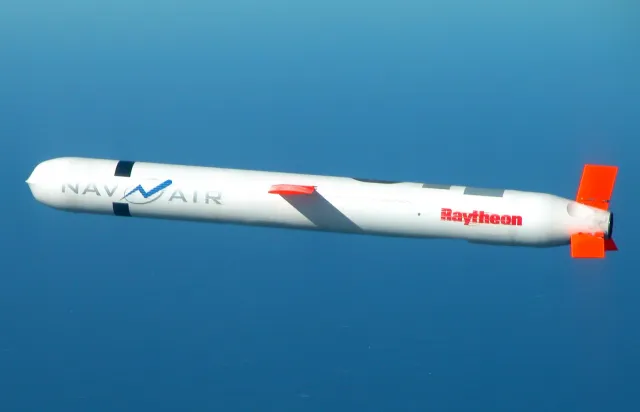
The clearest sign cost-per-shot has moved from spreadsheet to battlefield is the B-1B Lancer’s return to Iran strike duty from British soil. The Navy has fired over 1,000 Tomahawks since the war resumed, more than a third of its roughly 3,100-missile prewar stockpile, against procurement of about 90 a year, per CSIS figures cited by CBS News. That shortfall pushed the first B-1B sortie from RAF Fairford since the war resumed, confirmed by ITA MilRadar on July 22, a bomber standing in for a missile the fleet can no longer spend freely.
“It’s been recognized that we don’t have enough long-range strike capability, so we’ve been trying to build up these stockpiles, but we keep depleting them,” said Kelly Grieco, senior fellow at the Stimson Center (CBS News, July 25, 2026).

The buildup is hard to miss: The War Zone reports roughly 15 B-1Bs, several B-52Hs and two of the Air Force’s five EA-37B jamming aircraft at Fairford now, a concentration multiple outlets call unprecedented since the Cold War, and why Iran’s IRGC floated a long-range ballistic missile strike, possibly with cluster munitions, against the base on July 23, per Defence Security Asia, a single-outlet, no-named-official threat, unverified Iranian state messaging, not a confirmed plan. Fairford becoming a named target for hosting the aircraft the shortage created is itself new this week.
Autonomous systems crossed into live weapons-release authority
This week’s autonomy threshold was narrower than before: weapons release. On July 15 at Edwards Air Force Base, a YFQ-44A Collaborative Combat Aircraft drone fired a live AIM-120 AMRAAM over the Mojave Desert, the first time any CCA drone has released a weapon live, per Military Times. A human held exclusive fire authority throughout; autonomy handled engagement mechanics inside pilot-set parameters, not the decision to shoot. The Air Force wants $2.37 billion in fiscal 2027 toward 150-plus CCA aircraft by 2030.
The same week’s VENOM Autonomy Kit test on a modified F-16 feeds the same CCA pipeline, and France’s H160M Guepard completed its first armed-firing campaign years ahead of its planned late-2028 entry. None alone announces autonomous lethality; together they show missile release, AI flight control and a new armed airframe advancing in one week. Canada’s observer status on the crewed GCAP Tempest, confirmed July 21, targets 2035, five years after the CCA goal.
Big-dollar programs, unmoved readiness metrics
Four unrelated procurement stories shared one pattern: dollars scaling up without matching readiness gains. The House passed a $1.15 trillion NDAA for fiscal 2027, up 28% year over year, on a near party-line 216-212 vote now stalled in the Senate, roughly $3,400 per American in one year’s authorization alone. The Space Development Agency ordered 36 Golden Dome tracking satellites for $1.75 billion, but that is only the sensing layer, not launch-ready until 2028’s end. The Pentagon awarded Lockheed a $1.6 billion F-35 spare-parts order, 2.8 times last year’s, against a GAO-flagged fleet-wide full-mission-capable rate of roughly 25%, the best-performing F-35A variant still only 28.5%. CPS’s cost, noted above, rose $31 billion to $41 billion as its missile count fell. None is a scandal alone; together they show the pattern isn’t one program’s.
Russia is broadening its target set beyond fielded weapons
Two strikes this week hit industrial and political targets rather than deployed weapons. A Ukrainian FP-5 Flamingo cruise missile struck the Avitek plant in Kirov, Russia, roughly 1,200 kilometers from the nearest Ukrainian-held territory on July 24, hitting the country’s only serial manufacturer of ejection seats for fighter and attack aircraft, which also supplies the Tor air-defense system and Kh-101/Kh-59M2 cruise missiles, a genuine chokepoint. Governor Aleksandr Sokolov’s casualty figure of six killed and 26 injured is Russian state reporting, not independently verified.
Russia’s own strike hit a Ukrainian drone-industry trade exhibition near Kyiv the same day, killing at least 10 and injuring around 100, a toll holding as of July 25 per UNN.ua, which confirms the region declared a Day of Mourning. Russia’s claim it deliberately targeted the exhibition is an unverified government assertion. The same week, Zelensky replaced Gen. Syrskyi with Maj. Gen. Drapatyi as commander-in-chief, a shake-up alongside the industrial strikes, together showing Russia widening its target set toward Ukraine’s defense-industrial and political layers, though every claim of intent stays a state assertion, not confirmed fact. Greece separately drew two unrelated deals this week, an $80.1 million Switchblade 300 sale and a roughly 3.5 billion euro Israeli “Achilles Shield” package.
See WeaponSpecs’ news archive and the Patriot PAC-3 and Iron Beam system pages for continuing coverage.
Sources
- Rafael Brings World's First Operational Laser and $2.3B NATO Deal to Farnborough — Tech Times, Jul 18, 2026
- Farnborough 2026: Lockheed Martin unveils PAC-3 ACE low-cost interceptor — Jane's Defence, Jul 20, 2026
- Ukraine to Co-Manufacture Patriot Interceptor Missiles With Raytheon — Kyiv Independent, Jul 23, 2026
- Ukraine to Join Patriot Interceptor Production With Raytheon After Trump Talks in Ankara — Kyiv Post, Jul 23, 2026
- Production of Patriot missiles in collaboration with Raytheon — LIGA.net, Jul 24, 2026
- GAO: US Navy's Zumwalt hypersonic missile upgrade program hit by major delay — Naval Today, Jul 20, 2026
- US B-1B Lancer Bomber Flies Strike Mission Against Iran After Departing RAF Fairford — ITA MilRadar, Jul 22, 2026
- EA-37Bs Arrive At RAF Fairford As Iran Threatens To Attack The UK Air Base — The War Zone, Jul 23, 2026
- Iran Declares British RAF Fairford a "Legitimate Target" as B-1 Bombers Escalate US-Iran War — Defence Security Asia, Jul 23, 2026
- U.S. Tomahawks are being used in Iran war faster than stockpile is being refilled — CBS News, Jul 25, 2026
- Air Force completes first-ever CCA live-fire test with Anduril YFQ-44A — Military Times, Jul 15, 2026
- DARPA and U.S. Air Force fly AI-controlled F-16, paving the way for autonomous air combat — DARPA, Jul 16, 2026
- France Tests H160M Guepard Helicopter Weapons for First Time Ahead of 2028 Deliveries — Army Recognition, Jul 15, 2026
- House passes $1.15 trillion defense budget in near party-line vote — Military Times, Jul 22, 2026
- Space Force orders 36 more Golden Dome missile-tracking satellites, for $1.75 billion — Space.com, Jul 14, 2026
- Pentagon Awards Largest-Ever F-35 Spare Parts Contract — Air & Space Forces Magazine, Jul 23, 2026
- Military factory in Russia's Kirov in flames after reported Flamingo attack, local authorities report casualties — Kyiv Independent, Jul 24, 2026
- At Least 10 Killed, Over 100 Injured in Russian Strike on Arms Exhibition Near Kyiv — Kyiv Independent, Jul 24, 2026
- July 25 declared a Day of Mourning in Kyiv region due to Russia's deadly attack on an arms exhibition — UNN.ua, Jul 25, 2026
- Zelensky appoints Mykhailo Drapatyi as Ukraine's new commander-in-chief, dismissing Oleksandr Syrskyi — Meduza, Jul 22, 2026
- Canada joins GCAP 6th-gen fighter programme as first observer — Army Recognition, Jul 21, 2026
Systems mentioned
Every system named in this story, with its photo and, where available, a video. Tap a card to open the full spec sheet.
Compare these side by side →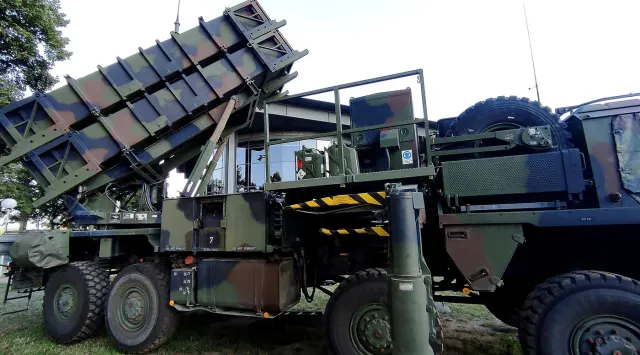
Air defense system
Patriot PAC-3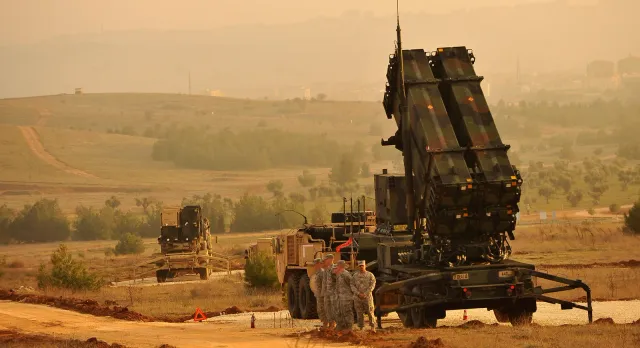
Air defense system
Patriot PAC-2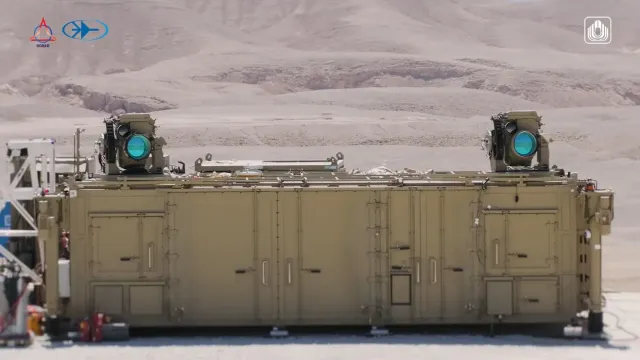
Missile
Tomahawk Block V
Strategic missiles
Dark Eagle (LRHW)
Artillery & MLRS
K9 Thunder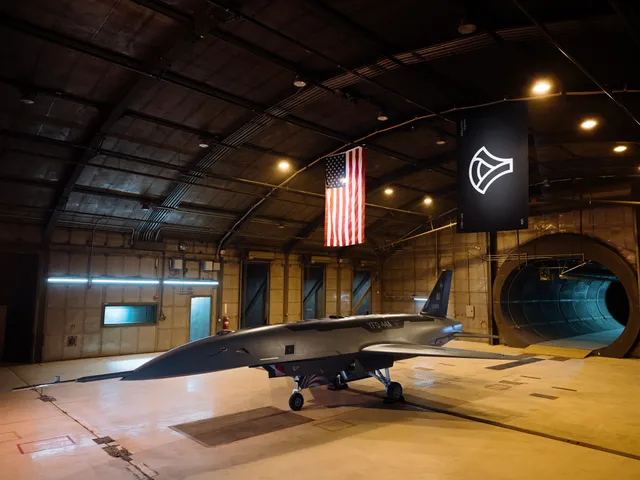
UAV / drone
Fury (YFQ-44A)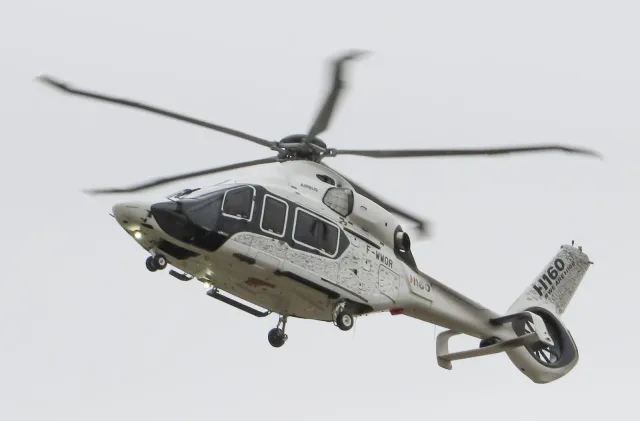
Helicopter
H160M Guepard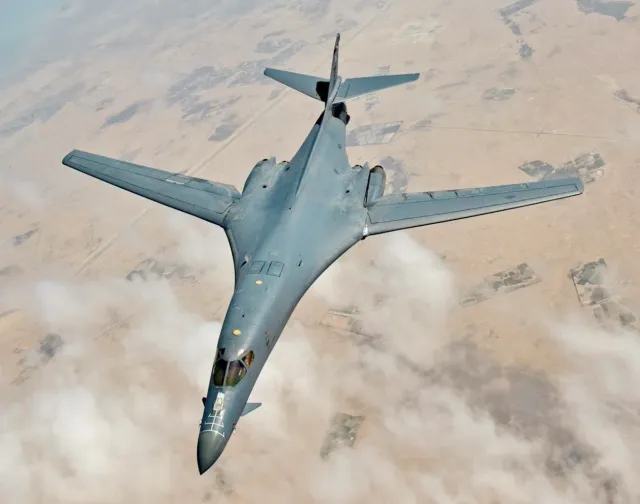
Bomber
B-1B Lancer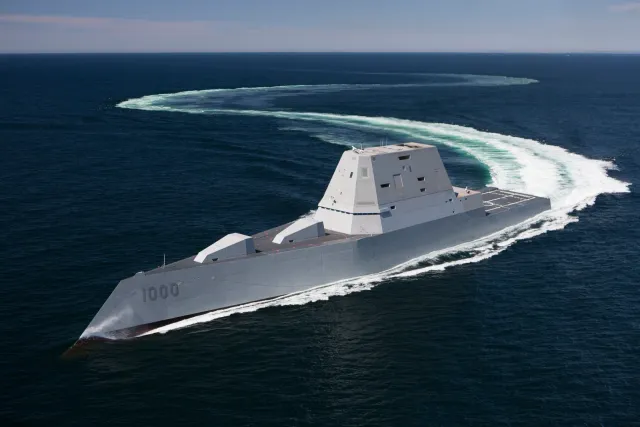
Warship
Zumwalt-class Destroyer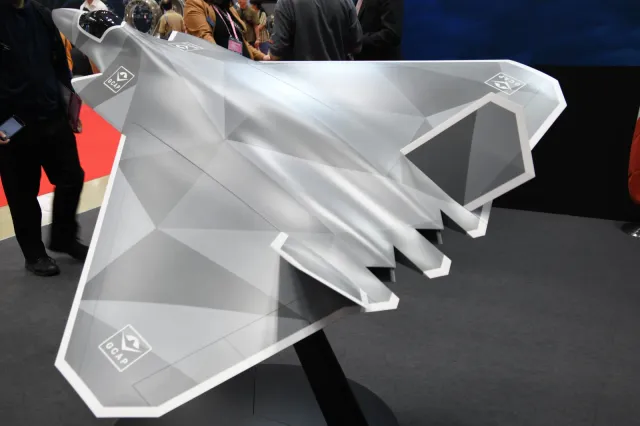
Fighter aircraft
GCAP Tempest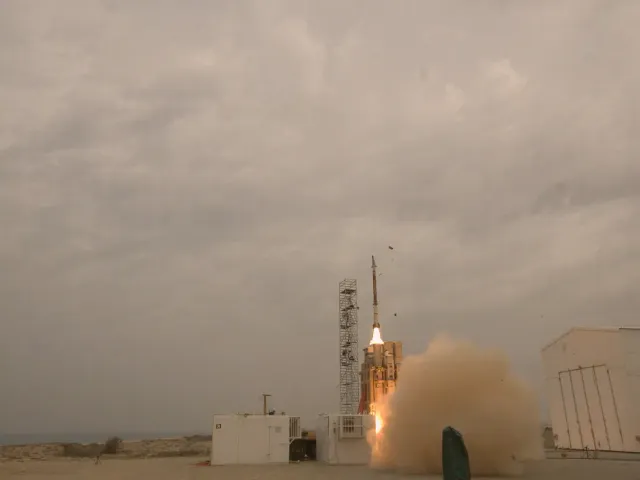
Air defense system
David's Sling
UAV / drone
Switchblade 300Frequently asked questions
What was the single biggest development this week? +
The interceptor-cost problem stopped being a talking point and started producing real procurement moves in the same seven days: Iron Beam's Farnborough showcase, Lockheed's PAC-3 ACE unveiling, and Ukraine's in-principle Raytheon co-production deal all responded to the same underlying math, that shooting down cheap threats with expensive interceptors is not sustainable.
Is the Patriot shortage actually being fixed, or just papered over? +
Mostly papered over for now. Lockheed built only 620 PAC-3 MSE interceptors in all of 2025, the Raytheon co-production deal has no existing Ukrainian manufacturing capacity and no signed contract yet, and PAC-3 ACE cuts cost roughly in half but reportedly cannot reliably stop maneuvering ballistic missiles like Iskander-M.
Is the US-Iran war escalating or winding down? +
Escalating on the available evidence. RAF Fairford now hosts roughly 15 B-1Bs and several B-52Hs, while Navy Tomahawk stocks are down more than a third of their prewar total and Iran has floated an unverified, single-source threat against Fairford itself.
What should readers watch next week? +
Whether Ukraine and Raytheon sign an actual Patriot co-production contract rather than just an in-principle agreement, whether Iran acts on its Fairford threat, and whether PAC-3 ACE gets an exact price and delivery timeline.
More news


