Romania Downs Third Russian Drone in Three Days Over Black Sea
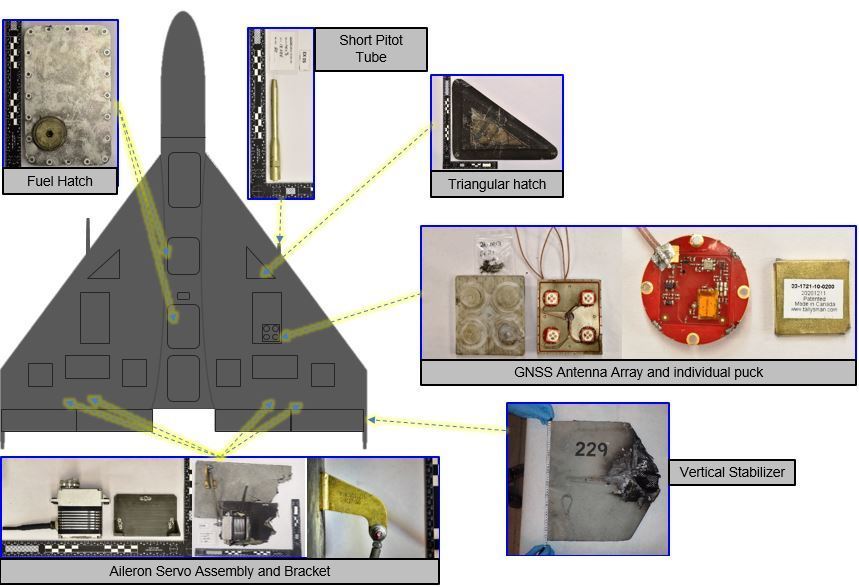
A Romanian F-16 shot down a Shahed-type drone over the Black Sea Sunday, the third intercept in three days and the 33rd airspace breach since 2022.

U.S. Air Force photo by Capt. Andrew Layton, Wikimedia Commons, public domain
A Romanian F-16 shot down a suspected Russian drone over Black Sea territorial waters near Sulina on Sunday, the third such intercept in three consecutive days and the first time Romania has engaged and destroyed intruding drones rather than merely tracking them. Romanian officials say the country’s airspace has now been breached by Russian drones 33 times since the war in Ukraine began, a tally that until this weekend had produced monitoring reports, not gun-camera footage.
Three days, three intercepts
The pattern started Friday, July 24, when a Romanian F-16 downed a Shahed-type uncrewed aerial vehicle near Padina using an air-to-air missile, the aircraft’s pilot bringing the wreckage down over unpopulated ground. Saturday’s intercept followed roughly 10 kilometers west of Sfântu Gheorghe, in the Danube Delta, the marshy border region where the river empties into the Black Sea and where Romanian and Ukrainian territory sit only a few kilometers apart. Sunday’s shootdown, at 10:13 a.m. local time, took place over territorial waters about 12 kilometers northeast of Sulina, after two F-16s scrambled from Fetești Air Base under NATO’s integrated air-policing command, according to Al Jazeera’s reporting on the incident.
That geography matters. The Danube Delta sits directly across the river from Ukraine’s Izmail and Reni port complexes, which Russia has targeted repeatedly with long-range strikes aimed at Ukraine’s grain-export infrastructure since the Black Sea shipping corridor became a contested lane earlier in the war. Drones and missiles aimed at Ukrainian riverbank targets do not reliably respect a border that, in places, runs down the middle of the water. Romanian officials have long argued that Shahed-type drones drifting off course, running out of fuel, or being deliberately routed to test air defenses account for the bulk of the 33 recorded violations since 2022, per Radio Romania International’s roundup of the incidents. What changed this weekend is that Romania stopped waiting to find out which explanation applied and started shooting.
A summons, and a silence from Moscow
Romania’s Foreign Ministry summoned the Russian ambassador after Sunday’s downing, the diplomatic equivalent of a formal protest that stops short of expelling anyone but puts an incident on the record at the highest bilateral level available between a NATO state and Russia. President Nicușor Dan framed the pattern as no longer tolerable as an operational nuisance.
“It is inadmissible and intolerable for the Russian Federation to continue violating Romania’s airspace,” said President Nicușor Dan (The Moscow Times, July 26, 2026).
Defense Minister Radu Miruță and Prime Minister Ilie Bolojan echoed that language. “Romania will continue to firmly defend its sovereignty and airspace but these provocations must stop,” Miruță said, according to the same report, while Bolojan separately called the breaches simply “unacceptable.” Moscow had made no public comment on any of the three incidents as of this writing. In a conflict where Russian officials typically either deny responsibility outright or claim a technical malfunction, silence on three consecutive shootdowns is itself notable, an absence of response rather than a denial, and it leaves Bucharest’s version of events uncontested in the public record for now.
NATO’s framing of the episode leaned less on the diplomacy and more on hardware still being acquired. “As NATO, Romania, and other nations actively acquire ground-based interceptors,” NATO spokesperson Col. Martin O’Donnell said, describing the shootdowns as part of a broader alliance effort to field more layered air defenses, according to Al Jazeera. That phrasing is a reminder that scrambling F-16s to chase single drones is an expensive, manpower-intensive way to defend against a cheap threat, one reason NATO members along the eastern flank, Poland, Romania, and the Baltic states among them, have spent the past two years pursuing ground-based counter-drone systems that do not require a fighter jet and a trained pilot for every intercept.
Why the Danube Delta keeps drawing fire
Romania’s predicament is a function of geography it cannot change. The Danube Delta is Europe’s largest river delta and forms roughly 30 kilometers of de facto shared frontier with Ukraine near the Black Sea coast, close enough that a drone launched at a Ukrainian port target can cross into Romanian airspace within minutes if it strays even slightly off its intended flight path. Since 2023, Poland, Romania, and the Baltic states have all logged Shahed-type drone debris landing on their territory during Russian strikes on nearby Ukrainian targets, a pattern that has forced NATO’s eastern members to treat their own airspace-monitoring posture as inseparable from the war next door, rather than as a peacetime baseline they can take for granted.
What is different in Romania’s case, and why this weekend’s shootdowns register as an escalation rather than routine incident response, is that all three engagements happened within a single 72-hour window rather than being scattered across years. Whether that reflects a genuine uptick in Russian strikes on the Danube ports, a Romanian air force that has grown more willing to engage after years of restraint, or simply three incidents that happened to cluster together, is not yet established. Romanian officials have not offered a theory tying the timing together beyond noting that Russian activity against Izmail and Reni has been sustained.
Sources
- Romania summons Russian envoy as it shoots down third intruding drone — Al Jazeera, Jul 26, 2026
- Romania Shoots Down Third Russian Drone, as President Calls Breaches 'Intolerable' — The Moscow Times, Jul 26, 2026
- Romania shoots down third drone in three days as tensions rise over Russian airspace violations — Kyiv Independent, Jul 26, 2026
- Romanian forces shoot down third drone in three days — Euronews, Jul 26, 2026
Systems mentioned
Every system named in this story, with its photo and, where available, a video. Tap a card to open the full spec sheet.
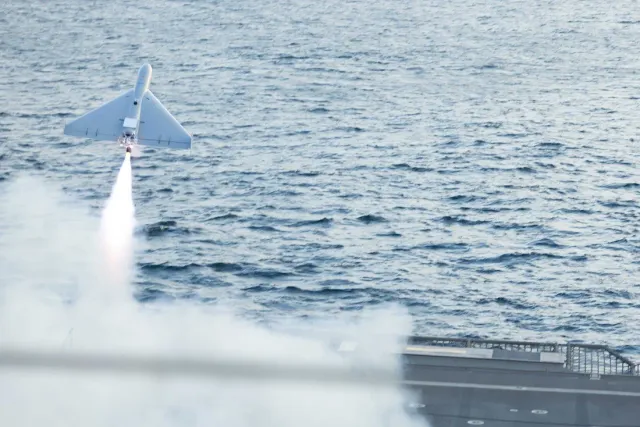
UAV / drone
Shahed-136Frequently asked questions
Is this the first time Romania has shot down a Russian drone? +
No. Romania had tracked and monitored prior incursions without engaging. Late July 2026 marked its first live shootdowns, three in three consecutive days, July 24 through 26.
How many times has Romanian airspace been violated by Russian drones since the war began? +
Thirty-three times, according to Romanian officials, though most of those incidents were overflights or debris landings rather than engaged shootdowns.
Has Russia responded to the accusations? +
No public comment as of this writing. That is an absence of response, not a denial.
Why is this happening now? +
It coincides with intensified Russian strikes on Ukrainian Danube river ports at Izmail and Reni, just across the border from Romania, part of a wider pattern of Shahed-type drone debris and overflights that has also affected Poland and the Baltic states.
More news

Ukraine's deep-strike campaign hits a Bashkortostan refinery and 20 Black Sea shadow-fleet vessels in one 48-hour window
Read →
Russian Kh-101 Crashes Into Poland as NK Missile Kills Family
Read →