US Gulf Arms Sales Hit $41B in Six Months, Topping All of 2025
State Department-approved arms deals to Gulf states reached $41B in H1 2026, up from $9B for all of 2025, driven by Patriot missile orders.

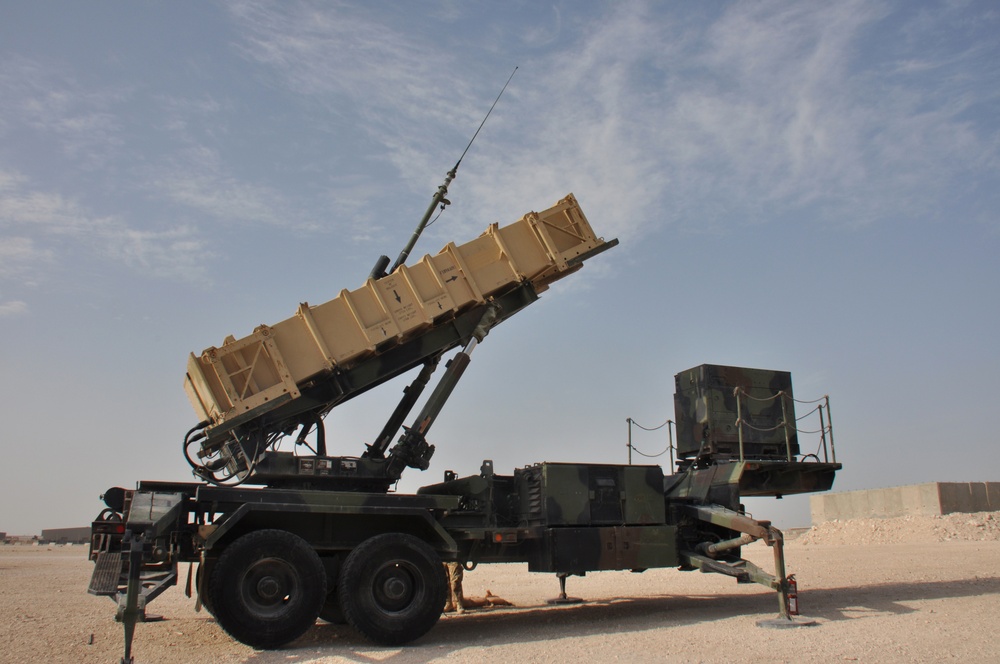
Sgt. JaDarius Duncan, U.S. Army, via DVIDS, public domain
US State Department-approved arms sales to Gulf Cooperation Council states reached $41 billion in the first six months of 2026, more than four times the $9 billion approved for all of 2025, according to a Gulf Business Intelligence analysis published July 24. Roughly 12 of the 15 largest deals in the period were air-and-missile-defense or aviation-related, led by a $9 billion Saudi Patriot interceptor order and a $4 billion Qatari Patriot replenishment, with another $17 billion in deals authorized but not yet formally approved.
A year’s worth of buying in six months
The scale of the shift is the headline: $41 billion approved from January through June 2026 against $9 billion for the entirety of 2025. That is not a gradual increase, it is a step change, and AGBI’s analysis attributes it directly to “ongoing hostilities with Iran” pushing Gulf governments to front-load exactly the kind of purchases that take years to deliver: layered air-and-missile defense. An additional $17 billion in deals have been authorized but have not yet completed the formal approval process, meaning the pace shows no sign of slowing through the rest of the year.
Saudi Arabia’s single largest package illustrates the pattern. In late January 2026, the US Defense Security Cooperation Agency certified a $9 billion sale of 730 Patriot PAC-3 MSE interceptor missiles to Saudi Arabia, with Lockheed Martin as principal contractor and launcher-modification kits and automated logistics-tracking systems bundled in. The Patriot PAC-3 is a hit-to-kill interceptor rated for roughly 60 kilometers of engagement range against aircraft, cruise missiles and tactical ballistic missiles, WeaponSpecs’ database lists it at roughly $1.1 billion per full battery including launchers and radar, and it is already the most widely fielded high-end air-defense missile among the region’s buyers.
Qatar and Kuwait’s deals, and how they got fast-tracked
Qatar followed with a $4.01 billion Patriot air-and-missile-defense replenishment covering 200 PAC-2 GEM-T missiles and 300 PAC-3 MSE missiles, split between RTX and Lockheed Martin as contractors. That deal was approved under a formal emergency determination, a mechanism in which the Secretary of State certifies an emergency exists and waives the standard congressional review period that normally applies before a major arms sale can proceed. Breaking Defense’s reporting on the mechanism ties this specific package into a broader $8.6 billion emergency-determination bundle covering Israel, Qatar, Kuwait and the UAE announced in May 2026, underscoring that speed, not just volume, has become a defining feature of this year’s Gulf sales.
Kuwait’s package centers on a $2.5 billion integrated battle-command purchase combining Lower Tier Air and Missile Defense Sensor radars with IBCS, the modular command-and-control network that lets a single air-defense picture fuse data from any sensor to any shooter, whether Patriot, THAAD or LTAMDS. IBCS reached initial operational capability in 2023 and is exactly the kind of connective-tissue system that turns a collection of individual batteries into a coordinated regional shield. RTX, Lockheed Martin and Northrop Grumman are all named contractors on the Kuwaiti deal. Some outlets have rounded Kuwait’s broader radar-and-battle-command commitment to roughly $8 billion when bundled with other related purchases; the $2.5 billion figure is the one the State Department has formally confirmed as this specific case, and this piece notes that gap rather than resolving it in either direction. Separately, Saudi Arabia, the UAE and Qatar have combined for more than $3 billion of Advanced Precision Kill Weapon Systems, laser-guidance kits that turn unguided 70mm Hydra rockets into precision munitions, a comparatively low-cost, high-volume purchase that rounds out the air-and-missile-defense-heavy shopping list.
The first six months of 2026 already outpaced the whole of 2025 by more than fourfold, with a single Saudi Patriot order nearly matching the entire prior year's total.
Why this is a structural shift, not a restock
The scale and mechanism together point to something more durable than a one-off spike. Analysts tracking the region describe Gulf buyers signing contracts well ahead of any realistic delivery timeline, a hedge against both supply shortages and the possibility that Washington’s appetite for fast approvals will not last.
“You can sign those deals even if you don’t have the production capacity or the availability right now. That’s what many producers do,” said Albert Vidal, research associate at the International Institute for Strategic Studies (via AGBI, July 24, 2026).
“Several of the largest cases… were approved under formal emergency determinations,” said Lucien Zeigler, partner at Masna Ventures (via AGBI, July 24, 2026).
That production gap is the practical constraint that could keep this year’s approvals from turning into fielded systems on any fast timeline. Lockheed Martin’s own 2025 Patriot interceptor production target was 650 missiles, a number that has to be split across US Army stockpiles, Ukraine’s ongoing resupply needs, Poland and other NATO allies, and now a Gulf order book that alone calls for hundreds more PAC-3 MSE rounds. The Patriot PAC-2 GEM-T variant in Qatar’s order, an older but still-produced interceptor generation, offers one partial release valve, since it draws on a different, less bottlenecked production line than the newer PAC-3 MSE. But the underlying dynamic, several buyers competing for the same limited manufacturing capacity at the same moment, is the same one already visible in Ukraine and Poland, now playing out again in the Gulf.
Sources
- US approves $41bn of arms sales to GCC in six months — AGBI (Gulf Business Intelligence), Jul 24, 2026
- Qatar – Patriot Missile Replenishment — U.S. Department of State, Bureau of Political-Military Affairs, May 1, 2026
- Qatar – Patriot Missile Replenishment (DSCA notification mirror) — GlobalSecurity.org, May 1, 2026
- US clears $8.6 billion arms sales to Middle East countries, 'waiving' congressional review — Breaking Defense, May 1, 2026
- US Approves $9-Billion Patriot Missile Sale to Saudi Arabia — The Defense Post, Feb 2, 2026
Systems mentioned
Every system named in this story, with its photo and, where available, a video. Tap a card to open the full spec sheet.
Compare these side by side →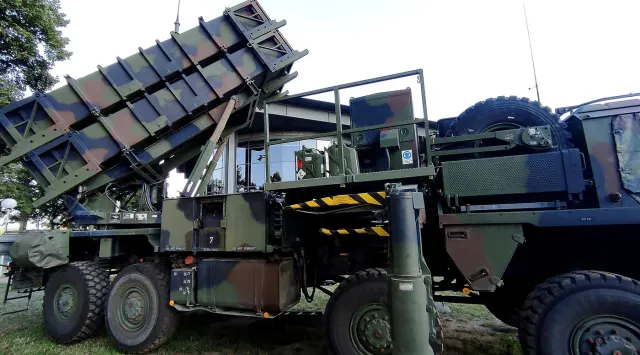
Air defense system
Patriot PAC-3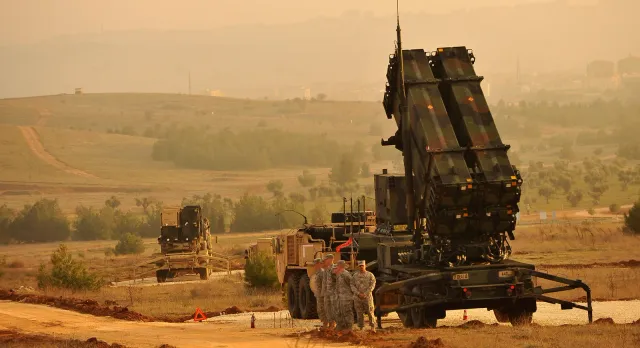
Air defense system
Patriot PAC-2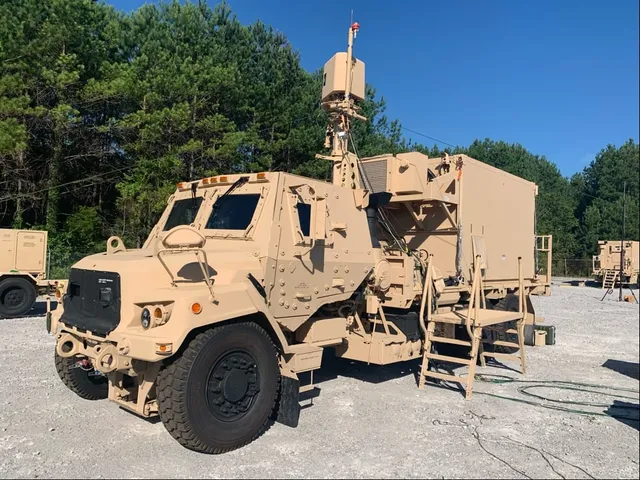
Air defense system
Integrated Battle Command System (IBCS)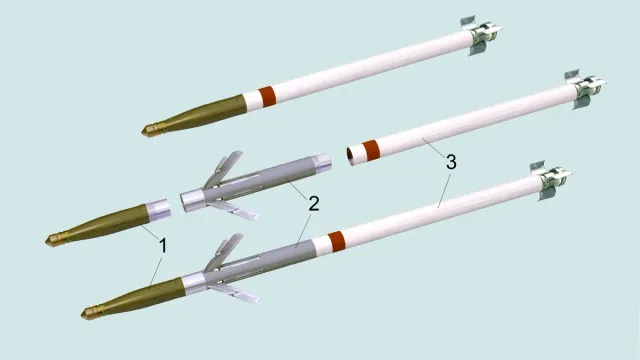
Frequently asked questions
How much has the US approved in Gulf arms sales this year? +
$41 billion in State Department-approved agreements to Gulf Cooperation Council states from January through June 2026, versus $9 billion for all of 2025, more than a fourfold jump.
What's driving the surge? +
A wave of air-and-missile-defense deals, roughly 12 of the 15 largest cases in the period, explicitly tied to ongoing tension with Iran, plus a pattern of 'emergency determination' approvals that skip the normal congressional review period.
What's the single largest deal in the package? +
Saudi Arabia's $9 billion purchase of 730 Patriot PAC-3 MSE interceptor missiles, approved in January 2026 with Lockheed Martin as prime contractor.
Can US industry actually build all this fast enough? +
Not clearly. Lockheed Martin's 2025 Patriot interceptor production target was only 650 missiles, well short of combined Gulf, Ukrainian and NATO-ally demand, a gap IISS's Albert Vidal specifically flagged.
More news


