Saudi Arabia Clears $1.96B Deal for 20,000 APKWS Guided Rockets
State Department clears a $1.96B sale of 20,000 APKWS laser-guidance kits to Saudi Arabia, split evenly between air-to-air and air-to-ground variants.

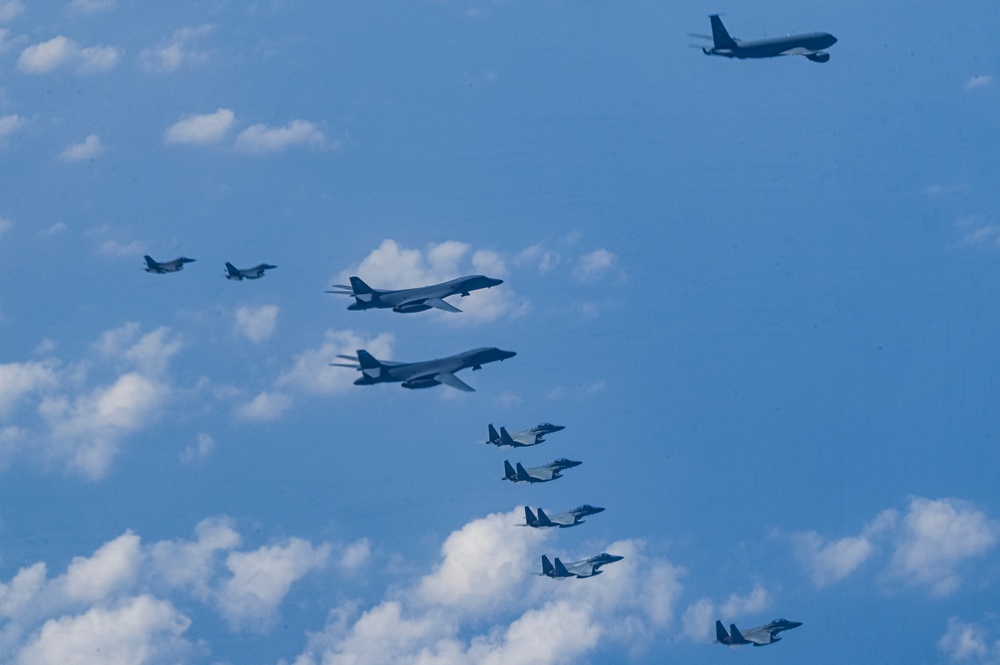
U.S. Air Force photo by Staff Sgt. Thomas Barley, 40th Flight Test Squadron, DVIDS, public domain
The U.S. State Department has approved a possible $1.96 billion Foreign Military Sale to Saudi Arabia covering up to 20,000 Advanced Precision Kill Weapon System (APKWS-II) guidance kits, split evenly between 10,000 air-to-air and 10,000 air-to-ground sections, according to the department’s own July 15 congressional notification, independently corroborated by The War Zone, Eurasian Times and FlightGlobal. It is one of the largest single APKWS orders publicly disclosed, and it lands as Iran-aligned Houthi forces and Saudi Arabia have traded fresh strikes on airports just days apart.
What the State Department actually approved
The notification, Transmittal #26-85, is a “possible” sale under the Foreign Military Sales system, the congressional-review step that has to clear before the U.S. government can negotiate a formal contract with Riyadh, not a signed deal itself. The state.gov release lists the package precisely: up to 10,000 APKWS-II air-to-air guidance sections and up to 10,000 air-to-ground guidance sections, plus LAU-131 A/A seven-shot 70mm rocket pods, Mk-152 high-explosive warheads, Mk66 rocket motors, proximity fuzes, WTU-1/B practice warheads, inert motors, test-support and launch equipment, spare and repair parts, and training. The principal contractor is BAE Systems, based in Nashua, New Hampshire, which builds the APKWS guidance section itself.
Implementation would require assigning fifteen additional U.S. government representatives and fifteen contractor representatives to Saudi Arabia for an extended period, covering program and technical reviews plus in-country training and maintenance support. The State Department’s stated rationale is standard Major Non-NATO Ally language: strengthening Saudi Arabia’s homeland defense, improving interoperability with U.S., regional and NATO forces, and augmenting the Royal Saudi Air Force’s air-to-air and air-to-ground self-defense capability. No offset agreement has been proposed yet; any such arrangement would be negotiated directly between Riyadh and BAE Systems.
A cheap fix bolted onto existing jets
APKWS is not a new missile. It is a laser-guidance section that slots between a standard 70mm Hydra rocket motor and one of several interchangeable warheads, turning an unguided rocket built for area saturation into a precision-strike round. Because the Hydra 70 airframe, launch pods and much of the supporting infrastructure already exist across NATO and Gulf air forces, the retrofit is comparatively cheap to integrate and, per BAE Systems’ and TWZ’s reporting, plug-and-play on aircraft already cleared to carry LAU-131 pods.
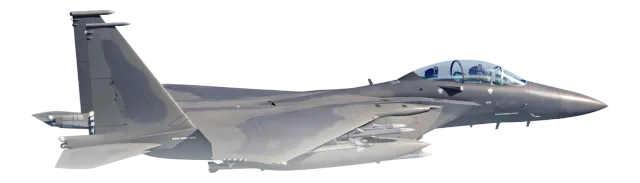
The air-to-air-optimized variant, designated AGR-20F and known within the U.S. military as FALCO (Fixed Wing, Air Launched, Counter-Unmanned Aircraft Systems Ordnance), adds a proximity fuze and revised guidance and sensing algorithms tuned for aerial targets rather than ground ones. U.S. Air Force F-15E Strike Eagles, F-16C Vipers, A-10 Warthogs and the Marine Corps’ F/A-18 Hornets are already cleared to fire it; the Eurofighter Typhoon, one of the two jets Saudi Arabia is expected to arm with this purchase, was cleared more recently, and Ukrainian F-16s have used the air-to-air variant against Russian drones. Neither the State Department notification nor any of the sourcing for this story specifies which Royal Saudi Air Force aircraft will actually carry the new rockets, but the F-15SA, a Saudi-specific variant of the F-15E Strike Eagle family, and the Eurofighter Typhoon, the RSAF’s two frontline multirole fighters, are the platforms TWZ, Eurasian Times and FlightGlobal all independently point to.
“It’s our primary weapon against a drone,” Air Force Lt. Gen. Derek France, commander of U.S. Air Forces Central (AFCENT), told TWZ in 2025 on the sidelines of the Air & Space Forces Association’s Air, Space and Cyber Conference, describing the U.S. military’s own use of APKWS against Iranian-origin one-way attack drones in the CENTCOM region. “We’ve had multiple shoot-downs with it.” That is the exact use case Saudi Arabia is buying into: AFCENT’s aircraft have used APKWS as their primary counter-drone weapon for several years, and the Royal Saudi Air Force is acquiring the same capability against the same class of threat.
The economics behind the “drone swatter” label
The Shahed-136 figure is a Western open-source cost estimate commonly cited in the $20,000-$30,000 range (midpoint shown here), not an Iranian-published figure. The APKWS-II figure combines the $15,000-$20,000 guidance section with its Mk66 motor, Mk-152 warhead and proximity fuze, per Eurasian Times' reporting on this specific deal. Both are approximate; neither is a fixed government-contract price, and actual per-unit cost under this FMS package has not been disclosed.
Eurasian Times’ framing of APKWS as a “drone swatter” comes down to that cost parity: a fighter shooting down a $20,000-$30,000 Shahed-136 with a roughly $35,000 guided rocket is no longer spending a multiple of the target’s value to destroy it, the way it would firing a $1 million AIM-120 or a $450,000 AIM-9X, figures TWZ attributes to current-generation air-to-air missile pricing. For an air force that has spent a decade absorbing Houthi drone and missile attacks during the Yemen war, that math matters at scale in a way it wouldn’t for a handful of intercepts.
The timing reinforces the point. TWZ’s reporting on this deal notes that Iran has been increasing attacks on nations hosting U.S. troops in the Middle East, a pattern WeaponSpecs has tracked closely this week in CENTCOM’s own sixth consecutive night of strikes on Iran and Iran’s retaliation against Bahrain, Kuwait and Qatar, and that Saudi Arabia and the Houthis “recently traded strikes on airports,” citing a Reuters report of a July 14 attack on Sanaa International Airport in Yemen that broke a four-year truce between the kingdom and the Iran-aligned group. Saudi Arabia’s own air defenses came under renewed Houthi ballistic-missile and drone attack on July 13, targeting Abha International Airport and military bases, according to Eurasian Times.
Sources
- Kingdom of Saudi Arabia – Advanced Precision Kill Weapon Systems — U.S. Department of State, Bureau of Political-Military Affairs, Jul 15, 2026
- Saudis Cleared To Buy A Whopping 20,000 Laser-Guided Rockets — The War Zone, Jul 15, 2026
- Saudi Arabia To Buy 20,000 "Drone Swatters" in $1.96B Deal; Could Arm Its F-15s, Typhoons with APKWS II Rockets — Eurasian Times, Jul 17, 2026
- US clears major APKWS sale to Saudi Arabia — FlightGlobal, Jul 16, 2026
Systems mentioned
Every system named in this story, with its photo and, where available, a video. Tap a card to open the full spec sheet.
Compare these side by side →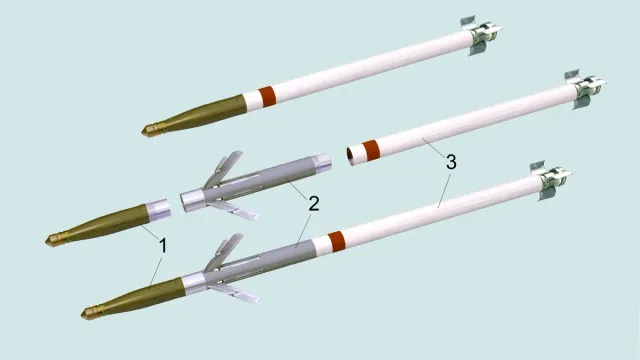
Fighter aircraft
F-15E Strike Eagle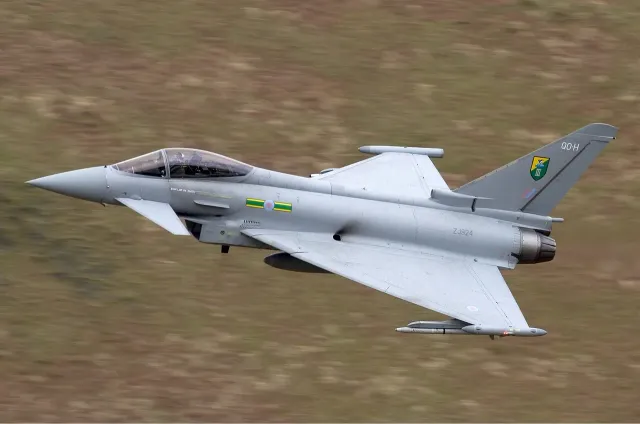
Fighter aircraft
Eurofighter Typhoon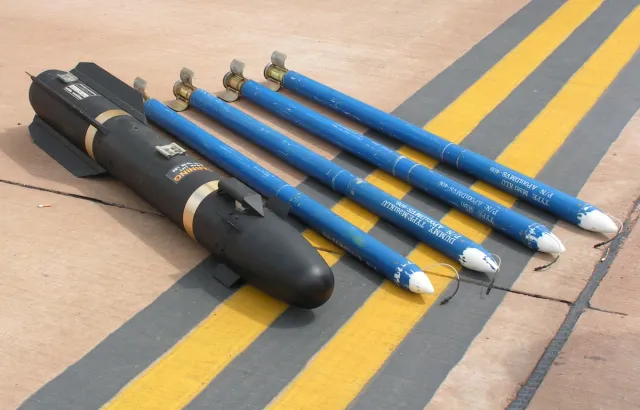
Frequently asked questions
Why does Saudi Arabia need laser-guided rockets when it already flies advanced air-to-air missiles? +
Cost per intercept. A single AIM-120 costs roughly $1 million and an AIM-9X roughly $450,000, according to TWZ's reporting on this deal, while an APKWS-II guidance section runs $15,000-$20,000 (a full round, guidance plus motor and warhead, closer to $35,000 per Eurasian Times). That is in the same range as the $20,000-$30,000 a Shahed-136 one-way attack drone is commonly estimated to cost, so shooting one down no longer means spending fifteen to twenty times the target's price. APKWS also retrofits Saudi Arabia's existing F-15SA and Eurofighter Typhoon fleets rather than requiring a new airframe or missile program.
Does laser-guided APKWS actually work in the Gulf's heat, humidity and dust? +
The U.S. Navy has fielded APKWS in Middle East operations since around 2015, and the U.S. Air Force has used it operationally against Houthi drones for several years, so the system has a real combat record in this exact climate. Semi-active laser and infrared guidance perform well in clear desert air over maritime and land targets alike, but like any laser-guided weapon, accuracy can degrade in heavy dust, sandstorms or thick cloud that obscures the laser spot.
Has Saudi Arabia operated APKWS before, or is this a first acquisition? +
Open sources do not document a prior Royal Saudi Air Force APKWS inventory. This Foreign Military Sale notification is the formal acquisition pathway, not a resupply of an existing stock, though Saudi pilots and ground crews would need training and integration work on the F-15SA and Typhoon fleets before the weapon reaches operational squadrons.
Is this a signed contract, or could it still fall through? +
Neither. A State Department release of this kind is a Congressional notification of a possible Foreign Military Sale, required before the U.S. government can negotiate a formal Letter of Offer and Acceptance with the buyer. Congress has a statutory window to object before the sale can proceed to contract; the State Department's own release states Saudi Arabia "will have no difficulty absorbing this equipment" and that the sale won't alter the regional military balance, the standard language used when a notification is expected to clear without objection, but it is not yet a signed deal.
More news


