Documents
 United States In development
 Lockheed Martin
MORFIUS X-Rotor
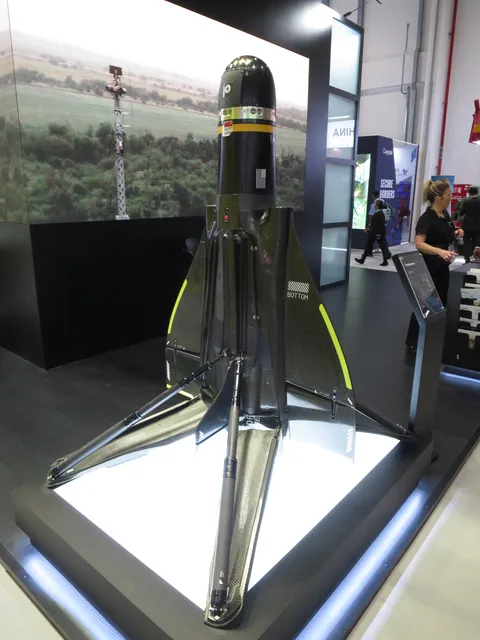
A ground-launched, VTOL, field-reusable airborne high-power microwave counter-drone system unveiled by Lockheed Martin at Farnborough 2026. Rather than engaging one target at a time like a missile or laser interceptor, it flies out and emits microwave energy bursts that disable the electronics of hostile drones, with the manufacturer claiming a single flight can defeat more than 50 of them.
Planned service entry 2026
Compiled from public sources ·primary reference ↗ ·last verified 2026-07-27
Pricing: No public per-unit price or program/contract value has been disclosed. Lockheed Martin frames the system's economics around a low cost-per-kill relative to disposable kinetic interceptors, driven by field recoverability and reuse, but has not published a supporting dollar figure for either the aircraft or a full engagement.
Procurement snapshot
Availability & export
US ITAR-controlled
Export needs U.S. State Dept (DDTC) approval; end-use & re-transfer restrictions apply.
Channel: Foreign Military Sales (FMS) or Direct Commercial Sale
Development status
Operator data not public
Planned service entry 2026. Status: announced.
Lifecycle cost (est.)
No public unit price to model from. Why so few systems publish one →
Interoperability
No standardised NATO calibre / datalink detected in public specs.
Derived guidance from public data, export regime by country of origin, lifecycle from the GAO ~30% acquisition rule. Verify eligibility, pricing and offsets with the manufacturer and your acquisition authority.
Overview
MORFIUS X-Rotor is a ground-launched, vertical-takeoff-and-landing counter-drone interceptor unveiled by Lockheed Martin at the 2026 Farnborough International Airshow (announced 20 July 2026). It is built around a high-power microwave (HPM) effector rather than a kinetic warhead or laser: instead of destroying one hostile drone at a time by ramming, exploding or burning through it, the aircraft flies into range of a drone or a swarm and emits microwave energy bursts that disable the target's onboard electronics, a 'one-to-many' approach the manufacturer says lets a single flight defeat more than 50 hostile drones, a materially different economics and tactical profile than a missile or laser interceptor engaging targets one at a time. Lockheed Martin has not stated whether that 50-plus figure represents drones disabled simultaneously in one pass or a cumulative total across an entire flight, and this entry treats it as the latter, more conservative reading pending a clearer manufacturer statement. The X-Rotor is designed to be recovered after a mission and reflown rather than expended like a kinetic interceptor, which the company says keeps its cost-per-kill low against cheap, mass-produced drone threats. It is also described as sensor-agnostic and command-and-control-agnostic: it does not require a dedicated fire-control radar or a proprietary sensor suite, and is built to take cueing from whatever C2 network a customer already operates rather than a bespoke system. X-Rotor builds on the base MORFIUS program, a family of HPM effectors Lockheed Martin says has been in testing since 2017 with roots in Air Force Research Laboratory-linked directed-energy work; X-Rotor is the newest, VTOL-capable evolution of that effector rather than a wholly new weapon concept, and readers should not confuse it with the unrelated 'MORFIUS' or similarly-acronymed programs that sometimes appear in open-source counter-drone literature from other organizations. Lockheed Martin states the system was recently flight-tested in Arizona, California and Oklahoma, covering flight performance, interception and lethality, with further evaluation campaigns planned in the coming months. As of the July 2026 unveiling, Lockheed Martin has not publicly disclosed the HPM effector's power output, the aircraft's weight or dimensions, its effective engagement range or altitude, its unit cost, or any program/contract value; no military branch or customer has been named as evaluating or ordering it. These are treated here as genuinely undisclosed rather than estimated, consistent with how a newly-unveiled directed-energy system is normally handled before a manufacturer publishes hard figures.
Full specifications
Firepower
Armament, payload and guidance.
| Main armament Primary weapon: main gun, cannon or missile type. | High-power microwave (HPM) directed-energy effector that disables hostile drone electronics rather than physically destroying the airframe; Lockheed Martin states a single flight can defeat more than 50 drones, though the company has not specified whether that figure is a simultaneous engagement count or a cumulative total across an entire sortie |
|---|
Sensors & avionics
Radar, sensor suite and datalinks.
| Sensors IRST, EO/IR turrets, laser designators, sniper pods, thermal sights. | Sensor-agnostic: does not require a dedicated fire-control radar or proprietary sensor to engage, Designed to accept cueing from existing command-and-control networks rather than a purpose-built C2 system |
|---|
Specifications compiled from public Lockheed Martin and reference sources ↗. Published defense figures are approximations, treat comparisons as directional. Last verified 2026-07-27.
Compare with rivals
See how it stacks up
 Rheinmetall Skyranger 30
  KBP Instrument Design Bureau Pantsir-S1
 Frequently asked questions
What is the main armament of the Lockheed Martin MORFIUS X-Rotor? +
The Lockheed Martin MORFIUS X-Rotor's primary weapon is the High-power microwave (HPM) directed-energy effector that disables hostile drone electronics rather than physically destroying the airframe; Lockheed Martin states a single flight can defeat more than 50 drones, though the company has not specified whether that figure is a simultaneous engagement count or a cumulative total across an entire sortie.
What is the Lockheed Martin MORFIUS X-Rotor used for? +
The Lockheed Martin MORFIUS X-Rotor is a air defense system typically used for counter uas, force protection, point defense, directed energy.
How much does the Lockheed Martin MORFIUS X-Rotor cost? +
Lockheed Martin MORFIUS X-Rotor: No public per-unit price or program/contract value has been disclosed. Lockheed Martin frames the system's economics around a low cost-per-kill relative to disposable kinetic interceptors, driven by field recoverability and reuse, but has not published a supporting dollar figure for either the aircraft or a full engagement.. Defense program costs are rarely fully public and vary by contract and configuration.
Similar systems
Related coverage
MORFIUS X-Rotor in the news
 News
News digest · Aug 1, 2026
Iran's War Resets Again, Russia Probes NATO's Seams
A Jordan strike, a two-hour US response, a Kh-101 that landed in Poland, and three new counter-drone systems defined this week in defense.
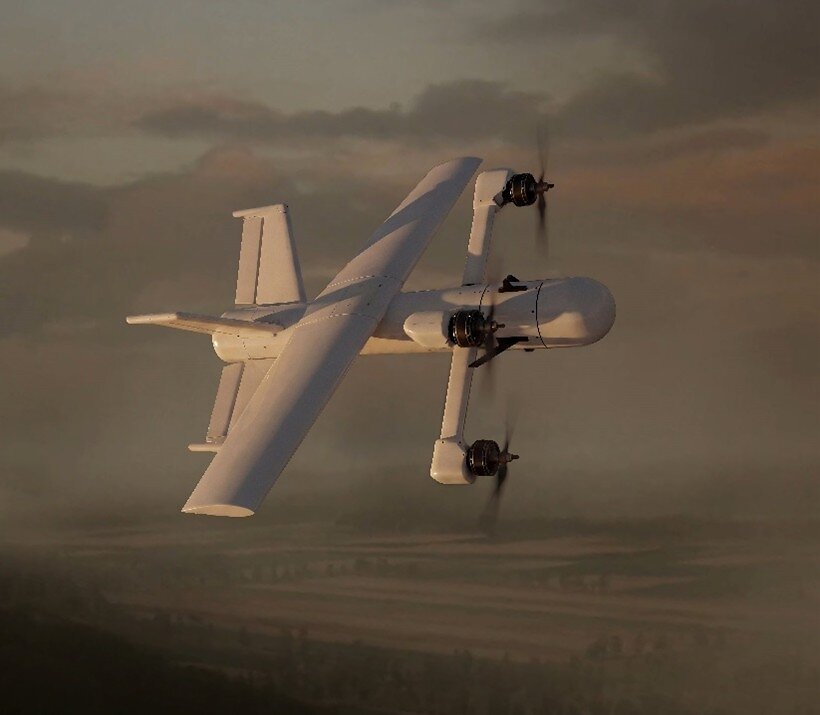 News
News technology · Jul 27, 2026
Lockheed Martin's MORFIUS X-Rotor Can Fry 50 Drones a Flight
Lockheed Martin's new MORFIUS X-Rotor flies out, disables more than 50 hostile drones with microwave bursts, then lands to be recharged and reflown.