Ukraine's Flamingo missile hits Russia's only ejection-seat plant
A Ukrainian FP-5 Flamingo cruise missile struck the Avitek plant in Kirov, Russia's sole ejection-seat maker, 1,200 km from the border, Russian officials report casualties.

Vitaly Kuzmin, Wikimedia Commons, CC BY-SA 4.0
A Ukrainian FP-5 Flamingo cruise missile struck the Avitek defense plant in Kirov, Russia, around 7 a.m. local time on July 24, hitting one of the facility’s central industrial buildings roughly 1,200 kilometers from the nearest Ukrainian-controlled territory. Avitek, formally JSC Vyatka Machine-Building Enterprise, is a subsidiary of Russia’s Almaz-Antey air-defense conglomerate and the country’s only serial manufacturer of ejection seats for fighter and attack aircraft, a niche but genuinely irreplaceable role in keeping Russian combat aircrews flying.
President Zelensky confirmed the strike, describing the plant as producing components for aircraft and missile systems that Russia has used against Ukrainian cities.
“Components for the occupier’s aircraft and missile systems, which are used, in particular, in the massive attacks against our cities and communities,” said Volodymyr Zelensky, President of Ukraine, describing what the Avitek plant manufactures (Kyiv Independent, July 24, 2026).
A plant that keeps three separate weapons programs running
Ejection seats do not usually make a factory a priority target, but Avitek’s role goes well beyond pilot-safety equipment. The plant also builds components for Russia’s Tor short-range surface-to-air missile system and produces parts used in the Kh-101 and Kh-59M2 cruise missiles, the same missile families Russia has repeatedly fired into Ukrainian cities. That combination, being the sole domestic source of a critical safety part for every Russian fast-jet pilot while simultaneously feeding two of Russia’s active missile programs, is what elevates Avitek from a routine industrial target to one with disproportionate leverage over Russia’s ability to sustain both its air force and its long-range strike campaign. Losing ejection-seat capacity does not ground existing aircraft immediately, but it removes a safety system every combat pilot depends on and one Russia cannot simply buy from an alternate domestic supplier, since Avitek is described across multiple sources as the country’s only serial producer of the part.
Avitek is already under sanctions from the United States, the European Union, Ukraine, Canada, Switzerland, and New Zealand for its role in Russia’s military-industrial complex, meaning this was not an obscure or ambiguous target from Kyiv’s perspective. Ukrainian officials, including Fire Point co-owner and chief designer Denys Shtilerman, confirmed the Flamingo’s involvement and released launch footage after the strike, a pattern of public acknowledgment Ukraine has increasingly adopted for its long-range strike program rather than the ambiguity that characterized earlier deep strikes.
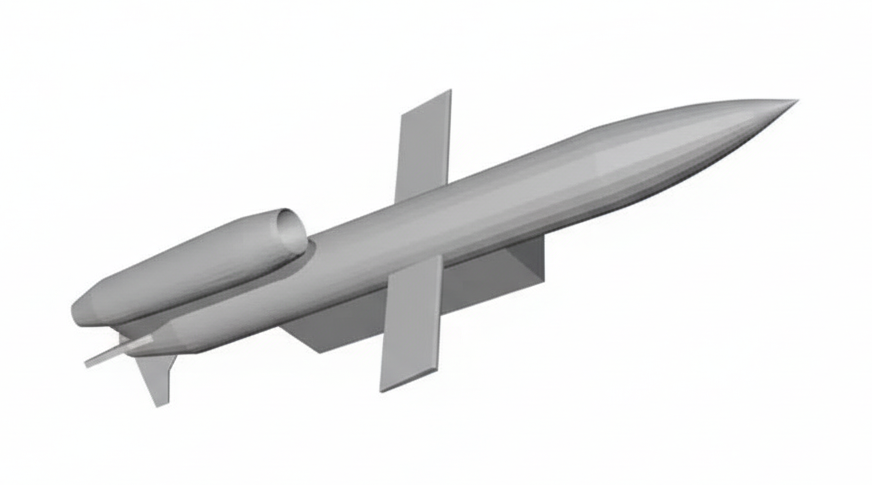
Reading the distance numbers correctly
Two distance figures are circulating around this strike and they answer different questions. The 1,200 kilometers is how far this specific missile actually flew, from Ukrainian-controlled territory to Kirov, and it is the number that matters for understanding how deep into Russia this strike reached. The more than 3,000 kilometers figure describes the Flamingo’s maximum stated range as a weapon system, the missile’s design capability rather than the distance flown on this mission. Conflating the two would make it sound like Ukraine is already striking near the outer edge of what the Flamingo can do; in fact Kirov sits well within the missile’s stated envelope, with roughly two-thirds of its claimed maximum range still in reserve. That gap matters strategically: it means targets considerably farther into Russian territory than Kirov remain within reach of the same missile, not just this one facility.
The FP-5 Flamingo itself, built by the Ukrainian company Fire Point, carries a 1,150 kilogram warhead, roughly three times the payload of Russia’s own Kh-101 cruise missile, over a 14-meter carbon-fiber airframe powered by an AI-25TL turbofan engine, with satellite navigation and a low-altitude flight profile intended to limit radar detection. It has now been used in what Militarnyi’s reporting describes as the third confirmed Flamingo strike on Russian defense facilities in recent months, a cadence that suggests Ukraine now has enough production capacity to sustain repeated deep strikes rather than treating each launch as a singular, resource-constrained event.
What is and isn’t confirmed
The one figure in this story that deserves the most caution is the casualty count. Kirov Oblast Governor Aleksandr Sokolov reported six workers killed and 26 injured in an afternoon update following the strike. That number comes from a single Russian government official with an obvious interest in how the incident is portrayed, and it has not been corroborated by any independent count, hospital record, or third-party observer. It should be read as Moscow’s account of what happened at Avitek, not as an established fact, the same caveat this desk applies to any casualty figure originating from a party actively fighting the war being described.
What is better corroborated, because it comes from Ukraine’s own side and from open-source imagery rather than a single official’s statement, is that the strike happened, hit a central building at the plant, and produced smoke plumes visible in satellite imagery, along with the plant’s basic product line and sanctions status, all of which multiple independent outlets converge on.
This strike continues a pattern this desk has tracked in Ukraine’s deep-strike campaign against Russian industrial and logistics targets, including the strike on the Omsk oil refinery and the Salavat refinery strike tied to Russia’s shadow fleet. Readers can find published specifications for the Kh-101, one of the cruise missiles Avitek supplies components for, on its WeaponSpecs system profile.
Sources
- Military factory in Russia's Kirov in flames after reported Flamingo attack, local authorities report casualties — Kyiv Independent, Jul 24, 2026
- Flamingo strikes Avitek plant in Russia's Kirov — Militarnyi, Jul 24, 2026
- Flamingo missiles strike sanctioned factory in Kirov, 1,200 kilometers from Ukrainian border — Ukrinform, Jul 24, 2026
- Ukrainian Flamingo cruise missile strikes key Russian defense plant in Kirov — United24 Media, Jul 24, 2026
Systems mentioned
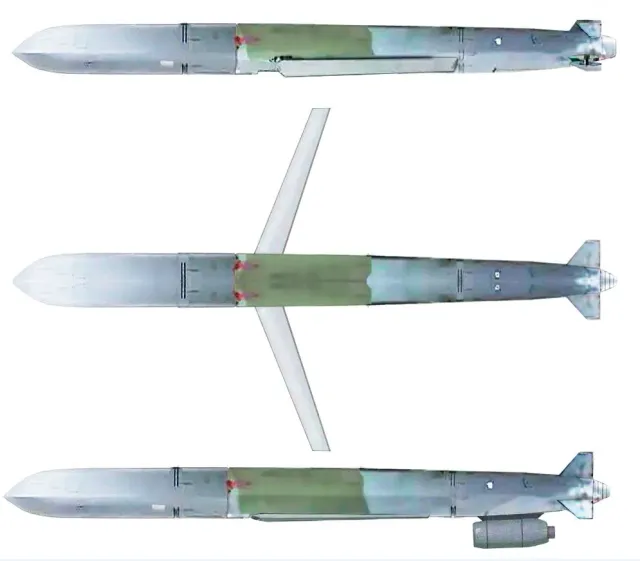
Every system named in this story, with its photo and, where available, a video. Tap a card to open the full spec sheet.
Frequently asked questions
What is the FP-5 Flamingo? +
The FP-5 Flamingo is a Ukrainian long-range cruise missile built by the domestic company Fire Point. It carries a 1,150 kg warhead, is roughly 14 meters long, uses an AI-25TL turbofan engine and a carbon-fiber airframe, and has a stated range exceeding 3,000 kilometers with satellite-guided, low-altitude flight to reduce radar detection.
What does the Avitek plant actually make? +
Avitek, formally JSC Vyatka Machine-Building Enterprise and a subsidiary of Russia's Almaz-Antey defense conglomerate, is Russia's only serial manufacturer of ejection seats for fighter and attack aircraft. It also produces components for Tor surface-to-air missile systems and for Kh-101 and Kh-59M2 cruise missiles, plus aircraft cargo-handling equipment.
How far did this missile actually travel to hit the target? +
Kirov is about 1,200 kilometers from the nearest Ukrainian-controlled territory, the distance the missile actually flew for this strike. That is separate from the Flamingo's maximum stated range of over 3,000 kilometers, which describes the missile's capability, not the distance flown on this particular mission.
Are the reported casualty figures confirmed? +
No. The figure of six killed and 26 injured comes solely from Kirov Oblast Governor Aleksandr Sokolov, a Russian government official, and has not been independently verified. It is reported here as a state claim, not a confirmed fact.
More news


