Fire Point Tackles the Engine Bottleneck Choking Flamingo Output
Ukraine's Fire Point is racing to fix the engine shortage capping Flamingo cruise-missile output at 30/month, with two parallel workarounds.

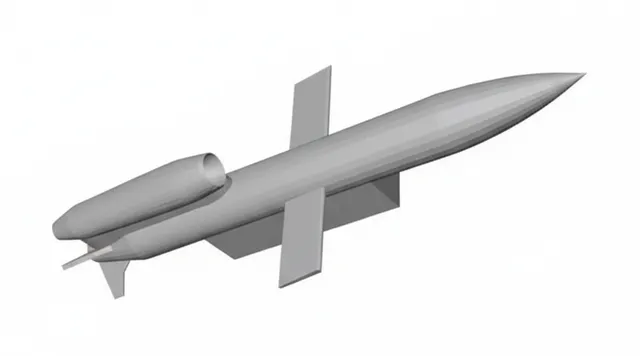
Wikimedia Commons, CC BY-SA 4.0, via BenjoP, Nov. 18, 2025, technical schematic (shown for identification, not a photograph)
Ukraine’s Fire Point has spent more than 18 months quietly building its own turbojet engine for the FP-5 Flamingo cruise missile, the company confirmed this week, aiming to break a single-point production bottleneck that has capped the missile’s output at roughly 30 units a month regardless of how many airframes and warheads the company can otherwise build. Separately, unverified wreckage analysis published days earlier suggests some Flamingos already flying may carry a different, foreign-made substitute engine, though neither Fire Point nor the Ukrainian government has confirmed that report.
One engine, one bottleneck
The FP-5 Flamingo has become Ukraine’s most consequential deep-strike weapon of 2026, a domestically built cruise missile with a stated range exceeding 3,000 km and a 1,150 kg warhead, roughly three times the payload of Russia’s own Kh-101, according to WeaponSpecs’ own systems database. Fire Point has confirmed the missile’s use in strikes deep inside Russian territory, including a July 24 strike on the Avitek ejection-seat plant in Kirov, roughly 1,200 km from the border, and an earlier strike on a plant in Cheboksary in June. Those missions proved the missile works. What has held it back from becoming a truly mass-produced weapon is not the airframe, the warhead, or the guidance package: it is a single part, the engine.
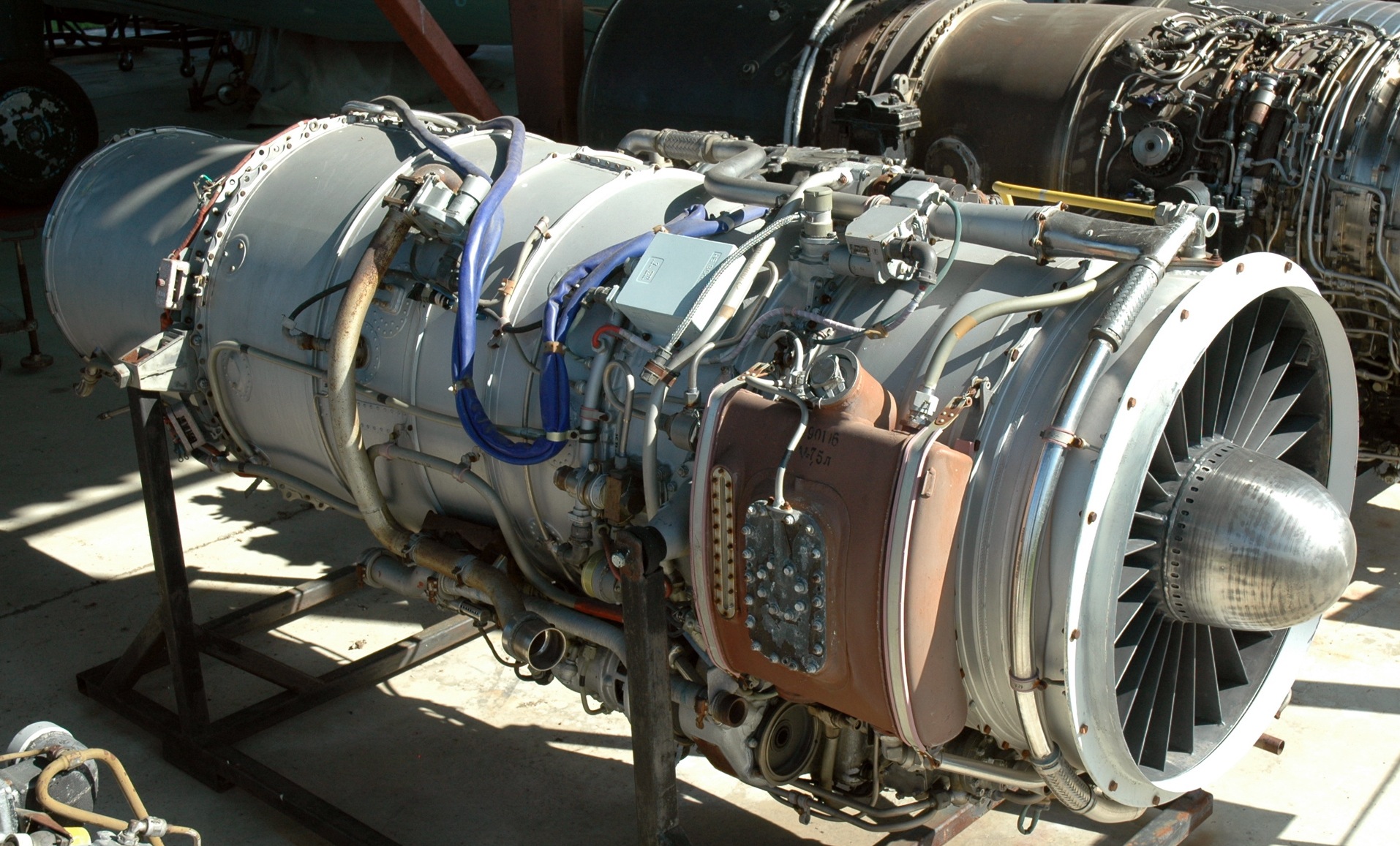
Flamingo has been built around the Ivchenko AI-25TL, a turbofan designed in the Soviet era for the L-39 Albatros jet trainer, generating about 16.9 kN of thrust and weighing roughly 350 kg. The AI-25TL was never a wartime mass-production item, and decades have passed since the Soviet Union last built new units in volume, so the supply of usable engines and spare parts is finite and shrinking. That single dependency, more than any other input into Flamingo production, is why output has plateaued around 30 missiles a month even as Fire Point has separately claimed a target of ramping to 200 or more per month by the end of 2026. A missile that can fly 3,000 km is worthless at scale if the factory can only finish 30 of them a month for want of engines.
An unconfirmed substitute, seen in wreckage
Defense Express, the Ukrainian outlet en.defence-ua.com, published an analysis on Aug. 3 reporting that debris recovered from downed or crashed Flamingo missiles shows what its analysts believe is a British-made turbojet in place of the AI-25TL. The specific model has not been identified. Comparable Western engines in this thrust class run 15.6 to 19.1 kN and 337 to 386 kg, close enough to the AI-25TL’s own figures that a swap would be mechanically plausible without redesigning the airframe. Defense Express estimates a potential 15 percent fuel-efficiency gain and roughly 450 km of extra range if the substitution is real, pushing Flamingo’s effective reach well past 3,000 km.
This is an open-source wreckage assessment from a single Ukrainian defense-analysis outlet, not a statement from Fire Point, the Ukrainian Ministry of Defense, or any other government body. United24 Media’s coverage frames the same story identically, as plausible but unconfirmed. No source reviewed for this piece has Fire Point acknowledging, denying, or commenting on the British-engine claim specifically: treat it as a credible analyst inference from physical evidence, not an official confirmation.
The confirmed program: building the engine from scratch
Whatever is or is not in the wreckage, Fire Point itself confirmed a second, deliberate answer to the bottleneck on Aug. 4: an indigenous turbojet, developed in-house for more than a year and a half, with the same design bureau that originally built the AI-25 involved, according to dev.ua’s reporting. The company says it has assembled the first 10 test samples and is running them through evaluation, aiming to finish testing and make refinements by the end of 2026, then move to mass production in 2027. The declared capacity target is up to seven engines a day, roughly 2,555 a year if sustained, comfortably clearing the company’s separate ambition of 200-plus Flamingos a month by the end of 2026.
“Creating a turbojet engine is obviously more difficult than the rocket itself. Our goal is to complete testing of all samples and make the necessary improvements by the end of this year, and move to mass production next year,” said Iryna Terekh, CEO of Fire Point (dev.ua, Aug. 4, 2026).
Terekh’s framing is an admission, not a boast: an airframe and a warhead are comparatively tractable next to a working jet engine, which must survive sustained high-temperature combustion and precise turbine-blade tolerances, using a supply chain of specialized alloys Ukraine’s wartime industry was not originally built around. Building that capability in-house is also a hedge: a domestic engine supply cannot be embargoed or cut off the way a foreign-sourced substitute eventually could be.
A contested claim about the factory itself
Russia’s Ministry of Defense claimed on Aug. 8 that it had struck the “Kyiv-11” Fire Point facility, alleging the site produces Flamingo components, warheads, and solid-fuel-booster chemicals. This is a Russian government claim, not independently verified: no neutral wire service, Ukrainian source, or Fire Point statement corroborates the target, the damage, or the premise that “Kyiv-11” is what Russia says it is. Coming four days after Fire Point’s engine-program announcement, the timing is notable; timing alone does not establish accuracy.
Two bets, one goal
Fire Point is running two tracks toward the same outcome: keep engine supply matched to airframe and warhead production, neither of which was ever the bottleneck. If the unconfirmed British-engine substitution is real, it buys time and possibly extends range while the indigenous program matures. If not, the in-house turbojet is the path Fire Point has staked its credibility on: testing complete by year-end, mass production in 2027, up to seven engines a day. Either path turns Flamingo from a demonstrated capability into a genuinely mass-produced one, the difference between a weapon behind a handful of headline strikes and one shaping a sustained air campaign.
Sources
- russia Has Noticed New Engines on Ukraine's FP-5 Flamingo Cruise Missile — Defense Express, Aug 3, 2026
- Ukraine May Have Broken the Biggest FP-5 Flamingo Production Bottleneck — United24 Media, Aug 3, 2026
- Fire Point has created its own turbojet engine for Flamingo missiles and plans mass production in 2027 — dev.ua, Aug 4, 2026
Systems mentioned
Every system named in this story, with its photo and, where available, a video. Tap a card to open the full spec sheet.
Missile
FP-5 FlamingoFrequently asked questions
Why can't Fire Point just buy more AI-25TL engines? +
The AI-25TL is a decades-old Soviet-era turbofan, originally built for the L-39 Albatros jet trainer, with a finite and dwindling parts supply. Analysts and Fire Point itself have identified it as the single biggest constraint on how fast Flamingo output can scale.
Is the report of a British-made replacement engine confirmed by Ukraine? +
No. It is a Defense Express analyst assessment based on wreckage recovered from downed or crashed Flamingo missiles, not an official statement from Fire Point or the Ukrainian government. This story treats it as an open question, not a confirmed fact.
What is Fire Point's own engine program actually targeting? +
CEO Iryna Terekh says testing of the first 10 prototype turbojet samples should be complete by the end of 2026, with mass production starting in 2027 and a declared capacity goal of up to seven missiles a day, roughly 2,555 a year, once that line is running.
How far can a Flamingo fly and what does it carry? +
Fire Point states a range exceeding 3,000 km and a 1,150 kg warhead, which WeaponSpecs' own systems database notes is roughly three times the payload of Russia's Kh-101 cruise missile.
More news


