Syria and Russia Strike Deal on Fate of Tartus, Hmeimim Bases
Syria takes over civilian control of Russia's two Mediterranean bases as both sides recast military sites as 'joint training centres.'

Voice of America / U.S. government work, public domain
Syria and Russia announced a memorandum of understanding Sunday settling the future of Russia’s two military installations in Syria, Hmeimim air base in Latakia province and the Tartus naval base, after 18 months of negotiation since Bashar al-Assad’s fall. Syria’s civilian administration takes over Hmeimim’s airport and Tartus’s commercial berth and warehouses, while the military portions of both sites convert into what both governments’ foreign ministries call “joint training and qualification centres,” with the full transition to be completed within three months.
What the memorandum actually changes
Under Sunday’s agreement, Syria’s transitional government takes direct civilian control of Hmeimim’s airport operations and of Berth No. 4 and the warehouse facilities at Tartus port, according to The Moscow Times. The remaining military footprint at both sites is to be reorganized into joint training and capacity-building centres, a formulation both Damascus and Moscow’s foreign ministries used in describing the deal, per Middle East Monitor’s reporting. Syria’s Foreign Ministry, quoted via the state news agency SANA, called the arrangement “the most significant development” since talks began 18 months ago. Both sides set a three-month deadline to complete the reorganization.
That timeline matters because it converts an open-ended, 18-month diplomatic standoff into a concrete, dated commitment. Since Assad fled to Moscow on Dec. 8, 2024, ending roughly 25 years in power and a 13-year civil war, Syria’s transitional government under Ahmed al-Sharaa, formed in January 2025, has had to decide what to do with two Russian bases it inherited but did not invite. Al-Sharaa has met Vladimir Putin twice since taking power, and Putin, during a January 2026 visit, said “much has been accomplished in terms of restoring our interstate relations.” That is a Russian head-of-state characterization of the relationship, not an independent assessment, and it predates Sunday’s actual agreement by seven months.
Why Hmeimim and Tartus matter beyond Syria
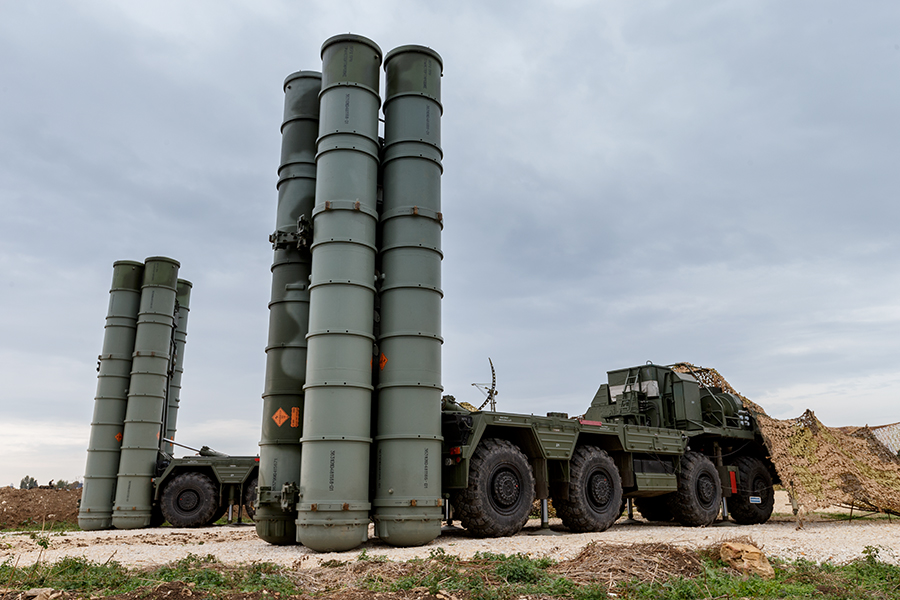
Tartus has hosted a Russian naval presence since 1971, a Soviet-era arrangement that survived the USSR’s collapse and became the anchor for Moscow’s only warm-water Mediterranean naval facility. A 2017 agreement between Assad’s government and Russia formalized a 49-year lease on both Tartus and Hmeimim, automatically renewable for 25 more years, and Tartus can accommodate up to 11 warships at once. Hmeimim, by contrast, grew from a modest civilian airport into a full military airbase only after 2015, when Russia’s intervention to prop up Assad turned it into the launch point for years of Russian airstrikes inside Syria. Together, multiple outlets describe the two sites as Russia’s only two official military bases outside the former Soviet Union, its principal Mediterranean power-projection foothold and the logistics link it has relied on to resupply Russian military and Wagner-linked operations across Africa and the Sahel. Losing meaningful operational use of either site would be a real strategic cost for Moscow, not a symbolic one, which is precisely why how much access Russia retains under this deal is the question worth watching rather than accepting either government’s framing at face value.
A genuinely contested reading, not a settled fact
Coverage of Sunday’s announcement splits on how much this actually curtails Russia’s military presence. Middle East Monitor and Al Jazeera frame the deal primarily as Syria reasserting sovereignty over civilian infrastructure while military use continues in a repurposed, renamed form, a reading consistent with the underlying facts, civilian handover plus a military “joint centre” conversion rather than a full withdrawal. A separate outlet’s headline instead frames the deal as ending Moscow’s use of the bases outright. Both cannot be fully correct at once, and this piece does not resolve that disagreement for the reader, because the underlying memorandum itself does not resolve it either: the facts (civilian handover, military-to-training-centre conversion, three-month deadline) are consistent across all three sources cited here, but what those facts mean for Russia’s actual future access is a matter of interpretation Damascus and Moscow have each shaded toward their own audiences.
“Damascus is affirming that its national sovereignty is not up for negotiation,” said Obaida Hitto, Al Jazeera’s correspondent reporting from the region (Al Jazeera, Aug. 9, 2026).
That framing, sovereignty first, capability second, is the throughline connecting Syria’s public statements: civilian control of the airport and port infrastructure is the concrete, verifiable win Damascus can point to immediately, while the military side’s fate depends on how “joint training and qualification centre” is actually implemented over the coming three months, a definition neither government has spelled out in operational detail.
Sources
- Syria and Russia Reach Deal on Future of Tartus and Khmeimim Bases After 18 Months of Talks — The Moscow Times, Aug 9, 2026
- Syria says it reached deal with Moscow on future of Russian bases — Al Jazeera, Aug 9, 2026
- Syria, Russia reach deal to reorganize Russian military presence at Hmeimim, Tartus bases — Middle East Monitor, Aug 9, 2026
Frequently asked questions
Does this mean Russia is leaving Syria? +
No. Syria takes over the civilian-side facilities, Hmeimim's airport and Tartus's commercial berth and warehouses, while the military portions convert into what both governments call joint training and qualification centres. How much operational access Russia actually retains is genuinely disputed in early coverage, not settled by this announcement.
How long has Russia had these bases? +
Tartus dates to a Soviet-era arrangement from 1971. Hmeimim was built up from a small civilian airport starting in 2015, when Russia intervened militarily to back Bashar al-Assad. A 2017 agreement gave Russia a 49-year lease on both, automatically renewable for 25 more years.
Why does this matter strategically? +
Hmeimim and Tartus are Russia's only two official military bases outside the former Soviet Union, its main Mediterranean power-projection foothold and the logistics gateway it has used to resupply operations in Africa and the Sahel.
How long is the transition expected to take? +
Both governments have set a maximum three-month window to complete the handover and reconfiguration described in Sunday's memorandum of understanding.
More news


