Lockheed Signs First Non-US Deal for Sub Combat Systems
A$29.3M deal with Australia's Submarine Agency builds a sovereign capability to integrate Virginia-class combat systems outside America.

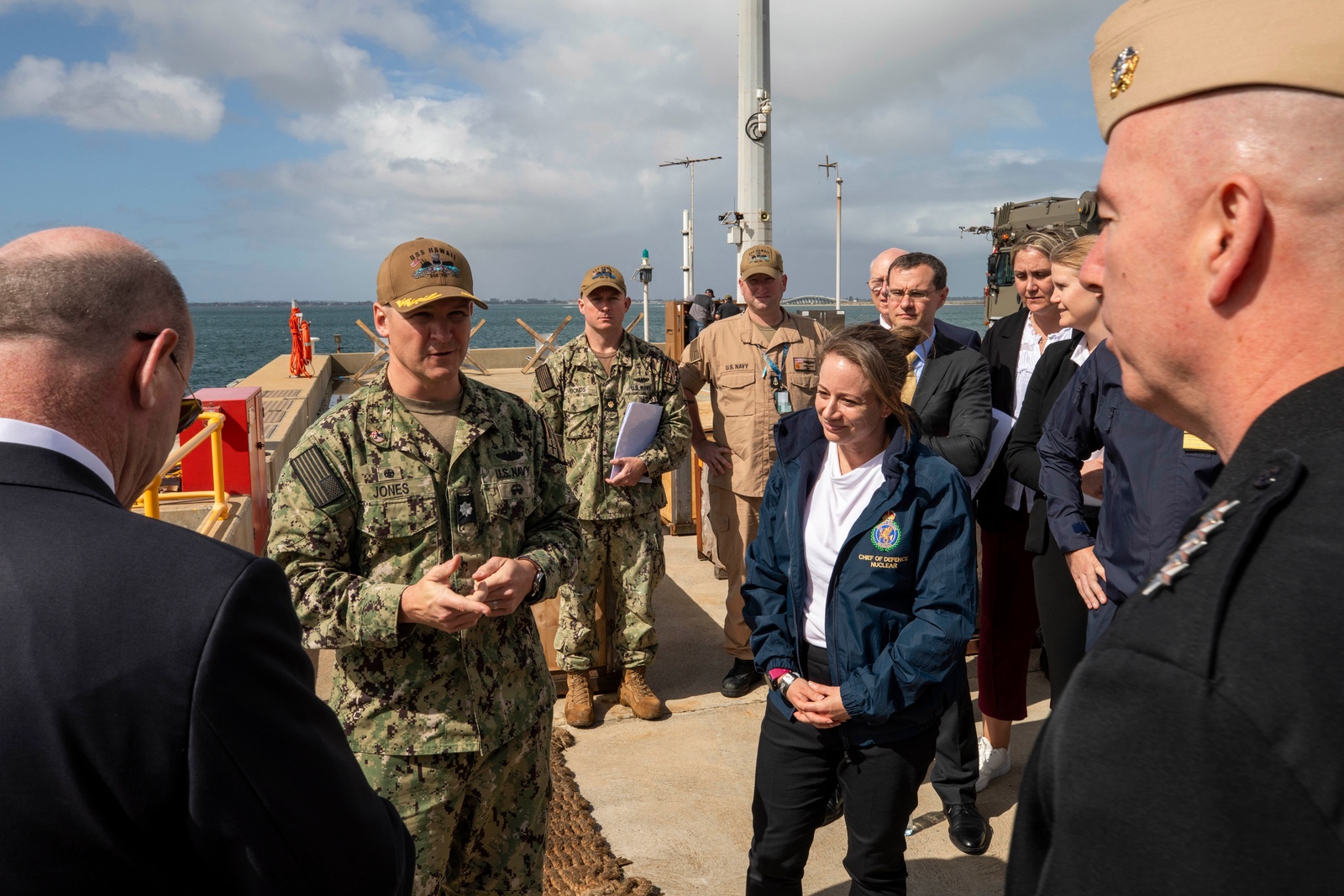
Lt. James Cavila, U.S. Navy, public domain (VIRIN 250225-N-QR679-1004)
Lockheed Martin Australia signed a multi-year, A$29.3 million (roughly US$19 million) contract with the Australian Submarine Agency on Monday, August 10, 2026, to build Australia’s first sovereign capability to integrate combat systems on Virginia-class submarines, reported as the first time this specific work has been established outside the United States. The deal converts a preferred-partner designation Lockheed Martin Australia received in May into an executed, funded contract, and it creates more than 20 combat-systems engineering jobs in Western Australia in its first year.
What was actually signed
Combat systems, in a submarine’s case, are the integrated sensors, weapons control and command software that let a crew detect, track and engage targets. On a Virginia-class boat, that system is complex and continually updated, which means a navy operating the class needs not just the hull but an ongoing, trained capacity to install, test and maintain new combat-system software and hardware over the submarine’s decades-long service life. Until this contract, that integration capability existed only in the United States. Lockheed Martin Australia’s new agreement with the Australian Submarine Agency builds the infrastructure, training pipeline and technology transfer needed for Australian industry to do that work domestically, independent of shipping the work back to an American facility every time an update is required.
Jeremy King, chief executive of Lockheed Martin Australia and New Zealand, framed the contract as foundational to the broader submarine program:
“Combat systems integration is fundamental to delivering a highly advanced, secure and operationally dominant submarine fleet. Lockheed Martin Australia brings decades of combat systems integration expertise to this partnership, and we are deeply honoured to support the Australian Submarine Agency,” said Jeremy King, Chief Executive, Lockheed Martin Australia and New Zealand, in a company and Australian Submarine Agency joint announcement, August 10, 2026.
Why this closes the hardest part of AUKUS Pillar 1
AUKUS, the trilateral security partnership between Australia, the United Kingdom and the United States, rests on two broad tracks. Pillar 2 covers advanced technology sharing across areas like hypersonics and undersea drones. Pillar 1 is the more concrete and more difficult piece: giving Australia a nuclear-powered submarine capability, first through rotational access to Virginia-class submarines operated by the U.S. and U.K., and eventually through Australian-crewed and, later, Australian-built boats. The single biggest technical and industrial gap in that plan has always been sustainment: Australia can host and eventually operate nuclear submarines, but doing so safely and independently requires a domestic industrial base capable of maintaining everything from the reactor plant to the combat system, work that traditionally exists only where submarines are built. This contract is the first one specifically aimed at closing that gap for combat systems, as distinct from the reactor, hull or propulsion work being addressed through separate programs.
It is also worth being precise about what this contract is not. It does not buy Australia any submarines, and it does not commit Lockheed Martin to building or delivering hardware beyond the integration capability itself. Australia’s path to operating Virginia-class boats, and eventually the planned AUKUS-class submarine, runs through several separate, larger programs. This deal is specifically about workforce and engineering capacity, the people and infrastructure needed to keep whatever submarines Australia eventually operates combat-ready without depending on the United States for every software update.
Four days after the Stirling access decision
This signing lands only four days after Australia’s Chief of the Defence Force, Admiral Mark Hammond, confirmed on August 4 that U.S. Virginia-class submarines will retain what he called enduring access to HMAS Stirling in Western Australia beyond the initial rotational-presence window currently planned to run from 2027 to 2032. That access announcement and this integration contract are not the same decision, but they reinforce each other. Enduring access to Stirling only matters operationally if the submarines that use it can be sustained there, and a domestic combat-systems integration capability only matters if there is a long-term submarine presence to apply it to. Read together, the two announcements describe Western Australia settling into a permanent role as an AUKUS submarine hub rather than a temporary rotational stop.
That reading is reinforced by the scale of infrastructure spending already committed nearby: roughly A$8 billion at HMAS Stirling itself, a further A$12 billion for the Henderson Defence Precinct in Western Australia, and a separate A$3.9 billion submarine construction yard planned in South Australia. Against those figures, Lockheed Martin’s A$29.3 million contract is a rounding error in dollar terms. Its significance is not the money; it is that it is the first contract specifically targeting the sustainment gap that has always been the hardest, least glamorous part of turning AUKUS from a political agreement into an operational one.
What the WeaponSpecs database shows, and how this changes it
WeaponSpecs’ own systems database currently lists the Virginia-class submarine, built by General Dynamics Electric Boat and Huntington Ingalls Industries, as a roughly 7,900-tonne submerged displacement, S9G-reactor-powered attack submarine with about 24 boats built and a per-boat procurement cost near $3.45 billion. That entry lists one operator on record, the United States Navy, a figure that predates this week’s developments and does not yet reflect Australia’s emerging role. Australia is not yet an operator of Virginia-class submarines in the sense of owning or crewing one independently, and nothing in this contract changes that directly. But between the confirmed rotational presence beginning in 2027, the enduring Stirling access Hammond described, and now a sovereign combat-systems integration capability, Australia is visibly moving toward becoming a second operator under the class’s evolving AUKUS arrangement, a status the database’s current single-operator figure will likely need to be revisited to reflect as that relationship becomes more concrete.
Sources
- Lockheed Wins Historic First, Update Nuclear Submarine Combat System Outside US — Tech Times, Aug 10, 2026
- Lockheed Martin Australia Signs $29.3M Deal With Australian Submarine Agency — Space & Defense, Aug 10, 2026
- Lockheed Martin Australia Joins Forces With Australian Submarine Agency — Asia Pacific Defence Reporter, Aug 10, 2026
- Lockheed Martin and ASA to Establish Virginia-Class Capability — Australian Defence Magazine, Aug 10, 2026
- Lockheed Martin to Build Sovereign Virginia-Class Submarine Combat Systems Integration Capability in Australia Under AUKUS — Defence Industry Europe, Aug 10, 2026
- HMAS Stirling: US Submarine 'Enduring Access' — Army Recognition, Aug 4, 2026
- Lockheed Martin Named Preferred Combat System Integration Partner for Australia's Next-Generation Nuclear Subs — Lockheed Martin, May 18, 2026
Systems mentioned
Every system named in this story, with its photo and, where available, a video. Tap a card to open the full spec sheet.
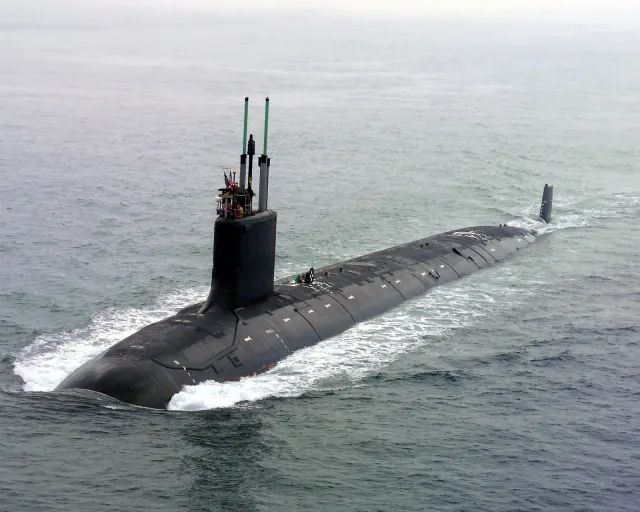
Submarine
Virginia-class SubmarineFrequently asked questions
Is Australia buying its own Virginia-class submarines here? +
No. This contract covers Australian industry's ability to integrate and sustain combat systems on Virginia-class boats, not building or purchasing the hulls themselves, which is a separate, much larger AUKUS Pillar 1 undertaking.
Why is this called a 'first'? +
Reporting on the announcement frames it as the first time Virginia-class submarine combat-systems integration capability has been established outside the United States.
How does this connect to the August 4 HMAS Stirling access decision? +
Both are AUKUS Pillar 1 building blocks. The Stirling decision secures long-term basing for rotational US and UK submarines; this contract builds Australia's own capacity to sustain those boats' combat systems. Together they are turning Western Australia into a durable AUKUS submarine hub.
How big is A$29.3 million against the broader AUKUS Western Australia spend? +
Small. It is a fraction of the roughly A$8 billion committed to HMAS Stirling infrastructure and the A$12 billion Henderson Defence Precinct, both also in Western Australia, and of the A$3.9 billion submarine construction yard planned in South Australia. This contract funds workforce and engineering capability-building, not construction.
More news


