Australia Adds $3.2B to AUKUS Shipyard as Build Timeline Faces Scrutiny
Canberra is spending A$4.6 billion more on the Osborne shipyard that must eventually build its own nuclear submarines, a hedge against production-rate risk it cannot control in the US and UK.

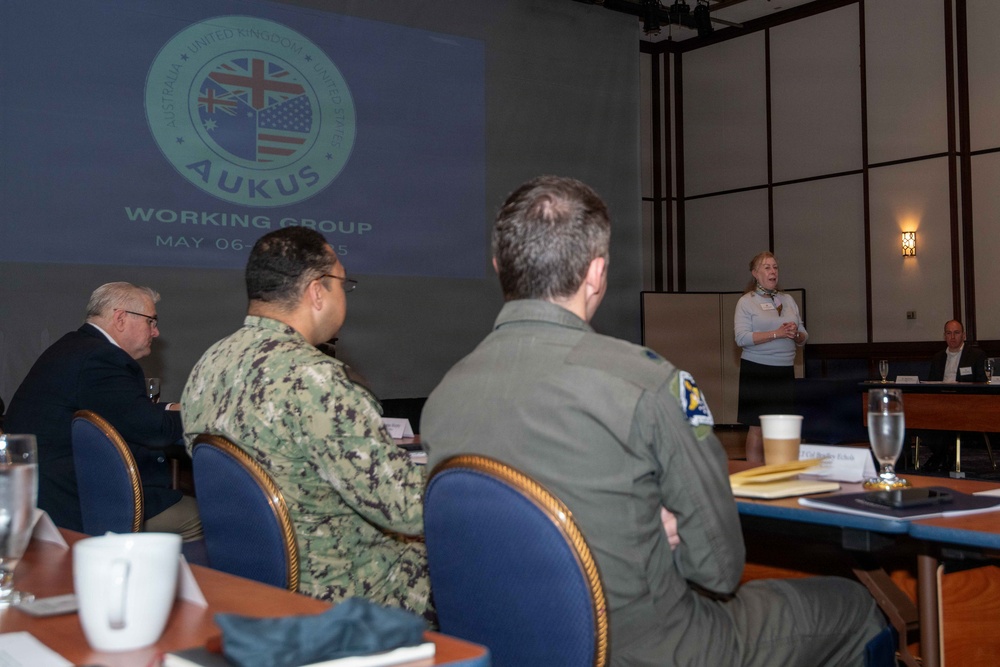
U.S. Navy photo by Mass Communication Specialist 1st Class Victoria Mejicanos, DVIDS, public domain
Australia’s Deputy Prime Minister and Defence Minister Richard Marles announced an additional A$4.6 billion (US$3.2 billion) for the Osborne Naval Shipyard in South Australia on July 24, funding new infrastructure and worker training to prepare the yard to eventually build SSN-AUKUS submarines from the 2040s. It adds to A$3.9 billion already committed, and the shipyard’s planned submarine-construction facility is being expanded to roughly ten times its current size.
De-risking the part of AUKUS Australia actually controls
The sharpest way to read this announcement is not as new submarine spending, but as industrial insurance. AUKUS, the trilateral security pact between Australia, the United States and the United Kingdom signed in 2021, has faced sustained, open scrutiny over whether submarine-production rates in the US and UK can realistically deliver boats to Australia on the timeline the pact promises. That production-rate risk sits almost entirely outside Canberra’s control: it depends on US shipyard capacity, workforce, and the Navy’s own competing demands for Virginia-class boats. What Australia can control is its own end of the bargain, the shipyard it must build domestically before it can ever construct a submarine of its own. Today’s funding is aimed squarely at that controllable piece.
The Virginia-class submarine, a 7,900-ton US Navy fast-attack boat with a submerged speed of 25 knots and a crew of 135, is the vessel Australia is set to receive first, with deliveries expected “from the early 2030s” under AUKUS Pillar 1. Only after that does Australia move to building its own boats: a new SSN-AUKUS class, developed jointly with the United Kingdom and drawing on the design of Britain’s Astute-class submarine, a 7,400-ton boat that reaches 29 knots submerged with a crew of 98. SSN-AUKUS construction is planned for the 2040s, at Osborne, which is precisely why the yard needs to grow roughly tenfold before then.
What the money buys, and what it does not
It is worth being precise about scope: this A$4.6 billion is for physical infrastructure, expanded construction halls, and worker training, not for submarine hulls, reactors, or weapons systems. Osborne currently builds surface naval vessels; turning it into a facility capable of constructing nuclear-powered submarines requires an industrial buildout on a scale the shipyard has never undertaken. Marles framed the investment explicitly around that sovereign, industrial dimension of the program rather than the submarines themselves.
“This investment is another important step in building the sovereign capability Australia will need to build, operate, maintain and sustain our future submarine fleet,” said Richard Marles, Australia’s Deputy Prime Minister and Minister for Defence (South China Morning Post, July 24, 2026).
One useful anchor for readers trying to grasp the scale here: the total 30-year AUKUS cost to Australia is estimated at up to US$250 billion across all three pillars, submarines, technology-sharing and advanced-capabilities cooperation. Today’s roughly $3.2 billion increment is a little over one percent of that total figure, added in a single announcement, which puts the headline dollar amount in useful perspective without minimizing that it is still a substantial, concrete commitment on its own terms. Cumulative Osborne-specific investment now stands at roughly A$8.5 billion once this funding and the prior A$3.9 billion are combined, a number that will keep climbing well before a single Australian-built SSN-AUKUS hull is laid down.
This spending pattern is distinct from Australia’s other recent defense-cooperation move, its observer status in the UK-Italy-Japan Global Combat Air Programme, a future sixth-generation fighter jet effort covered separately on this site. GCAP and AUKUS are entirely separate programs addressing different platforms, air and undersea respectively, and Australia’s posture toward each differs: full committed partner on submarines, observer-only on the fighter jet.
Why the timing signals unease, not just routine funding
Defense infrastructure announcements of this scale rarely happen in a vacuum, and the backdrop here is a program whose credibility increasingly rests on visible, near-term progress rather than distant promises. Every dollar Australia puts into Osborne now is a dollar spent years before it will produce a working submarine, a bet that building the industrial capacity early reduces the risk of a bottleneck later, when the US and UK legs of the plan are supposed to be handing off responsibility to Canberra. Whether that bet pays off depends less on this specific funding and more on whether Washington and London’s own production lines can keep their side of a three-way commitment that has already drawn skepticism from analysts and lawmakers in all three countries.
Sources
- Australia ramps up AUKUS funding by US$3.2 billion for nuclear submarine yard — South China Morning Post, Jul 24, 2026
- Australia invests nearly EUR3 billion more in its future AUKUS nuclear submarine program — Army Recognition, Jul 24, 2026
- Australia funding nuclear submarine AUKUS — Interesting Engineering, Jul 24, 2026
- Australia announces fresh $3.2 billion for nuclear subs — Free Malaysia Today (AFP), Jul 24, 2026
Systems mentioned
Every system named in this story, with its photo and, where available, a video. Tap a card to open the full spec sheet.
Compare these side by side →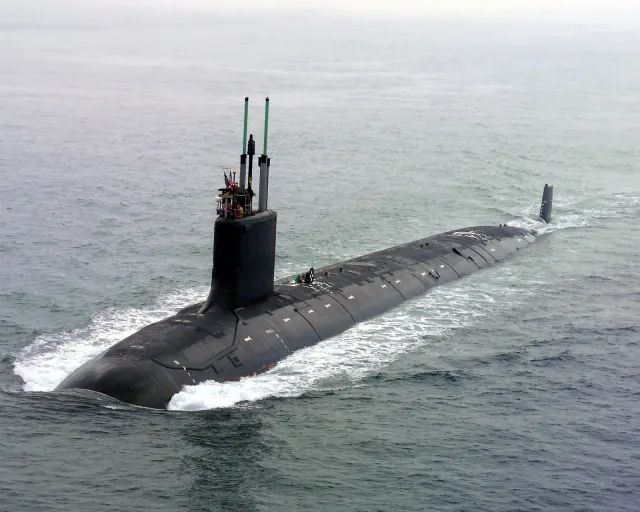
Submarine
Virginia-class Submarine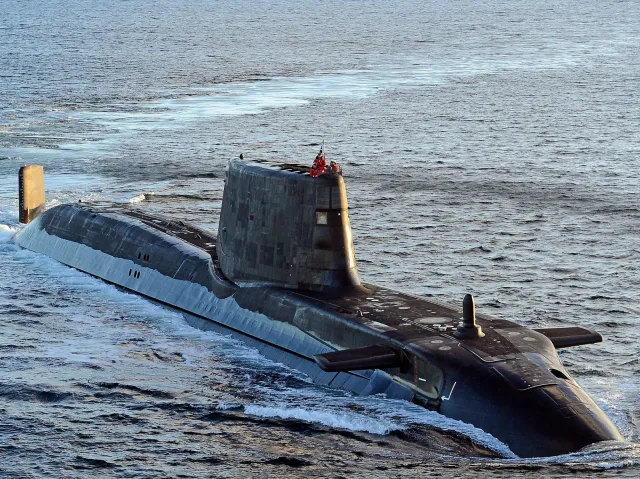
Submarine
Astute classFrequently asked questions
What is this $3.2 billion actually for? +
Physical infrastructure and worker training at the Osborne Naval Shipyard in South Australia, not submarines themselves. It is the industrial base Australia needs to build before it can construct its own nuclear-powered boats.
When will Australia actually get submarines? +
US Virginia-class boats are expected to arrive starting in the early 2030s under AUKUS Pillar 1. A new, jointly designed SSN-AUKUS class, built at Osborne, is planned for the 2040s.
Why is Australia spending more now? +
The program has drawn scrutiny over whether US and UK submarine-production rates can keep pace with Australia's needs. This funding is Canberra's own de-risking move on the part of the timeline it actually controls: the shipyard it has to build before it can build anything in it.
How big is this compared with the whole program? +
The total 30-year AUKUS cost to Australia is estimated at up to US$250 billion. Today's roughly $3.2 billion addition brings cumulative Osborne-specific investment to around A$8.5 billion, a small fraction of the total but a concrete, near-term commitment.
More news


