Belgium Commits Over €3 Billion to Rebuild Air Defense
Ten NASAMS batteries, 20 Skyranger 30 turrets and 14 Ground Master 200 radars form Belgium's first major air-defense rebuild since the 1990s, built on a shared Benelux architecture with the Netherlands.
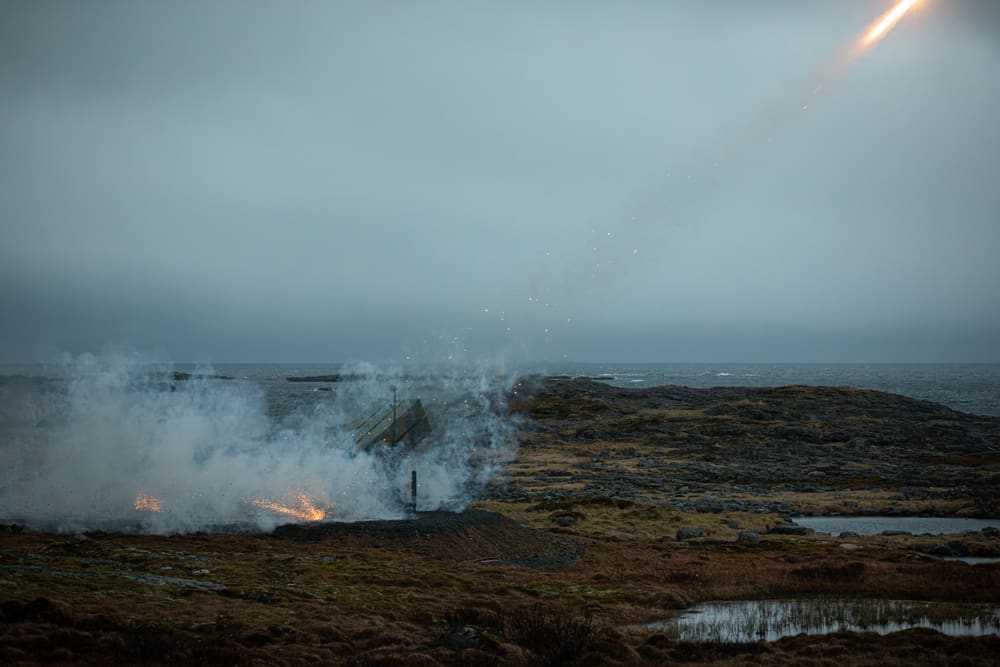
U.S. Defense Visual Information Distribution Service (DVIDS), public domain
Belgium will spend more than €3 billion on 44 major air-defense systems, 10 NASAMS medium-range batteries, 20 Skyranger 30 close-range turrets and 14 Thales Ground Master 200 mobile radars, Belgian Defense Minister Theo Francken announced at the NATO summit in Ankara, according to Army Recognition, corroborated by Meta-Defense and Breaking Defense. It is Belgium’s first large-scale ground-based air-defense reconstruction since post-Cold War cuts dismantled the country’s earlier systems in the 1990s, built on a shared architecture with the Netherlands to standardize training, maintenance and spare parts across both militaries.
Rebuilding a capability Belgium gave up thirty years ago
Belgium’s ground-based air defense was largely dismantled in the drawdown that followed the Cold War’s end, a pattern repeated across much of Western Europe as militaries reoriented away from a large-scale continental threat. That calculation has reversed. NATO’s eastern-flank posture, combined with the proliferation of drones and cruise missiles demonstrated repeatedly in Russia’s war on Ukraine, has pushed multiple European militaries back toward layered ground-based air defense rather than relying solely on fighter aircraft, which cannot maintain continuous coverage the way a ground battery can: combat air patrols are limited by sortie rates, aerial refueling, crew rest and maintenance cycles in a way a stationary launcher is not.
This package gives Belgium the core components of that layered model in one procurement action rather than piecemeal purchases over years, per Army Recognition’s reporting. Reported values differ slightly by outlet, Army Recognition and Meta-Defense both cite figures just above €3 billion (Meta-Defense specifically €3.1 billion), while Breaking Defense’s dollar-denominated figure is $3.5 billion, differences consistent with currency conversion and rounding at time of reporting rather than any disagreement on what was actually ordered. All three sources agree on the same system counts.
What each layer actually does
NASAMS forms the medium-range layer, engaging aircraft, cruise missiles and larger drones at ranges WeaponSpecs’ own systems data puts around 25 kilometers with the AIM-120 AMRAAM missiles the system typically fires, and up to roughly 40 kilometers in some published configurations. It is a distributed, networked system rather than a single vehicle, meaning launchers, radars and command posts operate as a linked battery instead of one platform doing everything.
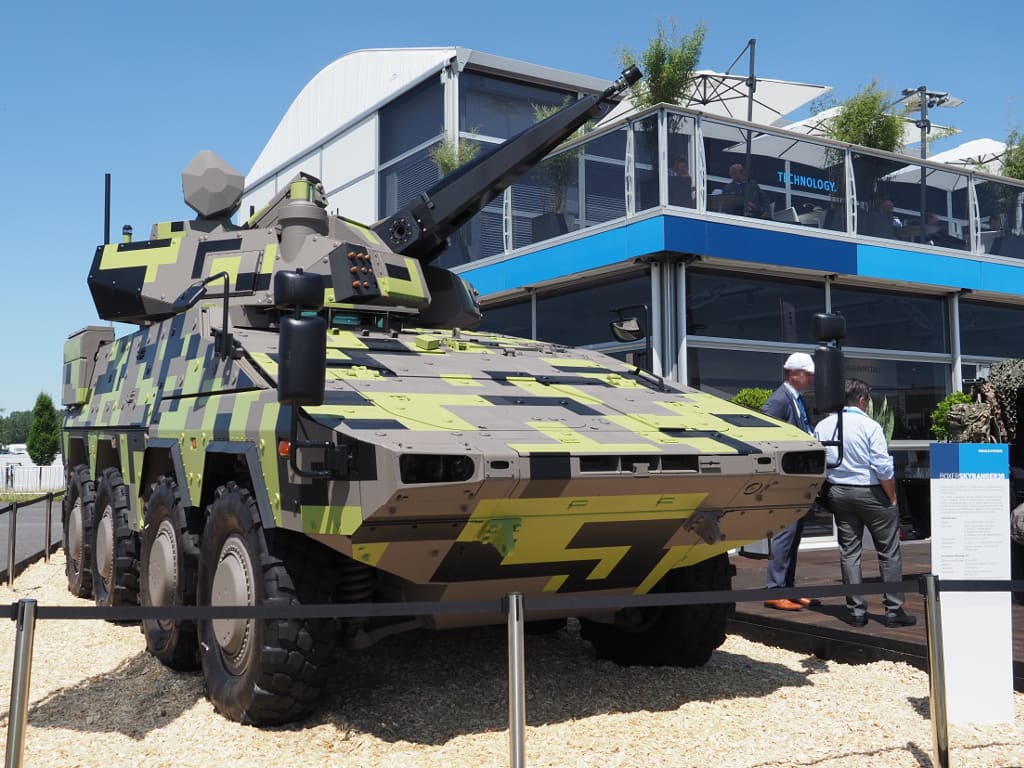
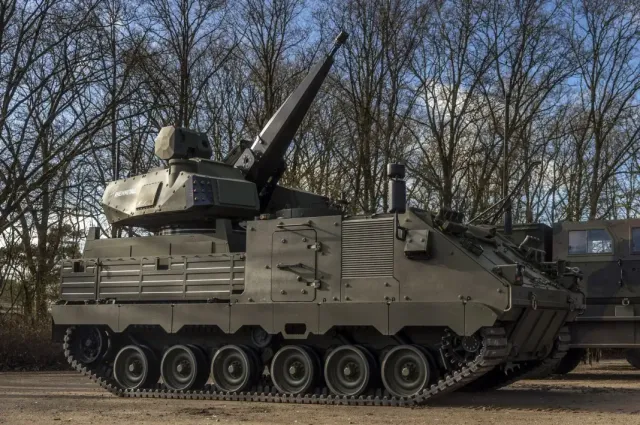
Skyranger 30 covers the close-in layer the NASAMS battery itself cannot: drones, helicopters and loitering munitions at short range, using a 30mm Oerlikon revolver cannon firing at roughly 1,200 rounds per minute, per WeaponSpecs’ systems database, against a published engagement range of about 3 kilometers. That short-range, high-rate-of-fire profile is specifically suited to the kind of small, low-altitude drone threat that a medium-range interceptor missile is often too expensive or too slow-reacting to use against economically, and the mount is modular, designed to accept future short-range missile or directed-energy upgrades rather than being locked to the cannon alone.
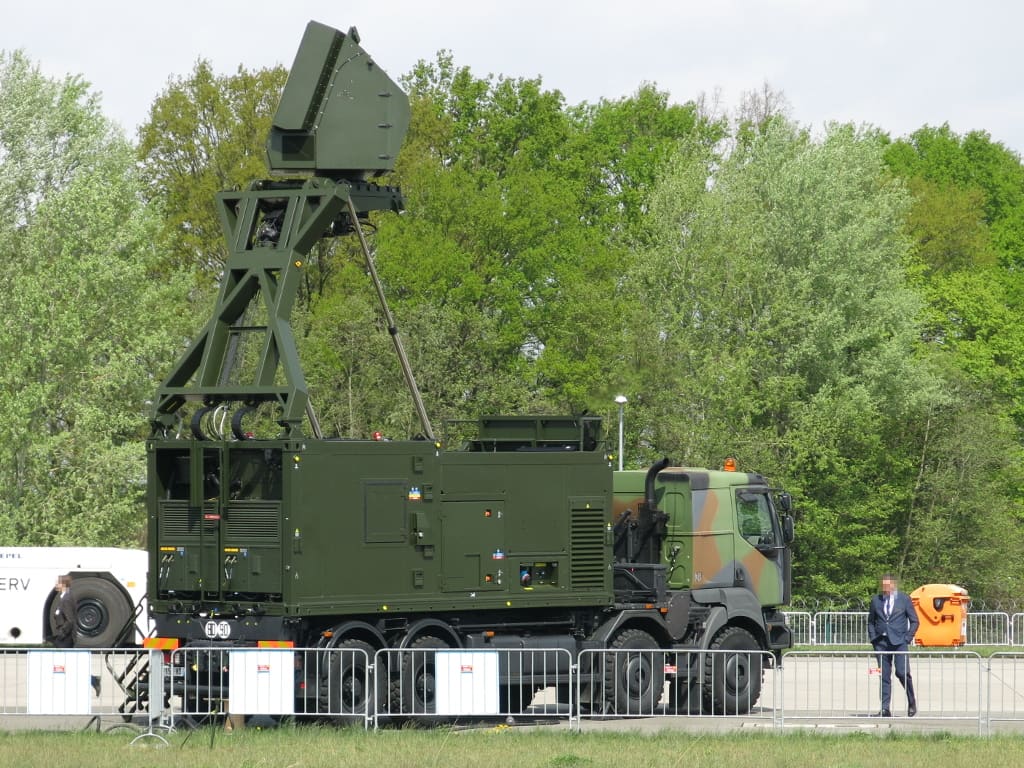
The 14 Ground Master 200 radars tie both layers together: mobile, active electronically scanned array sensors that provide search, track and surveillance data across the network rather than depending on one or two fixed radar installations, an approach that reduces the single-point vulnerability a fixed radar site represents and lets Belgium reposition sensor coverage as the operational picture changes.
Figures per WeaponSpecs' own systems database entries for each platform's typically cited engagement range. The near-tenfold gap between the two layers is the point of a layered architecture: neither system alone covers the full threat envelope Belgium is building against.
The Benelux angle
Army Recognition’s reporting frames the Netherlands partnership as central to the deal, not incidental. The Dutch military already operates both NASAMS and Patriot systems, and Belgium is using the Netherlands’ own procurement framework to place this order, a mechanism the reporting describes as shortening contracting timelines relative to running an independent Belgian tender. Sharing an identical NASAMS and Skyranger 30 fleet with an established operator means shared maintenance procedures, a common spare-parts pipeline and joint training pathways, the kind of interoperability NATO has pushed allies toward for years but rarely achieves through matching equipment purchases this direct. Breaking Defense’s coverage places the announcement within a broader wave of NATO summit procurement news, tens of billions of dollars in new multinational initiatives disclosed the same week, suggesting Belgium’s move is one data point in a wider alliance-level rearmament push rather than an isolated national decision.
Sources
- Belgium purchases 14 Ground Master 200 radars with 10 NASAMS and 20 Skyranger air defense systems at NATO summit — Army Recognition, Jul 8, 2026
- NASAMS, Skyranger: Belgium prepares a €3.1 billion investment to restore its air defence — Meta-Defense, Jul 6, 2026
- Belgium splashes $3.5 billion to build shared air defense arsenal with the Netherlands — Breaking Defense, Jul 8, 2026
Systems mentioned
Every system named in this story, with its photo and, where available, a video. Tap a card to open the full spec sheet.
Compare these side by side →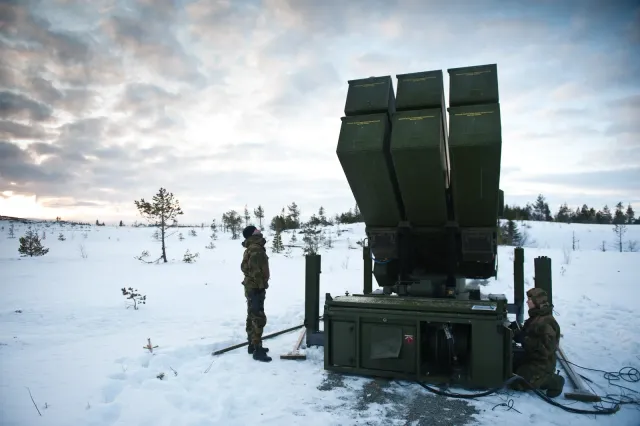
Air defense system
Skyranger 30Frequently asked questions
Why is this procurement significant for Belgium specifically? +
Belgium dismantled most of its ground-based air defense after the Cold War ended in the 1990s. This package, announced at the July 2026 NATO summit in Ankara, is the country's first large-scale rebuild of that capability in roughly three decades, driven by NATO's eastern-flank threat picture and the proliferation of drones and cruise missiles.
What does 'layered' air defense actually mean here? +
It means combining systems that cover different ranges and altitudes rather than relying on one type. NASAMS handles medium-range threats such as aircraft and cruise missiles out to roughly 25 to 40 kilometers; Skyranger 30 handles close-in threats like drones and helicopters within about 3 kilometers; Ground Master 200 radars provide the mobile surveillance and tracking that cues both layers.
Why is Belgium coordinating this purchase with the Netherlands? +
The Netherlands already operates NASAMS and Patriot systems. By adopting the same NASAMS and Skyranger 30 systems and using the Dutch procurement framework to place the order, Belgium can share maintenance procedures, spare parts and training with an established operator, shortening contracting timelines and improving interoperability between the two militaries.
Is €3 billion the final, confirmed cost? +
Reported figures vary slightly by outlet, from just above €3 billion to €3.1 billion and roughly $3.4 to $3.5 billion in dollar terms, reflecting currency conversion and rounding at the time of reporting rather than a disputed figure. All sources reviewed agree on the same system counts: 10 NASAMS batteries, 20 Skyranger 30 turrets and 14 Ground Master 200 radars.
More news