Russia Fires Zircon, Iskander, N. Korean Missiles at Zaporizhzhia
A combined overnight strike used three distinct ballistic and hypersonic systems, one supplied by North Korea, killing civilians and steelworkers in Zaporizhzhia.

Alexey Ivanov, Wikimedia Commons, CC BY 4.0. This 2018 file photograph shows an Iskander-M missile during a combat-launch demonstration; it does not depict this week's strike on Zaporizhzhia.
Russia hit Zaporizhzhia overnight with a combined salvo of Zircon hypersonic cruise missiles, Iskander-M ballistic missiles and North Korean KN-23 ballistic missiles, plus guided bombs and roughly 120 drones, killing civilians and steelworkers and forcing Ukraine’s Zaporizhstal steel plant to halt production entirely. Casualty figures are still moving between outlets: Al Jazeera’s morning count put six dead and 19 or more wounded in the city, while the Kyiv Independent’s fuller report tallied seven workers killed and 24 injured at the steel plant alone, with 52 hurt across the wider region.
Three missile types, one salvo, and a moving casualty count
Ukraine’s Air Force said the overnight barrage combined Iskander-M (9K720/9M723) ballistic missiles, North Korean KN-23 ballistic missiles, and 3M22 Zircon cruise missiles, alongside guided KAB aerial bombs and about 120 drones, according to the Kyiv Independent. The heaviest damage landed on Zaporizhzhia, where the Zaporizhstal steel plant, one of Ukraine’s largest still-operating steel producers, took a direct hit. Seven workers died there and 24 were injured, the Kyiv Independent reported, with the plant’s production “completely stopped.” Al Jazeera’s earlier count for the city stood at six killed and at least 19 wounded, with 12 or more dead nationwide overnight. Kyiv also came under fire, but with a markedly different outcome: zero deaths and one injury there, per the Kyiv Independent, underscoring how unevenly this particular wave of strikes landed across the two cities. Readers should treat both casualty figures as real but not yet reconciled: this is a fluid, developing count, and each number here is attributed to the specific outlet and hour that reported it rather than presented as a single settled total.
Why North Korea’s missiles matter more than the death toll alone
The KN-23 is not new to this war. Russian forces have fired the North Korean short-range, quasi-ballistic missile, derived from the Iskander design, since late 2023. What has changed, according to Ukrainian intelligence reporting picked up by The Defense Post on Aug. 7, is who is pulling the trigger. Roughly 90 North Korean personnel are now embedded in Russia’s 112th Missile Brigade at Voronezh, about 150 km from the Ukrainian border, gaining live combat-launch experience against a functioning air-defense network rather than simply shipping missiles for Russian crews to fire. Pyongyang has already delivered 40 KN-23/24 missiles along with initial personnel, and Ukrainian intelligence assesses the unit could eventually field six launchers and up to 120 missiles, with the final configuration expected to firm up at Moscow-Pyongyang talks next month. That is a meaningful escalation of the relationship: North Korea graduating from supplier to co-operator gives its forces real-world targeting data against Western-provided air defenses, experience it cannot get anywhere else. This assessment is sourced to Ukrainian intelligence (GUR) via Reuters, not to Russian or North Korean officials, so it does not require a state-claim flag; any future North Korean or Russian statement characterizing KN-23 combat performance would need one.

None of the missiles were intercepted
The Kyiv Independent’s reporting notes that none of the missiles in this particular wave were reported shot down, a detail President Volodymyr Zelenskyy tied directly to strained Western air-defense support. Ukraine has repeatedly said its stock of Patriot interceptors, the system best suited to catching ballistic missiles like Iskander-M and KN-23, is stretched thin by competing demand elsewhere. A zero-intercept night against a mixed salvo of this kind is a different kind of signal than a single missile getting through: it suggests Ukraine’s ground-based defenses were either absent, out of position, or out of interceptors for this specific attack, not merely outmatched by any one weapon’s performance.
“Every step Russia takes, increasing ballistic missile production, bringing in North Korean equipment, preparing for mobilisation, all of this shows that Moscow is preparing not for peace, but for escalation,” said Volodymyr Zelenskyy, President of Ukraine (Al Jazeera, Aug. 11, 2026).
What Zircon and Iskander actually are
Iskander-M is a road-mobile short-range ballistic missile that performs quasi-ballistic terminal maneuvers specifically to defeat missile defenses, listed in WeaponSpecs’ own systems database at a 500 km range and Mach 6 top speed with a 480 kg warhead. It has been Russia’s primary precision-strike weapon against Ukrainian cities and infrastructure since 2022, which is why its presence in this salvo is unsurprising even as the North Korean and hypersonic components draw more attention. 3M22 Zircon, by contrast, is a scramjet-powered hypersonic anti-ship and land-attack cruise missile fired from the same universal vertical-launch cells as the Kalibr and Oniks missile families, normally from ships like the Admiral Golovko or Yasen-class submarines. WeaponSpecs’ database lists it at a 1,000 km range and Mach 9, but flags explicitly that Russia’s claimed operational combat performance for Zircon remains independently unverified: any Mach-9 figure traces back to Russian Ministry of Defence statements, a state claim, not independently verified, rather than confirmed third-party testing or battle-damage analysis. That distinction matters for readers trying to gauge how much of this attack’s shock value comes from genuinely new capability versus Moscow’s own messaging about it.
Sources
- Russian attacks kill six in Ukraine's Zaporizhzhia — Al Jazeera, Aug 11, 2026
- Explosions rock Kyiv, Zaporizhzhia as Russian ballistic missiles strike cities across Ukraine — Kyiv Independent, Aug 10, 2026
- Russia fired North Korean missiles in attack that killed six in Zaporizhzhia, Zelenskyy says — Euronews, Aug 11, 2026
- North Korean Unit in Western Russia Could Operate 120 Ballistic Missiles — The Defense Post, Aug 7, 2026
Systems mentioned
Every system named in this story, with its photo and, where available, a video. Tap a card to open the full spec sheet.
Compare these side by side →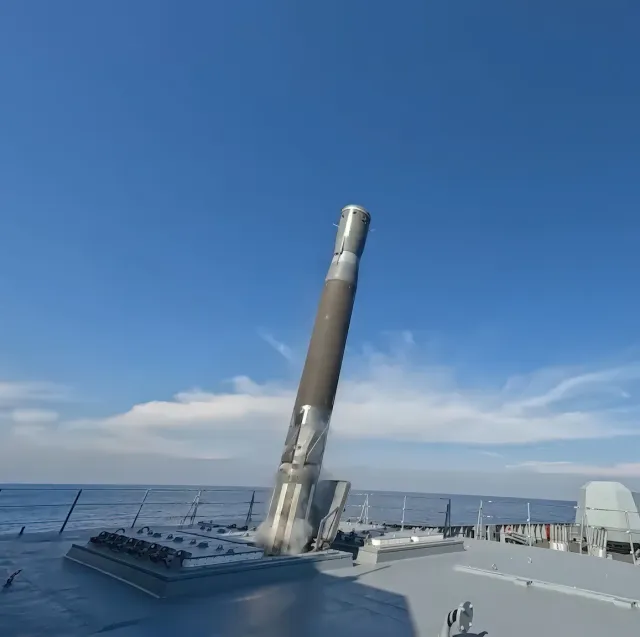
Missile
3M22 Zircon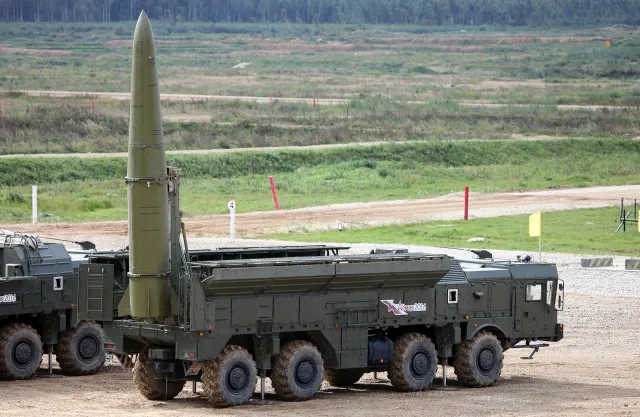
Missile
9K720 Iskander-MFrequently asked questions
Why is North Korea's role in this strike significant? +
Ukrainian intelligence says Russia has embedded North Korean personnel directly into a missile brigade, the 112th, at Voronezh, that could eventually field up to 120 KN-23/24 ballistic missiles. That is a shift from North Korea simply supplying missiles to North Korean crews gaining live combat-launch experience against a real air-defense network.
What makes the Zircon missile different from Iskander? +
Zircon is a ship- or submarine-launched, scramjet-powered hypersonic cruise missile that WeaponSpecs' own database lists at Mach 9 and a 1,000 km range, fired from naval vertical-launch cells. Iskander-M is a road-mobile, ground-launched short-range ballistic missile, listed at Mach 6 and 500 km, that performs evasive terminal maneuvers. Zircon's hypersonic performance figures originate from Russian state sources and are not independently verified.
Were any of the incoming missiles intercepted? +
Per the Kyiv Independent's Aug. 11 reporting, none of the missiles in this wave were reported shot down, something Zelenskyy linked to reduced Patriot interceptor support amid competing global demand for the system.
What was hit besides residential areas? +
The Zaporizhstal steel plant, one of Ukraine's largest still-operating steel facilities, was struck directly. Seven workers were killed there and the plant halted production entirely, per the Kyiv Independent.
More news


