N. Korea Fires Missile as Kim Yo Jong Warns Japan Over Arms
Pyongyang's first SRBM test since June came hours after Kim Jong Un's sister threatened new steps over Japan's Tomahawk and Kyushu buildup.

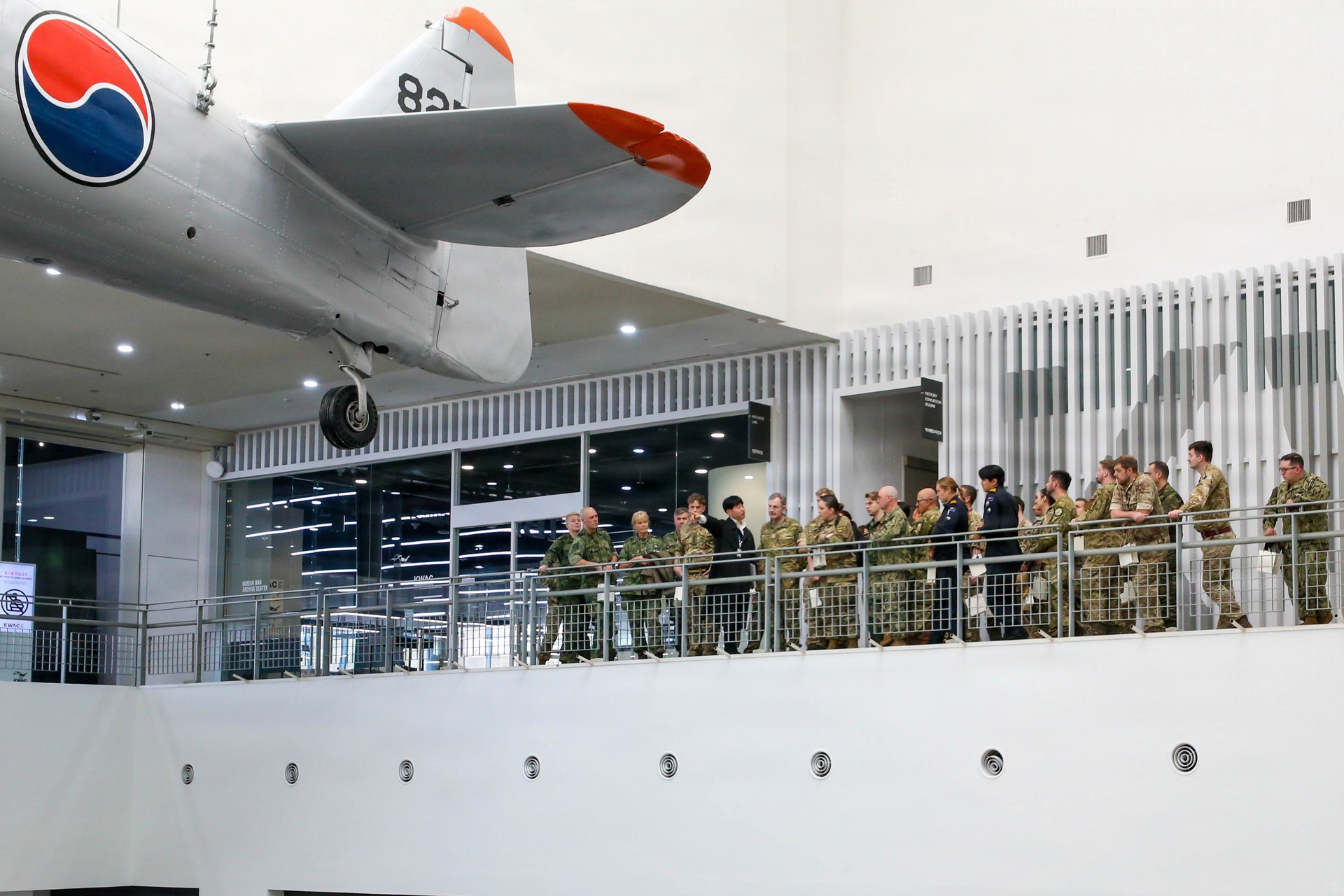
United Nations Command photo by Cpl. Seongho Park, DVIDS, public domain
South Korea’s Joint Chiefs of Staff said it detected a short-range ballistic missile fired from the Wonsan area of North Korea toward the East Sea at around 5 p.m. local time on August 6, 2026, Pyongyang’s first missile test since late June. The launch came roughly a day and a half after Kim Yo Jong, Kim Jong Un’s sister and a senior Workers’ Party official, warned in a KCNA-carried statement that North Korea would pursue “additional military options” over Japan’s expanding, Tomahawk-armed defense posture.
What South Korea detected
The Joint Chiefs of Staff described the launch in narrow, factual terms: a short-range ballistic missile fired from the Wonsan area toward the East Sea, detected around 5 p.m. Thursday. South Korean military did not disclose the missile’s specific type or how far it flew, and this piece does not assign it a model designation, such as the KN-23 family North Korea has favored in recent years, because no official identification has been made public.
South Korea’s presidential national security office convened an emergency meeting after the launch and called it “a provocation that violates United Nations Security Council resolutions.” The Joint Chiefs of Staff said the military is “maintaining a full readiness posture and closely sharing relevant information with the United States and Japan,” the standard trilateral coordination language Seoul uses after a North Korean test.
The test breaks a roughly six-week pause. North Korea’s previous missile launch came in late June 2026, when it fired a tactical ballistic missile that KCNA described as carrying a “special mission” warhead. North Korean state media claimed the June test demonstrated an ability to strike South Korean power infrastructure with tactical nuclear weapons, a claim from North Korea’s own state propaganda apparatus that has not been independently verified by outside observers and is treated here as exactly that, a state claim, not a confirmed capability.
Kim Yo Jong’s warning over Japan’s rearmament
The missile launch did not arrive in isolation. On August 5, Kim Yo Jong issued a statement carried by KCNA warning that North Korea would take unspecified further steps in response to Japan’s expanding military capabilities.
Kim Yo Jong, vice department director of the Workers’ Party of Korea’s Central Committee, warned North Korea would pursue “additional military options,” branding Japan “a war criminal state” undergoing “its transformation into a war state” over its expanding defense posture (Korea JoongAng Daily, August 5, 2026).
Kim’s statement cited two specific developments as provocations: Japan’s live-fire test of a Tomahawk cruise missile from the Aegis destroyer JS Chokai, and Japan’s participation in a US-led exercise in the Philippines in May 2026. WeaponSpecs covered the Chokai test in detail when it happened; the destroyer fired a US-made Tomahawk Block V cruise missile, a weapon with a published range of 1,600 kilometers and a unit cost near $2 million, becoming the third country after Australia and the Netherlands to fire one from a surface warship (see WeaponSpecs’ coverage of Japan’s first live Tomahawk launch). That test is established background here, not new news; what’s new is North Korea’s response to it.
Kim’s statement also pointed to Japan’s broader posture shift: in April 2026, Tokyo relaxed its arms-export rules and operationalized “counterstrike capabilities,” including long-range Tomahawk missiles and surface-to-ship systems based at Kumamoto and Shizuoka. Every element of Kim Yo Jong’s characterization, the “war criminal state” language, the “war state” framing, and the North’s own claimed intent to respond with “additional military options,” is a North Korean government statement, not an independently verifiable fact, and is presented here as exactly that.
Timing: two signals, one campaign
Read separately, a KCNA statement and a missile launch are routine North Korean behavior; Pyongyang issues threatening rhetoric and tests weapons on a recurring basis, and neither event alone would be unusual. What makes this week’s pairing worth flagging is the sequence: a specific, named grievance over Japan’s Tomahawk-armed rearmament, followed within a day and a half by a live missile test aimed at the peninsula, arriving just days before the US and South Korea are due to open Ulchi Freedom Shield, the larger, government-wide successor to the smaller springtime Freedom Shield field exercise North Korea has already reacted to earlier in 2026. North Korea has historically called both exercise cycles “invasion rehearsals” and often responds to them with weapons tests, so a test timed near Ulchi Freedom Shield fits a well-established pattern. What’s specific to this week is that Pyongyang paired that pattern with a direct warning over Japan’s hardware, tying its regional messaging to Tokyo’s rearmament rather than treating the US-South Korea drill as the sole trigger.
For a reader trying to gauge how seriously to weigh Kim Yo Jong’s “additional military options” language, the concrete reference point is what Japan has actually fielded: a single confirmed Tomahawk test from one destroyer, part of a roughly $1 billion, 400-missile program still being rolled out across Japan’s Aegis fleet through 2027, not a completed buildup. North Korea’s rhetoric is responding to an early, still-unfolding capability, not a finished one.
Sources
- North Korea launches unidentified projectile toward East Sea: JCS — NK News, Aug 6, 2026
- N. Korea fires short-range ballistic missile toward East Sea: military — Korea Times, Aug 6, 2026
- North Korea warns of 'additional military options' over Japan defense buildup — Korea JoongAng Daily, Aug 5, 2026
- North Korea warns of additional military steps over Japan's rearmament — The Japan Times, Aug 5, 2026
Frequently asked questions
What did North Korea launch, and where did it land? +
South Korea's Joint Chiefs of Staff said it detected a short-range ballistic missile fired from the Wonsan area toward the East Sea around 5 p.m. local time on August 6, 2026; the missile's specific type and flight distance were not disclosed by South Korean military at the time of reporting.
Is this connected to Kim Yo Jong's warning about Japan? +
Not officially linked by North Korea, but the launch came roughly 24 to 36 hours after Kim Yo Jong, Kim Jong Un's sister, issued a KCNA statement warning of "additional military options" over Japan's expanding defense posture, including its recent Tomahawk cruise-missile test. That statement is a state claim of intent, not an independently verified fact, and North Korea did not explicitly tie the missile launch to it.
Why now? +
The launch comes days ahead of the annual Ulchi Freedom Shield exercise between the US and South Korea, expected later in August 2026. North Korea has historically timed weapons tests to precede or coincide with major allied drills, which it characterizes as invasion rehearsals.
Has North Korea tested missiles recently before this? +
Yes. This was North Korea's first missile test since late June 2026, when it tested a tactical ballistic missile with what KCNA described as a "special mission" warhead, which North Korean state media claimed demonstrated the ability to strike South Korean power infrastructure with tactical nuclear weapons, a state claim that has not been independently verified.
More news


