US, Japan, Philippines Drill as China Water-Cannons PH Ships
A five-day US-Japan-Philippines naval drill wrapped up July 25 as China fired water cannons at Philippine vessels near Scarborough Shoal on back-to-back days.

U.S. Navy photo by MC1 Vance Hand, DVIDS, public domain
The United States, Japan and the Philippines wrapped up a five-day trilateral naval exercise on July 25 in the South China Sea, the same waters where, on the two days before it ended, China Coast Guard vessels fired water cannons at Philippine government ships near Scarborough Shoal for the second consecutive day. The two events are not the same story stapled together for convenience. They are two halves of one pattern: allied naval cooperation hardening at almost the exact moment China tests Manila’s resolve with an unusually aggressive back-to-back run of coercion.
What actually happened
The drill was the 17th Multilateral Maritime Cooperative Activity (MCA), a recurring trilateral naval and air exercise the three countries have run repeatedly, this iteration spanning July 21-25 inside the Philippines’ exclusive economic zone. It involved communication drills, division tactics, cross-deck landings and fly-by operations meant to build interoperability, unglamorous, repeatable proficiency work that underpins any actual crisis response rather than a one-off show of force.
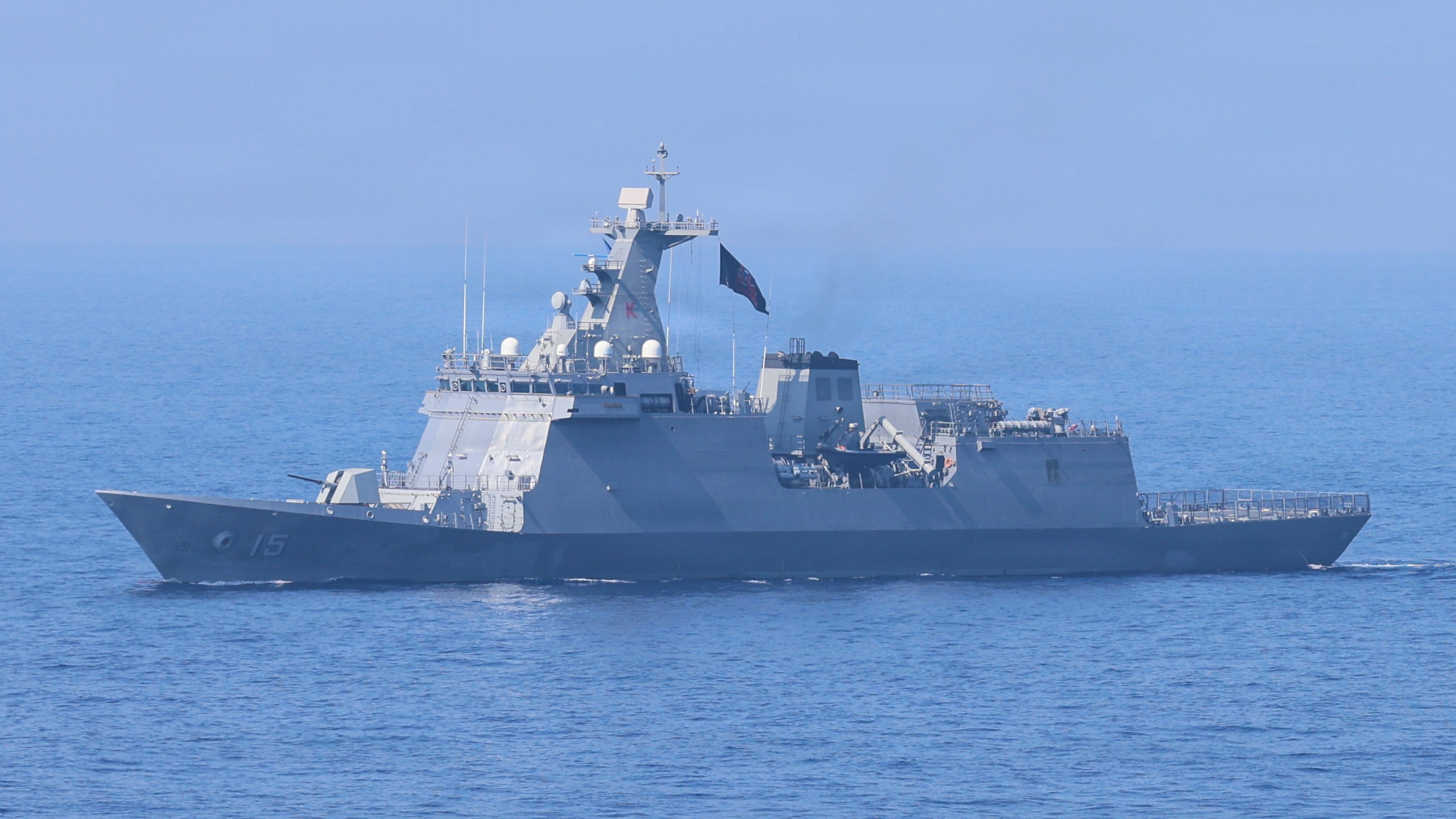
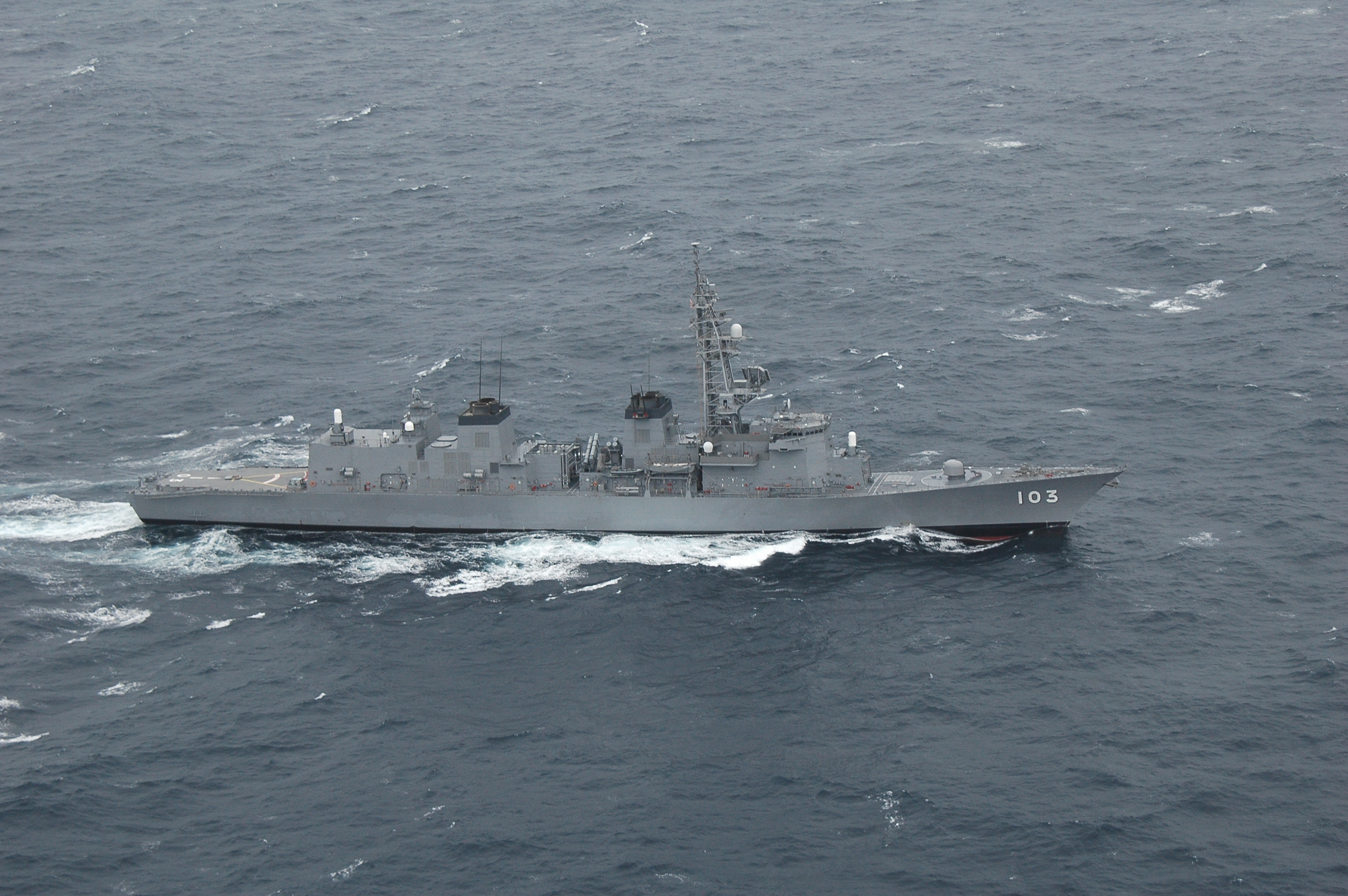
Four ships anchored the exercise: the US Navy’s USS Santa Barbara (LCS 32), an Independence-variant littoral combat ship; the Japan Maritime Self-Defense Force’s JS Yudachi (DD-103), a Murasame-class destroyer; the Philippine Navy’s BRP Antonio Luna (FFG-15), a Jose Rizal-class guided-missile frigate; and the Philippine Coast Guard’s BRP Malabrigo (MRRV 4402), a Parola-class patrol vessel. “It is always an honor and a privilege to work alongside our host-nation partner and continue to build on our powerful relationship,” said U.S. Navy Capt. Scott G. Wells, according to a report by The Epoch Times published July 26, 2026.
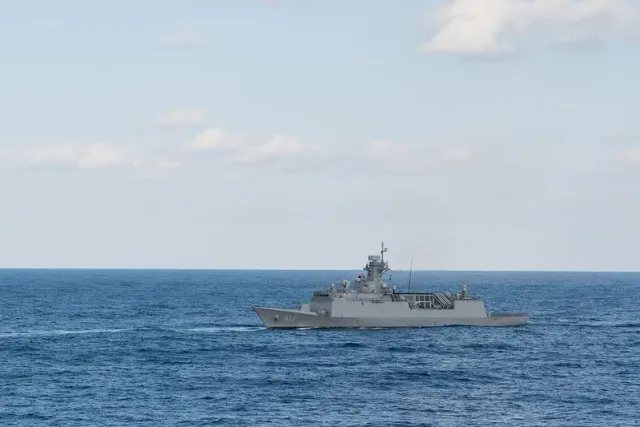
The Antonio Luna’s lineage runs back to South Korea. Hyundai Heavy Industries built the Jose Rizal class on its HDF-2600 design, derived from South Korea’s Incheon-class frigate, tracked in WeaponSpecs’ Incheon-class frigate system entry. The Philippine ship is a distinct export variant, not literally an Incheon-class hull, but the shared ancestry marks how thoroughly South Korean shipbuilding underpins the modern Philippine fleet, alongside American and Japanese hardware in the same exercise.
Separately: water cannons at Scarborough Shoal
While the four exercise ships ran drills, an entirely different set of Philippine vessels came under fire, literally, from Chinese Coast Guard water cannons roughly 220 kilometers away at Scarborough Shoal, also called Bajo de Masinloc. On July 23, a Chinese Coast Guard vessel closed to within about 50 meters of the BRP Datu Dumangsil, a Philippine Coast Guard and Bureau of Fisheries and Aquatic Resources vessel, and fired its water cannon at the ship for roughly two minutes. The Datu Dumangsil was not part of the MCA exercise; it was on a routine mission delivering fuel subsidies to Filipino fishermen working the shoal, a supply run that has become a recurring flashpoint precisely because it asserts Philippine presence in waters China treats as its own.
The following day, July 24, the pattern repeated and intensified. Chinese vessels targeted other unnamed Bureau of Fisheries and Aquatic Resources boats with water cannon, with one Chinese ship closing to within roughly seven meters of a Philippine fisheries vessel, an alarmingly tight distance for two vessels maneuvering at sea. The Philippine Coast Guard counted 12 China Coast Guard vessels and three Chinese maritime militia vessels involved across the two days. No injuries were reported.
“The PCG strongly condemns the dangerous and unprofessional actions of the China Coast Guard,” said Jay Tarriela, Philippine Coast Guard spokesperson (Al Jazeera, July 24, 2026).
China’s government pushed back entirely. Lin Jian, a spokesperson for China’s Ministry of Foreign Affairs, said “the Philippine side should immediately stop the infringement, provocation and hype,” according to the same Al Jazeera report. That is a state claim from the Chinese government, not an independently verified account, and it directly contradicts the Philippine Coast Guard’s version of events; readers should weigh it as Beijing’s official position, not a neutral description of what happened on the water. US Secretary of State Marco Rubio separately called Beijing’s actions “disturbing” and reaffirmed US support for the Philippines, per Al Jazeera, though no verbatim transcript of his remarks was available.
Why Scarborough Shoal keeps being the flashpoint
Scarborough Shoal sits well within the Philippines’ exclusive economic zone under the UN Convention on the Law of the Sea, but China has physically controlled access to it since a tense 2012 standoff, when Chinese vessels effectively blockaded Filipino fishing boats from the shoal’s lagoon and never left. A 2016 international arbitral tribunal ruling, brought by the Philippines under the same convention, rejected China’s sweeping claims to the shoal and the wider South China Sea. Beijing does not recognize that ruling and has continued enforcing its own control of the area since, which is exactly why a routine fuel-subsidy delivery to local fishermen can still turn into a two-day water-cannon confrontation in 2026.
This incident did not happen in isolation. A separate confrontation around the same period, roughly 650 kilometers away at Second Thomas Shoal, another disputed feature the Philippines controls with a grounded naval vessel, saw a Filipino sailor struck with a baton by Chinese coast guard personnel. Both governments summoned the other’s ambassador in protest, a sign neither side wants these frictions to pass quietly.
Set against that backdrop, the trilateral exercise reads less like routine scheduling and more like a deliberate signal. The MCA format is not new, this was its 17th run, but running it through a period when China escalated its Scarborough Shoal pressure to back-to-back days tells regional observers that Washington, Tokyo and Manila intend to keep showing up together in these waters regardless of what Chinese vessels do to Philippine ships elsewhere in the same sea. Japan’s own stake, visible in comparative terms on WeaponSpecs’ China-versus-Japan country comparison, is straightforward: the same playbook China runs at Scarborough Shoal is a template it could apply closer to Japanese-administered waters.
Sources
- US, Japan, Philippines Complete Joint Military Drills In South China Sea — The Epoch Times, Jul 26, 2026
- Philippines accuses China of using water cannon on vessels for second day — Al Jazeera, Jul 24, 2026
- Philippines, Japan, US Complete Exercises in South China Sea — The Korea Herald, Jul 26, 2026
- Japan, Philippines and the U.S. complete exercises in South China Sea — The Japan Times, Jul 26, 2026
Systems mentioned
Every system named in this story, with its photo and, where available, a video. Tap a card to open the full spec sheet.
Warship
Incheon-class FrigateFrequently asked questions
What is the Multilateral Maritime Cooperative Activity (MCA)? +
A recurring US-Japan-Philippines trilateral naval and air exercise. The July 21-25, 2026 run was its 17th iteration, focused on interoperability, communications, division tactics, cross-deck landings and fly-bys, inside the Philippines' South China Sea exclusive economic zone.
Did the water-cannon incidents happen during the exercise? +
Yes, concurrently. The drills ran July 21-25, and China fired water cannon at separate Philippine Coast Guard and fisheries vessels on July 23 and July 24, during a routine fuel-subsidy run to Scarborough Shoal, not against any of the exercise's own ships.
Where is Scarborough Shoal and why does it matter? +
A shoal inside the Philippines' exclusive economic zone that China has physically controlled since a 2012 standoff. A 2016 international arbitral ruling rejected China's claim to it, a ruling Beijing does not recognize.
Was anyone hurt in the water-cannon incidents? +
No injuries were reported from the water-cannon actions on July 23-24. A related but separate incident around the same period at Second Thomas Shoal, roughly 650 kilometers away, saw a Filipino sailor struck with a baton by Chinese coast guard personnel.
More news


