Israel Tests Arrow Upgrade Built From Its War With Iran
IMDO, the US Missile Defense Agency and IAI fired an upgraded Arrow interceptor incorporating AI and combat data from Israel's Iran war.

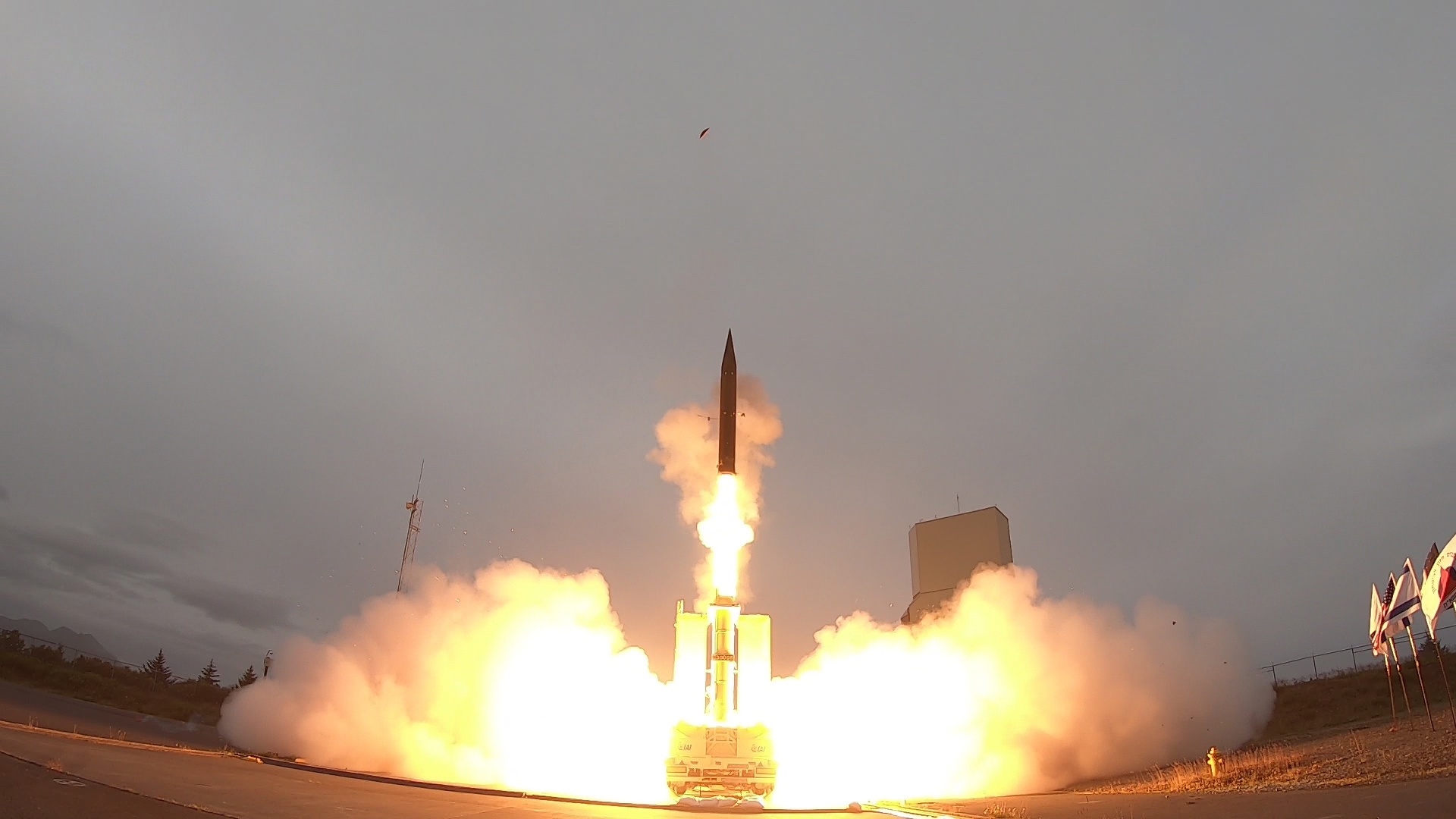
Missile Defense Agency, courtesy photo, DVIDS, public domain (Arrow Weapon System test, shown for identification)
Israel’s Missile Defense Organization, the US Missile Defense Agency, the IDF and Israel Aerospace Industries jointly test-fired an upgraded Arrow interceptor at a site in central Israel on August 5, 2026, the first Arrow flight test since the end of Israel’s recent war with Iran to be publicly described as incorporating combat lessons from that conflict directly into the interceptor’s design. Residents of Ashdod reported seeing an interception overhead before Israel’s Defense Ministry confirmed the launch as the test.
What the test actually demonstrated
The four participating organizations described the interceptor as upgraded through “advanced AI applications,” faster and more automated manufacturing processes, and improved threat-detection capability. Neither the Jerusalem Post nor European Security & Defence reporting named the specific interceptor variant fired, Arrow 2 or Arrow 3, so this piece describes it only as an upgraded Arrow interceptor rather than assigning it a specific model designation that hasn’t been confirmed publicly.
What officials were explicit about is where the upgrades came from: real data gathered during Israel’s war with Iran, which Israeli officials refer to as the “War of Redemption.” IAI President and CEO Guy Bar Lev framed the test as feeding directly back into engineering work already underway.
“This test put the system up against future threats and generated data that our engineers will use to build the next generation of aerial defense,” said Guy Bar Lev, President and CEO of Israel Aerospace Industries (The Jerusalem Post, August 6, 2026).
Israeli Defense Minister Israel Katz tied the test to the system’s operational record directly: “The Arrow system has proven itself in war, successfully intercepting numerous threats from Iran and other arenas and protecting Israel’s citizens,” Katz said, according to the Jerusalem Post’s August 6 report.
Where Arrow sits in Israel’s defense architecture
WeaponSpecs’ own database entries for the Arrow family show why this tier matters most for the kind of threats Israel faced from Iran. Arrow 3, the exo-atmospheric tier, carries a published engagement range of 2,400 kilometers and an engagement altitude of 100,000 meters, meaning it is designed to intercept incoming ballistic missiles above the atmosphere, in space, before they re-enter toward their target. It flies at up to Mach 9 and uses a hit-to-kill kinetic warhead rather than an explosive one, guided by the Green Pine and Super Green Pine radar network. Its predecessor, Arrow 2, is the older endo-atmospheric layer, with a shorter 90-kilometer range and 51,000-meter engagement altitude, using a 135-kilogram fragmentation warhead instead of hit-to-kill. A third variant, Arrow 4, is a jointly developed IAI-Boeing successor to Arrow 2 that remains in development rather than fielded, with no unit cost or engagement figures yet disclosed publicly.
Arrow forms the top of a three-layer Israeli air-defense stack: David’s Sling handles medium-range threats beneath it, and Iron Dome and the newer Iron Beam laser system handle short-range rockets, mortars and drones closer to the ground. Arrow’s job is specifically the long-range ballistic missiles that Iran and its allied forces in Yemen have fired at Israel, the highest-consequence threat class the country faces.
IMDO Director Moshe Patel put the war’s lesson in institutional terms: “The War of Redemption proved the importance of the multi-layered aerial defense array,” Patel said, describing how the program “incorporated advanced technologies, artificial intelligence, the application of combat lessons,” according to European Security & Defence’s August 6 report. IAI Chairman Boaz Levy added that the system “plays a decisive role in defending Israel against threats from Iran and its proxies,” per the same report.
Why the automated-manufacturing framing matters
Over the past three years, Arrow 2 and Arrow 3 have intercepted numerous ballistic missiles fired at Israel from Iran and Yemen, including exo-atmospheric intercepts carried out above the atmosphere, according to European Security & Defence’s reporting. Each of those intercepts consumes a single interceptor that costs roughly $2.2 million to build, per WeaponSpecs’ own database figure for Arrow 3, drawn from 2025 and 2026 Israeli Defense Ministry procurement reporting. A sustained air war against a state actor capable of launching large missile salvos draws down that stockpile fast, which is why officials framed this test as much around production as around the interceptor’s flight performance.
Maj. Gen. (Res.) Amir Baram captured that framing directly: “We remain in emergency mode, dramatically accelerating production and upgrading the system’s capabilities,” Baram said, according to the Jerusalem Post’s August 6 report. Read alongside the AI-assisted threat-detection improvements, the test represents Israel trying to close two gaps simultaneously that the Iran war exposed: how fast the interceptor can be built, and how well it can distinguish and track real threats under load.
Sources
- Israel successfully tests Arrow system as defense upgrades accelerate — The Jerusalem Post, Aug 6, 2026
- Israel Tests Upgraded Arrow Missile Defense System — European Security & Defence, Aug 6, 2026
Systems mentioned
Every system named in this story, with its photo and, where available, a video. Tap a card to open the full spec sheet.
Compare these side by side →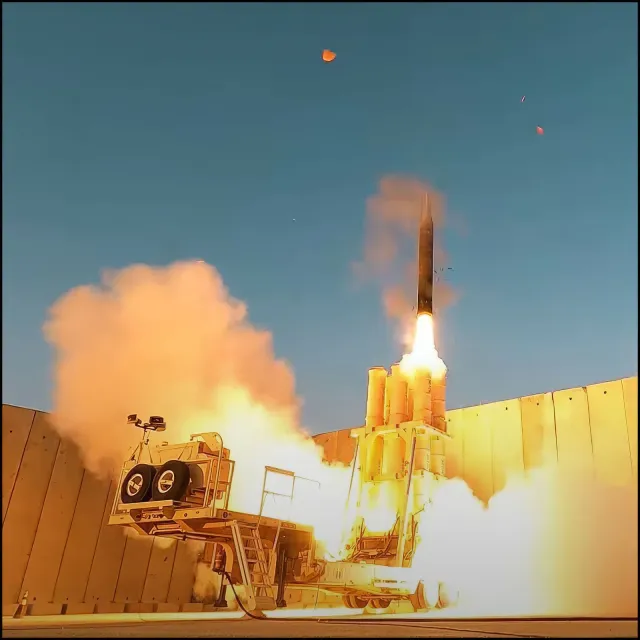
Frequently asked questions
What exactly did Israel test? +
An upgraded Arrow interceptor, tested jointly by Israel's Missile Defense Organization, the US Missile Defense Agency, the IDF and Israel Aerospace Industries at a site in central Israel on August 5, 2026, incorporating design changes drawn from Israel's recent war with Iran.
What's different about this interceptor versus the Arrow system already in service? +
Officials described AI-assisted improvements, automated manufacturing intended to speed production, and design changes based on real intercept data gathered during the Iran war, though the specific technical changes were not itemized publicly.
Where does Arrow fit in Israel's air-defense network? +
Arrow is the top, exo-atmospheric tier, designed to intercept long-range ballistic missiles in space. It sits above the shorter-range David's Sling and Iron Dome/Iron Beam layers. WeaponSpecs' own database lists Arrow 3's engagement altitude at 100,000 meters and range at 2,400 kilometers, versus Arrow 2's 51,000 meters and 90 kilometers.
Has the Arrow system actually been used in combat? +
Yes. Israeli officials say Arrow 2 and Arrow 3 have intercepted multiple ballistic missiles fired from Iran and Yemen over the past three years, including intercepts above the atmosphere.
More news


