India Test-Fires Kusha, Its Homegrown Rival to the S-400
DRDO's maiden flight test of the Kusha interceptor hit a simulated target July 23, India's bid to end reliance on imported systems like the S-400.

Ministry of Defence, Government of India, via Wikimedia Commons, GODL-India
India’s Defence Research and Development Organisation conducted the maiden flight test of the indigenous Project Kusha long-range surface-to-air missile system on July 23, launching from APJ Abdul Kalam Island off the Odisha coast and successfully intercepting an electronic target simulating a high-speed, high-altitude aerial threat. Kusha is India’s answer to imported systems like Russia’s S-400 Triumf, which New Delhi already operates, and the US Patriot, an explicit bid to build a top-tier, long-range air-defense capability at home rather than continue buying it abroad.
What DRDO actually tested
The test, conducted from a range on APJ Abdul Kalam Island, involved a Kusha interceptor engaging an electronic target designed to simulate a fast, high-altitude aerial threat, according to India’s Press Information Bureau release on the test, reported by Republic World and The Week. It was a maiden flight test, the first time hardware from the program had actually flown against a live intercept scenario, not a full operational demonstration across the system’s advertised range envelope. That distinction matters: a successful first intercept validates that the missile, its guidance and the supporting radar and command infrastructure can work together at all, but it does not by itself prove performance at the outer edges of the ranges DRDO has publicly claimed for the system.
Kusha is structured as a three-tier interceptor family rather than a single missile. The shortest-range variant, designated M1, is rated for roughly 150 kilometers of engagement range. The M2 variant extends that to roughly 250 kilometers. The longest-range M3 variant claims roughly 350 to 400 kilometers, putting it in the same performance class India already operates today only through an imported system. Bharat Electronics Limited handles the radar systems and overall system integration, while the missiles themselves and the wider architecture have been developed across multiple DRDO laboratories and industry partners. The Cabinet Committee on Security granted its “Acceptance of Necessity,” the formal Indian government approval that greenlights a defense program’s development, back in September 2023, meaning this test represents roughly three years of subsequent development work reaching its first flight milestone.
Why India is building its own S-400 rival
India already operates the Russian-made S-400 Triumf, a long-range, multi-layered air-defense system rated in WeaponSpecs’ database at a 400-kilometer engagement range, a 30,000-meter engagement altitude, and the ability to track 36 simultaneous targets. That purchase came at real diplomatic cost: India bought the S-400 under the threat of US sanctions under the Countering America’s Adversaries Through Sanctions Act, a law aimed at punishing countries that buy Russian military hardware, and New Delhi absorbed that friction specifically because no domestic system offered comparable range and capability at the time. Kusha’s M3 variant explicitly targets that same performance envelope, and Indian officials have been direct about the goal: ending dependence on imports for a capability that, per India’s defense minister, is “possessed only by a handful of nations.”
That framing extends to the US Patriot as well, though the comparison needs a caveat: the Patriot PAC-3 that the United States exports is rated at roughly 60 kilometers of engagement range in WeaponSpecs’ database, far short of Kusha’s claimed 400-kilometer top tier. That is not because Patriot is a weaker system in absolute terms, the two are built for different jobs: Patriot’s PAC-3 tier is optimized for shorter-range, high-precision hit-to-kill intercepts of tactical ballistic missiles and aircraft at closer range, while Kusha’s M3 tier is built for the long-range, wide-area engagement layer that the S-400 also occupies. Comparing raw range numbers across those two systems, in other words, is not quite apples to apples, but the underlying point, that India is now developing indigenous options across multiple air-defense tiers rather than shopping for each one abroad, holds regardless.
Kusha's longest-range M3 tier claims roughly the same 400-kilometer reach as the imported Russian S-400 already in Indian service, exactly the parity the program is designed to achieve, though only the S-400 has proven that range operationally so far.
What still has to happen before Kusha matters operationally
A single successful intercept test is an early, necessary step, not a finished program. Indian officials project operational induction for Kusha between 2028 and 2030, meaning the system now facing its first flight test is still several years from actually standing watch over Indian airspace. Kusha is also explicitly framed as one building block within a larger, longer-horizon effort: “Mission Sudarshan Chakra,” a comprehensive national missile-defense shield India has targeted for full realization by 2035. That places this week’s test within a broader 2026 pattern of DRDO accelerating multiple indigenous missile programs, including inducting the MP-ATGM anti-tank missile and upgrading the Prithvi ballistic missile family, all aimed at the same underlying goal of reducing India’s reliance on Russian and Israeli imports across its weapons inventory, not just in air defense.
“Today’s successful test flight of Kusha marks an important milestone in Indian defence R&D,” said Rajnath Singh, India’s Defence Minister, who added that long-range surface-to-air missile capability “is possessed only by a handful of nations” and that Kusha “will eliminate the import dependency for such systems” (The Week, July 23, 2026).
Sources
- DRDO Successfully Conducts Maiden-Test Flight of Long Range Kusha Air Defence Missile Off Odisha Coast — Republic World, Jul 23, 2026
- India's Kusha missile system, capable of destroying fighter jets, missiles, large enemy aircraft, passes crucial test — The Week, Jul 23, 2026
- Kusha Long-Range Surface-to-Air Missile: maiden flight test — Channel iAM, Jul 24, 2026
Systems mentioned
Every system named in this story, with its photo and, where available, a video. Tap a card to open the full spec sheet.
Compare these side by side →
Air defense system
S-400 Triumf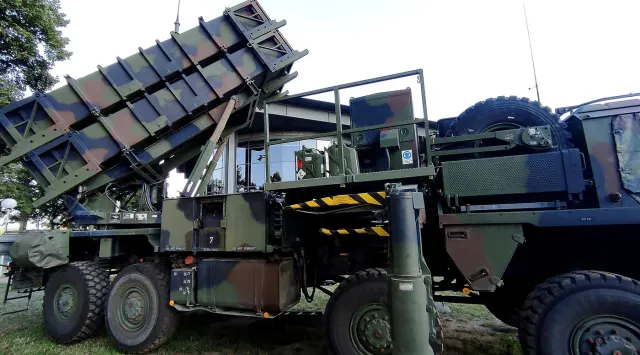
Air defense system
Patriot PAC-3Frequently asked questions
What is Kusha? +
India's indigenous long-range surface-to-air missile system, developed by the Defence Research and Development Organisation (DRDO), designed to intercept fighter jets, missiles, drones and large aircraft at ranges up to roughly 400 kilometers.
When was it first tested, and did it work? +
DRDO conducted its maiden flight test on July 23, 2026, off Odisha's coast, successfully intercepting a simulated high-speed, high-altitude aerial target.
How does it compare to systems India already has, like the S-400? +
Kusha's longest-range interceptor, the M3, is rated for roughly the same 400-kilometer range as Russia's S-400 Triumf, which India already operates. The explicit goal is to replace reliance on that imported Russian system over time.
When will it actually enter service? +
Indian officials project operational induction between 2028 and 2030, feeding into a broader national missile-shield program, 'Mission Sudarshan Chakra,' targeted for full realization by 2035.
More news


