Korea Picks Hanwha Ocean to Build First Homegrown Aegis Ship
Hanwha Ocean's $580M win for the KDDX lead ship starts South Korea's move off US-made Aegis toward a fully indigenous $5.7B destroyer class.

Mass Communication Specialist 2nd Class Analice Baker, U.S. Navy, DVIDS, public domain
South Korea’s Defense Acquisition Program Administration signed a roughly 7.8 trillion won ($5.7 billion) contract with Hanwha Ocean on Aug. 1 to design and build KDDX, six next-generation guided-missile destroyers that will be the first top-tier air-defense warships South Korea has ever built without relying on an American combat system. The lead ship alone is valued at about $580 million. Every Aegis destroyer South Korea has fielded until now runs on the US Lockheed Martin Aegis Combat System; KDDX replaces it outright with a Korean-made radar and combat management system, a step only a handful of navies worldwide have attempted on their own.
Beating an American system on its own turf
Every prior-generation Korean Aegis destroyer, the Sejong the Great-class known internally as KDX-III, was built around the Lockheed Martin Aegis Combat System and its AN/SPY-1D(V) radar, the same integrated sensor-and-fire-control suite the US Navy uses on its own Arleigh Burke-class destroyers. KDDX tears that arrangement up. In its place: an Integrated Mast housing a Korean-made dual-band S/X phased-array radar, KVLS-I and KVLS-II vertical launch cells built for indigenous weapons, an Integrated Electric Propulsion System, and a domestically developed combat management system that does the job Aegis has always done on Korean ships. This is not a cheaper or bigger hull chasing the same formula. It is Seoul deciding it no longer wants its top-tier naval air-defense capability to run through software and hardware another country controls, a capability gap that becomes strategically relevant the moment any future disagreement with Washington touches export licenses, software updates, or spare parts for a combat system built and maintained abroad.
A margin close enough to matter
DAPA’s formal scoring process pitted Hanwha Ocean against HD Hyundai Heavy Industries, South Korea’s two dominant shipbuilders, and Hanwha Ocean won by just 0.5867 points on a combined technical-and-price evaluation. That is a thin enough margin to signal a genuinely competitive process rather than a foregone conclusion favoring either company’s existing naval shipbuilding relationships with the Republic of Korea Navy. Both companies have built major Korean Navy combatants before; this was a real contest over who executes Korea’s first indigenous Aegis-class design, not a formality.
“The KDDX project is a national initiative bringing together top-tier warship construction capabilities,” said Jung Jae-jun, head of DAPA’s Advanced Capabilities Program Bureau (Naval News, Aug. 1, 2026).

Smaller hull, comparable price tag
KDDX displaces an estimated 6,000 to 7,000 tons, notably lighter than the Sejong-class’s 10,000-ton full-load displacement, according to WeaponSpecs’ own systems data. That is a smaller ship carrying a brand-new combat system rather than a proven one, and the price tag reflects it. Averaged across all six hulls, the $5.7 billion program works out to roughly $950 million per ship, close to the Sejong-class’s already-confirmed $923 million unit cost despite KDDX’s smaller displacement. That averaged per-ship figure is an inference from the total program value, not an independently confirmed number the way the lead ship’s $580 million price is; only the first hull’s cost has been directly reported. But the pattern it points to is a familiar one in defense shipbuilding: designing and qualifying a combat system from scratch carries a heavy premium that a smaller hull doesn’t offset, at least not on the first run through the yard.
The KDDX displacement figure is a midpoint estimate from the reported 6,000 to 7,000-ton range. Only the $580 million lead-ship cost is independently confirmed; a full six-ship average of roughly $950 million per hull is not shown here because it is an inferred figure, not a directly reported one.
What replacing Aegis actually buys, and what it risks
The strategic logic is straightforward even if the engineering is not: a country that builds its own radar, combat management software and vertical launch architecture no longer needs another government’s export approval to upgrade, repair, or modify its most capable warships. That independence carries real risk on a first-of-class program. Aegis has been refined across decades of US Navy and allied deployment; KDDX’s Korean-made combat system has none of that operational history yet; and the 2032 delivery date for the lead ship gives Hanwha Ocean roughly six years to move from a signed contract to a combat-ready warship carrying a radar and software suite nobody has fielded before. Delays and cost growth on first-of-class combat systems are common enough across navies that South Korea’s own Sejong-class program, built around an already-mature Aegis system, is a useful baseline for how smoothly even a lower-risk shipbuilding effort can go. KDDX is deliberately choosing the harder, slower path in exchange for control over the finished product, and the next milestone worth tracking is whether the detailed design phase now underway holds to its current schedule once KVLS integration and the new phased-array radar move from spec sheet to steel.
Sources
- South Korea's KDDX Enters Detailed Design and Lead Ship Construction Phase — Naval News, Aug 1, 2026
- Hanwha Ocean signs 7.8 trillion won contract to build Korea's next-generation destroyer — Korea JoongAng Daily, Aug 4, 2026
- Hanwha Ocean signs KDDX main contract — Cyprus Shipping News, Aug 4, 2026
Systems mentioned
Every system named in this story, with its photo and, where available, a video. Tap a card to open the full spec sheet.
Compare these side by side →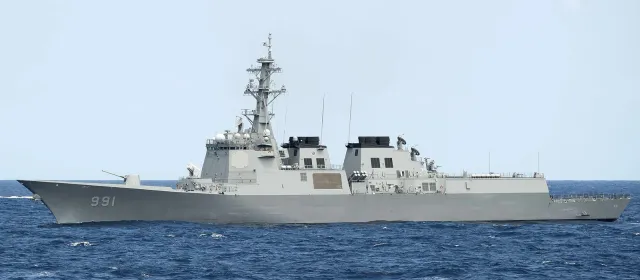
Software & C2
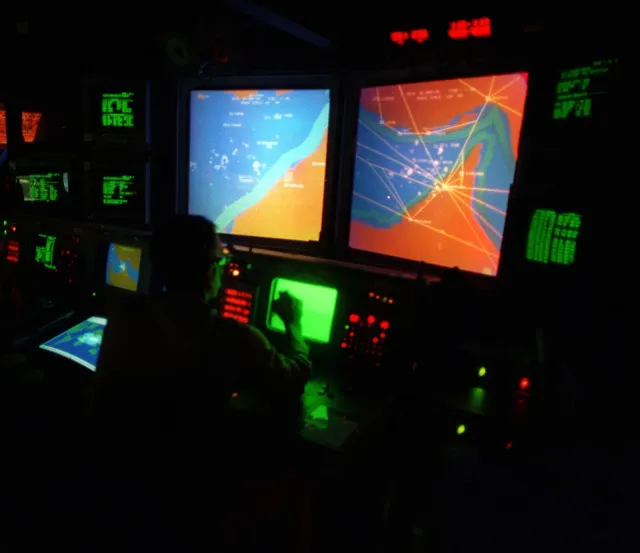
Aegis Combat SystemFrequently asked questions
What exactly did South Korea just award, and to whom? +
The Defense Acquisition Program Administration signed a roughly 7.8 trillion won ($5.7 billion) contract with Hanwha Ocean covering all six KDDX destroyers, with the lead ship alone valued at about $580 million. Hanwha Ocean beat rival HD Hyundai Heavy Industries in a formal technical and price scoring process by a margin of 0.5867 points.
What makes KDDX different from South Korea's existing Aegis destroyers? +
The existing Sejong the Great-class (KDX-III) runs the American Lockheed Martin Aegis Combat System and AN/SPY-1D(V) radar. KDDX replaces both with a Korean-made phased-array radar and an indigenous combat management system, making it South Korea's first fully home-built top-tier air-defense destroyer.
When will the first ship actually enter service? +
The lead ship is due for delivery in 2032, with the remaining five destroyers following by roughly 2036.
Is KDDX bigger or smaller than Korea's current Aegis destroyers? +
Smaller. KDDX displaces roughly 6,000 to 7,000 tons versus the Sejong-class's 10,000 tons at full load, according to WeaponSpecs' own systems data.
More news


