Counter-Drone Lasers: Only One System Is Actually Fielded
Of five directed-energy weapons WeaponSpecs tracks, only Israel's Iron Beam is operational; the rest are prototypes, demonstrators, or sensors, not fielded.

Israeli Ministry of Defense Spokesperson Unit, via Wikimedia Commons, CC BY-SA 4.0 (shown for identification)
Five directed-energy and counter-drone weapon systems sit in WeaponSpecs’ spec database right now, and exactly one of them has gone operational as a hard-kill weapon: Israel’s Iron Beam, delivered to the IDF on December 28, 2025. Everything else is still a demonstrator or, in the newest case, not a weapon at all: a US Army prototype, a microwave interceptor unveiled last month, a fielded system whose laser is an optional add-on, and a laser trialed by Australia and Japan just yesterday.
What happened this week with the Boobook laser trial, and is it a weapon?
On August 18, 2026, Australia’s Defence Science and Technology Group and Mitsubishi Electric ran field trials of a jointly developed high-energy laser called Boobook, at the Cultana Training Area and DSTG’s Edinburgh facility in South Australia. It’s the first Australia-Japan co-developed defense technology program, and it landed in headlines the way most “laser weapon” stories do lately: fast, with a photo of a beam and a vague sense that something got shot down.
Nothing got shot down. Boobook is explicitly a detection and tracking system, not a kill weapon.
“[It’s] about an enhanced laser capability that can be put on land combat platforms as well as littoral platforms, which gives greater protection and situational awareness by using lasers to optically detect incoming threats,” said Richard Marles, Australia’s Minister for Defence (Breaking Defense, August 18, 2026).
That distinction matters because it’s the whole shape of this piece in miniature. Boobook isn’t in the WeaponSpecs systems database because it isn’t a weapon system, it’s a sensor that happens to use a laser. Mitsubishi Electric Australia separately disclosed a A$70 million (roughly US$49.8 million) investment in a manufacturing facility in Rydalmere, New South Wales, tied to the partnership, but that figure is a factory investment, not a unit price for a weapon, and it shouldn’t be read as one.
Which laser weapon has actually gone operational?
Iron Beam, built by Rafael, is the one system in this comparison that crossed from demonstrator to delivered hardware. Israel’s Ministry of Defense handed the IDF a combat-ready Iron Beam battery on December 28, 2025, a 100 kW-class solid-state laser rated to engage rockets, mortars, artillery shells, and drones out to 10 km and up to 3,000 m altitude.
“Proud to deliver… the most advanced laser system in the world for intercepting aerial threats,” said Yoav Turgeman, CEO of Rafael Advanced Defense Systems (Times of Israel, December 28, 2025).
The cost story here is the part worth slowing down for, because two very different numbers get flattened into one headline in most coverage. The first number is the marginal cost of firing a single Iron Beam shot: roughly $2 to $3 in electricity, against roughly $50,000 for a single Tamir interceptor missile fired by Iron Dome. That asymmetry is real and it’s the actual mechanism behind Israel’s “near-zero marginal cost” claim, against a drone swarm or a rocket barrage, the per-engagement math genuinely favors a laser over a missile.
The second number is different: the laser director unit itself, the targeting and beam-steering hardware that makes a shot possible in the first place, reportedly costs “tens of millions of dollars,” according to unnamed senior defense officials cited by Ynet. No public source discloses a full Iron Beam system unit price. So the honest version of the claim is this: firing the weapon is cheap once you own it, but owning it is not cheap, and Rafael and Israel’s Defense Ministry haven’t said what it actually costs to field.
There’s also a physical limit worth stating plainly, because no laser program anywhere claims otherwise. Times of Israel reporting notes that heavy cloud cover measurably limits Iron Beam’s effectiveness, a straightforward consequence of atmospheric attenuation, not a manufacturer failure. That’s also why Iron Beam is fielded alongside Iron Dome, David’s Sling, and Arrow rather than replacing any of them: a laser is a complement to missile-based air defense, not a substitute for it.
Naval drone-swarm defense runs into a version of the same cost-asymmetry logic; our breakdown of cheap-drone-versus-expensive-interceptor economics covers the pattern in more depth.
What does the rest of the field actually look like?
Outside Iron Beam, the picture is thinner than the press cycle suggests.
| System | Country | Status | Mechanism | Engagement range | Cost disclosure |
|---|---|---|---|---|---|
| Iron Beam (Rafael) | Israel | Operational, delivered Dec 28, 2025 | 100 kW-class solid-state laser | 10 km | ~$2-3/shot electricity; no system unit price published |
| LOCUST (AeroVironment, AMP-HEL) | United States | 2 JLTV-mounted prototypes delivered to the US Army Dec 18, 2025 | Hard-kill laser; baseline unit power output not published | Not published | No public unit price |
| MORFIUS X-Rotor (Lockheed Martin) | United States | Unveiled July 20, 2026 at Farnborough; flight-tested, no branch has ordered it | High-power microwave, disables electronics rather than destroying the airframe | Not published | No public price |
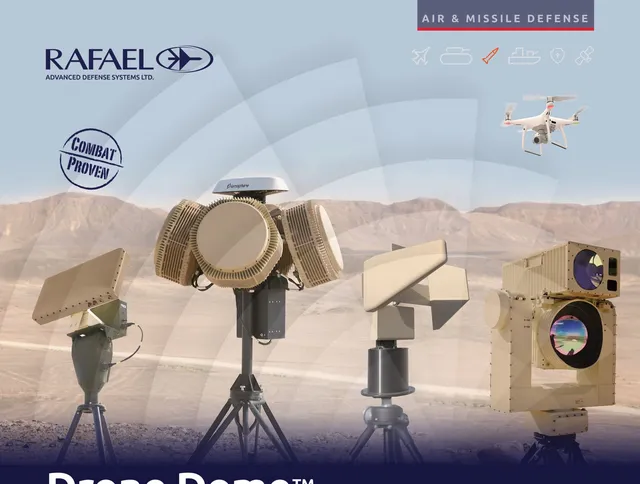
| Drone Dome (Rafael) | Israel | Fielded since 2016, exported | RF jammer, laser “kill” module is an optional add-on | 3 km | Not disclosed |
| Alka / ALKA DEW (Roketsan) | Turkey | Reportedly used operationally, figures unverified* | Laser destruction module plus RF jamming module | 4 km | Not disclosed |
*WeaponSpecs’ own database record for Alka explicitly flags its figures as manufacturer- or open-source and not independently verified, the same caveat that applies to every Turkish, Russian, Chinese, or Iranian manufacturer claim covered on this site.
Two of the five, LOCUST and MORFIUS X-Rotor, don’t publish a numeric engagement range at all. LOCUST reached the US Army in prototype form on December 18, 2025, just ten days before Iron Beam went operational, but two JLTV-mounted units is a prototyping effort, not a program of record. MORFIUS X-Rotor claims a single flight can defeat “more than 50” drones, a Lockheed Martin figure the company hasn’t clarified as simultaneous or cumulative, and it has not been ordered by any branch or export customer.
Only the three systems with a published range clear the bar for the comparison below.
Iron Beam's range is more than double the other two combined, but the gap that matters is the one the bar chart can't show: it's the only bar backed by an actual delivery to an armed force.
Iron Beam’s 3,000 m altitude ceiling puts it firmly in the short-range, point-defense tier alongside the other systems covered in our look at engagement altitude across the air-defense field, not anywhere near the long-range interceptors that guard against ballistic threats.
How much of this field is real versus still a demonstrator?
Stepping back across all five systems by real-world fielding status makes the gap between headline and hardware explicit.
Only one slice of five represents a laser actually delivered as a working hard-kill weapon; the other four range from "laser is optional" to "not ordered by anyone yet."
Drone Dome and Alka are the closest thing to a middle tier: both are fielded and exported systems, but in both cases the laser “kill” module is an add-on bolted onto a primarily RF-jamming base system, rather than the core capability being sold. Strip the laser out of either and you still have a working counter-drone product. Strip the laser out of Iron Beam and there’s nothing left.
Why don’t directed-energy weapon makers publish hard numbers?
Two honest reasons, not one cynical one. The first is program stage: LOCUST and MORFIUS X-Rotor are still early, LOCUST is two prototype units ten days old as programs go, and MORFIUS X-Rotor is a demonstrator with no customer yet, so there’s often no finalized unit cost or performance envelope to publish because the program hasn’t reached that stage. The second is genuine trade-secret protection: beam-director optics, tracking software, and thermal-management systems are exactly the kind of engineering detail a competitor or an adversary would want, and companies have real incentive to keep it close even after a system fields.
What’s less defensible is the marketing pattern that follows: publishing a flattering per-shot cost figure while staying silent on the acquisition cost that actually determines whether a buyer can afford the system at all. The pattern isn’t unique to Iron Beam. It shows up across nearly every directed-energy program in this database, and readers evaluating any “cheap laser” headline should ask which of the two numbers is actually being quoted.
The bottom line for buyers watching this space
One system in this comparison has shipped as a real weapon. The rest are demonstrations of what the technology might eventually do, worth tracking, not worth mistaking for proliferation. Anyone weighing directed energy against a conventional missile-based shield should start from that fielding gap, not from the headline of whichever program just had an airshow reveal or a field trial this week.
Compare Iron Beam and the rest of the field directly against conventional interceptors in the Advisor, or browse the full air-defense systems category for the missile-based systems these lasers are supplementing, not replacing.
Sources
- Australia, Japan test co-developed high-energy laser
- Defense Ministry hands IDF first combat-ready Iron Beam laser interception system
- Israel's Iron Beam laser set to change regional defense dynamics - analysis
- The real cost of Israel's 'Iron Beam' laser
- Lockheed Martin Unveils MORFIUS X-Rotor
- LOCUST Laser Weapon System
- Iron Beam (Wikipedia)
- Drone Dome (Wikipedia)
- ALKA (weapon) (Wikipedia)
Systems in this comparison
Every system covered above, with its photo and, where available, a video. Tap a card to open the full spec sheet.
Compare these side by side →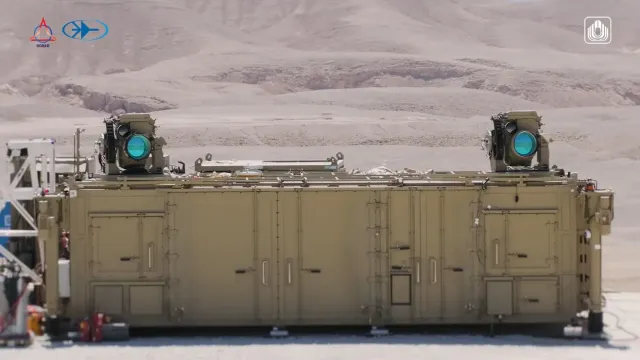
Air defense system
Drone Dome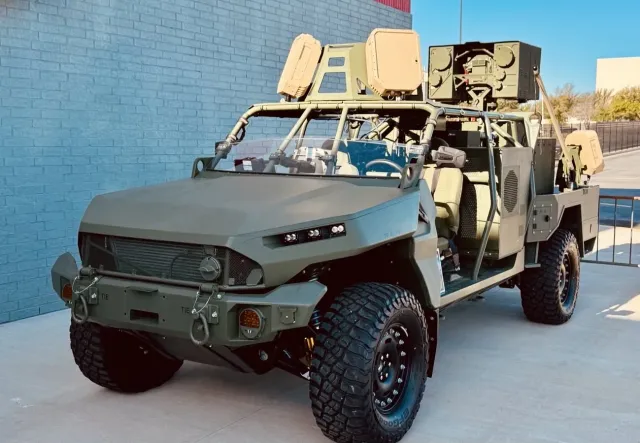

Air defense system
MORFIUS X-Rotor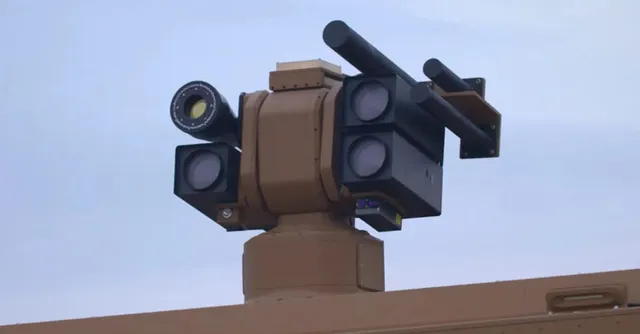
Frequently asked questions
What is a directed-energy weapon? +
A directed-energy weapon uses focused electromagnetic energy, either a laser beam or high-power microwaves, to damage or disable a target instead of firing a physical projectile. A laser burns through a target's skin or seeker to cause structural or thermal kill; a microwave weapon like MORFIUS X-Rotor instead fries a drone's onboard electronics so it loses control, without necessarily destroying the airframe. Both differ fundamentally from a kinetic interceptor like a Tamir or PAC-3 missile, which has to physically collide with or detonate near its target.
Has a laser weapon ever actually intercepted a real threat? +
Yes, but only one system has a confirmed operational record. Israel's Iron Beam was delivered to the IDF as a combat-ready system on December 28, 2025, the world's first operational hard-kill laser weapon, built to engage rockets, mortars, artillery shells, and drones. Every other laser or microwave counter-drone system currently in the WeaponSpecs database remains a prototype or demonstrator with no confirmed combat interceptions.
Is the Australia-Japan Boobook laser a weapon that can shoot down drones or missiles? +
No. Per Australia's Defence Minister Richard Marles, Boobook is a detection and tracking system that uses lasers to spot and follow incoming threats and improve situational awareness for land and littoral platforms. It has no kill mechanism of its own and is not a directed-energy weapon in the sense that Iron Beam or MORFIUS X-Rotor are.
Why don't laser weapon makers publish a cost-per-shot or unit price figure? +
Two different numbers get conflated here. The marginal cost of firing one laser shot, mostly electricity, can be genuinely cheap and is sometimes disclosed, Israeli officials have cited a few dollars per Iron Beam shot. The full acquisition cost of the weapon system itself, including its targeting and beam-director hardware, is a separate and far larger figure that manufacturers rarely publish, often because programs are still early, contracts are classified or under negotiation, or the number simply reflects poorly against the headline per-shot claim.
What stops laser weapons from replacing missile interceptors entirely? +
Physics and geometry. A laser's beam attenuates through cloud cover, dust, smoke, and humidity, reducing effective range and kill probability in exactly the weather conditions a real attack might exploit. Lasers also engage one target at a time along a line of sight, have limited range compared to long-range ballistic interceptors, and require sustained power and thermal management. That is why every current laser program is being fielded alongside existing missile-based air defense, not as its replacement.
Related reading


