Turkey's $284M ATACMS, M270 Transfer to Ukraine Clears Congress
A 15-day congressional review of Turkey's re-export of 70 ATACMS missiles and 12 M270 launchers to Ukraine lapsed unopposed as lawmakers sit in recess.

U.S. Army photo by Sgt. 1st Class Andrew Dickson, via DVIDS, public domain. File photo from Talisman Sabre 2023, Australia, not the actual transferred launchers.
Turkey’s re-export of 70 M39 ATACMS missiles, 12 M270 multiple launch rocket systems, and thousands of rounds of artillery ammunition to Ukraine has cleared its final legal hurdle: the 15-day window Congress had to block the roughly $284 million transfer lapsed unopposed around Aug. 18, with both chambers in recess and no resolution introduced.
A re-export, not a new US commitment
This deal did not originate as American policy. It is Turkey offloading its own aging, US-origin stockpile, built up over decades of American foreign military sales, while it modernizes its own arsenal. The package includes 12 M270 MLRS launchers, 70 M39 ATACMS Block I missiles, 2,524 M26 227mm unguided rockets, and 47,000 M509A1 203mm cluster artillery shells, negotiated through Turkish defense firms MKE, ASFAT, and ARCA Savunma alongside Bulgarian intermediary VTIC International and US contractors Pansophico and Patriot Defense Group.
Because the equipment is US-origin, Turkey cannot simply hand it to a third country. Under the Arms Export Control Act, Washington’s consent is required for any re-export of American-made defense equipment, and Congress gets a mandatory 15-calendar-day review period once the State Department formally notifies it. The State Department notified Congress on Aug. 3, publishing the notice in the Congressional Record on Aug. 6. From there, the deal proceeds automatically unless both the House and Senate pass a joint resolution objecting to it within the window, a high bar that requires actual floor action, not silence. With the House in recess until Aug. 31 and the Senate until Sept. 14, no such resolution was realistically possible before the review period ran out around Aug. 18, and none was introduced.
What Ukraine actually gains
Ukraine currently operates a small, allied-donated M270-class fleet: 6 M270B1 launchers from the United Kingdom, 5 MARS II launchers from Germany, and 2 LRU launchers from France, 13 total. Turkey’s 12 additional launchers would roughly double that count in a single transfer, a meaningful jump in a system class that matters specifically because it fires the same family of rockets and missiles as the more widely known M142 HIMARS, just from a heavier, tracked, armored Bradley-chassis vehicle carrying twice the rocket load of a HIMARS.
The ATACMS missile itself, formally the MGM-140, is a Lockheed Martin surface-to-surface ballistic weapon that has been Ukraine’s primary means of striking targets beyond typical artillery range since the US first supplied a restricted batch in 2023. Washington limited early ATACMS deliveries to use only inside Ukrainian-held territory; the Biden administration lifted that restriction on strikes into Russia proper in November 2024, and Ukraine used the missile against a Russian arsenal at Karachev on Nov. 19, 2024, days later. It’s worth being precise about what this particular batch is, though: the M39 variant Turkey is transferring has a 165 km range, useful but well short of the newer ATACMS variants, and the bulk of the package by volume, the 2,524 M26 rockets and 47,000 M509A1 shells, is shorter-range unguided ordnance, not the deep-strike missiles that draw the most attention.

Why Turkey, and why now
Turkey’s willingness to directly re-export lethal, US-origin equipment to Kyiv is itself a notable shift for a NATO member that has spent much of the war balancing ties to both Moscow and Kyiv, hosting peace talks while also selling Bayraktar drones to Ukraine and maintaining energy and tourism ties with Russia. Turkey’s stated rationale is straightforward inventory management: these are older systems it received through prior US foreign military sales and no longer needs at scale as it modernizes its own forces, and selling them recoups value while freeing budget for newer procurement.
The timing also matters beyond Turkey’s own calculus. Defense analysts have noted that concurrent demand from the separate Iran conflict has strained US and allied stocks of higher-end air-defense systems like Patriot and THAAD interceptors. Turkey’s older MLRS stock offers Ukraine additional rocket-artillery capacity without drawing directly on US Army holdings that are already committed elsewhere, a supplement rather than a substitute for American-sourced weapons.
A state claim from Moscow, not independently verified
Russia’s government has objected publicly. Russian Foreign Ministry spokeswoman Maria Zakharova said on Aug. 15 that the transfer would cause serious damage to Moscow’s relations with both Washington and Ankara.
“The transfer would cause ‘serious damage’ to Moscow’s relations with Washington and Ankara and would ‘inevitably undermine mutual trust,’” said Maria Zakharova, spokeswoman for Russia’s Ministry of Foreign Affairs (Kyiv Independent, Aug. 15, 2026).
This is a state claim from a government that is a party to the conflict this transfer is meant to affect, not an independently verified assessment, and it should be read that way. It also is not a new posture: Russia has objected to nearly every Western arms transfer to Ukraine since 2022 in similar terms, so the statement fits an established pattern rather than signaling anything specific about how Moscow intends to respond.
What happens next
With the congressional review window closed, the transfer proceeds under the terms already negotiated between Turkey and its buyers, though the actual delivery timeline for the launchers, missiles, and ammunition to reach Ukrainian units has not been publicly detailed in the reporting available. The more durable story here is structural: a NATO ally directly re-exporting American-origin combat systems to Ukraine, cleared not by an affirmative vote but by congressional inaction during a recess, is a mechanism worth watching for whether it becomes a template other allies use to move older US-origin stock to Kyiv going forward.
Sources
- Turkey to Transfer M270 Launchers, ATACMS to Ukraine With US Approval — The Defense Post, Aug 10, 2026
- Türkiye Moves to Send Ukraine 12 M270 MLRS Rocket Launchers and 2,524 Rockets as U.S. Reviews Transfer — Army Recognition, Aug 10, 2026
- Ukraine to Receive 70 M39 ATACMS Missiles and 12 M270 MLRS Launchers from Turkey — Militarnyi, Aug 10, 2026
- Ukraine set to receive 70 ATACMS and 12 M270 launchers from Turkey in $280 million arms deal — United24 Media, Aug 10, 2026
- Russia threatens 'serious damage' to relations with US, Turkey over weapons shipment to Ukraine — Kyiv Independent, Aug 15, 2026
Systems mentioned
Every system named in this story, with its photo and, where available, a video. Tap a card to open the full spec sheet.
Compare these side by side →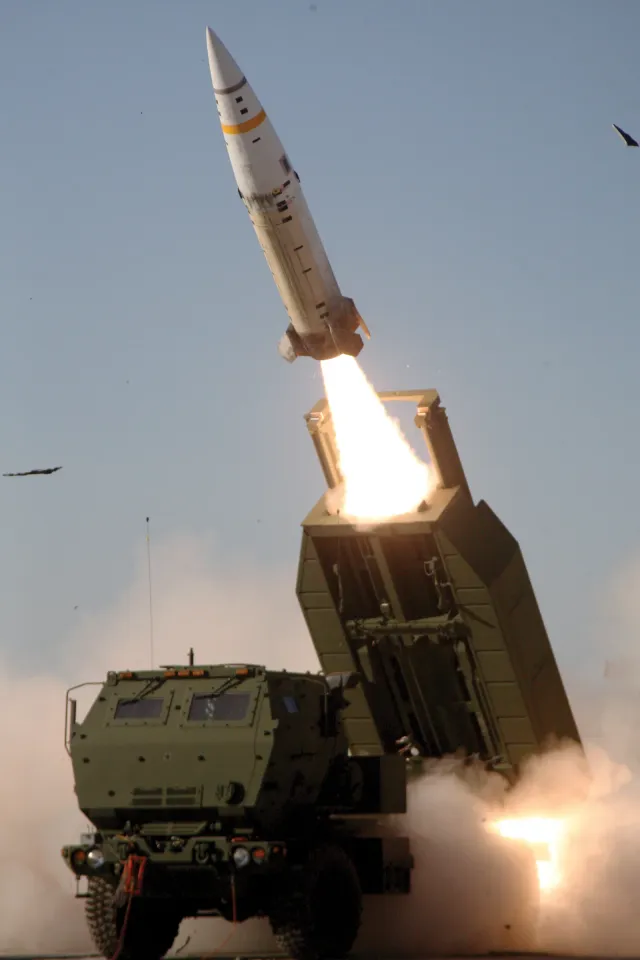
Missile
MGM-140 ATACMS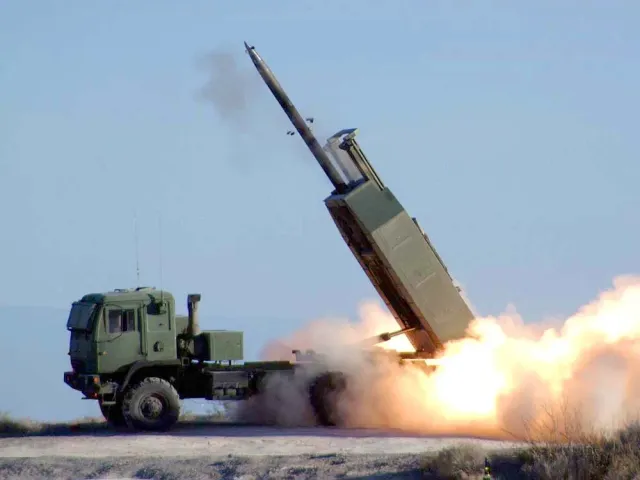
Artillery & MLRS
M270A2 MLRSFrequently asked questions
Why does Turkey need US approval to send its own equipment to Ukraine? +
The M270 launchers, ATACMS missiles, and M26 rockets in the package are US-origin systems Turkey received through earlier American arms transfers. Re-exporting US-origin equipment to a third country requires Washington's consent under the Arms Export Control Act, regardless of who currently owns it.
How is this different from Congress blocking a deal outright? +
Congress does not vote to approve a re-export; it only gets a 15-calendar-day window to pass a joint resolution blocking one. If no resolution passes in that window, consent is automatic. With the House in recess until Aug. 31 and the Senate until Sept. 14, opponents had no realistic path to act before the window closed around Aug. 18.
What can these specific weapons actually hit? +
The M39 ATACMS missiles in the package have a 165 km (102 mi) range. The M26 rockets are shorter-range, unguided munitions with a 32 km (20 mi) range and DPICM cluster warheads, not the longer-range guided weapons most associated with strikes deep into Russian territory.
Has Russia responded? +
Yes. Russian Foreign Ministry spokeswoman Maria Zakharova said on Aug. 15 that the transfer would cause serious damage to Moscow's relations with Washington and Ankara. That is a Russian government claim, not independently verified, and fits a broader pattern of Russian objections to Western arms transfers to Ukraine.
More news


