Navy's Hypersonic Missiles Span $300K to $67 Million
Navy hypersonic missiles range from a $300K target price to $67M a round. The 150x gap reflects two competing theories of hypersonic warfare.

U.S. Navy photo, public domain, via Wikimedia Commons (shown for identification)
The US Navy is buying two hypersonic missiles at once, and their prices sit roughly 150 times apart. Blackbeard, the air-launched missile Castelion is building for the Navy’s MACE program, targets 300,000 dollars a round and is scheduled to reach 4,510 built by 2031. Conventional Prompt Strike (CPS), the Navy’s ship and submarine-launched hypersonic weapon, costs about 67 million dollars a round, per a July 2026 GAO report, and Lockheed Martin’s production line manages barely six or seven a year. Both are hypersonic. Neither is a substitute for the other, and the gap between them reflects two different bets about what hypersonic warfare is for.
What is MACE, and what is Blackbeard?
MACE, short for Multi-mission Affordable Capacity Effector, is the Navy program. Blackbeard is Castelion’s specific missile competing to fill it, an air-launched hypersonic anti-ship weapon that flies past Mach 5 and has logged more than 20 flight tests as of April 2026. It carries a modest 75-pound (34 kg) warhead with terminal guidance built to pick out a moving ship from clutter, and it is meant to fly off the F/A-18E/F Super Hornet first, with an Early Operational Capability target in FY2027. The longer-term objective is internal carriage on the F-35A/C, four rounds per aircraft.
Speed is not the interesting spec here. Blackbeard is designed to be cheap enough to buy by the thousand rather than the dozen, and its price is what makes that plan work or fail. The Navy’s own stated target is 300,000 dollars per round, but the FY2027 budget justification book lists an “average gross weapon system cost” of 442,000 dollars, and a June 2026 production contract for 50 early-build rounds priced out at 468,000 dollars each. Both real-money figures sit well above the target, so 300,000 dollars should be read as a goal the Navy is chasing, not a price it has hit.
Castelion is building for that scale now. Its new Project Ranger facility in Sandoval County, New Mexico, cost 220 million dollars and is designed for a minimum of 500 units a year. The Navy’s procurement ramp backs that pace: 353 units in FY2027, 691 in FY2028, 976 in FY2029, 1,115 in FY2030, and 1,375 in FY2031, a cumulative 4,510 missiles over five years.
“The US Navy’s commitment to fielding affordable, innovative hypersonic capability reflects the kind of leadership this moment demands and clear determination to move fast for the warfighter,” said Bryon Hargis, CEO and Co-Founder of Castelion (The Defense Post, April 27, 2026).
Hargis runs the company selling the Navy this missile, so his optimism is a sales pitch as much as an assessment, worth noting, not worth treating as independent confirmation that the price or the schedule will hold.
What is Conventional Prompt Strike, and why is it stuck at six missiles a year?
Conventional Prompt Strike is a different weapon solving a different problem. It shares the Common Hypersonic Glide Body (C-HGB) with the Army’s Dark Eagle (Long-Range Hypersonic Weapon), but the Navy cold-launches CPS from vertical tubes on ships and submarines instead of a ground launcher, and that integration difference shows up entirely in the price. A GAO report dated July 17, 2026 puts CPS at 63 to 71 million dollars per missile, averaging around 67 million.
Production has not kept pace with even modest ambitions. Lockheed Martin’s line turns out only 6-7 missiles a year, against the 12-per-year rate the Navy would need to fill a single Zumwalt-class destroyer’s magazine (four 87-inch Large Missile VLS tubes, installed in place of the ship’s two 155mm guns). A full 12-round load runs roughly 804 million dollars in missiles alone, for one ship, and the Zumwalt integration program itself has grown from 1.8 billion to at least 2 billion dollars, now 24 months behind schedule with the first ship-based flight test slipped to Q3 FY2027.
The Navy’s own lifecycle cost estimate has moved the wrong direction twice: 31 billion dollars for 262 missiles in 2020, then 41 billion dollars for only 224 missiles by 2024. The Army’s parallel Dark Eagle effort has spent more than 10 billion dollars on 48 missiles plus ground equipment, at a widely cited open-source per-missile price of roughly 41,000,000 dollars, itself a rough estimate rather than a GAO-audited figure. The roughly 26-million-dollar gap between that number and CPS’s GAO-sourced 63-71 million range likely comes down to launch method: a ground launcher is a simpler engineering problem than a shipboard cold-launch tube, not a difference in the glide body both services fly.
GAO has been explicit that the Army and Navy hypersonic efforts are not being run as one coordinated bet. Two services, two glide-body integrations, two cost curves, and no shared strategy tying them together.
Does a cheap hypersonic missile break the math of ship defense?
This is where the price gap turns tactical. Every interceptor the Navy fields costs more than a bullet and less than the ship it’s defending; that gap has always been the price of layered defense. Pricing the attacking missile below the interceptor meant to stop it is a newer problem, and it’s built into Blackbeard’s design on purpose.
If Blackbeard lands anywhere near its 300,000 to 442,000 dollar range, that’s exactly the inversion. A single SM-6 interceptor shot, priced with a 4,300,000 dollar unit cost in the WeaponSpecs database, costs roughly ten to fourteen times more than the missile it’s shooting down. Fire two SM-6s at one incoming Blackbeard, standard doctrine for a high-confidence intercept, and the defender has spent 20 to 30 times the attacker’s missile price to stop a single shot. That’s the same cost logic that has made China’s DF-21D and DF-26 anti-ship ballistic missiles a persistent worry for US carrier groups, covered in WeaponSpecs’ own look at anti-ship missile range claims versus combat record: the caveat there, that state-claimed figures aren’t tested performance, applies here too, just pointed the other direction.
The table below places both Navy hypersonic weapons against the rest of the ship-killing and ship-defending field already in the WeaponSpecs database, ranked by unit cost.
| System | Service/Role | Unit cost | Production rate |
|---|---|---|---|
| MACE/Blackbeard (Castelion) | Navy, air-launched hypersonic anti-ship | $300,000 target / $442,000 FY27 actual | 353/yr (FY27) ramping to 1,375/yr (FY31) |
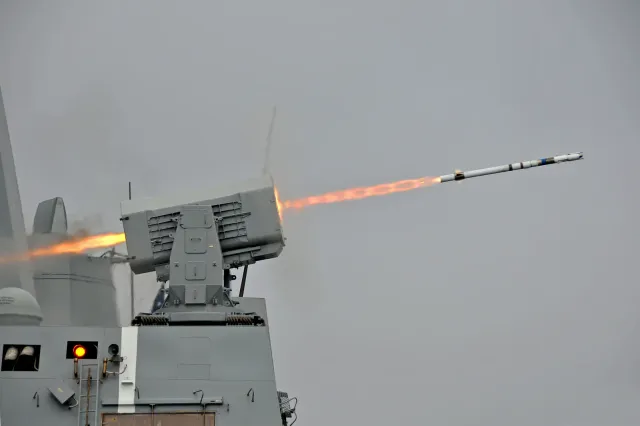
| RIM-116 RAM | Navy, ship point-defense interceptor | $900,000 | Established production line |
| Harpoon Block II | Navy, subsonic anti-ship cruise missile | $1,200,000 | Established production line |
| AGM-158C LRASM | Navy/Air Force, subsonic stealth anti-ship cruise missile | $3,000,000 flyaway | 200 missiles in FY2026 (~$1B total program funding) |
| SM-6 | Navy, extended-range ship air/missile defense interceptor | $4,300,000 | Established production line |
| Dark Eagle/LRHW | Army, ground-launched hypersonic boost-glide | $41,000,000 (open-source estimate) | 48 missiles delivered for $10B+ program |
| Conventional Prompt Strike | Navy, ship/submarine-launched hypersonic boost-glide | $63M-$71M (avg. ~$67M, GAO) | 6-7/yr (Lockheed Martin) |
LRASM’s FY2026 procurement worked out to nearly a billion dollars for 200 missiles, a higher effective per-unit figure than its 3-million-dollar flyaway cost because the program total includes support and integration spending beyond the missile itself.
The chart below isolates the tactical tier, Blackbeard alongside the four systems it’s actually priced near, RAM, Harpoon, LRASM, and SM-6. Dark Eagle and CPS are left out here because they run 15 to 150 times larger and would flatten every bar below them into an unreadable sliver.
Blackbeard's FY2027 actual price sits below every ship-defense interceptor on this chart, including the short-range RAM, which is the entire cost-exchange problem in one bar.
That comparison comes with a real caveat: Blackbeard is still pre-production, working toward an FY2027 Early Operational Capability, not a fielded, combat-proven weapon. Its price has already climbed once, from the 300,000 dollar target to the 442,000-468,000 dollar range shown in FY2027 budget and contract figures, the pattern early-lot military hardware usually follows. This whole comparison is a bet on where the price settles once the Sandoval County line runs at scale, not a settled fact.
Why run both programs at once?
Blackbeard is built for mass: a fighter-launched weapon meant to saturate a target set, the same logic behind China’s own anti-ship missile inventory. CPS answers a narrower question, a small number of high-value, long-range strikes the Navy is willing to pay 67 million dollars a round for because there’s no cheap way to solve that problem. GAO’s finding that the Army and Navy hypersonic efforts lack a coordinated joint strategy means these tracks, plus the Army’s separate Dark Eagle program, are developing largely on their own.
For anyone tracking naval procurement, the open question isn’t whether Blackbeard’s technology works, it’s whether the price holds as production ramps toward the 2031 target of 4,510 missiles. Compare interceptor and strike-missile costs across the full field yourself in the Compare tool, or run a threat profile against your own scenario in the Advisor.
Sources
- US Navy confirms Blackbeard hypersonic missile link to MACE program as first weapon candidate
- US Navy Contracts Castelion to Integrate Hypersonic Missile Onto F/A-18
- U.S. Navy Delays Zumwalt Destroyer Hypersonic Missile Test to 2027 as Costs Reach $2 Billion
- U.S. Navy Expands Long-Range Maritime Strike Strategy with Nearly $1B LRASM Procurement in FY2027
- US Navy to buy 4,500 hypersonic missiles in MACE program push
Systems in this comparison
Every system covered above, with its photo and, where available, a video. Tap a card to open the full spec sheet.
Compare these side by side →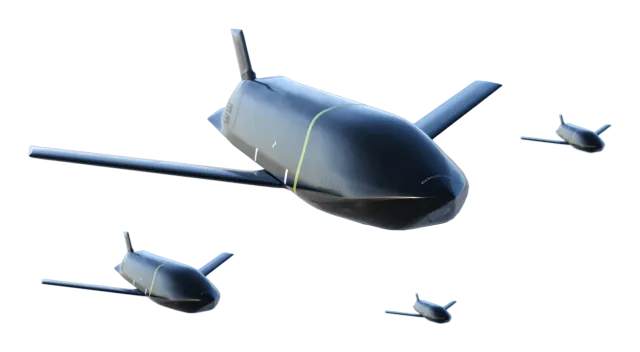
Missile
AGM-158C LRASM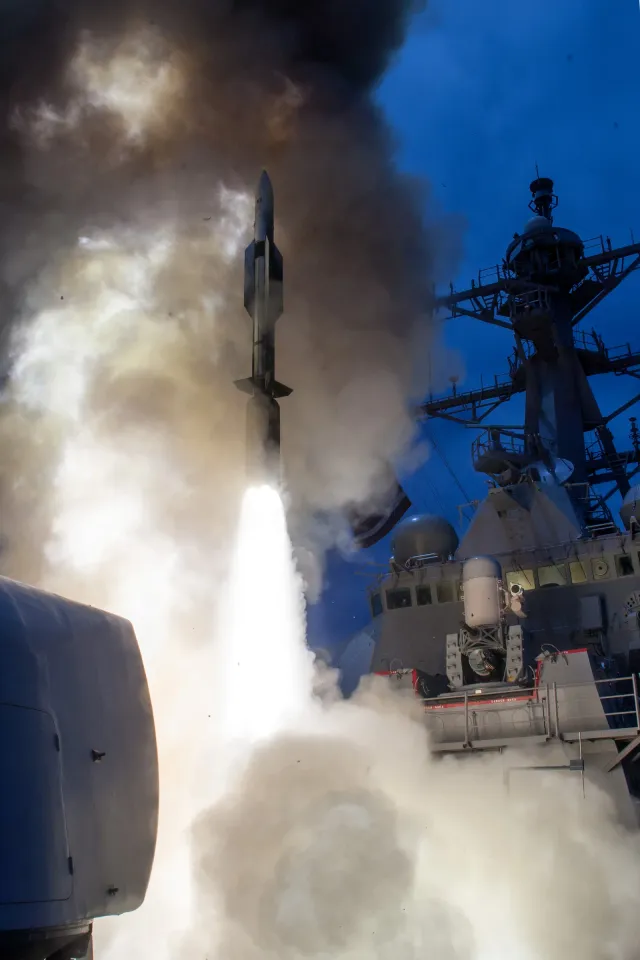
Missile
RIM-116 RAM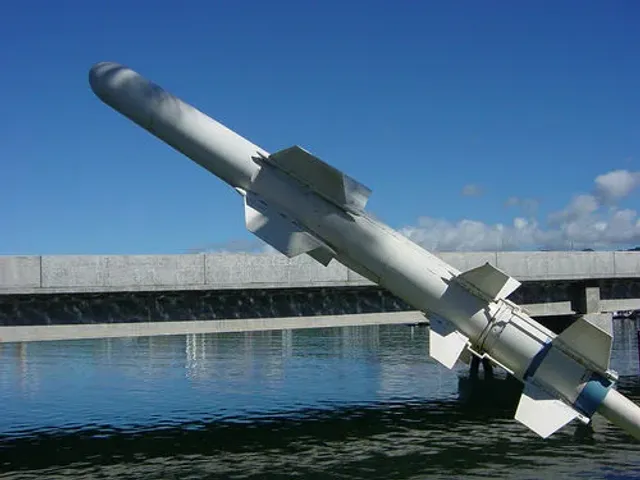
Missile
Harpoon Block II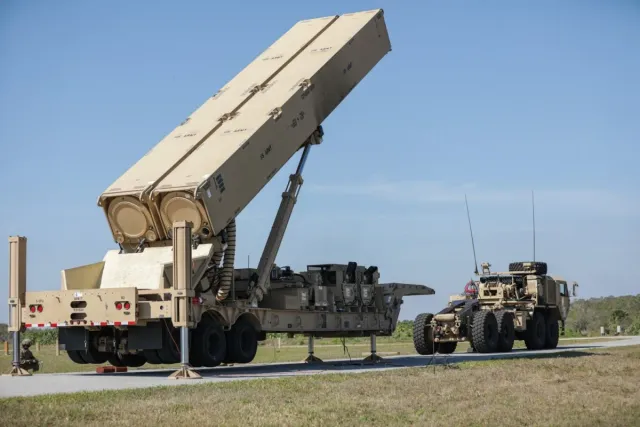
Strategic missiles
Dark Eagle (LRHW)Frequently asked questions
What is MACE/Blackbeard and how much does it cost? +
MACE (Multi-mission Affordable Capacity Effector) is the Navy program name; Blackbeard is the specific air-launched hypersonic anti-ship missile Castelion is building for it, flying Mach 5-plus off an F/A-18 Super Hornet. The Navy's own stated target price is 300,000 dollars a round. Its FY2027 budget book lists an average gross weapon system cost of 442,000 dollars, and a June 2026 production contract for 50 early rounds worked out to 468,000 dollars each, both above the target, not at it.
What is Conventional Prompt Strike and why does it cost 67 million dollars? +
Conventional Prompt Strike (CPS) is the Navy's ship and submarine-launched hypersonic boost-glide weapon, built around the same glide body as the Army's Dark Eagle. A GAO report dated July 17, 2026 put its per-missile cost at 63 to 71 million dollars, averaging roughly 67 million. The price reflects a low-volume, hand-built production line, cold-launch integration into large vertical launch tubes, and a Zumwalt-class shipboard program whose own cost has grown from 1.8 billion to at least 2 billion dollars.
Are Conventional Prompt Strike and the Army's Dark Eagle the same missile? +
They share the same Common Hypersonic Glide Body, but they are not the same weapon end to end. The Army's Dark Eagle (Long-Range Hypersonic Weapon) fires from a ground launcher; the Navy's Conventional Prompt Strike cold-launches from vertical tubes aboard ships and submarines, which is a different integration problem with its own cost. Open-source estimates put Dark Eagle at roughly 41 million dollars a round versus CPS's GAO-sourced 63 to 71 million, a gap that likely reflects launch-method engineering rather than the munition itself.
How does Blackbeard's cost compare to firing an SM-6 to intercept it? +
If Blackbeard reaches its 300,000 to 442,000 dollar target range, a single 4.3 million dollar SM-6 interceptor shot costs roughly ten to fourteen times more than the incoming missile it is meant to stop. That inverted cost-exchange ratio, cheap offense against expensive defense, is exactly the math that has worried US Navy planners about Chinese anti-ship missiles like the DF-21D and DF-26 for years.
Why is the Navy running two hypersonic missile programs at once? +
Blackbeard and Conventional Prompt Strike answer different questions. Blackbeard is built for mass: a cheap, fighter-launched anti-ship weapon meant to be fielded by the thousands. CPS is built for a small number of high-value, long-range strikes against hardened or time-critical targets from ships and submarines. GAO has flagged that the Army and Navy hypersonic efforts lack a coordinated joint strategy, so the two Navy programs are, by design and by omission, running on separate tracks.
Related reading


