Pentagon Bets $11M X-Bow Deal Can Break the $12.7M Interceptor
MDA moved X-Bow Systems into Phase 2 of its Low-Cost Interceptor program, targeting a sub-$750,000 round versus THAAD's $12.7M and Patriot's $4M per interceptor.

Courtesy photo, Missile Defense Agency, DVIDS, public domain
The Missile Defense Agency has awarded X-Bow Systems a two-year, $10.9 million contract that advances the Albuquerque-based propulsion company into Phase 2 of its Low-Cost Interceptor program, an effort aimed at building an interceptor round for under $750,000, a fraction of what the agency pays today for a THAAD or Patriot round. The award, made in July 2026 and disclosed publicly on August 19, is a bet that a company built around 3D-printed solid rocket motors can crack the single biggest reason missile defense stays expensive: the interceptor itself.
The math MDA is trying to fix
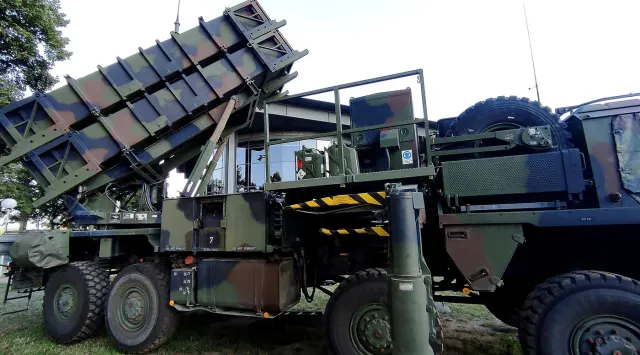
The Low-Cost Interceptor program exists because of a cost mismatch that has bothered missile defense planners for years: cheap threats forcing expensive responses. A massed salvo of drones or low-cost ballistic missiles can be built and launched for a fraction of what it costs to shoot each one down. WeaponSpecs’ own systems data shows the scale of that gap at the top end: a full THAAD battery, radar, launchers and all, runs roughly $1 billion, and a Patriot PAC-3 battery around $1.1 billion. Those are whole-battery figures, a different number from what X-Bow’s contract targets. The number MDA is chasing here is narrower and, in some ways, more revealing: the price of a single round. Reporting on the award puts THAAD’s per-interceptor cost at roughly $12.7 million and Patriot’s at roughly $4 million. Depleting a battery’s magazine against a drone swarm or a barrage of cheap missiles can cost more than the threat itself, which is the exact incentive an adversary has to attack with volume.
X-Bow’s Phase 2 target is a round priced under $750,000, an order of magnitude below Patriot and closer to two orders of magnitude below THAAD. Lt. Gen. Heath A. Collins, the Missile Defense Agency’s director, described the agency’s broader approach to that gap plainly:
“We’re taking a look at propulsion, we’re looking at all the expensive parts of an interceptor,” said Lt. Gen. Heath A. Collins, director, Missile Defense Agency (DefenseScoop, August 19, 2026).
Propulsion is where X-Bow is staking its pitch.
Why X-Bow thinks it can hit that number
Founded in 2016 and now based in Albuquerque, New Mexico, X-Bow Systems specializes in additively manufactured solid rocket motors, propellant and motor casings built through 3D printing rather than the slower, more labor-intensive casting and machining processes most established suppliers still use. The pitch is straightforward: a solid rocket motor is typically the single most expensive component in an interceptor, and most missile builders buy that motor from a separate subcontractor, one of a small handful of firms that dominate the U.S. solid rocket motor supply chain. By manufacturing motors in-house and additively, X-Bow argues it can compress both the cost and the lead time of the part that usually drives the price of the whole round.
Jason Hundley, X-Bow’s founder and chief executive, framed the company’s reason for existing in terms of that supplier base directly:
“America can’t out-produce today’s threats with yesterday’s supplier base,” said Jason Hundley, founder and CEO, X-Bow Systems (Interesting Engineering, August 19, 2026).
The contract itself runs under MDA’s Rapid Response Small Launcher Technology program, and Phase 2 specifically funds building and flight-testing a prototype interceptor. If that testing succeeds, X-Bow would then deliver between 4 and 10 systems for MDA’s own intercept testing, with a demonstration targeted for late 2027.

Figures as reported in coverage of X-Bow's MDA award: THAAD roughly $12.7 million and Patriot roughly $4 million per interceptor, against X-Bow's sub-$750,000 Phase 2 target. These are per-round prices, distinct from the roughly $1 billion and $1.1 billion whole-battery costs (radar, launchers and interceptors combined) that WeaponSpecs' own THAAD and Patriot system records track.
Part of a wider affordability push, not a one-off
X-Bow’s award is one piece of a broader Missile Defense Agency effort to bring interceptor costs down across the board, alongside programs like the Glide Phase Interceptor, aimed at the mid-course phase of a hypersonic weapon’s flight; Project Maverick; the Family of Affordable Mass Missiles; and the Low-Cost Containerized Missile concept. The throughline across all of them is the same: MDA has concluded that matching a proliferating, increasingly cheap missile and drone threat with individually exquisite, expensive interceptors is not sustainable at scale, and that affordability has to be engineered into the interceptor itself rather than treated as a tradeoff against performance.
That framing matters for how to read this specific contract. $10.9 million is a small number by defense-acquisition standards, closer to a technology-maturation bet than a production order, and nothing about Phase 2 guarantees X-Bow reaches its cost target or that the resulting round performs against the advanced and hypersonic threats the program is aimed at. What it does confirm is that MDA is willing to fund a company outside the traditional prime contractor base to test whether a different manufacturing approach, building motors in-house rather than buying them, can move the needle on a cost problem the agency’s larger suppliers have not solved on their own.
Sources
- MDA awards X-Bow to develop low-cost interceptor — DefenseScoop, Aug 19, 2026
- Defense Business Brief: Arcfield's state of play; SMD wrap up; X-Bow Systems' MDA win — Defense One, Aug 19, 2026
- $11M backs cheap interceptor against hypersonic missile threats — Interesting Engineering, Aug 19, 2026
Systems mentioned
Every system named in this story, with its photo and, where available, a video. Tap a card to open the full spec sheet.
Compare these side by side →
Air defense system
Patriot PAC-3Frequently asked questions
What exactly did MDA award X-Bow? +
A two-year, $10.9 million contract, awarded in July 2026 and disclosed publicly in August, that moves X-Bow Systems into Phase 2 of the Missile Defense Agency's Low-Cost Interceptor program under its Rapid Response Small Launcher Technology effort.
Why does a $750,000 target matter? +
Current interceptors cost far more per round, roughly $12.7 million for a THAAD interceptor and $4 million for a Patriot missile, making it expensive to defend against cheap, massed drone and missile salvos. A sub-$750,000 round changes that math and lets a battery afford far more shots per dollar.
What makes X-Bow different from established primes? +
It manufactures its own solid rocket motors using additive manufacturing, historically the priciest subsystem in most interceptors, rather than buying them from a subcontractor. That in-house motor production is the company's stated basis for undercutting cost.
When would this actually be fielded? +
Phase 2 covers building and flight-testing a prototype, with a demonstration targeted for late 2027. MDA would then use 4 to 10 delivered systems for intercept testing. Full fielding is not yet scheduled.
More news


